Grammar nerds everywhere have long lamented the widespread misuse of the word "literally."
As anyone who paid attention in grade school knows, "literally" means "in a literal or strict sense, as opposed to a non-literal or exaggerated sense," and is the opposite of "figuratively," which means "in a metaphorical sense." But recently, it's become in vogue to use "literally" for emphasis in precisely the non-literal sense, as in, "We were literally killing ourselves laughing." It's the type of informal use that drives any self-respecting language lover nuts.
"My impression is that many people don't have any idea of what 'literally' means — or used to mean," Boston University psycholinguist Jean Berko Gleason told the Boston Globe. "So they say things like 'He was literally insane with jealousy.' If in response, you asked them if this person had been institutionalized, they'd look at you as if you were the crazy one."
The Week
Escape your echo chamber. Get the facts behind the news, plus analysis from multiple perspectives.
SUBSCRIBE & SAVE
Sign up for The Week's Free Newsletters
From our morning news briefing to a weekly Good News Newsletter, get the best of The Week delivered directly to your inbox.
From our morning news briefing to a weekly Good News Newsletter, get the best of The Week delivered directly to your inbox.
Latest Videos From
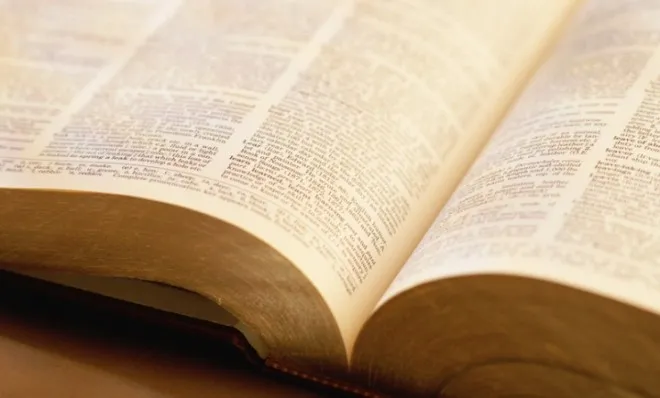
Much to the chagrin of grammar-lovers everywhere, it turns out that this informal (and completely incorrect) use of "literally" has actually been added to three established dictionaries, as Reddit user andtheniansaid pointed out. Here's what each dictionary said:
Merriam-Webster added a second usage of the word to mean "virtually," but added the disclaimer that "Since some people take sense 2 to be the opposite of sense 1, it has been frequently criticized as a misuse. Instead, the use is pure hyperbole intended to gain emphasis, but it often appears in contexts where no additional emphasis is necessary."
Cambridge Dictionaries Online added that the informal usage of the word is "used to emphasize what you are saying," while Oxford Dictionaries also added a similar informal usage, which is "used for emphasis while not being literally true." Oxford, however, also noted that "in recent years an extended use of literally has become very common, where literally is used deliberately in non-literal contexts, for added effect, as in they bought the car and literally ran it into the ground. This use can lead to unintentional humorous effects and is not acceptable in formal contexts, although it is widespread."
So there you have it: The dictionaries have begrudgingly bowed to the will of the grammar-averse public. For some classic examples of how "literally" has been misused (and a few times it's used correctly), look no further than this supercut of Chris Traeger (Rob Lowe) using his favorite word on Parks and Recreation: