The Week The Week
flag of US
US
flag of UK
UK
https://cdn.mos.cms.futurecdn.net/flexiimages/jacafc5zvs1692883516.jpg

SUBSCRIBE & SAVE

Less than $3 per week

Sign in
  • View Profile
  • Sign out
  • The Explainer
  • The Week Recommends
  • Newsletters
  • Cartoons
  • From the Magazine
  • The Week Junior
  • Student Offers
  • More
    • Politics
    • World News
    • Business
    • Health
    • Science
    • Food & Drink
    • Travel
    • Culture
    • History
    • Personal Finance
    • Puzzles
    • Photos
    • The Blend
    • All Categories
  • Newsletter sign up Newsletter
  • The Week Evening Review
    The White House’s AI rethink, Democrats’ Platner divide, and Kushner’s resort plan

     
    TODAY’S BIG QUESTION

    Where does the White House really stand on AI?

    President Donald Trump’s executive order that voluntarily allows artificial intelligence companies to receive more government oversight marks a shift in his administration’s attitude about AI. It seems Trump, Republicans and even some Democrats are changing their tune.

    What did the commentators say?
    The order signed by Trump is “relatively toothless” as most major AI companies “already had agreements in place that allowed the government to preemptively test their models for safety risks,” said The Atlantic. But it’s also “meaningful in that the president is doing something — anything — about AI” given that when Trump retook office, he largely “signaled to tech companies that he would stay out of the way.” 

    National Economic Council Director Kevin Hassett previously said the administration was considering federal guidelines that would “require AI models to go through an evaluation process similar to that used by the Food and Drug Administration,” said The Hill. But this idea seemed to fizzle out as AI advocates became “concerned that an evaluation process from the White House could strangle development.”

    The order that was signed “nonetheless represents a sea change in Washington’s willingness to tighten oversight of the technology,” said Politico. For the “first time, it’s on a piece of paper, a structure and a process,” said former Trump adviser Steve Bannon to the outlet.

    What next?
    This is “only the latest in a long string of strange, often contradictory AI policy positions,” said The Atlantic. Trump’s policies on the matter have been “inconsistent, if not incoherent, almost since the day he retook office.” So there’s a chance he could change his mind again. 

    While Trump says he’s focused on AI security, his administration has slashed major portions of the Cybersecurity and Infrastructure Agency, which “aims to protect the nation against hackers,” said The Atlantic. These budget cuts mean CISA is “heading into the AI era with shrinking resources and a diminished role,” which could pave the way for future vulnerabilities, said Axios. Many fear the agency “no longer has the capacity” to help “critical infrastructure operators prepare for a coming wave of AI-fueled cyberattacks.”


    QUOTE OF THE DAY

    ‘This is a special kind of loathsomeness: a blend of historical deafness, grotesque stupidity and comically ludicrous self-importance.’

    British historian and TV presenter Simon Schama, in a social media post, on Pete Hegseth’s speech in France on the 82nd anniversary of the D-Day landings. The Defense Secretary tried to link immigration to D-Day, saying European beaches are being “stormed by different, dangerous ideologies.” 


    talking points

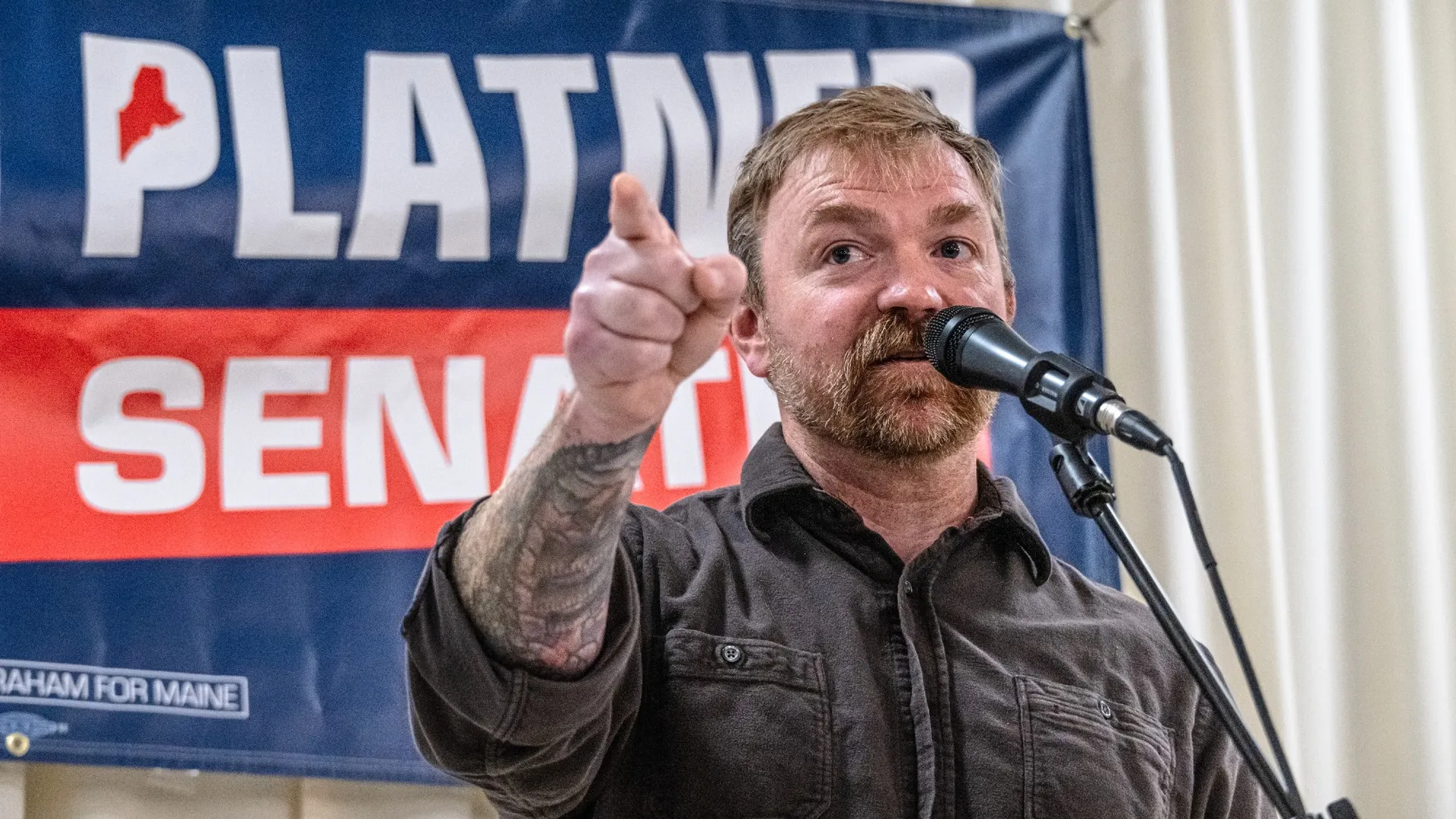
    Will Graham Platner cost Democrats the Senate?

    Maine’s Graham Platner was seen as a potent populist challenger to incumbent GOP Sen. Susan Collins. But revelations about the Democrat’s Nazi-linked tattoo, charged social media posts, and past treatment of women now have his party’s leaders debating whether to pull their support. And either choice might cost them a shot at winning the Senate in November.

    Democrats should “cut Platner loose,” said David Frum at The Atlantic. Republicans in 2017 ditched Alabama’s Roy Moore over revelations about his pursuit of underage girls. GOP leaders then had to “choose between character and power.” It’s time for Democrats to “muster equal shrewdness and toughness.” 

    Other observers disagree. The party should stick with the candidate unless there are revelations “involving murder, rape or a taste for child pornography,” said Michael Tomasky at The New Republic. That’s a “low bar,” but Collins has spent her public career helping Republicans “pick the pockets of working-class people.”

    ‘Scandal fatigue’
    The party is “betraying its own values” if it doesn’t denounce Platner, said Michael A. Cohen at MS NOW. The latest revelations include reporting that he has been “volatile, unfaithful and physically threatening” to the women in his life. So supporting Platner “opens up Democrats to charges of hypocrisy” in their criticisms of Texas Senate candidate Ken Paxton and risks “losing the Maine Senate race.”

    Democrats’ chances of retaking the Senate now depend on a “baggage-laden candidate with clear character issues and a sketchy past,” said Nia-Malika Henderson at Bloomberg. “Scandal fatigue” could dampen enthusiasm for Platner, but the U.S.’s “ultrapolarized” politics could also “work the other way, hardening support for Platner.” It’s a dynamic that has worked for GOP candidates like President Donald Trump and Paxton. 

    ‘Fed up with rolling revelations’
    Platner “needs women on his side to win,” said Steve Collins at the Portland Press Herald. Independent and Democratic women voters in Maine are “increasingly fed up with rolling revelations” about the candidate’s past, and social media is “full of Maine women who say they are no longer buying what Platner’s selling.” Maine Gov. Janet Mills, who suspended her campaign in April, could pick up votes in tomorrow’s primary as a result.


    Statistic of the day

    $28 billion: The amount of money Russia is on track to overspend on its ongoing war with Ukraine, according to a letter from Finance Minister Anton Siluanov seen by The Financial Times. This is lower than the ministry’s February estimate of $40 billion in a “negative scenario.”


    in the spotlight

    Kushner’s resort gets an icy Albanian welcome

    The goal of the first son-in-law to open a luxury resort on Albania’s coast has hit a speed bump. Albanian investigators have begun digging into the private equity firm spearheading the project, Kushner’s Affinity Partners. And mass public protests over the resort have become a flashpoint for broader civic frustrations. What began as a “local land dispute on Albania’s southern coast,” said France 24, has now become a forum for “wider grievances” over “corruption, arrogance of power, and disgruntlement with the ruling government.”

    ‘Flamingo revolution’
    The proposed luxury resort project is slated for construction on the “uninhabited Adriatic island of Sazan” and hundreds of acres of the Vjosa-Narta protected site, a “sensitive coastal wetland area home to flamingos, seals and sea turtle nesting sites,” said Politico. So protesters gathered outside Prime Minister Edi Rama’s office this week “using a pink flamingo as their emblem,” said the BBC.

    The symbol “echoes the deployment of a yellow duck” used in Serbian civic protests but here “reflects the protesters’ very specific concerns” about the project’s environmental impact, which is why the movement has “now been nicknamed Albania’s flamingo revolution,” said France 24. But Asher Abehsera, Kushner’s business partner on the project, claims the development will focus on “responsible stewardship” and “enhancing the environment,” said the BBC.

    ‘Total lack of transparency’
    Initially a local development dispute, the project has spiraled into a “national political crisis,” said the Tirana Times, “triggering mass protests” and calls for Rama’s resignation. “From start to finish, there has been a total lack of transparency,” said leading Albanian conservationist Aleksander Trajce to The Guardian. “We have seen no public consultation or public documentation regarding permits.” 

    Broader frustrations
    “No longer only about a resort,” the growing protests are now a “vehicle for wider anger” over Albanian civic society, said the Tirana Times. “It’s more or less everything” at the protests, said Taulant Bino, the president of the Albanian Ornithological Society,  to The New York Times. “You find people from the left, people from the right, people from different religious beliefs.”


    Good day 🎭

    … for classic American plays. The Broadway revival of Arthur Miller’s “Death of a Salesman” emerged as the star of the show at last night’s Tony Awards. Director Joe Mantello’s production scooped six awards at the ceremony in New York City’s Radio Music Hall, including best revival of a play.


    Bad day 🇺🇸

    … for scientific grants. Universities and nongovernmental organizations that receive public grants now have to be vetted for their fidelity to “American values,” as defined by Trump, according to the Office of Management and Budget. All federal grants approved by Trump’s political appointees must “demonstrably advance the president’s policy priorities,” according to the proposal by the OMB.


    Picture of the day

    Debris field

    Farmers spray water on the scorched earth surrounding a downed and partially buried Iranian ballistic missile near the village of Najha in Syria after overnight exchanges of fire between Israel and Iran.
    Ghaith Alsayed / AP Photo


    Puzzles

    Daily sudoku

    Challenge yourself with The Week’s daily sudoku, part of our puzzles section, which also includes guess the number

    Play here


    The Week recommends

    A cookbook on how to use breadcrumbs well

    You would think there would be endless words for breadcrumbs. In “All That Crumbs Allow,” authors Michelle Marek and Camilla Wynne creep toward that goal. Across 45 recipes, each its own kind of breadcrumb-naming treatise, the duo celebrates the kitchen staple’s versatility.

    Prayer to pulverization
    Marek and Wynne have backgrounds in pastry, and it shows. Wynne, in a recipe for bread and jam twice-baked croissants, eschews the nut filling and crafts a breadcrumb frangipane, which is then slathered on bisected day-old croissants along with the jam of your choosing and baked until crackly.

    Marek reminisces about the sweet cheese dumplings of her childhood visits to the Czech Republic. Soft bread cubes are beaten with butter, sugar, flour, egg and farmer's cheese before a poaching turn in sweetened boiling water. The pillowy dumplings are then added to hot, crisped breadcrumbs and served with fruit.

    Other recipes for sweets include such zingers as breadcrumb-glazed doughnuts, rhubarb cardamom breadcrumb cake and witches’ froth, a fluffy cloud of whipped apple served with clattering toasted breadcrumbs.

    In the beginning, there was bread
    The book’s centerpiece chapters on starters, mains and sweets are bookended on one side by a treatise on how to make and store breadcrumbs of various sizes, with an under-duress subsection about how to buy breadcrumbs.

    A pantry chapter closes the tome. It’s a collection of six recipes that swerves from the book’s much-used and dead-simple Crunchy Topping to Fairy Rocks, with a sparkling blend of freeze-dried raspberries, sesame seeds, ground rose petals, sugar and, yes, breadcrumbs.

    Read more


    Poll watch

    A majority of Israelis (62%) believe that Prime Minister Benjamin Netanyahu should not allow Trump to dictate the nature of Israel’s military actions, according to a survey of 500 adults published by Maariv. One out of four believe Netanyahu has no choice but to concede to Trump’s demands, while 13% do not know.


    INSTANT OPINION

    Today’s best commentary

    ‘Flu vaccines should not be this hard’
    Katherine J. Wu at The Atlantic
    In a “typical year, the process of bringing a new seasonal flu shot to market is one of the United States’ most predictable vaccine routines,” but this is “not a typical year,” says Katherine J. Wu. The job would normally “fall to the CDC’s expert vaccine advisory panel, known as ACIP, which guides the agency’s recommendations,” but “currently, no functional ACIP exists to guide this autumn’s immunization campaigns.” This “could further undermine ACIP’s role as a key scientific check on government policy.”

    ‘Is Britain getting a new prime minister?’
    Eliot Wilson at The Hill
    In the U.S., “changes of leaders are predictable,” but in “Britain, it’s more nuanced,” says Eliot Wilson. It’s “impossible to predict whether Sir Keir Starmer will still be prime minister at the end of this year, this month or perhaps even this week.” There’s “no bar to a party in office changing its leader who then becomes prime minister.” Will the U.K. have a “new prime minister by autumn? Yes. Or possibly no.”

    ‘How women are shaping Minnesota’s cannabis industry’
    Clemon Dabney at The Minnesota Star Tribune
    Cannabis legalization “created a market” in Minnesota, and women are “helping create its culture,” says Clemon Dabney. While women are “still underrepresented in cannabis ownership,” the women who are “launching dispensaries” across the state are “doing far more than opening stores.” These women are “claiming space in an industry where they have too often been overlooked, underestimated or asked whether a man is really behind the business.” They are “setting the tone for what this market becomes.”


    WORD OF THE DAY

    hematite

    A red iron-rich pigment used in prehistoric art. Stripes on the walls of a large cave in the U.K.’s Wales that were long dismissed as natural stains are actually northwestern Europe’s earliest known example of cave art, according to a study in the journal Quaternary. These hematite streaks were made by humans more than 17,000 years ago.


    Evening Review was written and edited by Theara Coleman, Nadia Croes, Scott Hocker, Anya Jaremko-Greenwold, Justin Klawans, Joel Mathis and Rafi Schwartz, with illustrations by Julia Wytrazek.

    Image credits, from top: Illustration by Julia Wytrazek / Getty Images; Laura Brett / Getty Images; Armend Nimani / AFP / Getty Images; Kitchen Arts & Letters
     

    Recent editions

    • Morning Report

      Iran war ceasefire teeters amid renewed strikes

    • Sunday Shortlist

      Wandering a liminal labyrinth

    • Saturday Wrap

      A midterms meltdown?

    VIEW ALL
    TheWeek
    • About Us
    • Contact Future's experts
    • Terms and Conditions
    • Privacy Policy
    • Cookie Policy
    • Advertise With Us
    • FAQ
    Add as a preferred source on Google Add as a preferred source on Google

    The Week is part of Future US Inc, an international media group and leading digital publisher. Visit our corporate site.

    © Future US, Inc. Full 7th Floor, 130 West 42nd Street, New York, NY 10036.