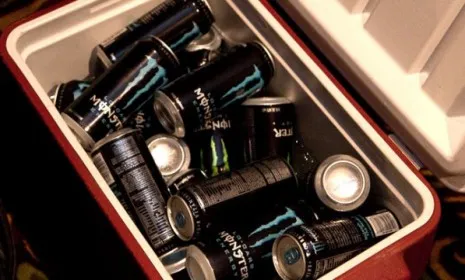
Energy drinks are under scrutiny again. Not only has the Food and Drug Administration released a report stating that five people in the past three years may have died from consuming Monster Energy products, but a Maryland couple is suing the company behind the popular line of energy drinks, for the death of their 14-year-old daughter last December. Anais Fournier died from a heart complication after allegedly drinking two 24-ounce cans of Monster on back-to-back days. An autopsy revealed she died of "cardiac arrhythmia due to caffeine toxicity."
Though the company denies that its products are dangerous, the lawsuit "charges that Monster failed to warn about the risks of its energy drinks," says Barry Meier at The New York Times.
Monster Energy spokesman Evan Pondel issued this statement:
The Week
Escape your echo chamber. Get the facts behind the news, plus analysis from multiple perspectives.
SUBSCRIBE & SAVE
Sign up for The Week's Free Newsletters
Join more than 350,000 subscribers and keep yourself informed with a selection of The Week’s most interesting, enlightening and entertaining stories - plus daily puzzles.
Join more than 350,000 subscribers and keep yourself informed with a selection of The Week’s most interesting, enlightening and entertaining stories - plus daily puzzles.
Latest Videos FromThe Week
Over the past 16 years Monster has sold more than 8 billion energy drinks, which have been safely consumed worldwide. Monster does not believe that its beverages are in any way responsible for the death of Ms. Fournier. Monster is unaware of any fatality anywhere that has been caused by its drinks.
The Fourniers' lawsuit raises the question: How much caffeine is too much?
While caffeine is legal, it's still a potentially dangerous psychoactive stimulant that can show up in the blood stream within five minutes of ingestion, cardiac surgeon Dr. Marc Gillinov tells CBS News. "Caffeine toxicity," or consuming high amounts of caffeine, can cause irritability, hyper-aroused states (including insomnia), abnormal heart beat, and, sometimes, cardiac arrest. Consuming more than 1 gram of the stimulant can trigger serious reactions; at 10 grams, it can cause death.
But consuming even 1 gram of caffeine can be a tall order: A 12-ounce cup of Starbucks coffee, for example, contains about 260 milligrams, meaning you'd have to drink about four cups to ingest 1 gram.
On the surface, the Fourniers' case does not look strong. A 24-ounce can of Monster, like the two cans their daughter reportedly consumed, contains about 240 milligrams of caffeine, says Maggie Fox and Linda Carroll at NBC News, meaning that Anais only ingested 480 milligrams over two days. (It also contains many other ingredients, including sugar, ginseng, amino acids like taurine and L-carnitine, salt, guarana seed, and B vitamins.)
But, most experts agree, caffeine sensitivity, and therefore potential risks of exposure, can vary from person to person. The American Academy of Pediatrics recommends that adolescents and youth stay away from energy drinks altogether.