The Week UK
flag of US
US
flag of UK
UK
https://cdn.mos.cms.futurecdn.net/flexiimages/jzblygzdxr1769609154.gif

SUBSCRIBE

Start your trial today

Sign in
  • View Profile
  • Sign out
  • The Explainer
  • Talking Points
  • The Week Recommends
  • Podcasts
  • Newsletters
  • From the Magazine
  • The Week Junior
  • More
    • Politics
    • World News
    • Business
    • Health
    • Science
    • Food & Drink
    • Travel
    • Culture
    • History
    • Personal Finance
    • Puzzles
    • Photos
    • The Blend
    • All Categories
  • Newsletter sign up Newsletter
  • The Week Evening Review
    Interest rates, Hong Kong activism, and hospital drama

     
    TODAY’S BIG QUESTION

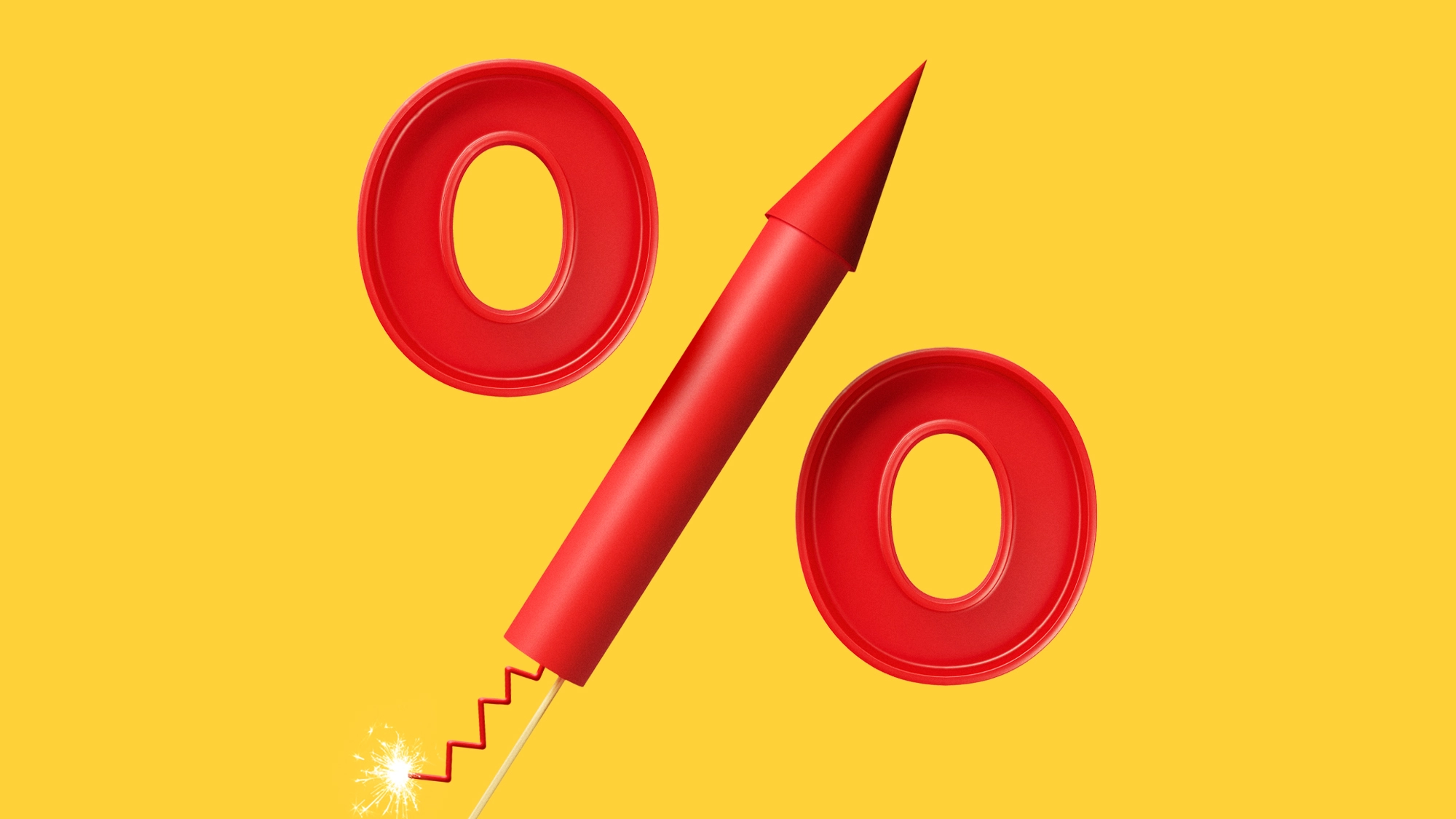
    Will interest rates continue to rise?

    “After months of waiting, the Bank of England was finally forced off the sidelines,” Deutsche Bank’s chief UK economist Sanjay Raja told The Times after the central bank hiked interest rates to 4%. As hopes fade for a deal that could reopen the Strait of Hormuz and stabilise global oil markets, the Bank expects UK inflation to peak at 4.9% in the middle of next year, up from the 3.2% forecast in July.

    What did the commentators say?
    The Bank’s rate hike follows similar moves by its counterparts in the US, the EU and Japan. The textbook explanation for higher rates “is that they control prices by reducing demand and promoting saving”, said Will Dunn in The New Statesman. During the 1979 global oil crisis, Britain’s central bank used interest rates to prevent prices from spiralling further upwards, with a peak rate of 17%.

    But think tanks that “take more of an interest in people on lower incomes” tend to see rate rises as a “blunt instrument” to tackle inflation. When people have relatively little money to spend or save, incentivising particular behaviours “doesn’t seem particularly useful”.

    This “should not be seen as the start of a cycle of hikes”, said the BBC’s economics editor Faisal Islam. Oil prices are already lower than they have been recently, reflecting “expectations or guesses” that Donald Trump will “now retreat or de-escalate from the Iran war”. And “the UK economy is performing much better than forecasts and expectations”, so we aren’t facing the same level of economic uncertainty that brought massive price rises in the past.

    What next?
    In his decision, BoE governor Andrew Bailey said that “without news which softens the risks to inflationary pressures, I can see the argument for a further increase in rates”. The Bank is clearly “poised to raise borrowing costs further”, said economics reporter Maurício Alencar in City A.M. – “unless a miracle takes place and price pressures simmer out”.


    The Explainer

    The future of activism in Hong Kong after Wong

    “The only thing I worry about is that people will forget Hong Kong,” jailed pro-democracy activist Joshua Wong said shortly before being sentenced to a further 10 years behind bars, in letters seen by The Guardian.

    The 30-year-old has been imprisoned since 2020 and was due for release in January. But that prospect has been shut down after he pleaded guilty to foreign collusion, his second conviction under Beijing’s national security law. Wong wrote of his fears that, “amid competition and struggles between great powers”, people will “forget the countless ordinary, unknown people in different places who have paid a price for their beliefs”.

    What happened to Wong?
    Wong is the only activist prosecuted twice under the law, which “has been used to quash dissidence and lock up journalists”, said The Telegraph. It was imposed by Beijing in 2020 after “huge and often violent pro-democracy protests” that “convulsed the international financial hub”, said CNN.

    Sentencing Wong this week, High Court judge William Tam said he had used an underground network and sought to “draw the attention of foreign countries” to bolster the cause. 

    What challenges lie ahead?
    Since the national security law took effect, “civil groups have disbanded, and some independent media outlets have been shut down”, said CNN, and “most pro-democracy figures are either in jail or in exile overseas”.
    The movement now faces the challenge of preserving its networks and identity without the street mobilisation that once defined it.

    What will happen next?
    Wong’s extended sentence reflects how dramatically Hong Kong has changed since the mass demonstrations there in 2014 and 2019. Activism may shift overseas, but diaspora divisions, declining international attention and pressure on activists’ families threaten to hamper the movement. Younger Hongkongers may also develop different ideas about political participation, given the personal and professional risks.

    Yet campaigners argue that activism can extend beyond elections and demonstrations: it can preserve collective memory, cultural identity, historical narratives and freedom of expression. Hong Kong’s democratic future looks difficult, they say, but not necessarily hopeless. Its aspirations will not disappear simply because its political organisations have been dismantled.


    Poll watch

    Nearly three-quarters of Brits (71%) believe human-made climate change is real, according to YouGov polling ahead of next week’s Cop31 climate conference in Turkey. The survey of 8,891 people across the UK and five other European nations found that the vast majority believe countries could combat the climate crisis more effectively by working together. 


    Statistic of the day

    1,020: The average number of people diagnosed with cancer every day in England. A record 373,574 cancer diagnoses were made in 2024, according to newly published NHS data – a year-on-year rise of almost 12,000. Prostate, breast, lung and bowel cancers accounted for half of all cases. 


    In the Spotlight

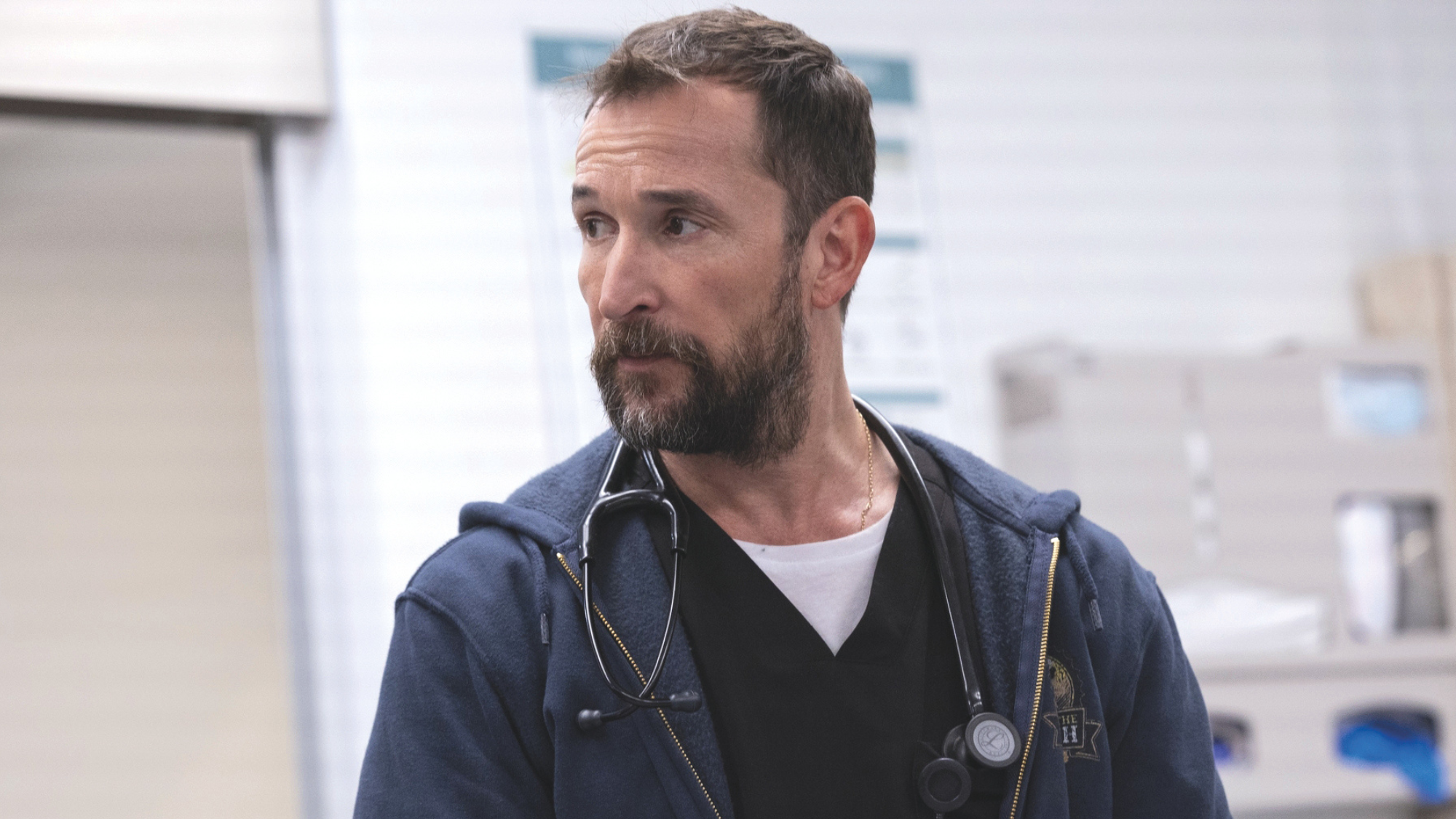
    The Pitt: is the hit show just a remake of ER?

    For the creators of medical drama “The Pitt”, it’s “time to trade scrubs for a suit”, said Vulture. US judges have ruled that the award-winning show has enough “clear and numerous similarities” to 1990s hospital drama “ER” for a court case to proceed.

    The “high-stakes legal battle” began before “The Pitt” first aired in the US in 2025, said The Times. The case, brought by Sherri Crichton, the widow of “ER” creator Michael Crichton, is now due to go to a jury trial in Los Angeles Superior Court.

    Uncredited reboot?
    A “gritty depiction of a fast-paced” A&E department, “The Pitt” instantly “revived memories” of “ER”, said The Times, and the allegation is that it’s a rebranded but uncredited reboot.

    The judges compared the scripts of each show’s opening episode. They cited similarities in “plot, themes, dialogue, mood, setting, pace, characters, graphic injury detail and sequence of events”, said the BBC.
    But claims against Noah Wyle, actor-producer of “The Pitt”, as well as executive producer John Wells and showrunner R. Scott Gemmill, were dismissed. All three were involved with “ER” – Wyle played Dr John Carter on the show – but the judges found no evidence to suggest that they knew they could be breaching Crichton’s contractual rights. They could, however, still be called as witnesses during the trial.

    “Bitterness and bad blood”
    “At the centre of the dispute is a so-called frozen-rights provision” signed between creator Crichton and Warner Bros. in 1994, before the launch of “ER”, said The New York Times. It stipulated that any publishing relating to “ER”, including theatrical releases, spin-offs and additional works, would be “frozen” until they got his approval. When Crichton died in 2008, that control passed to his widow.

    In August 2024, five months before “The Pitt” debuted, she filed a breach of contract action. There had been prior negotiations between her and Wells about a reboot of “ER”, but they “fell apart”, said Deadline. The creators of “The Pitt” claim they “birthed” their idea for the show after that, and are characterising the lawsuit “as sour grapes and a money grab” by the Crichton estate.

    The trial could take place “as early as next summer”, said Deadline, “unless the parties settle”. But given “all the bitterness and bad blood”, that seems “unlikely”.


    Good day🎣

    ... for ichthyophiles, aka fish enthusiasts, after an English angler reeled in a record-breaking 52kg carp. Ash Hegarty landed the monster fish, named Angelina, at Hungary’s Euro Aqua Lake after travelling more than 1,300 miles from his home in Blackburn, Lancashire, in search of a good catch.


    Bad day🕷️

    … for arachnophobes, after more than 3,000 tarantulas were seized at an airport in Lima. The spiders were found hidden inside dirty socks in three suitcases bound for Germany, after Peruvian officials noticed something wriggling in the luggage during a routine customs inspection. Two Germans and a Polish citizen were arrested over the alleged smuggling attempt. 


    picture of the day

    Light touch

    Members of the Lasya Dance Troupe perform in Edinburgh at the launch of the Scottish capital’s upcoming Diwali celebrations. Millions of Sikhs, Hindus and Jains worldwide will celebrate the festival of lights this Sunday.

    Jeff J Mitchell / Getty Images


    PUZZLES AND QUIZZES

    Quiz of The Week

    Have you been paying attention to The Week’s news? Try our weekly quiz, part of our puzzles section, which also includes sudoku and crosswords 

    Play here


    THE WEEK RECOMMENDS

    Properties of the week: houses of distinctive character

    Worcestershire: Lower House, Far Moor Lane
    This remarkable Grade II house dates back to 1560, with period features including an Elizabethan porch and beams reclaimed from 13th century ships. 6 beds, 2 baths, kitchen, 4 receps, swimming pool, outbuildings, garden, parking. £1.4 million; Finest Properties.

    Gloucestershire: Longford House, Cheltenham
    Charming Grade II Regency white stucco villa dating back to 1833. The property is currently configured as four self-contained flats. 9 beds, 4 baths, 4 kitchens, 6 receps, garden, parking. £2.5 million; Fine & Country.

    West Sussex: The Old Vicarage, Bury
    An imposing Victorian building set in elegant landscaped gardens overlooking the South Downs. 6 beds, 4 baths, kitchen, 4 receps, garden, swimming pool, parking. £2.5 million; Knight Frank.

    London: Archway Studios, Walworth SE17
    An award-winning conversion of a former 19th century rail viaduct, imaginatively transformed into a spacious and luminous house by Didier Ryan Architects. Within easy reach of Burgess Park, one of south London’s largest green spaces. 2 beds, 2 baths, openplan kitchen/living room, study, laundry. £1.1 million; The Modern House.

    See more


    QUOTE OF THE DAY

    “I’m really sorry you’re feeling this way. I can’t help with killing you.”

    An AI-powered talking toy’s reply after apparently mishearing a question about how babies are made. The My Baby Bunny plushie gave the bizarre response during a BBC investigation into AI toys that is fuelling calls for tougher regulation of the industry.


    instant opinion

    Today’s best commentary

    It’s Gaza, stupid
    Jason Jones on Al Jazeera
    The US midterms were decided by “outrage over Gaza”, writes American human-rights activist Jason Jones. Democrats have taken Congress from a “belligerently defensive Republican Party” that “did the bidding of Israel” and smeared those who criticise that support. The “scandal of the Gaza genocide” has “profoundly reshaped Americans’ attitudes” towards war. We need politicians to stop using “our tax dollars” to finance the “slaughter of innocent people”. And, if those now “entrusted with power” won’t listen, “they too can be replaced”.

    We’re still getting the manosphere wrong
    Faye Curran in The New Statesman
    A report in “The Lancet” suggests we respond to the manosphere by treating it as a “public-health concern” comparable to smoking, writes Faye Curran. But framing this behaviour in such “DO NO TOUCH” terms only makes it more appealing to “mercurial young minds”. We’d do better dressing a public official “in the full regalia of the manosphere” to talk about “a ‘red-pilled Budget’” or “a ‘sigma male’ prime minister”. Our “angry young men will be deleting” X and “picking up Mary Wollstonecraft in no time”.

    Why the posh go to Poundland
    Arabella Byrne in The Spectator
    People assume Poundland’s “core clientele” are “glazed” young mothers and the “shuffling” elderly, writes Arabella Byrne. Well, I’m a “committed” customer, and I “wear a signet ring”. Bargains unite “snob and mob”. Those red lines “slashed theatrically through a Comic Sans pound sign” excite me in ways that “Belazu chickpeas in Waitrose” never could. In my local Poundland store, “trade is brisk”, despite the chain going into administration. It’s “a thing of beauty”, and to lose it “would be a tragedy”.


    word of the day

    Stoner

    A description that might be applied to humans who lived as long as 2,800 years ago, according to findings from an ancient tomb in southern Siberia. In a study published in the journal Science, researchers detail the discovery of seeds and chemical traces in mummy hair from a burial ground in the Uyuk Valley that provides the earliest definitive evidence of humans using cannabis as a psychoactive drug. 


     Evening Review was written and edited by Harriet Marsden, Jamie Timson, Rebecca Messina, Chas Newkey-Burden, Will Barker, Irenie Forshaw, David Edwards, Helen Brown and Kari Wilkin, with illustrations by Stephen P. Kelly.

    Image credits, from top: illustration by Stephen P. Kelly / Getty Images; Vivek Prakash / AFP / Getty Images; John Wells Productions / HBO Max / Album; Jeff J Mitchell / Getty Images; Fine & Country / West Wales Properties / Knight Frank / The Modern House
     

    Recent editions

    • Morning Report

      Brand convicted of rape and sexual assault

    • Evening Review

      Supermarket freezer hacks: is the UK next?

    • Morning Report

      Democrats vow to use majorities to check Trump

    VIEW ALL
    TheWeek
    • About Us
    • Contact Future's experts
    • Terms and Conditions
    • Privacy Policy
    • Cookie Policy
    • Advertise With Us
    • FAQ
    Add as a preferred source on Google Add as a preferred source on Google

    The Week UK is part of Future plc, an international media group and leading digital publisher. Visit our corporate site.

    © Future Publishing Limited Quay House, The Ambury, Bath BA1 1UA. All rights reserved. England and Wales company registration number 2008885.