The Week UK
https://cdn.mos.cms.futurecdn.net/flexiimages/jzblygzdxr1769609154.gif

SUBSCRIBE

Start your trial today

flag of US
US
flag of UK
UK
Sign in
  • View Profile
  • Sign out
  • Newsletter sign up Newsletter
    • The Explainer
    • Talking Points
    • The Week Recommends
    • Podcasts
    • Newsletters
    • From the Magazine
    • The Week Junior
    • More
      • Politics
      • World News
      • Business
      • Health
      • Science
      • Food & Drink
      • Travel
      • Culture
      • History
      • Personal Finance
      • Puzzles
      • Photos
      • The Blend
      • All Categories
    The Week Evening Review
    Weather warnings, justice for the Rohingya, and a divisive football tradition

     
    THE EXPLAINER

    What the polar vortex means for UK winter

    The record-early collapse of a polar weather pattern is ramping up predictions of a particularly chilly UK winter. The “unusually strong” disruption of high-altitude winds will “feed down through the atmosphere and potentially influence our weather” over the coming weeks, said the Met Office. 

    What is the polar vortex?
    It’s a ring of strong westerly winds circling the Arctic stratosphere, about 10 to 30 miles above the Earth’s surface. The polar vortex helps trap cold air high over the North Pole, and typically strengthens in winter and weakens in the spring. But this year, it broke down on 10 November. The winds reversed direction to blow from the east, displacing the cold air southward and causing the earliest major “sudden stratospheric warming” since weather-balloon data recording began.

    What caused the early collapse?
    Meteorologists are divided about whether the premature weakening is connected to this year’s Super El Niño climate phenomenon. El Niño is a natural weather pattern that develops in the Pacific Ocean and tends to keep the polar vortex strong until late winter, when large atmospheric waves travel towards the North Pole and push against the vortex, weakening it. The exceptional strength of the Super El Niño “could have sped up the weakening”, said New Scientist.

    Others argue that the collapse may be linked to a combination of atmospheric disturbances, including a high-pressure “blocking” weather system that has recently developed over Scandinavia, obstructing the west-to-east jet stream just above the Earth’s surface and sending disruptive waves higher up to the polar vortex.

    What does it mean for the UK winter?
    How much the early collapse will drive down temperatures here remains unclear, said the Met Office. “This is only a shift in chances rather than a guaranteed cold spell.”

    Research suggests that about two-thirds of sudden stratospheric warming events are followed by colder conditions across northern Europe, including the UK. A polar vortex breakdown preceded the “Beast from the East” cold snap in 2018, when blizzards swept across much of the UK, resulting in 10 deaths.  A weakened polar vortex “increases the probability of colder conditions but is not a reliable forecast ⁠on its own”, said Reuters, “as other atmospheric patterns can reinforce or counteract the effect”.


    TODAY’S BIG QUESTION

    What does genocide ruling mean for the Rohingya?

    Campaigners have welcomed a historic International Court of Justice ruling that Myanmar committed genocide against its Rohingya Muslims minority. The UN’s top court found that Myanmar acted with the “intention to destroy” a substantial part of the Rohingya population, and engaged in “extensive destruction of evidence” to conceal its crimes –  marking the first time that a state has been held to account for violating the 1948 Genocide Convention.

    What did the commentators say?
    The ICJ ordered Myanmar to allow the “safe and dignified return” of Rohingya refugees, prosecute people who committed genocidal acts and commit to paying reparations, with the amount to be determined in later court proceedings. Myanmar was also told to offer “physical and psychological rehabilitation to victims”, said University of Adelaide lecturers Juliette McIntyre and Adam Simpson on The Conversation.

    But “despite the legal victory”, the Rohingya “remain in perilous conditions”. More than a million live in “worsening conditions” in refugee camps in Bangladesh. Those still in their homeland in Myanmar’s Rakhine State “continue to experience torture, abuse and discrimination”, both from the military and from the Arakan Army, a separatist militia that Myanmar considers a terrorist group.

    The Myanmar government is unlikely to “quietly” accept the ICJ verdict, said the BBC’s international editor Jeremy Bowen, and the court “has no mechanism to enforce its rulings”.  The judgment will not automatically alleviate the “miserable and dangerous living conditions” endured by “refugees who have spent nearly a decade waiting for justice”. But it does raise hopes of the “restoration of their rights” and their homes, as well as “accountability for those responsible for the atrocities”.

    What next?
    The ICJ is also considering a genocide case brought against Israel over its actions in Gaza – allegations that Israel strenuously denies. The Myanmar ruling will “send a shiver through Israel’s legal and military establishment”, said Paul Nuki and Sarah Newey in The Telegraph. The judgment blows apart the “assumption” that a “single smoking gun” is required to establish genocidal intent. However, an ICJ ruling on Gaza is thought to be “still a decade or more away”.


    Poll watch

    Only a third (34%) of Brits like our national anthem, while 58% of Americans like theirs, according to global polling by YouGov. Of 3,987 UK adults quizzed, 28% said they dislike “God Save the King” as a piece of music. A survey of 2,264 Americans found that just 10% weren’t keen on “The Star-Spangled Banner”.


    Statistic of the day

    $2.36 billion: How much “Grand Theft Auto VI” made from pre-orders and first-day sales, according to analytics platform Sensor Tower. Gamers snapped up an estimated 24.6 million digital copies of the record-breaking new release, which cost about $1 billion to make.


    Talking point

    Football’s 3pm blackout: time to blow the whistle?

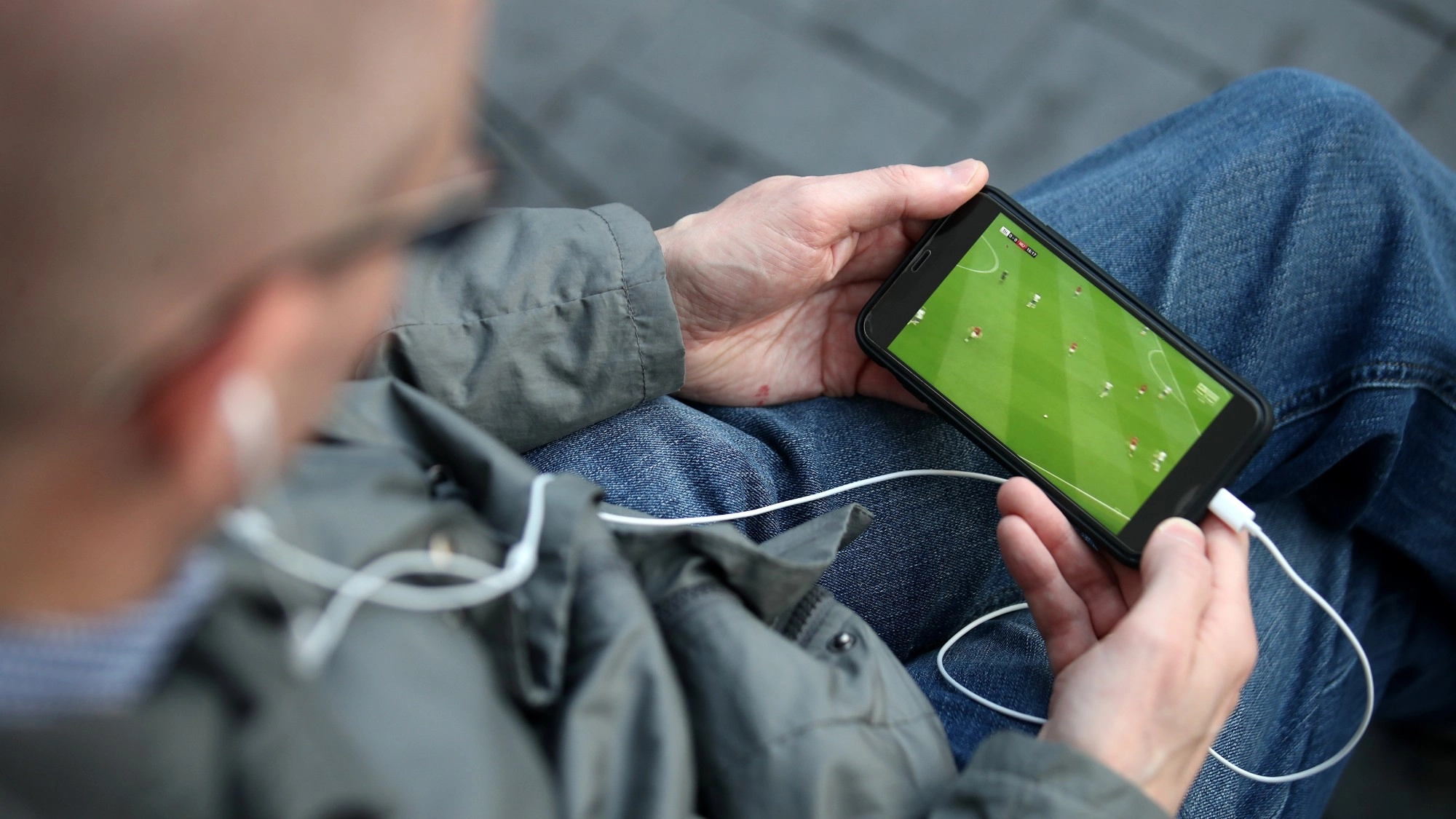
    The UK tradition of not showing live football on television between 2.45pm and 5.15pm on Saturday is “unique”, said the BBC. The blackout dates back to the 1960s and was introduced to encourage spectators to attend lower league fixtures kicking off at 3pm. But many fans are now calling for the “archaic” rule to be scrapped.

    ‘Quaint shibboleth’
    The 3pm blackout is “under threat like never before”, said The Telegraph. After 60 years, this “quaint” tradition is a “shibboleth of the British game”. Fans in other countries worldwide can watch Premier League games on Saturday afternoons, while domestic supporters are forced to rely on radio commentary, live blogs or illicit online feeds. 

    “There are two types of football fans,” said James Andrew in FourFourTwo: “match-going fans and armchair fans”. And “those that want to find a way to watch their team on television at 3pm on Saturday will find one”, as demonstrated by the millions who tune in “via illegal streaming”. With more and more EFL games being broadcast live, and fewer occupying the traditional Saturday 3pm kick-off slot, it’s time to blow the final whistle on the blackout.

    ‘Last bastion’
    The blackout is a “thorny issue”, said Daniel Storey in The i Paper, but I don’t think it’s “out of date”. It is the “last bastion of non-subservience”. The blackout means the Premier League, undoubtedly “at the top of the food chain”, is forced to compromise in favour of the lower leagues in the footballing “ecosystem”. We must not allow football culture to be “trampled upon by the few again, for their gain”.

    “No other nation in the world boasts a football culture like England,” said Michael Cox in The Athletic, “where attendances are impressive far down the pyramid.” The blackout is part of that. Encouraging fans to visit stadiums helps to promote “competitive, good-quality matches” across all tiers. Amid the “loneliness epidemic” among the elderly, and the “mental health crisis” among young people, “we should care about protecting” local clubs.


    Good day🚀

    … for space exploration, as a joint European-Japanese mission arrives at Mercury after an eight-year, six-billion-mile journey. The BepiColombo double probe will orbit and map the mysterious planet’s surface, in a further milestone after Nasa’s Voyager 1 spacecraft reached one light-day from Earth earlier this week.


    Bad day📝

    … for Lib Dem MPs, some of whom were left “in tears” after party officials issued a “school report” ranking their campaigning efforts from best to worst, according to The Times. Confidential files leaked to the paper suggest that each politician was scored across a range of “key performance indicators”, including the number of leaflets delivered to their constituency residents.


    picture of the day

    Reigning kings

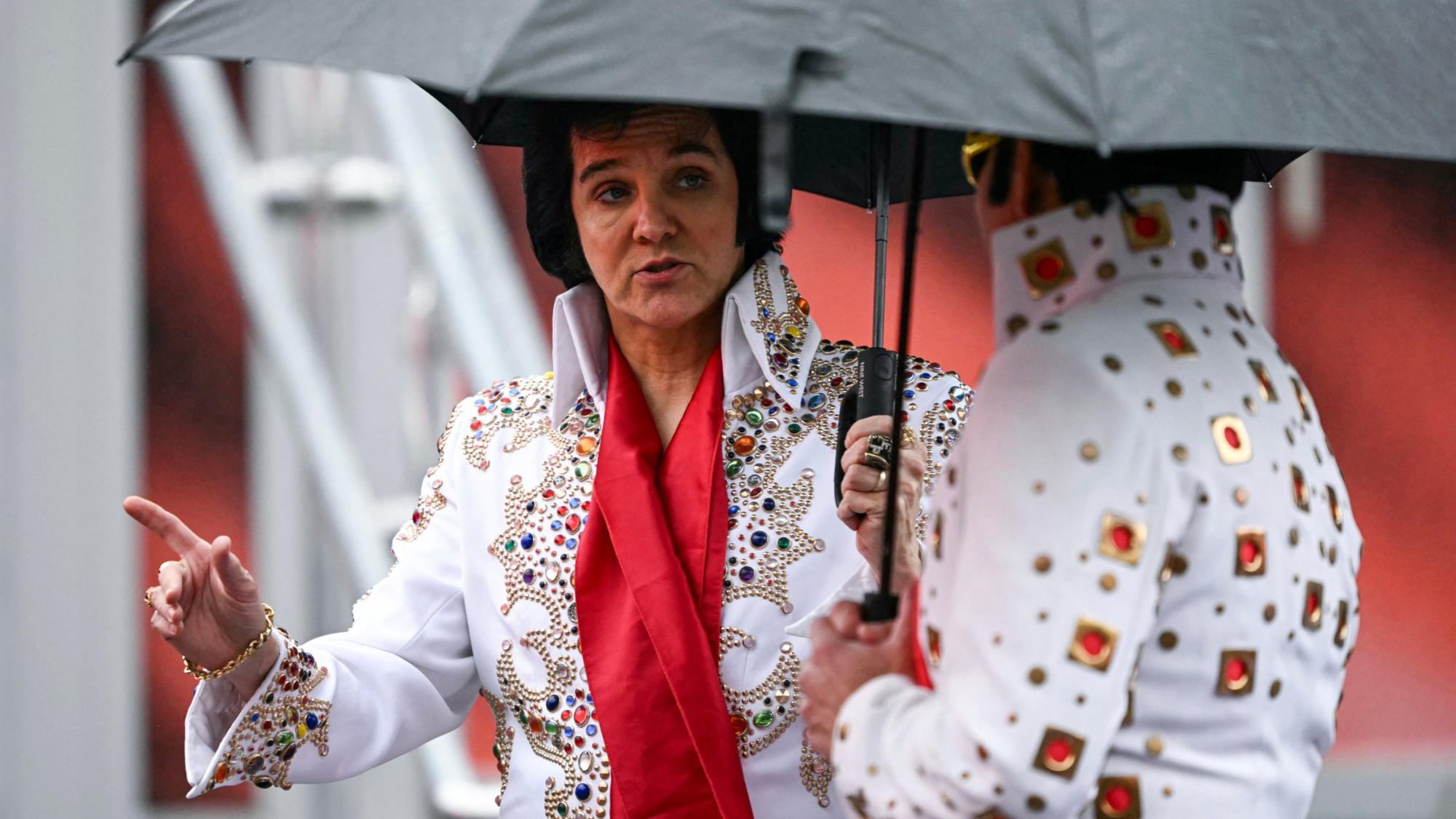
    Two Elvis impersonators shelter from a shower at the first practice session of the Formula 1 Las Vegas Grand Prix. Drier weather is forecast for Saturday’s race, where drivers will battle for the tournament’s runner-up spot behind already-crowned champion Kimi Antonelli.

    Jim Watson / Getty


    PUZZLES AND QUIZZES

    Quiz of The Week

    Have you been paying attention to The Week’s news? Try our weekly quiz, part of our puzzles section, which also includes sudoku and crosswords 

    Play here


    THE WEEK RECOMMENDS

    Properties of the week: gorgeous Georgian houses

    Bath: Queen’s Parade
    An exceptional honey-coloured stone townhouse in the centre of Bath, backing onto Royal Victoria Park. Main suite with dressing room, 3 further beds, 3 baths, kitchen, 4 receps, garden, studio, enclosed parking. £2.9 million; Carter Jonas.

    Roxburghshire: Glendouglas House, Jedburgh
    A handsome and classically proportioned house with approx. 34 acres of land on the banks of the Jed Water river. 6 beds, 5 baths, 2 kitchens, 4 receps, study, 2-bed self-contained cottage, 3-bed lodge (currently let), workshop, garden, parking. OIEO £2 million; Knight Frank.

    Lincolnshire: Mulberry House, Moulton
    This elegant Grade II house enjoys a central village position overlooking Moulton Windmill. 6 beds, 2 baths, kitchen/breakfast room, 2 receps, art studio, conservatory, office, garden, garage. £895,000; Fine & Country.

    Kent: The Red House, Barhame
    Handsome Grade II house in the heart of the village, with elegant interiors. 7 beds, 5 baths, kitchen, 6 receps, 1-bed annexe, garden, parking. £1.75 million; Strutt & Parker.

    See more


    QUOTE OF THE DAY

    “What this new drug has done is it’s found a way of drugging the undruggable.”

    Cancer Research UK’s Dr Sam Godfrey tells the BBC about his hopes for a new daily pill for one of the hardest-to-treat cancers. Daraxonrasib was found to shrink and even eliminate pancreatic tumours when used alongside chemotherapy in early-stage trials, although experts stress that long-term outcomes remain uncertain.


    instant opinion

    Today’s best commentary

    Nigel Farage warns UK households they’ll have to pay £2k each if Burnham U-turns on Brexit
    Nigel Farage in the Daily Express
    “I’m in Brussels today” to urge Andy Burnham not to “hitch our wagon” again to the EU, writes Nigel Farage. I want a Britain that “helps create wealth for the average family”, not “siphon it off in exchange for more migration and more regulation” from a “virtually irrelevant organisation that no longer has a seat at the head table of global politics, finance, and innovation”. We “flourished for centuries” without “bureaucrats in Brussels”. The PM “may not believe in Britain”, but “I still do”.

    Why I take this posh salt scandal with a pinch of you know what
    Thea Everett in The Guardian
    “I won’t be getting salty” over the revelation that Maldon uses imported German rock salt in its production process, writes recipe developer Thea Everett. People value the texture of “fancy salt flakes” but, really, “salt is salt”, whether it’s from “Essex estuaries” or “German mines”; the provenance doesn’t affect flavour. “To me, the Maldon ‘scandal’ is akin to going off your favourite band when you’re a teenager because they released a more mainstream third album that they recorded in LA.”

    The legalisation of psychedelic drugs offers potential – and pitfalls
    Natasha Loder in The Economist
    A “profound shift in the treatment of mental-health conditions” is imminent, writes Natasha Loder, as big pharma moves into psychedelics. The goal is to stimulate “new ways of thinking” that can be “equivalent to years of therapy”. But these drugs don’t “work for everyone”: they can trigger psychotic episodes in some patients, and “unsupervised use can result in a bad trip, which can worsen mental distress”. This “new tool” will undoubtedly “save lives”, but the “challenge will be to use it wisely”.


    word of the day

    Colonoscopy 

    A medical procedure in which a tiny tube with a camera is inserted into the bowels. Internet sensation Fiona the hippo underwent a colonoscopy this week at Ohio’s Cincinnati Zoo, after swallowing a hat that fell into her enclosure. But despite a series of treatments to assist the nine-year-old’s digestive system, “she did not recover”, the zoo said yesterday in a post announcing the sad news of her death.


     Evening Review was written and edited by Irenie Forshaw, Chas Newkey-Burden, Rebekah Evans, Rebecca Messina, David Edwards, Helen Brown and Kari Wilkin, with illustrations by Stephen P. Kelly.

    Image credits, from top: Stephen P. Kelly / Shutterstock / Getty Images; Alex Pantling / Getty Images;  Salahuddin Ahmed / AFP / Getty Images; Jim Watson / Getty; Carter Jonas; Knight Frank; Fine & Country; Strutt & Parker
     

    Recent editions

    • Morning Report

      Trump urges Ukraine funding cuts after Putin talks

    • Evening Review

      GTA VI: a new frontier in gaming?

    • Morning Report

      Anthropic raises $81.3bn in biggest-ever IPO

    VIEW ALL
    TheWeek
    • About Us
    • Contact Future's experts
    • Terms and Conditions
    • Privacy Policy
    • Cookie Policy
    • Advertise With Us
    • FAQ
    Add as a preferred source on Google Add as a preferred source on Google

    The Week UK is part of Future plc, an international media group and leading digital publisher. Visit our corporate site.

    © Future Publishing Limited Quay House, The Ambury, Bath BA1 1UA. All rights reserved. England and Wales company registration number 2008885.