The Week UK
flag of US
US
flag of UK
UK
https://cdn.mos.cms.futurecdn.net/flexiimages/jzblygzdxr1769609154.gif

SUBSCRIBE

Start your trial today

Sign in
  • View Profile
  • Sign out
  • The Explainer
  • Talking Points
  • The Week Recommends
  • Podcasts
  • Newsletters
  • From the Magazine
  • The Week Junior
  • More
    • Politics
    • World News
    • Business
    • Health
    • Science
    • Food & Drink
    • Travel
    • Culture
    • History
    • Personal Finance
    • Puzzles
    • Photos
    • The Blend
    • All Categories
  • Newsletter sign up Newsletter
  • WeekDay AM: 10 Things you need to know this morning
    EU youth mobility, Crimean bridge attack, and TGJones up for sale again

     
    today’s diplomacy story

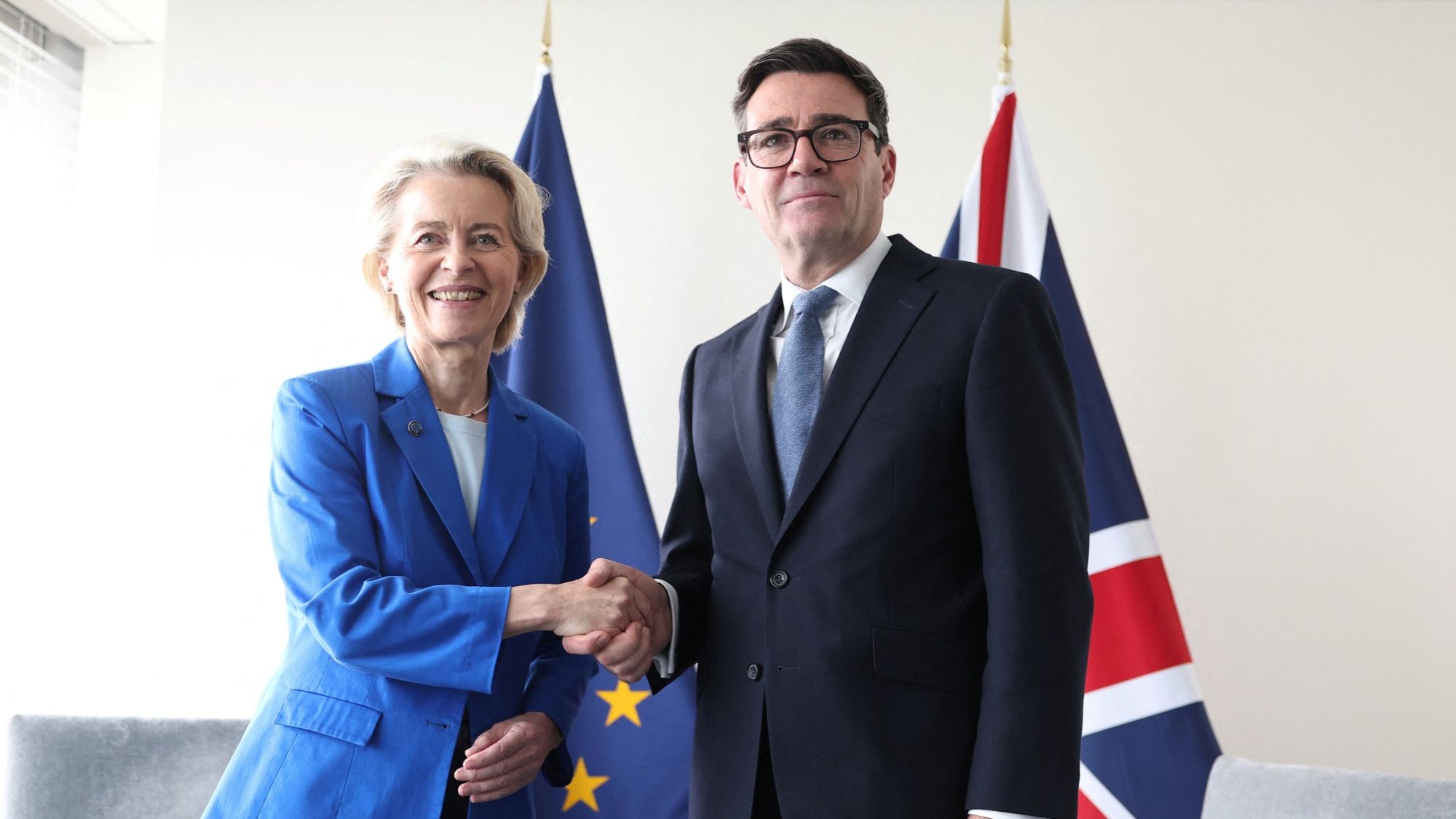
    EU youth mobility deal may not take effect until 2030

    What happened
    Young Britons hoping to live, work or study in the EU under a new post-Brexit mobility scheme may have to wait until 2030. A draft agreement between London and Brussels, seen by The Guardian, says both sides will aim to implement the arrangement by 2028, but that opportunities must be available to participants by January 2030. Germany and other EU countries could accept unlimited numbers of young Britons despite the UK seeking an annual limit of about 100,000 EU arrivals.

    Who said what
    The government has pushed for limits on EU citizens entering the UK, citing concerns over migration. Andy Burnham said there was “no rush” to determine the UK’s longer-term relationship with the bloc while insisting that he was not “stepping back” from efforts to strengthen ties. He said the public would ultimately decide the country’s direction.

    “After revealing his personal preference would be to fully rejoin the bloc”, Burnham has “encountered some resistance”, said Lisa O’Carroll and Pippa Crerar in The Guardian – “including from within the cabinet, with some MPs with Leave-voting seats anxious about reopening the debate.”

    What next?
    EU ambassadors will discuss the latest draft of the proposal today ahead of Friday’s EU-UK summit in Brussels. An accompanying agrifood agreement may not take effect until March 2028, while negotiations continue over university tuition fees. There could also be a commitment to explore easing the restrictions on British musicians and theatre companies touring Europe.


    today’s international story

    Major Ukrainian strike on Crimean bridge

    What happened
    Ukraine has launched one of its most damaging attacks yet on the Kerch Bridge, severing the road route linking occupied Crimea with Russia. Images showed that a large section of the roadway had fallen into the Kerch Strait, while the parallel rail crossing was also hit but remained standing. Kyiv said the operation involved drones and cruise missiles, and had been prepared over several weeks. The bridge was constructed following Russia’s invasion and illegal annexation of Ukraine’s southern peninsula in 2014 and is widely viewed as Vladimir Putin’s pet project.

    Who said what
    Volodymyr Zelenskyy called it an “unprecedented operation”, saying Ukrainian forces had spent a month degrading Russian air defences and other systems before striking the bridge. Ukraine’s security service said it had “systematically suppressed enemy air defence systems”.

    The attack “deals a logistical and symbolic blow to Moscow’s war effort”, said Olivia Ireland on the BBC. The timing of the attack also “comes at a significant moment, ahead of Putin meeting the leaders of China and the US; this could cloud his moment back in the spotlight”.

    What next?
    The destruction caused by the strike could disrupt the flow of Russian military supplies to Crimea, although Moscow retains alternative routes through occupied southern Ukraine and limited sea links.


    Today’s retail story

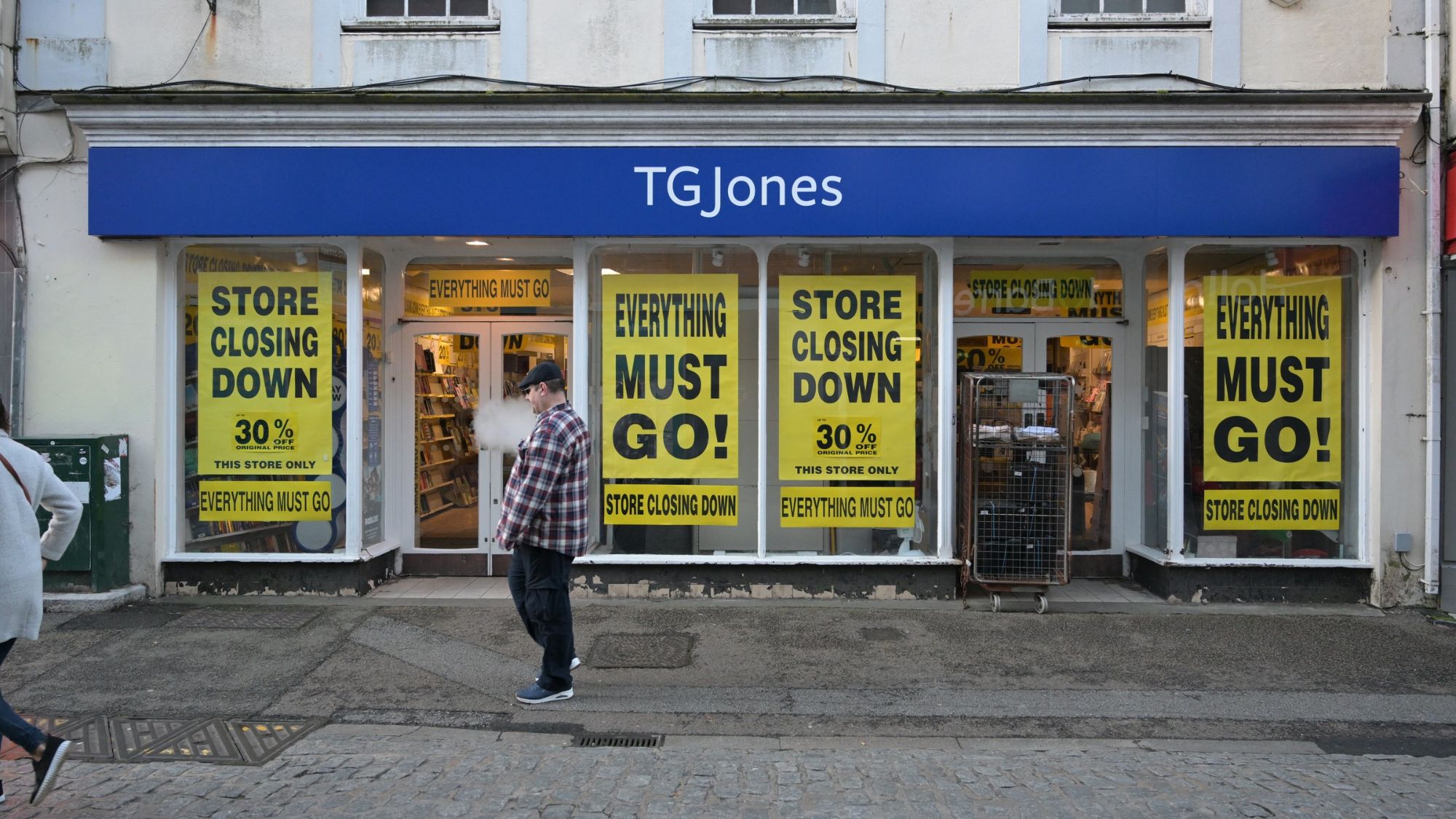
    TGJones fails to find its feet as owner prepares to sell

    What happened
    High street retailer TGJones is to be put up for sale after advisors were appointed to prepare the business for auction, according to a Sky News exclusive.

    Owner Modella Capital, which purchased and rebranded WH Smith’s high street operations last year, has already closed more than 100 of the chain’s 470 stores as part of an emergency restructuring plan. About 3,500 people are employed at the remaining stores.

    Who said what
    Sources cited by Sky News said the decision “came in response to unsolicited expressions of interest in a deal from unnamed parties”. The announcement “paves the way for another major retail name to change hands” amid ongoing efforts to find a buyer for fellow high street staple Poundland, added the broadcaster.

    Modella Capital “has drawn scrutiny” over the failure of some of its previous high street takeovers, including Claire’s Accessories and The Original Factory Shop, although “allies point to its turnaround of the crafts retailer Hobbycraft”.

    What next?
    According to insiders, no sale will take place prior to the first quarter of next year, ensuring that Christmas trading will proceed without disruption.


    It’s not all bad

    The UK music industry generated a record £8.4 billion for the economy last year, boosted by blockbuster tours from Oasis, Robbie Williams and Dua Lipa, and hit albums by artists including Olivia Dean and Sam Fender. Export revenue also rose to £4.8 billion, while employment reached 220,500. The industry is now looking ahead to another bumper year, with Oasis, Lipa and Fender among the stars planning major tours and performances in 2027.


    under the radar

    Longer estrogen exposure may help women’s brains

    A decline in women’s estrogen production may be a key factor in the development of Alzheimer’s disease. But hormone therapy could help keep estrogen levels raised in the body, improving brain health and reducing the risk of dementia.

    Estrogen levels in women fluctuate over time and those changes can affect brain health, according to a study published in the journal Neurology. Women are “disproportionately affected by Alzheimer’s disease (AD), a vulnerability that may relate to estrogen fluctuations across the lifespan”, said the study. Estrogen also has “neuroprotective and vasoprotective effects”, suggesting that steady lifetime exposure may benefit “both AD-related neurodegeneration and cerebrovascular health”.

    The study conducted MRIs on 352 healthy Swedish women at age 70 and again at age 75. It discovered that those with longer reproductive spans – the time between the first menstruation and menopause – showed less damage to the brain’s “tiny blood vessels and better-preserved white matter, the tissue that allows different parts of the brain to communicate”, said The Washington Post. The study also found that “women who had used both oral contraceptives and hormone therapy had the healthiest brain profiles of all”.

    Despite estrogen’s effects on the brain, this new research does not prove that estrogen or hormone therapy caused the differences. “Other hormones, which also fluctuate with menopause”, may be “contributing to the associations,” according to ScienceAlert. Also, “with a relatively small, single-country cohort, it’s unclear whether these trends would apply to broader populations”. The study, though, “adds a new piece of evidence to a much broader reassessment of hormone therapy”, added the Post – a “treatment whose risks and benefits have been fiercely debated for more than two decades”.


    on this day

    18 November 1626

    St Peter’s Basilica was consecrated, 120 years after work on the building first began on the site of an older church. The Vatican is marking the basilica’s 400th anniversary with a series of improvements for visitors, including a streamlined online reservation system, simultaneous translations for Masses – and an upgraded snack bar.


    Today’s newspapers

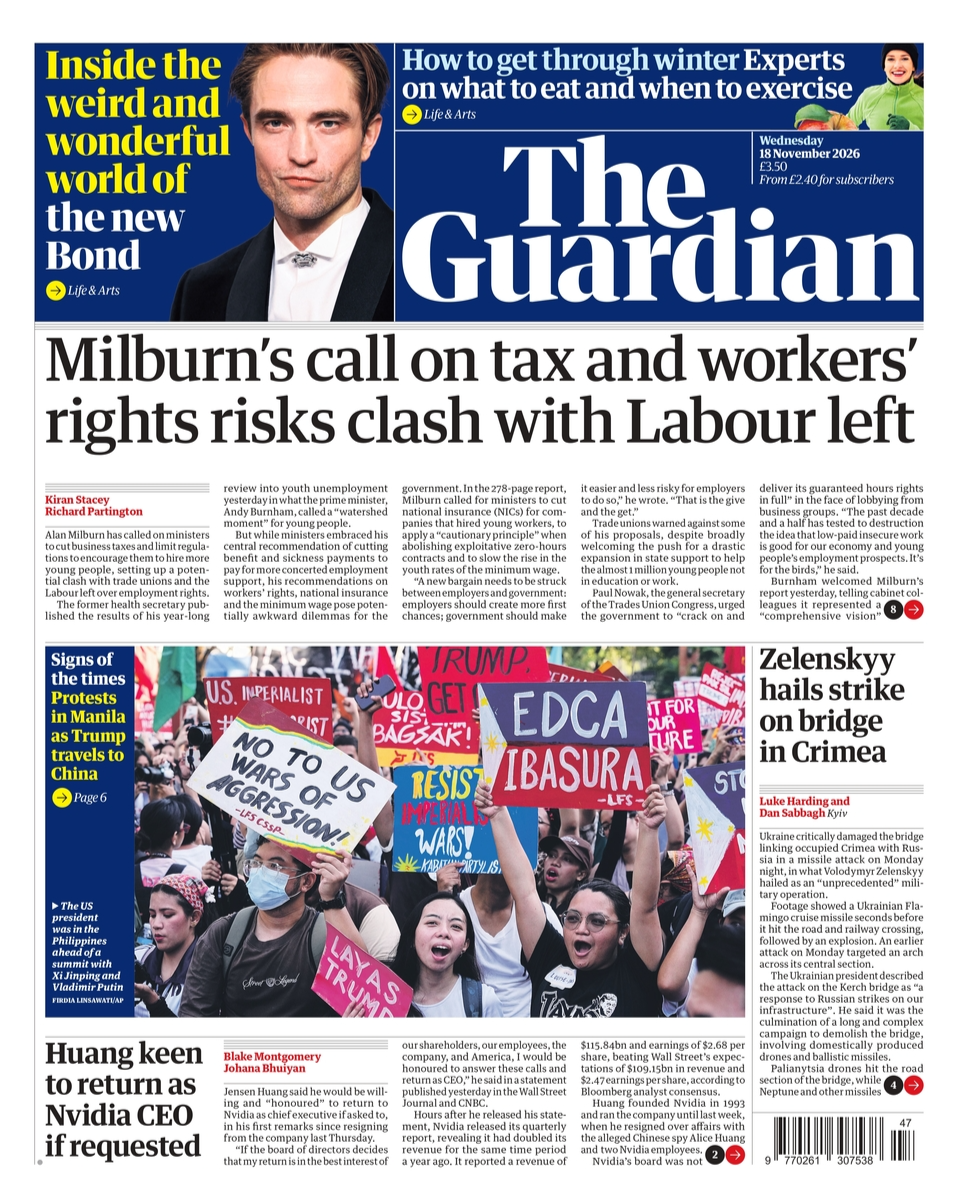
    ‘Unions clash’

    The former minister Alan Milburn’s review risks a “clash” with trade unions and those on the left of Labour, The Guardian reports. The Telegraph leads on his “attack” on Labour’s workers’ rights reforms. “I’m clean for Coleen”, says Wayne Rooney in the Daily Star, but his “darkest time” came at the height of his career, says The Mirror. 

    See the newspaper front pages


    tall tale

    Needs must

    A Russian oligarch’s ex-wife is seeking £600 million in Britain’s biggest ever divorce case, saying she needs the money to cover her “reasonable needs”. Natalia Potanina, 65, was married to billionaire Vladimir Potanin for 31 years and had already received about £30 million after their 2014 divorce in Russia. Potanin, a friend of Vladimir Putin, is worth an estimated $36 billion. His ex-wife has spent 12 years fighting for a bigger slice of his fortune.


    Morning Report was written and edited by Arion McNicoll, Rebecca Messina, Devika Rao, Ross Couzens and Chas Newkey-Burden, with illustrations by Stephen P. Kelly.

    Image credits, from top: Toby Melville – WPA Pool / Getty Images; Handout / various sources / AFP / Getty Images; Hugh R Hastings / Getty Images; Illustration by Stephen P. Kelly / Getty Images.
     

    Recent editions

    • Evening Review

      Age of consent under scrutiny

    • Morning Report

      Forensic expert says Epstein was murdered

    • Evening Review

      Yalta 2.0?

    VIEW ALL
    TheWeek
    • About Us
    • Contact Future's experts
    • Terms and Conditions
    • Privacy Policy
    • Cookie Policy
    • Advertise With Us
    • FAQ
    Add as a preferred source on Google Add as a preferred source on Google

    The Week UK is part of Future plc, an international media group and leading digital publisher. Visit our corporate site.

    © Future Publishing Limited Quay House, The Ambury, Bath BA1 1UA. All rights reserved. England and Wales company registration number 2008885.