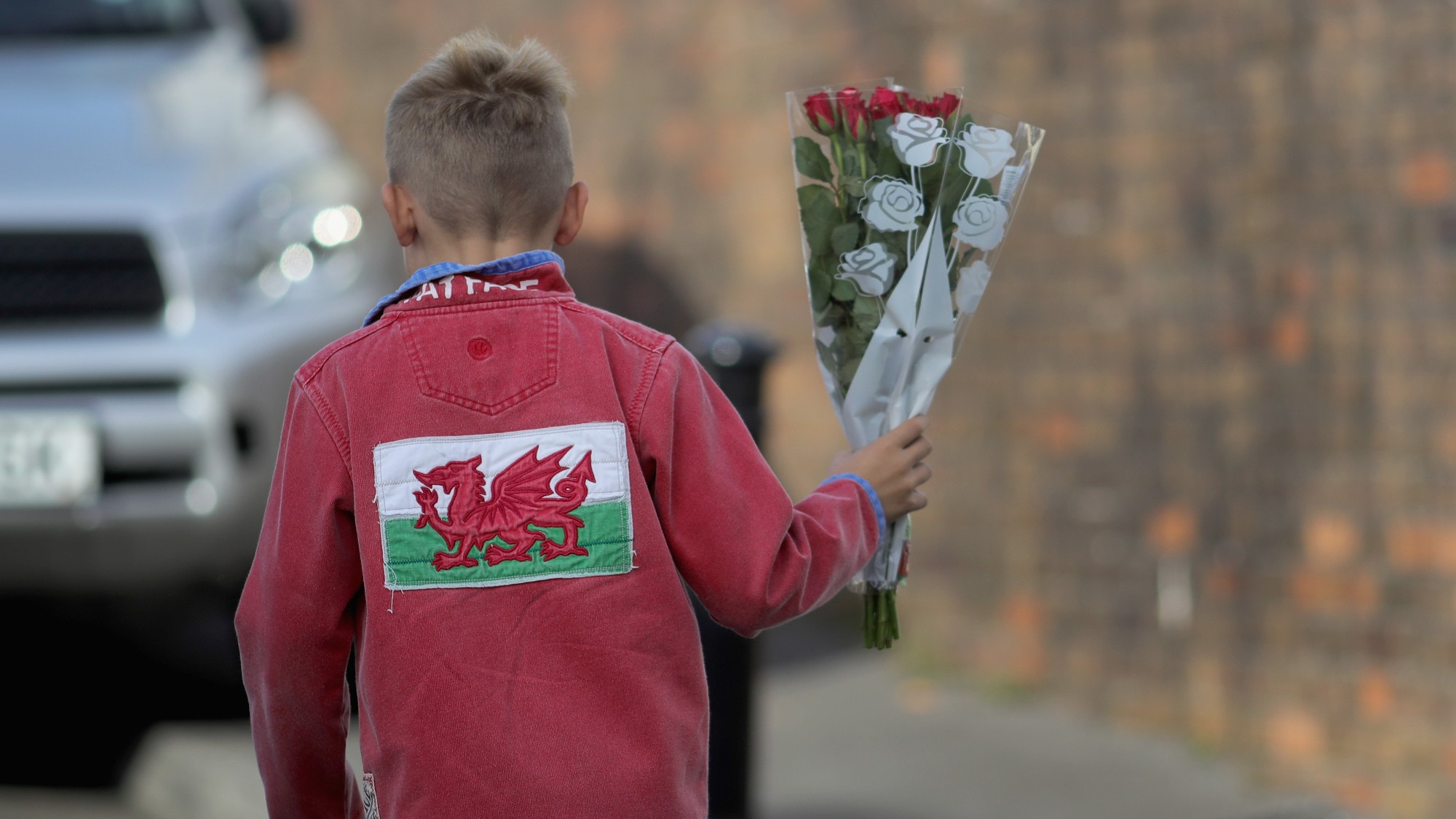
Sixty years ago this week, a colliery spoil tip collapsed on to a South Wales mining village, killing 116 children and 28 adults
How did the disaster start?
October 1966 saw an unusually high level of rainfall in South Wales, where the village of Aberfan sits near the bottom of the Taff Valley, four miles south of Merthyr Tydfil. Spoil from the Merthyr Vale coal mine had been dumped on Merthyr Mountain, 500 feet above the village, creating hundred-foot-high heaps of loose rock, clay, soil, coal waste and other debris.
At 7.30am on Friday 21 October, the early shift noticed that Tip 7 – already known to be unstable, since it was sited over a spring – had subsided by more than 10 feet overnight. Workers went up to investigate. At 9.15am, they watched in horror as around 110,000 cubic metres of liquefied mine waste burst from the tip and vanished into the mist down the mountain.
Where did the landslide go?
Moving in waves 20-30 feet high, and at up to 20mph, it engulfed two farm cottages, killing everyone inside. Then it crossed a disused canal and railway embankment, destroying two buried water mains, which added 2-3 million gallons to the slurry. Finally, it crashed into Pantglas Junior School in Aberfan, and around 20 houses on Moy Road. Schoolchildren saw “a black wave of muck” coming down the slope with “trams, trees, trucks, bricks and boulders in it”. Survivors reported hearing a sound like thunder or a jet plane taking off, followed by an eerie silence. The mist made it hard to see what had happened; many villagers assumed there had been a gas explosion or a building accident at the school, where the roof was being repaired.
What happened at the school?
At 9.15am, teachers were still taking the register. The half-term break was due to start at midday. One teacher had time to make her pupils get under their desks in a classroom the landslide didn’t reach. But most survivors reported having no time to react: there was a rumbling sound, and then walls burst apart and the tall Victorian classrooms filled up with mud, sludge and rubble. Of the 240 children aged seven to 10 enrolled at the school, 109 were killed, along with five teachers (seven other children and 23 other adults were also killed).
Miners – many of them school parents – arrived from the colliery within 20 minutes and took charge of digging out survivors. Emergency services and thousands of volunteers soon joined them, but no one was rescued alive after 11.15am, when Jeff Edwards, aged eight, was carried out of the wreckage.
What was the reaction?
By 10.30am, Aberfan was the top story on the BBC; it was the first disaster of its kind to be broadcast live into people’s homes, and a wave of national shock and mourning followed. The secretary of state for Wales, Cledwyn Hughes, was on the scene by 4pm. The prime minister, Harold Wilson, visited Aberfan that evening.
However, Alfred Robens, chair of the National Coal Board (NCB), the body responsible for the mine, put off visiting until the next day (he was busy being invested as chancellor of the University of Surrey). A burial of 81 children and one woman took place in Aberfan six days after the disaster, attended by some 10,000 mourners. Donations to the Aberfan Disaster Fund poured in, reaching an unprecedented £1.75 million, worth over £40 million today.
Whose fault was the tragedy?
A public inquiry published its damning findings in August 1967. It found the disaster foreseeable and preventable, and the NCB wholly responsible – cataloguing its “ignorance” and “bungling ineptitude”. The tips violated the NCB’s own rules. The spring under Tip 7 (which Robens first claimed no one could have known about) was marked on the Ordnance Survey map; there had been smaller tip slips in 1944 and 1963; and various complaints, including from Merthyr Council, about the danger posed by the tips above the school, had been ignored.
The inquiry singled out nine engineers and managers for varying degrees of blame; it also strongly criticised Robens’ stonewalling and factual inconsistency; Wilson wrote “devastating” on his copy. Robens offered to resign, though the offer was refused. However, to the shock of Aberfan, no one was prosecuted, fined, or even sacked over the tragedy.
Why was no one prosecuted?
The concept of corporate manslaughter was in its infancy in 1966. Mining was dangerous, and accidents were accepted; broad health-and-safety laws making employers responsible for identifying and mitigating risks had yet to be passed. And the NCB had enormous political power. Eventually, during the inquiry, it accepted liability; payments of £50 per head, later raised to £500, were given to bereaved parents; many did not receive this until the 1970s. The NCB successfully argued that it shouldn’t have to cover the cost of removing the remaining tips, which it claimed it had made safe. To defray part of the cost, the government forcibly took £150,000 from the disaster fund (this was paid back under New Labour).
What was the effect on Aberfan?
Almost every family in the tightly knit community of 5,000 people was affected. The surviving children were terrorised – not least because the tips weren’t removed until 1969 – and avoided school. Post-traumatic stress disorder was little understood, and testimonies show that people largely did not talk about what had happened. Dr Alfred Jones, a local GP, described the village as consumed with guilt, psychological problems and alcoholism. He spoke of a “strange bitterness between families who lost children and those who hadn’t”.
For years, children didn’t play in the streets, from an unspoken understanding that this would pain the bereaved; many of them didn’t open up about their experiences until they’d reached middle age. Merthyr Vale Colliery closed in 1989, and today the area scores highly for unemployment and deprivation.
The ‘indispensable’ Lord Robens
Government papers released in 1997 showed that Alfred Robens’ offer to resign as chair of the NCB following Aberfan was in fact a sham. Robens demanded and got the report 10 days before it was published, and used the time to drum up support. The rejection of his offer to resign was agreed in advance, and he even got to determine the wording of the minister’s reply rejecting his resignation.
Robens got away with this because ministers thought he was indispensable. Nationalising the coal industry was one of the postwar Labour government’s proudest achievements, but coal was on the way out, and Robens had shown that he could run the NCB at a time of mass job losses without provoking major strikes. A former trade unionist and Labour MP, he’d taken the job at the NCB (and a life peerage) from Harold Macmillan’s Conservative government in 1961.
Three years after Aberfan, the Wilson government put Robens in charge of a committee on workplace safety – a decision described by Professor Iain McLean, an expert on the disaster, as “beyond satire”. However, the committee was a notable success: it led to the Health and Safety at Work Act 1974, enshrining a general duty to ensure the safety of both staff and the public.