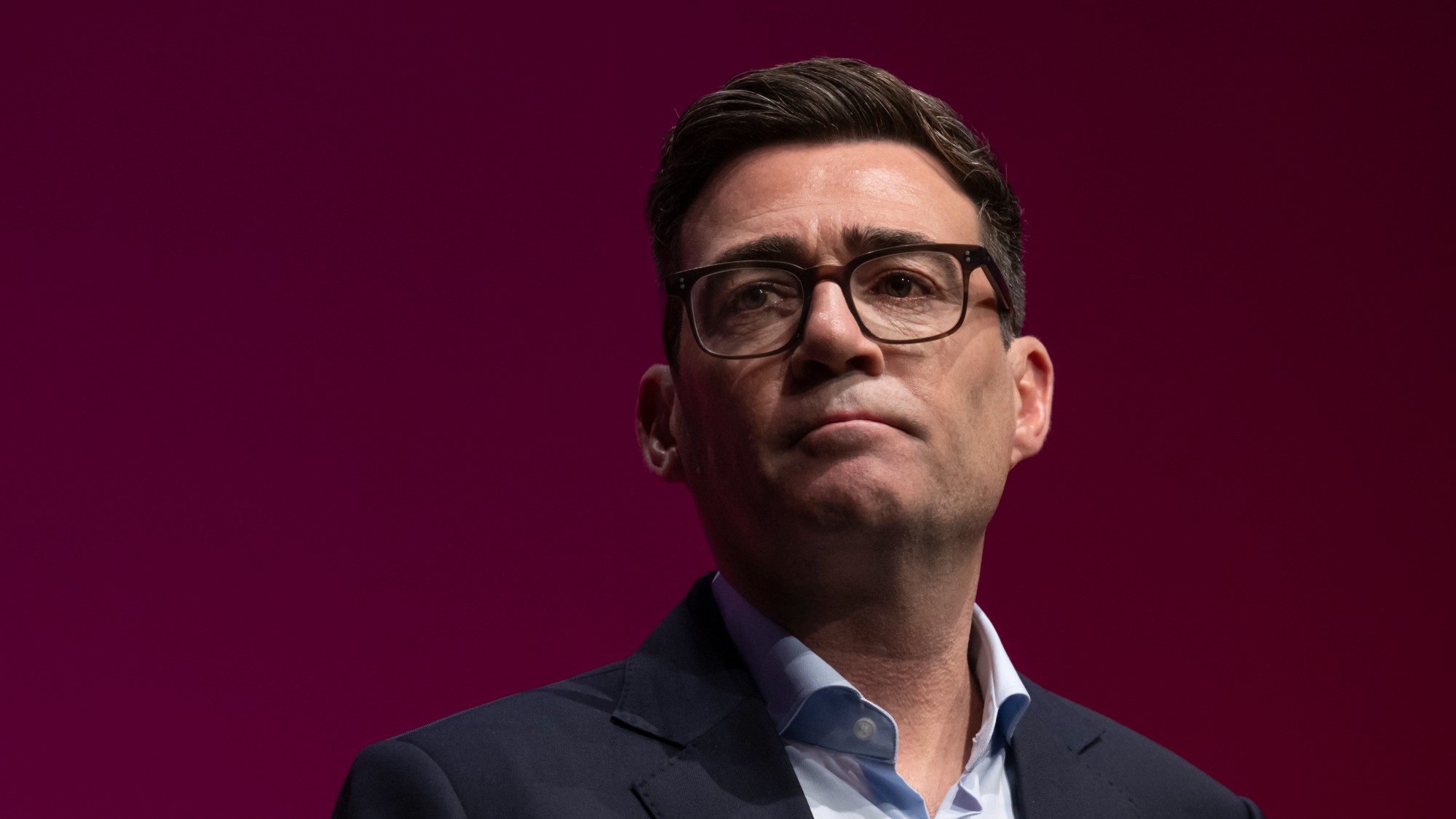
Andy Burnham’s government plans to downgrade the pension triple lock. A necessary step, or an unfair raid on pensioners?
How does the triple lock work?
A guarantee on pensioner incomes, it was introduced by the coalition government in 2011 to address high levels of old-age poverty: it was actually a Liberal Democrat manifesto policy and a key demand during coalition talks.
The aim was to halt the atrophy of the state pension. For the 30 years before that, pensions had been tied mostly to inflation, and had fallen relative to wages. The triple lock ensures that each year the payout rises by whichever of three figures is the highest: inflation (based on the CPI measure); the average increase in wages; or 2.5%.
The idea was to increase pensions fast in real terms, whatever the economic conditions, and it has worked. The charity Age UK says the triple lock has “rebuilt the value of the state pension”, and helped “improve the living standards of some of our poorest pensioners”. The state pension increased by 10.1% in 2023, 8.5% in 2024, 4.1% in 2025 and 4.8% in 2026.
How much does it cost?
Spending on pensions is now £16 billion a year higher than it would have been without the triple lock, calculates the Institute for Fiscal Studies (IFS). This takes the total spent on the state pension in 2026/27 to £154 billion. It is by far the UK’s largest benefit, “similar in magnitude to the combined annual budgets of the Ministry of Defence and Department for Education”.
The government spends 4.9% of national income on state pension outlays: up from 4.3% in 2010 and 3.6% 20 years ago. What really worries fiscal experts though, is future projections. The government’s economics watchdog, the Office for Budget Responsibility, estimates that the triple lock has already cost “around three times more than initial expectations”, because of economic volatility.
But it is impossible to put even a ballpark figure on it long term, given the vagaries of inflation and earnings growth. By 2050, retaining the triple lock could cost “anywhere between £5 billion and £40 billion” a year. “At some point”, says the IFS, a government will have to move “towards a more predictable and less costly way of uprating the state pension”.
Why has this not been done?
The huge popularity of the triple lock, in an electorate tilted towards an elderly demographic, made it politically untouchable as the big “boomer” generation passed into retirement. The upshot, argues The Economist, is that “Britain became a dictatorship of the pensionariat”. State support for working-age groups has been squeezed, while support for the elderly has been protected. When Margaret Thatcher left office in 1990, 40% of pensioners were in poverty, after housing costs. Today, only around 15% of pensioners are in poverty (post-housing), compared with 19% of working-age adults.
So is the pension generous now?
Not on the face of it, no. At around £12,500 a year, the current “new state pension” is the lowest in the G7 – and is impossible to live on without additional private provision or benefits.
In 2024, the Pensions and Lifetime Savings Association calculated that a single person needs £14,400 annually as a “minimum”, £31,300 for a “moderate” lifestyle and £43,100 to be “comfortable”. Pensioners who receive only the state pension and top-ups (about 13% of the total) are very poorly off. This is why the triple lock is supported by the Labour left, and by unions such as Unite.
However, the international comparison isn’t quite fair: income from occupational and personal pensions is a relatively important part of pensioner income in the UK, unlike in many other countries where state provision is higher.
But will private pensions hold up?
The IFS Pensions Review in 2023 found that work pension schemes had become less generous, and many private sector employees were not saving enough to fill the gap. The situation has been improved by pension “auto-enrolment”, introduced, like the triple lock, by George Osborne. Unless they opt out, all workers over 22 earning more than a set salary (currently £10,000) are enrolled into a company scheme that saves 8% of their income: 3% paid by the employer, 4% by the employee and 1% in tax relief.
A British worker on a median wage might amass a £400,000 pot after 35 years: enough at today’s rates for a £25,000 annuity. This state-subsidised system will do more of the heavy lifting as the years pass and might, in time, serve as a “replacement for the actual state pension”, says Merryn Somerset Webb on Bloomberg. But the costs to the Treasury are large: tax relief on individual contributions grew from £33 billion in 2011/12, to £84 billion last year.
What is Andy Burnham’s plan for the triple lock?
Starting from 2030, a re-elected Burnham government would not entirely abolish the triple lock, but would “adjust” it to a “double lock” – by removing the automatic annual link with average earnings, which in recent years has been highly volatile. The PM’s plan is to use the “significant savings” generated to help fund the creation of a new National Care Service, free at the point of use.
Could this cause him problems?
Burnham admits that he could “pay a political price” for the proposed reforms, but says “someone has to go through the pain barrier and rip the plaster off”. All the main opposition parties are committed to keeping the triple lock. Reform UK’s Nigel Farage accused the PM of “launching an offensive against our elderly”. And even those who would happily cut the triple lock might disagree with Burnham’s intention to divert the savings to social care, as opposed to reducing UK state spending, or using it in a way that benefits Britain’s youth, instead of the elderly.
Heated debate will continue. The state pension remains an emotionally charged topic: recent years have seen fights in Italy’s parliament and riots in France over the issue. In the meantime, next year’s pension rise will be 3.9%, equating to an increase of around £500 a year.
How generous is the UK pension?
Comparing pension systems directly is difficult, since they are often organised very differently. In the UK, state pension benefits, as opposed to private pensions and savings, provide about half of all pensioner income; in France, the state pension makes up more than 80%. Britain has a flat-rate system, while France and Germany have a contributory system: higher earners contribute more and get a better pension.
Even allowing for such differences, Britain’s state pension “could be considered one of the least generous in the G7”, notes a November 2025 Fidelity report. Britain is at the bottom of the pile on three key metrics:
● The “gross replacement rate” (the level of the state pension relative to earnings when working) is 22% in the UK – compared with 39% in the US, 58% in France and 76% in Italy.
● The average number of years a person can expect to receive the state pension: Britons, whose pension starts at 66, can expect 19.8 years, compared with 24.4 in Japan and 26.6 in France – where it starts at 65 and 62 respectively (though life expectancy is also a factor).
● Government pension spending as a percentage of GDP is 4.7% in Britain, 6.6% in the US, 12% in France and 12.8% in Italy.