The Week UK
flag of US
US
flag of UK
UK
https://cdn.mos.cms.futurecdn.net/flexiimages/jzblygzdxr1769609154.gif

SUBSCRIBE

Start your trial today

Sign in
  • View Profile
  • Sign out
  • The Explainer
  • Talking Points
  • The Week Recommends
  • Podcasts
  • Newsletters
  • From the Magazine
  • The Week Junior
  • More
    • Politics
    • World News
    • Business
    • Health
    • Science
    • Food & Drink
    • Travel
    • Culture
    • History
    • Personal Finance
    • Puzzles
    • Photos
    • The Blend
    • All Categories
  • Newsletter sign up Newsletter
  • Saturday Wrap, from The Week
    China’s ‘performative obedience’, ICC sanctions, and the threat of Elon Musk

     
    controversy of the week

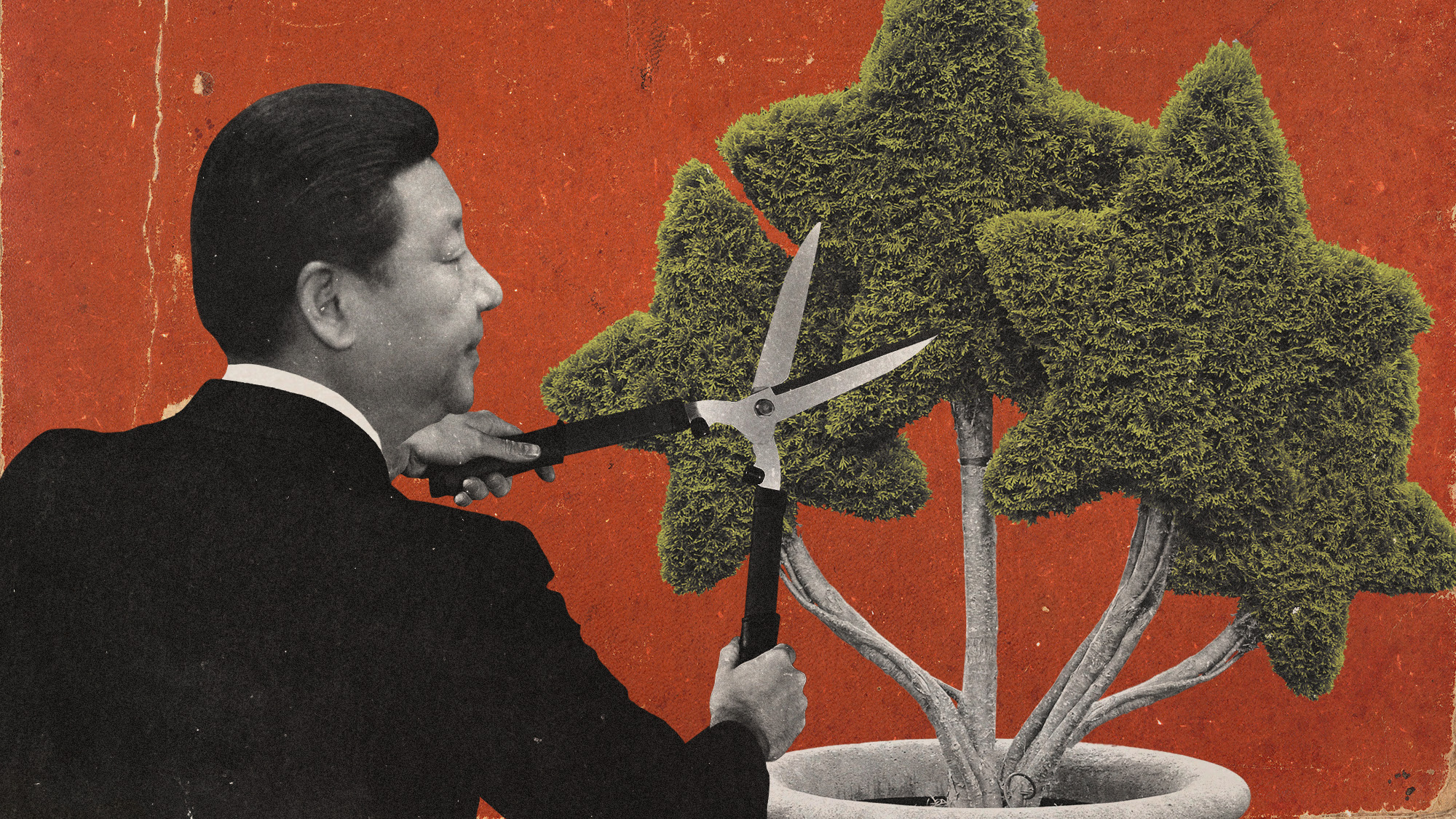
    Empty seats in the Great Hall: Xi’s ruthless party purge

    There is a deep “contradiction” at the heart of the Chinese state, said Han Yong Hong in Lianhe Zaobao (Singapore). “Despite the extraordinary concentration of power at the top,” Xi Jinping, all-powerful general secretary of the Chinese Communist Party and president of China for the past 13 years, “has still struggled to secure genuine loyalty” from leading figures in the bureaucracy beneath him. 

    Earlier this year, he railed against the “performative obedience” of party officials, describing in a caustic speech their many forms of “two-faced” behaviour. Some, he said, loudly proclaim their political loyalty while quietly defying orders; others are opportunists who resort to flattery and deception, but “stand ready to jump ship at any moment”. And it was revealing to find that the focus of last week’s party plenum in Beijing was not economic planning, as is customary – but discipline and loyalty. Behind closed doors, officials were told they will now face even tighter oversight and constraints over the way they carry out their duties, not least through more detailed performance reviews. 

    The internal machinations of a far-off bureaucracy may not seem significant, said The Indian Express (Noida). But “in a system where the party effectively subsumes the state”, the way the CCP governs itself can have far-reaching consequences. It will shape how China projects its power abroad, impacting global markets and the strategic calculations of other powers. 

    The subtext for this latest crackdown, said The Straits Times (Singapore), is that Xi’s long-running purges are not paying off. Millions of CCP members have been dragged into the autocrat’s “anti-corruption” drive in the past few years, and hundreds of senior officials and top generals have disappeared from view. Yet Xi seems anxious to shore up his authority even further. 

    Xi took out one of his biggest targets just two weeks before the gathering, continued Han Yong Hong. Former Chongqing mayor Huang Qifan, who earned the nickname “roly-poly toy” for his ability to be knocked about by political upheavals without being toppled, was taken from his home by the authorities on 10 October for “suspected serious violations of discipline and law”. Huang had stepped down as Chongqing mayor a decade ago, but his intricate network of political connections was clearly considered a threat by Xi. His removal will have served as a “stern warning to others within the political establishment” ahead of the Fifth Plenum. 

    A record 33 members of the CCP’s central committee were purged ahead of last week’s meeting, said Allegra Mendelson in The Telegraph – including Zhang Youxia, Beijing’s highest-ranking general, who was dismissed after a months-long corruption investigation; and a former party secretary from Xinjiang who was removed for “nepotism, bribery and paying for sex”. It left the “largest number of empty chairs” in Beijing’s Great Hall of the People since these plenums began. 

    These regular party meetings matter a huge amount to a leader like Xi, said James Palmer in Foreign Policy (Washington DC), because his power is almost entirely rooted in the CCP’s formal structures. That marks a sharp contrast with Mao Zedong, who was able to use the strength of his personality cult to bypass the formal structures and attack his enemies – as he did during the Cultural Revolution “when he mobilised the student-led Red Guards against the CCP’s established leaders”. 

    Xi’s personality cult is only surface level: “unlike Mao, nobody has ever cried singing Xi’s poems”. Nor does he have the personal networks to sustain his influence. Although he is the son of one of the founding fathers of the People’s Republic of China, he has not built close ties to other princelings,“choosing instead to curtail them”. Xi’s power stems almost entirely from his formal position and his ability “to control the CCP’s internal security services”. Without that, his authority would disappear.


    Briefing of the week

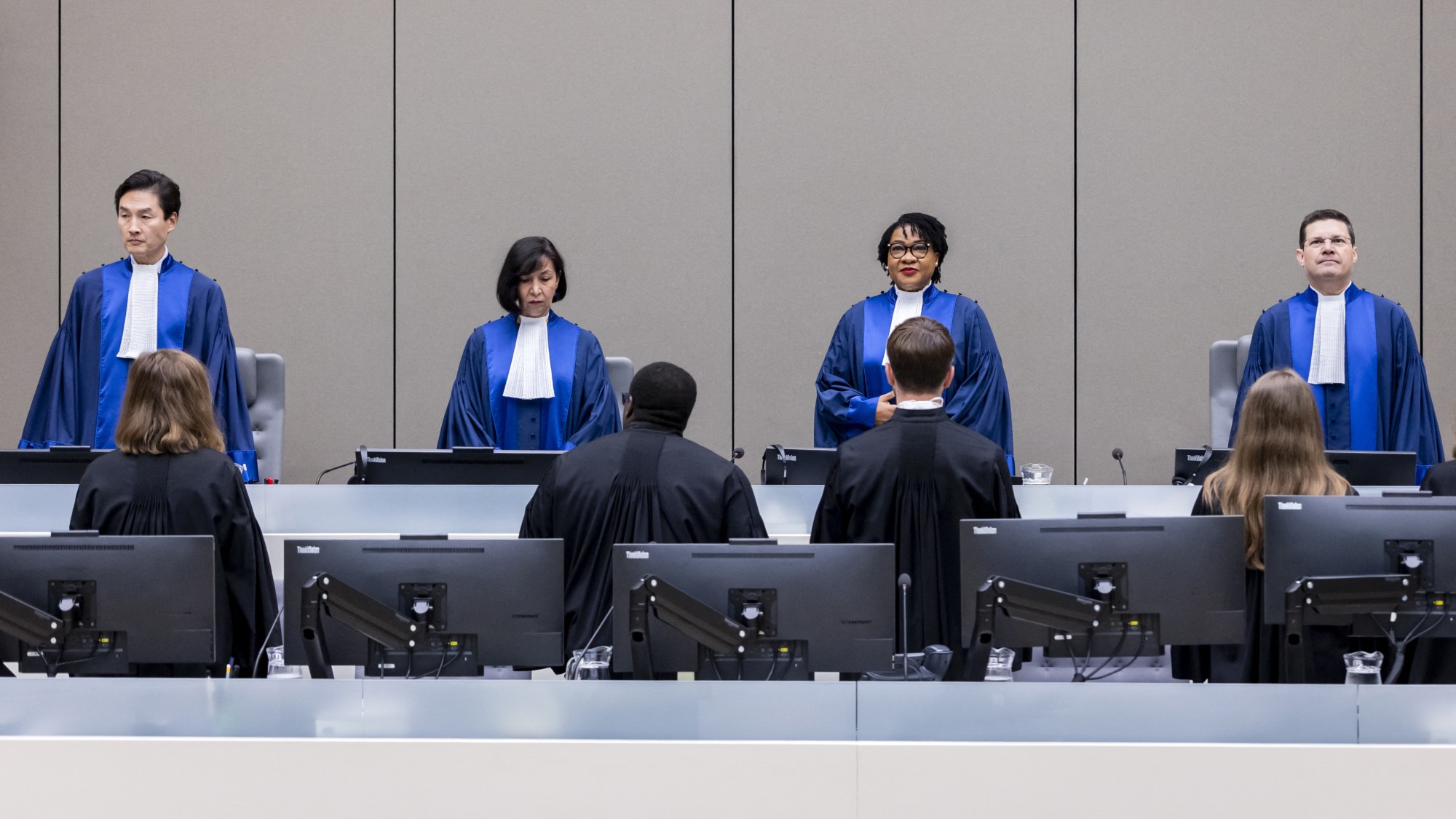
    America’s war on the ICC

    The Trump administration has imposed further sanctions on the International Criminal Court. Why?

    What’s going on? 
    Last month, new US sanctions on the ICC began to take effect. All US-linked companies that provide services to the court face penalties; it has had to find European alternatives to US software, and end its relationship with insurance company Axa, which does business in the US.

    The latest measures were announced on 9 October, but sanctions had already been imposed by the US on ICC officials: in Donald Trump’s first term (in response to an ICC probe into the actions of US soldiers in Afghanistan); and in 2025, after the court issued arrest warrants for Israeli Prime Minister Benjamin Netanyahu and former defence minister Yoav Gallant, over suspected war crimes in Gaza.

    The US regards this as an overextension of its authority. US Secretary of State Marco Rubio called the ICC a “rogue court”, and said that if US allies did not rein it in, America would “continue its campaign to dismantle the ICC, brick by brick”. 

    What exactly is the ICC? 
    It’s not part of the UN, though it was created by the Statute of Rome, at the UN General Assembly there in 1998. The International Criminal Tribunal for the former Yugoslavia and the International Criminal Tribunal for Rwanda provided blueprints for the ICC.

    Describing itself as the “court of last resort”, the ICC, based in The Hague in the Netherlands, exercises its power only when states are “unwilling or unable” to investigate serious crimes against international law. The Rome Statute lists crimes it can prosecute: genocide; crimes against humanity; war crimes; crimes of aggression; and offences against its own legal processes (i.e. perjury or contempt).

    There are 125 member states, but many others do not recognise its authority. More than 40, including China and India, never signed the treaty. Dozens of others, such as the US, Israel and Russia, signed the treaty but never ratified it. 

    What is its jurisdiction? 
    Usually, it can only exert authority over citizens of its member states or when a crime has been committed on member-state soil. For instance, although Russia is not an ICC state party, Vladimir Putin has been indicted for crimes committed in Ukraine, which has accepted the jurisdiction of the court since 2014. Palestine followed in 2015, allowing warrants to be served on Israeli ministers.

    Although the ICC respects the primacy of member states’ courts, it can step in if it deems they are failing. But it has no police or army: signatory states are obliged to enforce its rulings; and since the world’s three most militarily powerful nations are not members, this limits its powers. 

    Why is it criticised? 
    For many reasons. Its proceedings are slow: since its first case in 2006, there have been only 34 cases before the court, and 15 convictions. These have been disproportionately focused on less powerful countries. The first ICC investigation against a citizen from outside the African continent did not take place until 2016; and the court continues to struggle with its image as the enforcer of “white man’s justice”. The US human rights lawyer Reed Brody complained in 2024 that it had “never indicted a Western official”, preferring to focus on “powerless outcasts, or opponents of the West such as Vladimir Putin”.

    However, on the occasions when it has indicted Western allies, or investigated crimes potentially committed by Western nations, it is criticised for having a “globalist” left-wing agenda. 

    Why did the US never sign up? 
    President Clinton signed the treaty, but did not submit it to the Senate for ratification. Given the global deployment of US troops and the frequency of its use of force, the fear was that the ICC would make US officials and soldiers vulnerable, and would reduce its freedom of military action. The US has long rejected the ICC’s claim to jurisdiction over its citizens when they are in the territory of treaty states. President George W. Bush signed into law the American Service-Members’ Protection Act in 2002, declaring that it would take “all means necessary” to protect US military personnel and officials from ICC jurisdiction.

    However, until recently the US has selectively supported investigations, for instance into war crimes in Darfur and during the Syrian civil war, and – under President Biden – into Russian atrocities in Ukraine. 

    Why is Trump so opposed to the ICC? 
    It is part of his wider war on multilateral institutions, which has seen the US withdraw from the Paris climate agreement and the World Health Organization. The latest sanctions, however, seem to have had a particular trigger: they came hours after the Nobel Peace Prize was awarded to one of the ICC’s former judges. South African judge Navi Pillay, currently at the UN’s International Court of Justice in The Hague, was awarded the prize for lifelong contributions to international justice. The prize, said the Norwegian Nobel Committee, was a “message to those who are attacking, undermin[ing] ... the international rules-based system”. 

    Where does this leave the ICC? 
    Sanctions mean officials cannot enter the US, or use US-affiliated credit cards or use Microsoft platforms. Staff say that the sanctions have not hindered the court’s work, but this seems improbable. The EU, whose states are heavily committed to the ICC, has given clear support, saying that US attacks on the court and its officials are “simply not acceptable”.

    The EU last month awarded the court the Sakharov Prize for Freedom of Thought, commending its “important work in upholding international law and justice”. The campaign against it is likely to “further cement the reputation of the United States as an unhinged, domineering hegemon”, said Stewart Patrick of the Carnegie Endowment for International Peace. But opposition to the ICC is practically a consensus position on the US right.

    Running the court of last resort 
    The ICC employs more than 900 staff from roughly 100 countries, and conducts proceedings in English and French. It has 18 judges, selected from member states, and a separate office of the prosecutor. (Until July, the chief prosecutor was a UK lawyer, Karim Khan, who was ousted following accusations of sexual misconduct.) The ICC is funded from mandatory annual contributions from member states – the UK is among the largest contributors – alongside voluntary donations; its budget for 2026 is just under €200 million. 

    The court has its own detention centre within a Dutch prison outside The Hague, used for holding those awaiting trial. There are currently six inmates. Its most high-profile recent detainee is the former president of the Philippines, Rodrigo Duterte, who in March was arrested on charges of crimes against humanity committed during his 2011-19 “war on drugs” campaign. Those convicted are usually sent to prisons in other member states. Norway currently holds the Ugandan former child soldier Dominic Ongwen, found guilty in 2023 on 61 counts of war crimes and crimes against humanity. The Malian militant Ahmad al-Mahdi, convicted by the court of damaging monuments in Timbuktu, was imprisoned in the UK.


    Spirit of the age

    Three-quarters of the responses to a 2023 government consultation on disposable vapes came from AI bots. In total, 118,756 responses were submitted. Specialist software revealed that 90,835 of them had been submitted by bots, and of those, all but two opposed the plan to ban the sale of disposable vapes. These responses were found to have been sent at high frequency from a small number of IP addresses.


    VIEWPOINT

    The joy of Poundland

    “I love Poundland. Now on the brink of going bust, it is both the weirdest and the most wonderful shopping experience on the high street. I nipped into my local branch last week and the selection was as surreal as ever. There were batteries and bras, adjustable spanners and Pot Noodles, sweets and shampoo, reading glasses and pet food and something called All-Purpose Yacht Varnish. Modern retail is, we’re told, all about branding: people who own Le Creuset, or Nike, or Patek Philippe, are buying an identity. Poundland is a raised finger to all that. Shopping there says just one thing about you: ‘I want cheap stuff.’ Millions of us do.” 

    Stephen Bleach in The Sunday Times


    talking point

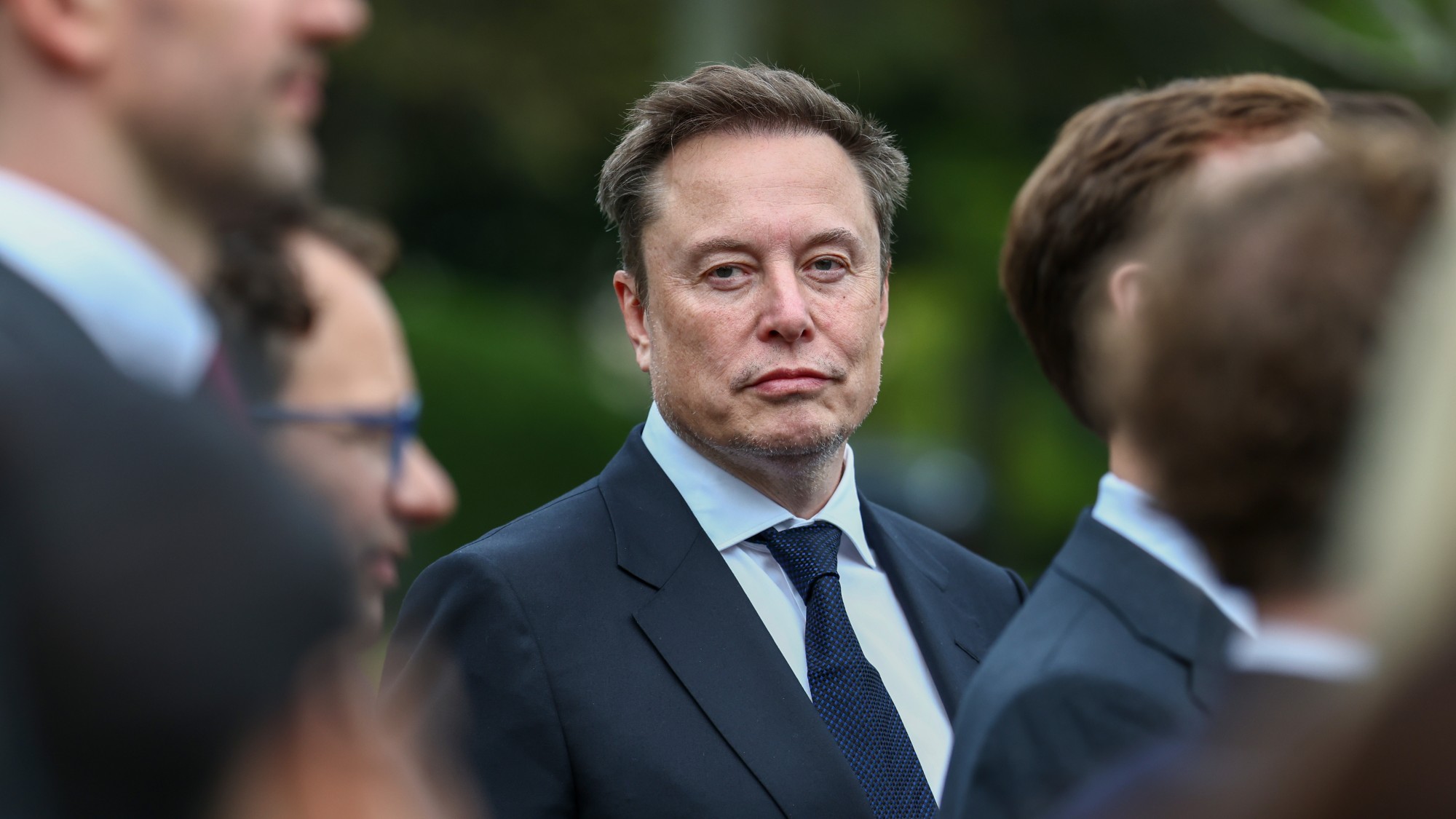
    Elon Musk: is he a threat to democracy?

    American politics has never had to deal with someone like Elon Musk before, said Andrew Egger on The Bulwark. There are other wealthy donors, of course, but none comparable to the world’s richest man. 

    Musk lavished about $450 million on Republican campaigns ahead of this week’s midterm elections – more than any single donor has ever spent on a US election cycle. Around $180 million of that went on unsuccessfully trying to stop the Democrat James Talarico winning the Texas Senate race. And Musk wasn’t just writing cheques. On his platform X, where “he has 241 million followers and owns the algorithms that ensure everyone sees his posts”, he relentlessly tweeted attacks on Talarico, calling him a creep who “will vote to take away your children and transition them”. 

    Musk’s efforts to swing the outcome may have failed, but they raised questions about his degree of influence, and put him in the Democrats’ sights, said Paul Blumenthal on HuffPost. Kendall Scudder, chair of the Texas Democratic Party, declared: “If you think retribution isn’t on the way, you’re mistaken.” 

    The left has “gone nearly berserk” in its hatred of Musk, said Victor Davis Hanson on American Greatness. Back in the days when he supported the Democrats (Musk voted for Hillary Clinton in 2016 and claimed he voted for Joe Biden in 2020), liberals loved him and proudly drove Teslas. But now that he votes Republican, he’s a Nazi who’s out to buy elections. Never mind that the billionaire George Soros and his foundations “have channelled well over half a billion dollars to left-wing candidates and causes in just the last six years alone”. 

    Democrats are itching to launch investigations into Musk, said Robby Soave in Reason. And some are now even talking of nationalising his companies, including Starlink, claiming that they’re too important to be left under his control. This is a “dangerous” notion. It would unfairly target Musk and send a message to other innovators that they’d better not be too successful or they’ll be punished. 

    Critics must keep their vengeful feelings in check, said Marian L. Tupy on The Dispatch. While Musk should of course be held accountable for any violations of the law or any harms caused by his decisions, opponents shouldn’t turn political disagreement into a reason to “obstruct legitimate enterprise”. Musk can be arrogant, vindictive and rude, but his “failings should be weighed against his contributions to human progress”. 

    If Musk stuck to technology, his “capricious, emotionally stunted man-baby” antics might not matter, said David Futrelle in The National. But he’s a political force: apparently willing to switch off Starlink with shocking effects on Ukraine; increasingly sceptical of democracy and willing to leverage his immense wealth to undermine it. The sums he’s spending to tilt elections are unprecedented, and he seems to believe his wealth puts him above the law. When the tech journalist Kara Swisher predicted in a recent podcast that the Democrats would soon be investigating Musk over his huge government contracts and his leadership of the job-slashing Doge agency, he reacted furiously. “Live by the sword, die by the sword,” he posted on X. “Sounds like Swisher really wants to go to prison.” 

    The good news is that Musk’s money couldn’t buy the Texas Senate seat, said Tim Murphy in Mother Jones – in part because Talarico’s campaign “was predicated on the idea that people like Musk would try to buy the seat”. Even so, this is a warning, said Perry Bacon in The New Republic. Democrats must restrict the vast and growing political power of billionaires, including liberal ones. “America can have an oligarchy or a democracy – not both.”


    It wasn’t all bad

    A rare beetle that oozes an oily substance from its knees has been spotted in Wales for the first time in nearly 60 years. The short-necked oil beetle has been driven close to extinction in Britain, owing to habitat loss. According to Natural Resources Wales, there are today only a handful of sites that have the mix of vegetation and insect life that it requires, and only about one in 10,000 larvae make it to adulthood. Populations of the stubby creature have been seen in Devon, on Salisbury Plain and in the Hebrides; and now the beetle has also been found to be breeding at a site in Pembrokeshire.


    People

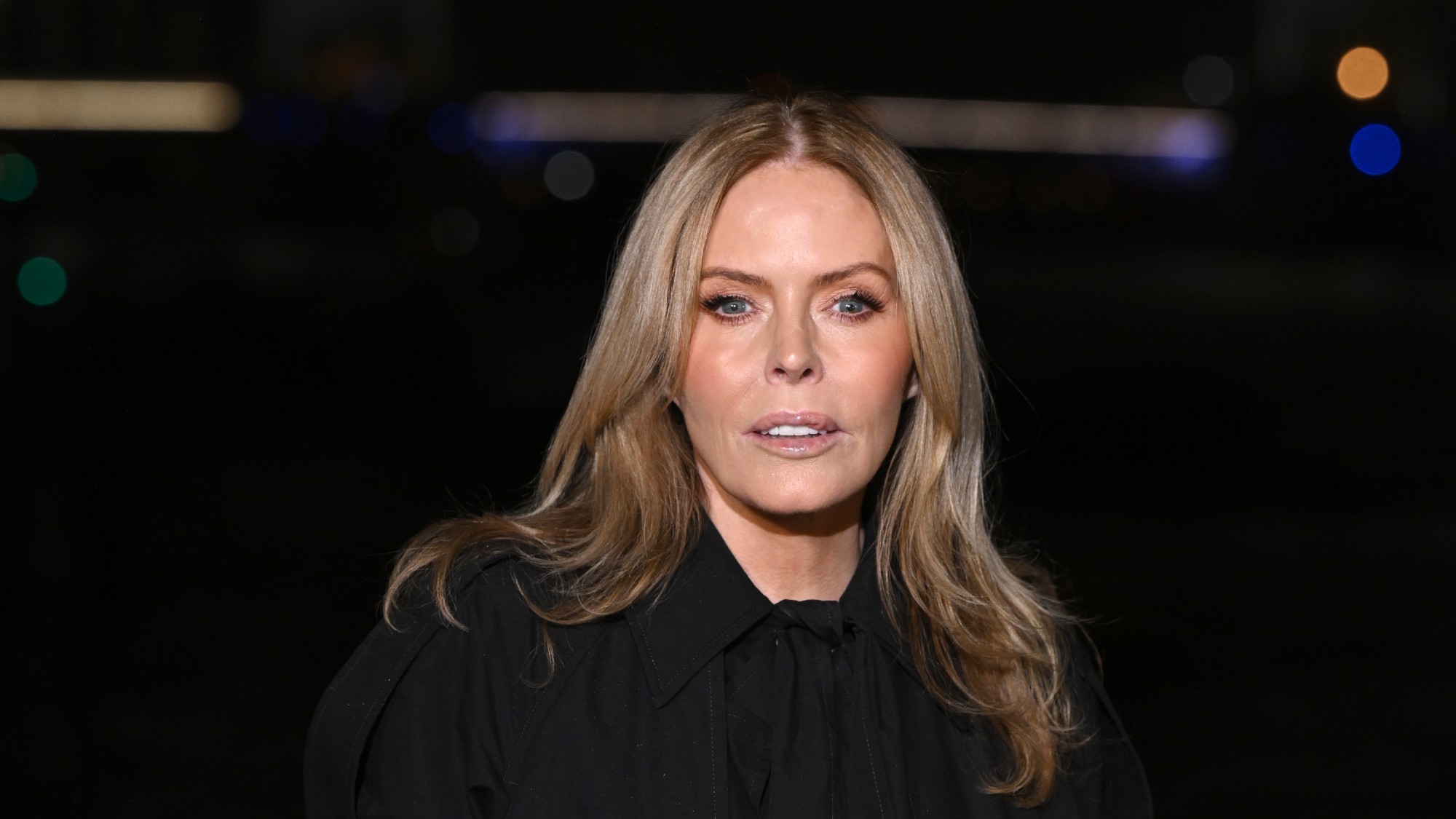
    Patsy Kensit 

    Over her five-decade-long acting career, Patsy Kensit has worked with some huge stars, says Julia Llewellyn Smith in The Times. The daughter of a former secretary and a Kray associate known as Jimmy the Dip, she landed her first major role in “The Great Gatsby”, when she was four, after a friend of her mother asked if she could make up the numbers at an audition. Cast as Mia Farrow’s daughter, she also shot scenes with Robert Redford. 

    Two years later, she made “The Blue Bird” with Elizabeth Taylor, who announced, “This little girl is going to be the biggest name in showbusiness.” Taylor was “so good with children”, says Kensit. “I just worshipped her. She had this presence and this entourage – if she wore red, they all had to wear something red. She had this diamond Richard Burton had given her as an engagement ring, she’d play ‘catch’ with it with me.” 

    At 17, Kensit won the role of Crepe Suzette in Julien Temple’s “Absolute Beginners”, alongside David Bowie, then 39. “He shook everyone’s hand on the first day and my teenage brain thought he was going to fall in love with me, but he just walked off. I was crushed,” she recalls. A few weeks later, however, Bowie appeared in her dressing room, and began brushing her hair. “He didn’t say a thing. Some people think it sounds creepy. I don’t at all. It was the most wonderful moment of my life.”


    Image credits, from top: Julia Wytrazek / Getty Images; Remko de Waal / ANP / AFP / Getty Images; Finn Gomez / Getty Images; Jeff Spicer / Getty Images
     

    Recent editions

    • Evening Review

      Will interest rates keep climbing?

    • Morning Report

      Brand convicted of rape and sexual assault

    • Evening Review

      Supermarket freezer hacks: is the UK next?

    VIEW ALL
    TheWeek
    • About Us
    • Contact Future's experts
    • Terms and Conditions
    • Privacy Policy
    • Cookie Policy
    • Advertise With Us
    • FAQ
    Add as a preferred source on Google Add as a preferred source on Google

    The Week UK is part of Future plc, an international media group and leading digital publisher. Visit our corporate site.

    © Future Publishing Limited Quay House, The Ambury, Bath BA1 1UA. All rights reserved. England and Wales company registration number 2008885.