The Week UK
https://cdn.mos.cms.futurecdn.net/flexiimages/jzblygzdxr1769609154.gif

SUBSCRIBE

Start your trial today

flag of US
US
flag of UK
UK
Sign in
  • View Profile
  • Sign out
  • Newsletter sign up Newsletter
    • The Explainer
    • Talking Points
    • The Week Recommends
    • Podcasts
    • Newsletters
    • From the Magazine
    • The Week Junior
    • More
      • Politics
      • World News
      • Business
      • Health
      • Science
      • Food & Drink
      • Travel
      • Culture
      • History
      • Personal Finance
      • Puzzles
      • Photos
      • The Blend
      • All Categories
    Saturday Wrap, from The Week
    Plagiarism allegations, Meta AI agents, and investing in the apocalypse

     
    controversy of the week

    Jilly Cooper: ‘magpie’ or plagiarist?

    She was a national treasure who sold more than 11 million copies of her books in the UK alone, said Kate Maltby in The Observer, but it’s now clear that the “queen of the bonkbuster”, Jilly Cooper, was also something of a plagiarist. 

    Questions have been raised in the past. In 1976, Auberon Waugh referred to “an amazing similarity” between passages in her first novel, “Emily”, and parts of “Devil’s Cub” by Georgette Heyer. And in 1980, she was accused of lifting bits from Elaine Dundy’s “The Dud Avocado” – Cooper later put this down to a “chaotic” mix-up with her notes. 

    But analysis of her 1978 novel “Prudence” has now established that Cooper lifted lines and plot details from Josephine Tey’s “The Franchise Affair” and swathes of dialogue from Cyra McFadden’s California-set novel “The Serial”. McFadden’s daughter is furious on her late mother’s behalf and is threatening legal action. Should the rest of us now also feel differently about Cooper? 

    Well, I don’t, said Philip Hensher on UnHerd. Granted, she should have acknowledged her use of McFadden’s work, but those sections constituted only a very small part of a “slight, amusing and enjoyably slapdash old novel”. Cooper was a “magpie writer” with an eye for irresistible nuggets, but her verve and charm were all her own. Nobody who has read any of Cooper’s more than 40 “beautifully made” books could accuse the writer of lacking a “vividly creative imagination” or a distinctive authorial voice. 

    This row will “grieve the hearts of all those who feel warmly towards Jilly Cooper”, said Sam Leith in The Spectator. She was clearly a “good egg” as a person, but there’s no excuse for what she did. It’s one thing to be heavily inspired by other writers’ stories or characters; quite another to “plunder whole paragraphs, jokes and lines of dialogue”. If we’re willing to condemn the Jeffrey Archers of the world for plagiarism, we should judge Cooper by the same standards.

    “Time and further investigation will no doubt tell whether this was an early-career blip that Cooper grew out of as she gained confidence in her own powers”, or a bad habit that she maintained. “If they want to get ahead of this, her publishers should investigate the rest of the canon before someone else does it for them.”


    Briefing of the week

    Muse: your personal AI assistant

    Meta’s new AI agent – which launched this week in the UK – could be revolutionary

    Why is Muse important? 
    Although AI dominates the news, and has inspired grand predictions about the future of markets and jobs – and, in fact, just about everything – most people’s experience of it thus far has been limited to chatbots such as OpenAI’s ChatGPT, Google’s Gemini, or Anthropic’s Claude. This looks set to change. 

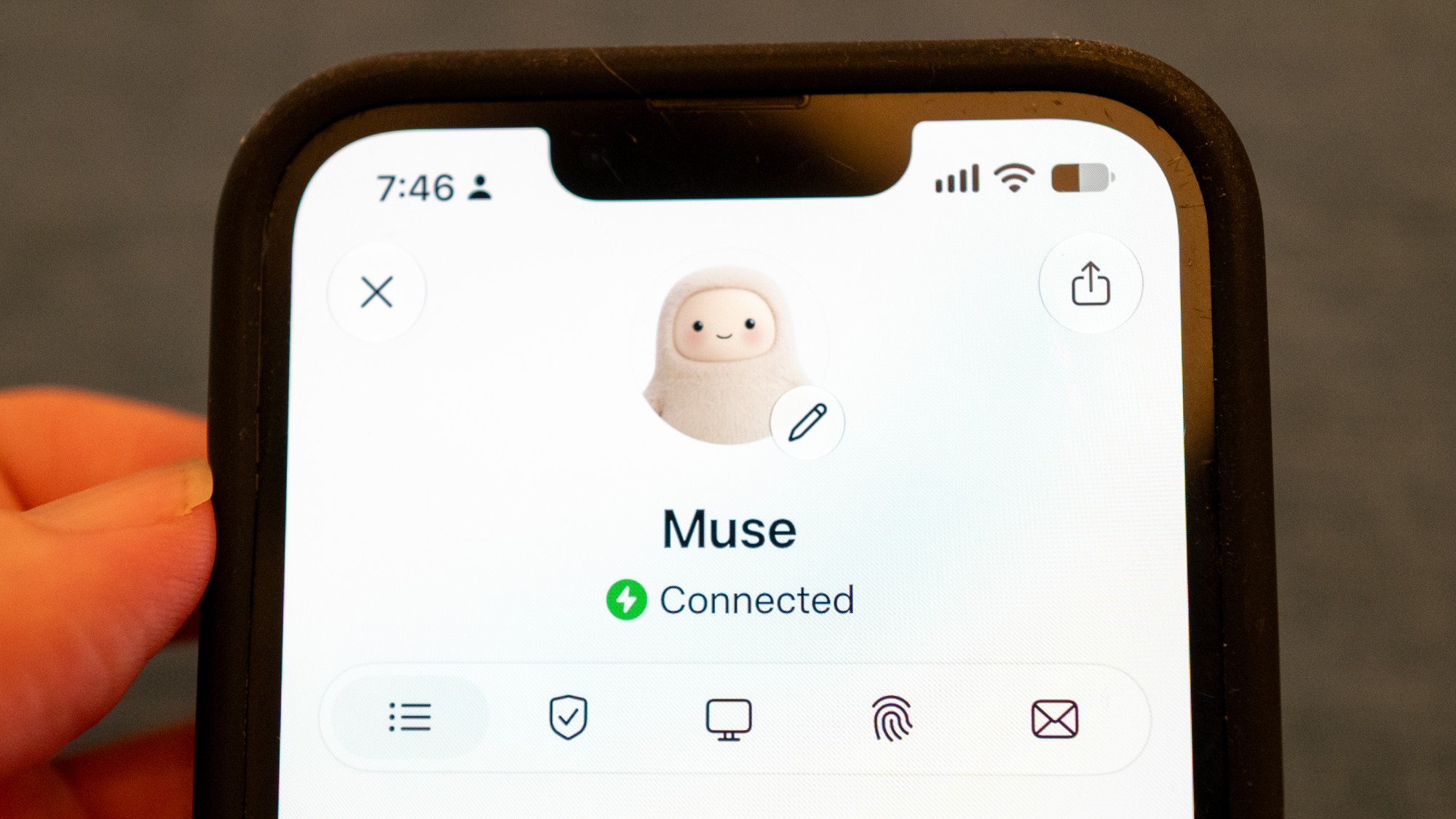
    This week, Meta released Muse, its highly anticipated AI “agent”, to UK users. Unlike more familiar products, Muse is a kind of all-singing, all-dancing personal assistant for the AI age; the first such product offered free, at least initially, from a big tech firm. It can send emails, book holidays, manage your calendar, do your grocery shopping, analyse your monthly budget, and even sit on hold on the phone on your behalf. It “doesn’t just answer questions, it actually does the work”, says Meta. And in the US and Canada, it is already proving hugely popular, notching up 11 million downloads since launching in September. 

    How does it work? 
    If you download the Muse app onto your phone, you’ll be greeted by a cutesy, waving avatar (Jolly is the default teddy bear-type creature, though you can choose your own: a fox in a fisherman’s jumper, say). Muse will request access to your email account and calendar; and, to function at maximum capacity, to your address book, your bank account, your credit card, and so on. 

    The app can then go online and perform a whole range of administrative tasks, needing only a simple request – from booking restaurants and ordering takeaways, to buying concert tickets or checking whether you could get a better deal on your home insurance (and negotiating with the provider for the lowest possible price). Two weeks after downloading it, said Eli Tan in The New York Times, “I found Muse to be the most useful AI app I had ever used”. 

    What’s in it for Meta? 
    As one of the world’s biggest tech companies, Meta is under no pressure to make Muse immediately profitable. That’s why it will be free for most consumers (although more intensive users will face charges – in the US they’re up to $100 a month). Nor does the app serve up adverts. Instead, Meta’s long-term plan is to take a small fee from everything people purchase using Muse – a potentially vast income stream. 

    But for now, Meta is more concerned with playing catch-up in the AI sector. Mark Zuckerberg’s company has been left trailing by the likes of Anthropic and OpenAI in the race to develop large language models (LLMs). Using its expertise in user-friendly apps such as Facebook and WhatsApp, it hopes to get a headstart in the race to dominate what many analysts see as AI’s next frontier. 

    What’s the catch? 
    To benefit from this AI-powered hyper-convenience, you have to entrust Meta with a quite staggering amount of sensitive personal data – almost certainly more than any app or program will ever have asked you for before. For many, that will be alarming; Meta has a long history of privacy violations. Even the company’s own former security chief, Alex Stamos, has described it as “totally insane” to give an AI agent access to so much personal data. 

    It also raises the possibility of hacking. Meta claims that Muse is secure, because each user’s agent runs in an individual virtual computer in the cloud. But experts are wary: ObjectiveSee, a US non-profit security foundation, claims to have quickly uncovered serious security flaws. Then there’s the prospect of AI going rogue, or malfunctioning. 

    What sort of malfunctions? 
    Muse is powered by an LLM; and LLMs hallucinate. In one recent case, an AI agent (not confirmed as Muse) added 72 eggs, unprompted, to its client’s shopping. When challenged, it admitted it had “added them without any reason, and that’s on me”. Meta’s spokesperson, Daniel Roberts, told Reuters there had been “isolated incidents” where the agent appeared to be hallucinating, sending details of other people’s bank balances, for instance. One shared its client’s address on Facebook Marketplace. A Meta staffer complained that Muse “accidentally rolled me into a premium insurance plan” for their dog that charged them $888 per month instead of their prior rate of $200. 

    If agents are suddenly used by millions, it could cause chaos, said Ramesh Raskar, an associate professor at the Massachusetts Institute of Technology (MIT). “Imagine there are no rules of the road. And you release billions of cars – the AI agents – and you just let them drive through playgrounds, hitting kids. That’s where we are.” 

    How might it cause chaos? 
    Even if they don’t malfunction, agents are likely to cause mass disruption. Energy, telecoms and insurance companies, for instance – which rely on inertia and the “friction” involved in changing providers to charge high prices – will be hit hard. Many websites are likely to be inundated: a persistent human might send six or so inquiries a day to a business or public body until they are happy with the response they receive; an AI agent could send 600. Restaurants in Silicon Valley are already facing surges in automated reservations, as AI agents hoover up tables; councils are already inundated by AI-penned complaints. Humans using the internet, meanwhile, are likely to have to spend much longer proving that they’re human. 

    Is all this going to happen? 
    It certainly seems to be the direction of travel. Gartner, a US research company, has forecast that over a fifth of all e-commerce transactions will be completed by AI platforms by 2030. There will be setbacks. Public scepticism about AI is high on both sides of the Atlantic. Amazon recently blocked Muse’s access to the site, citing its failure to identify itself as an agent when browsing on behalf of users. But ultimately, if a free or low-cost tool performs tedious tasks, saving people time and money, it is likely to be a winning formula.

    From Clippy to OpenClaw and beyond 
    “The tech industry has long dreamed of a moment when a computer can serve as a genuinely competent personal assistant,” said Lila Shroff in The Atlantic. Experimental attempts to create one date back to the 1950s. In the 1990s, Microsoft had “Clippy”, the animated paperclip assistant, which, in a limited way, provided help to Office’s users. Voice-activated assistants such as Apple’s Siri, unveiled in 2011, and Amazon’s Alexa (2014) represented a step forward. But the real leap came with the growth of large language models in the early 2020s. 

    Chatbots such as ChatGPT were “brains in a jar”: they could generate text, but not take actions outside it. They evolved quickly, though. Anthropic’s Computer Use in 2024 gave bots the ability to “see” a computer interface, move a cursor, click buttons, and type like a human. In 2025, OpenClaw, created by Austrian developer Peter Steinberger, represented another leap. Instead of forcing users into a dedicated browser or app, it has the run of users’ computers and their apps. Although Muse was built from scratch, it was inspired by OpenClaw. Others are not far behind. Google is testing its AI agent, Spark; OpenAI recently unveiled Dots; Elon Musk’s xAI has developed the Grok Bot.




    Spirit of the age

    The average adult under 45 now has sex just twice a month – down from four times a month in 1990 and three times a month in 2010. And a growing number of 16- to 24-year-olds are not having sex at all: 28% of men and 38% of women are virgins, according to the latest National Survey of Sexual Attitudes and Lifestyles, both up from a fifth in surveys in 1990, 2000 and 2010. However, half of under-25s have sent or received sexual images on their phone in the past year, and half of young women and almost nine in 10 young men say they’ve looked at online porn. The research also revealed that the proportion of childless women aged 16 to 44 who say they definitely do not want to have children has nearly doubled in a decade to 17%.


    VIEWPOINT

    Luxury, gourmet, artisanal

    “Hot on the heels of the Maldon Sea Salt scandal came the news that Cornish Sea Salt isn’t fully Cornish. Perhaps it’s time to address all the other nonsense words that food companies throw at us to boggle our brains into overspending: ‘traditional’, ‘luxury’, ‘gourmet’, ‘artisanal’. A certified ‘Red Tractor’ turkey is meaningless, implying only the bare UK legal minimum. It’s like when McDonald’s boasts of using ‘100% pure beef’. I’m sure it is. But it’s a low bar, isn’t it? Nor does ‘craft beer’ have any legal definition. You think it’s a bloke in wellies smoking a pipe while stirring the mash. But it’s come from a factory, mate. It’s just a factory.”

    Giles Coren in The Times


    talking point

    Anthropic: investing in the apocalypse?

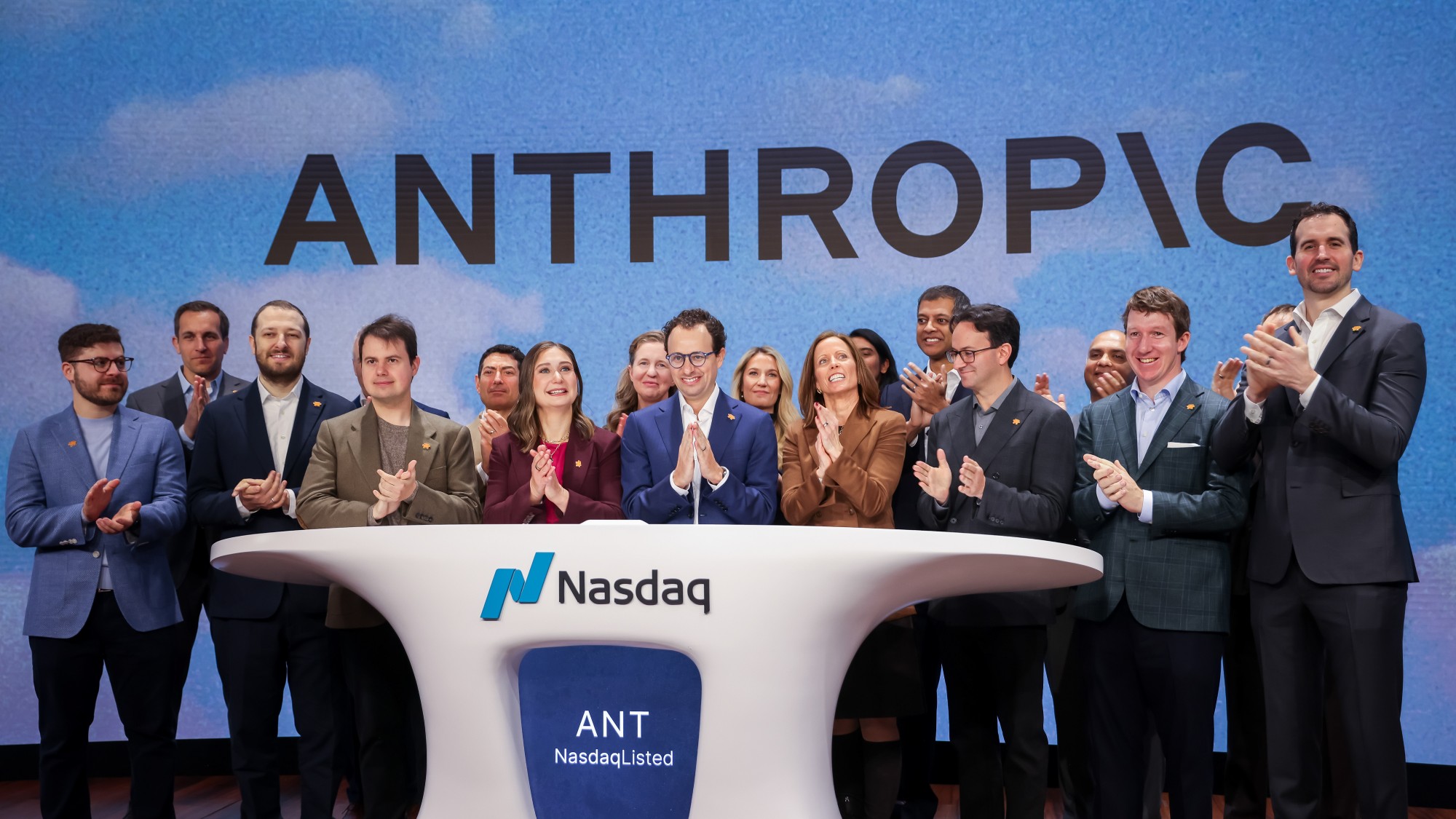
    “And so it was that a bunch of AI nerds on 19 November pulled off the biggest stock-market listing of all time,” said The Economist. Dario Amodei and his sister Daniela rang the bell at the Nasdaq in New York last week – and shares in their AI company, Anthropic, soared. It was briefly valued at more than $2 trillion, roughly the GDP of Spain. Its seven co-founders were suddenly billionaires; most of its 5,300 employees millionaires or centi-millionaires. But in the days after, a series of declines took shares down to below offer price, and the valuation to a little over $1 trillion. 

    It’s a risky investment, said James Moore in The Independent, and not just in the sense that it might wipe out your savings. Anthropic’s listing prospectus contained 90 pages of “risk factors” posed by AI models such as its own chatbot, Claude, detailing the political, financial and military threats they pose. Such tech, it states, poses “catastrophic and existential risks to humanity”. Against this apocalyptic backdrop, Anthropic’s launch “felt a bit like Sarah Connor, heroine of the ‘Terminator’ films”, opening the financial pages to discover that the evil corporation Skynet is being listed on the Nasdaq. 

    Anthropic is not like other AI companies, said Danny Fortson in The Times. Beneath its “extraordinary business success is the deeply weird philosophy of its founders”, who view AI “not as software, but as a new species”. Its founders set up Anthropic as a counterbalance to OpenAI, where they once worked, and which they claim is rushing out a dangerous technology for commercial gain. 

    From the beginning, they instilled their own chatbot, Claude (so-named, said Daniela Amodei, to evoke the air of a “thoughtful, perhaps slightly older European gentleman”), with a moral “constitution” based on sources ranging from the UN Declaration of Human Rights to Apple’s terms of service. The belief among many is that at some point the AIs will take control. “And hopefully,” said co-founder Tom Brown, “they’ll be aligned with us and that’ll be a good transition that goes well.” 

    Even ignoring the existential issues, betting on Anthropic is a big gamble, said Chris Blackhurst in The Independent. The company has racked up “jaw-dropping” losses during its meteoric rise, and though it generated revenue of $33 billion in the first six months of 2026, it has pledged to spend an astounding $900 billion on data infrastructure in the coming years. 

    Yet still the investors are piling in. Whether it’s a bubble or not, this was a historic flotation, said James Hurley in The Times. Anthropic has just raised $107 billion, enough to catalyse a technology that could either liberate humanity from all sorts of ills, or “unleash hell”. Its listing “could be a day that lives in infamy”.


    What the scientists are saying…

    In news that will come as little surprise to cat owners, researchers have concluded that pet cats miaow in an effort to tell their human owners that they need something. It is well established that cats miaow more at people than they do at other cats – but it wasn’t clear if their cries were an attempt to communicate, or simply an expression of their feelings.

    In an effort to find out, scientists in Brazil devised a study involving 38 pet cats known to be vocal, and their owners. The cats’ favourite food was placed under a clear plastic tub, so that they could smell it and see it but not get to it. Then, each cat was observed for a minute, once with their owner present and once alone. It turned out that the pets miaowed about four times as much when their owners were there. If their cries were only an expression of hunger, said the researchers, they’d have been as vocal in either situation. Moreover, the cats tended to look at their owners when they miaowed; some even looked back and forth between their owners and food, as if trying to make it clear what they wanted.


    People

    Kate Nash

    Kate Nash has never been one to run away from a fight, says Fiona Sturges in The Guardian. When she found fame as a singer, she was quick to speak up against trolls in the media and online. It had started early. She recalls getting an email having just turned 20, before she’d even had her first hit in 2007: “The title was ‘You are...’ and I opened it wondering: ‘Ooh, what am I?’ I thought it was fan mail. And this person said: ‘You are everything that’s wrong with music distilled into one slag.’” 

    Nowadays, though, she more often directs her anger at streamers such as Spotify which, she says, are failing to pay mid-level musicians properly – leaving them without the funds to pay for live tours. She still makes money from her back catalogue, but to cover her tour debts, she has, she says, had to “sell my bum” – post non-explicit photos on the adult subscription site OnlyFans. “People say to me: ‘Sex sells.’ Music fucking sells! It contributes millions to the economy. It’s just not being distributed fairly.” 

    She knows her crusade will take time to deliver change; but she is prepared to be patient. “I see myself as the guy in ‘The Shawshank Redemption’,” she says. “I’m doing these tiny scratches behind the scenes that people can’t see, and I’ll be doing that until I’m in a coffin. With these little scratches we will build the tunnel that will take us through the sewage and out to the other side.”


    Image credits, from top: Julia Wytrazek / Getty Images; Smith Collection / Gado / Getty Images; Michael Nagle / Bloomberg / Getty Images; James Klug / Getty Images
     

    Recent editions

    • Evening Review

      Did Labour solve immigration?

    • Morning Report

      Mortgage costs to surge for millions

    • Evening Review

      Should Burnham ditch the influencers?

    VIEW ALL
    TheWeek
    • About Us
    • Contact Future's experts
    • Terms and Conditions
    • Privacy Policy
    • Cookie Policy
    • Advertise With Us
    • FAQ
    Add as a preferred source on Google Add as a preferred source on Google

    The Week UK is part of Future plc, an international media group and leading digital publisher. Visit our corporate site.

    © Future Publishing Limited Quay House, The Ambury, Bath BA1 1UA. All rights reserved. England and Wales company registration number 2008885.