The Week The Week
flag of US
US
flag of UK
UK
https://cdn.mos.cms.futurecdn.net/flexiimages/jzblygzdxr1769609154.gif

SUBSCRIBE

Try 6 weeks free

Sign in
  • View Profile
  • Sign out
  • The Explainer
  • Talking Points
  • The Week Recommends
  • Podcasts
  • Newsletters
  • From the Magazine
  • The Week Junior
  • More
    • Politics
    • World News
    • Business
    • Health
    • Science
    • Food & Drink
    • Travel
    • Culture
    • History
    • Personal Finance
    • Puzzles
    • Photos
    • The Blend
    • All Categories
  • Newsletter sign up Newsletter
  • The Week’s Saturday Wrap
    Political wedges in the WNBA, America trails China in EV race, and the politics of motherhood

     
    controversy of the week

    WNBA: Can the league survive the culture wars?

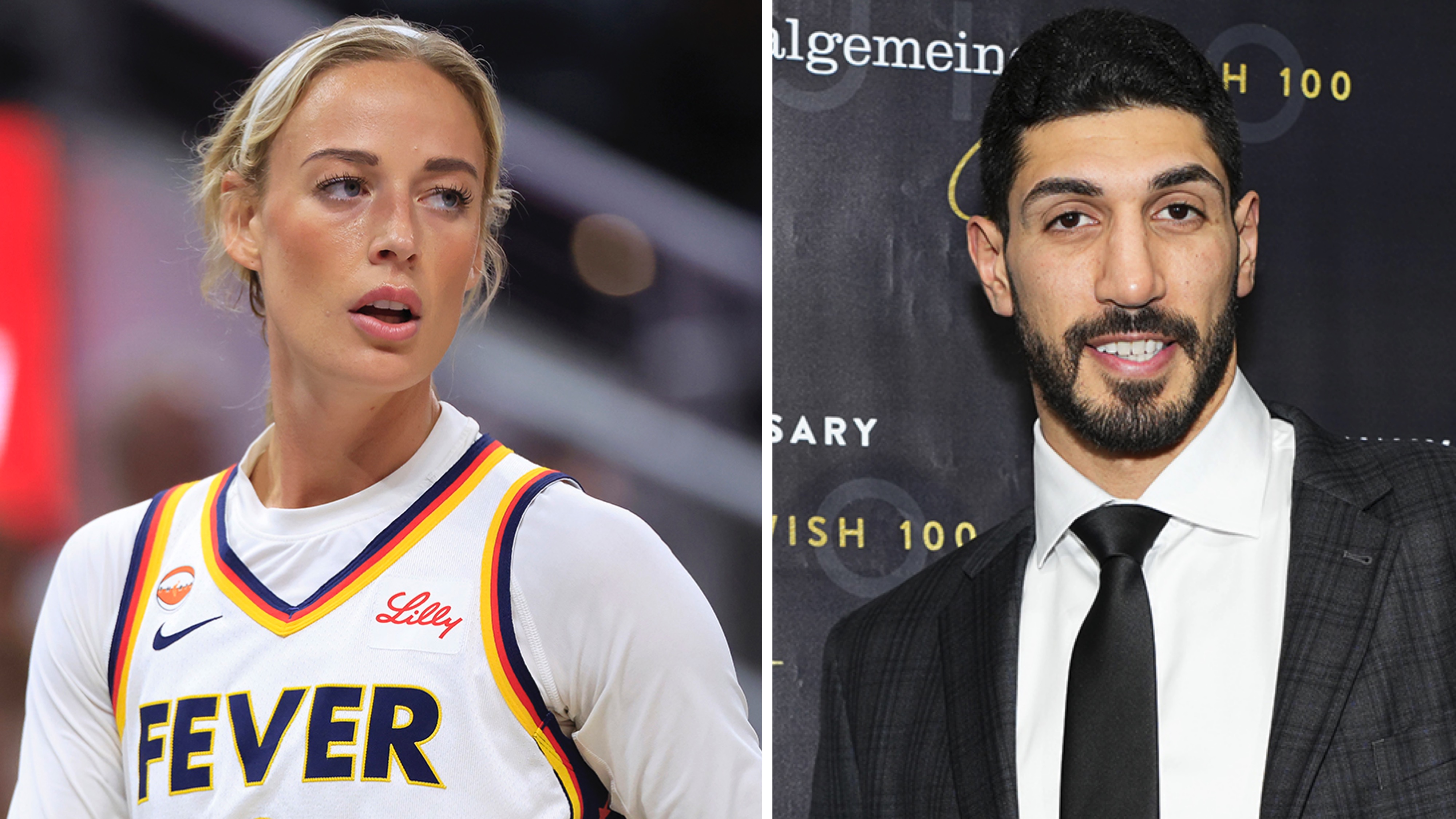
    “Sports are supposed to be a diversion,” said Candace Buckner in The Athletic, but the Women’s National Basketball Association suddenly feels “less like a sport and more like a societal powder keg.” When the Indiana Fever in 2024 drafted Caitlin Clark, the leading scorer in NCAA history—male or female—the league’s audience exploded, but so did the culture war nastiness. Clips of the straight, white Clark being clobbered by Black opponents, in a league where 25% to 35% of players are publicly LGBTQ+, became a staple of rightwing social media. Then, this summer, Clark’s teammate Sophie Cunningham became her on-court “bodyguard” and a social media phenomenon in her own right. Cunningham recently told ESPN that society should “protect young girls” from playing sports or sharing lockers with “biological men,” and the already toxic “cesspool” of WNBA discourse became instantly more poisonous. Pro- and anti-trans activists held dueling rallies outside Fever games. But now two burly ex-NBA players, Enes Kanter Freedom (6-foot-10 and 250 pounds) and Royce White (6-foot-8 and 270 pounds) have “mockingly” threatened that if the league doesn’t ban male-born players, they’ll declare themselves women and enter next year’s WNBA draft. With attendance and TV viewership at record highs, this “should have been a history-making season for the WNBA,” said Rachel Bachman in The Wall Street Journal. Instead, the season has “spiraled into absolute chaos,” amid racial resentment, feuds, and on-court physical fights. 

    Kanter and White are “attention-starved” trolls who can safely be ignored, said Mike Wise in MS.now. The WNBA has never had a male-born player, and with about 3 out of 4 Americans agreeing with Cunningham, probably never will. Cunningham isn’t a troll, said Kase Wickman in Vanity Fair. But the blonde, beautiful social media star likes to seek attention, as she demonstrated with her viral “pointing” meme after a scuffle with a Black player in June, which gained her throngs of new followers and lucrative endorsement deals. By coming out against trans players, Cunningham became “MAGA’s favorite women’s basketball player.” 

    Don’t blame Cunningham, said Joe Nocera in The Free Press. The league could have avoided its “trans mess” just by following the lead of the Olympics or the Women’s Tennis Association, whose rulebooks now clarify that “woman” means “biological woman.” Because that would anger its progressive and LGBTQ+ fan base, however, WNBA executives are responding to the firestorm with meek, meaningless calls for “inclusivity.” Their cowardice also explains why the league’s “race issue isn’t going away.” When the Chicago Sky’s DiJonai Carrington blamed “white privilege” last week, after being ejected for a flagrant foul on Cunningham, the league stayed silent. Unless it can “develop a spine,” the WNBA will remain a “piñata in the culture wars.” 

    The good news, said Helen Lewis in The Atlantic, is that all this drama is a by-product of the league’s astonishing success. Since Clark arrived, TV viewership has doubled and TV revenues have quadrupled to $200 million. Players’ salaries have soared. “Any emergent sports league” has growing pains, said Will Leitch in The Washington Post. The WNBA can survive the culture wars so long as the quality of the product—the actual basketball—remains high. If you haven’t seen a game lately, the players’ skills are better than ever, and the WNBA’s “product is magnificent.”


    VIEWPOINT

    There’s no reason to split up childhood vaccines

    “One of the arguments people have or concerns they have is some sort of immune overload from getting too many vaccines at once. To put that into perspective, a century ago, a child got one vaccine—the smallpox vaccine—which carried about 200 viral proteins. The entire vaccination schedule today carries fewer viral proteins than that, and it’s because they’re much more pure and targeted. In addition, young children will typically get four to six fevers a year from ordinary infections. Each one of those is a bigger challenge to the immune system than the several shots you might get in a well-baby visit.”

    Céline Gounder, infectious-disease physician, in New York magazine


    briefing

    The big stall

    America has fallen far behind China in the electric vehicle race. Can it catch up?

    How big is China’s EV industry? 
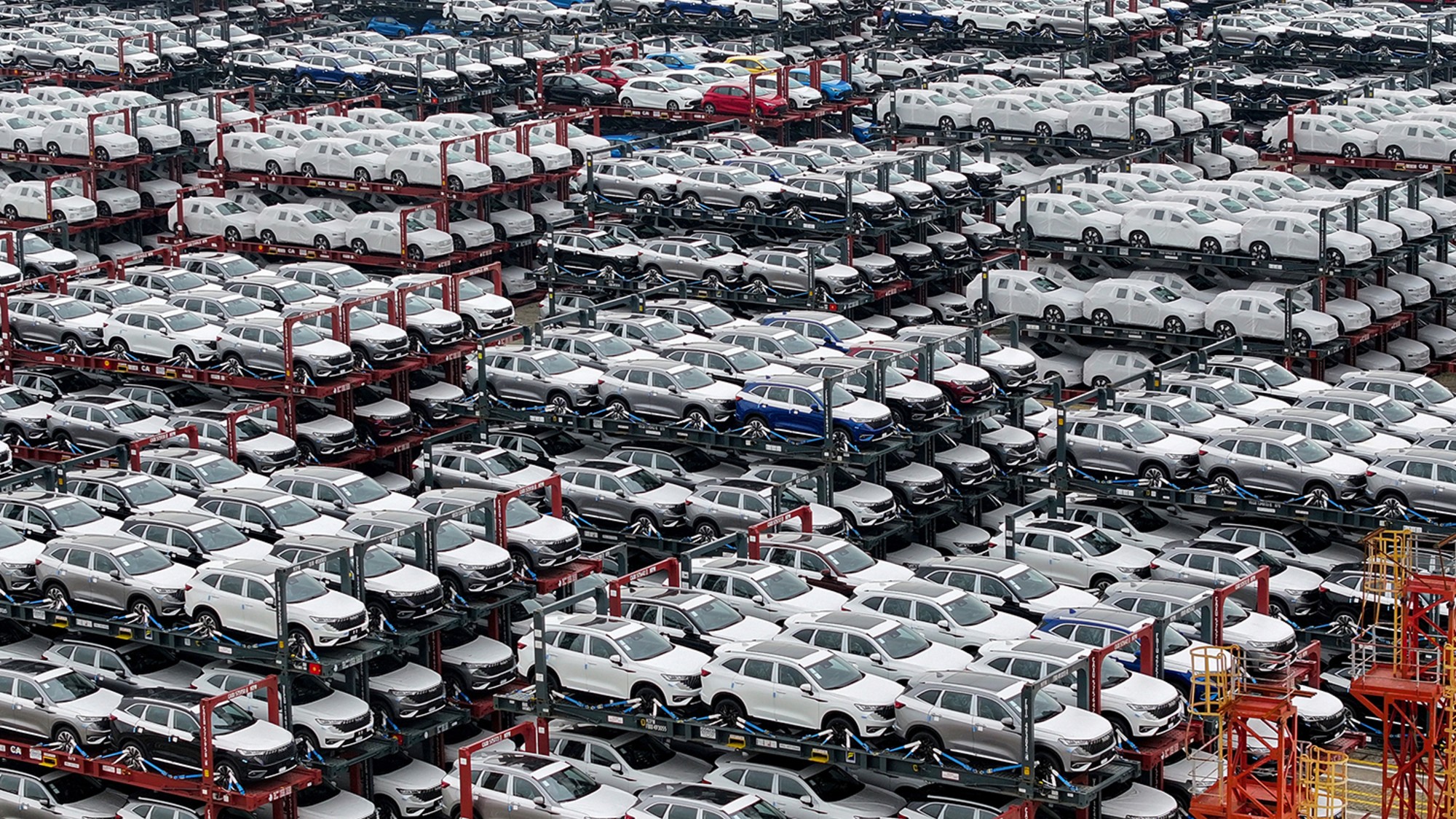
    Chinese automakers last year made nearly 16 million electric vehicles, a whopping 75% of all EVs sold globally. The U.S. produced only 5%. More than half of new cars sold in China are now EVs—here it’s about 10%— and those vehicles are in heavy demand around the world: Tariffs of up to 127.5% have kept them out of the U.S., but 80% of EVs sold in Latin America are Chinese, as are 75% in Southeast Asia, and 57% in Australia. It’s a staggering turnaround for China, which in 2000 made only 2 million cars a year, all of them gas-powered. Today, Chinese EVs impress with their affordability—budget models run as low as $7,800, compared with $29,000 for a Chevrolet Bolt in the U.S.—reliability, battery range, and luxury features that come as standard, such as massage chairs, big screens, and built-in refrigerators. With every major nation except the U.S. shifting from gas- to battery-powered cars, a move that’s been accelerated by the Iran war driving up oil prices, China’s dominance is expected to grow. “We’ve reached a genuinely existential moment” for U.S. automakers, said Stephen Ezell of the Washington-based Information Technology and Innovation Foundation.

    How did China become an EV power? 
    It began in 2001, when Beijing realized EVs would help it “solve multiple problems at the same time,” said China-based auto analyst Bill Russo: “energy security, environmental pollution concerns, and industrial competitiveness.” It pumped more than $230 billion into the EV sector over 15 years, funding new automakers and new battery and charging technologies. Beijing also offered EV buyers rebates and tax incentives, constructed the world’s largest network of public charging stations, and helped automakers build vertically integrated supply chains. BYD, which overtook Tesla last year as the world’s top EV producer, mines its own lithium, makes its own batteries and semiconductors, and even exports cars on its own ships. Recognizing the challenge, President Barack Obama in 2009 launched a $2.4 billion grant program to boost EV development in the U.S.; a $465 million loan helped Tesla get its breakout Model S to market. Under President Joe Biden, the federal government put $7.5 billion toward charging networks and offered billions more in incentives for buyers and automakers. Many of those efforts were scrapped following President Trump’s return to the White House last year.

    What did Trump do?
    Calling climate change a “con job,” Trump signed into law a GOP mega-bill that nixed a $7,500 tax credit for new EV buyers. His administration has dismantled clean-air regulations and fuel economy standards that spurred carmakers to move toward EVs; it has also challenged states’ authority to set their own tougher standards. “You’re not going to be forced to make all those cars,” Trump said last year, while signing a law aimed at killing rules from California, which would phase out the sale of new gas-only cars by 2035. EV sales had already stalled in the U.S. before those actions, with potential buyers discouraged by high prices and concerns over range and charging access. But the withdrawal of federal support caused the market to slump, with new EV sales plunging 27% year over year in the first three months of 2026. 

    How have U.S. automakers responded? 
    Starting in December, the so-called Big Three— Ford, GM, and Stellantis, owner of Chrysler and Jeep—announced more than $52 billion in write-downs on EV-related losses, and set about what GM called a “strategic realignment.” The companies canceled planned EV models; stopped production of current ones, such as Ford’s F-150 Lightning pickup; and repurposed their battery plants for other uses, including making batteries for data centers. The retreat has alarmed industry analysts, who say U.S. automakers are dooming themselves to irrelevance by doubling down on gas-guzzlers.

    What’s at stake? 
    The U.S. auto industry generates $1.2 trillion each year, nearly 5% of GDP, and directly employs some 7.4 million Americans. It indirectly supports millions more jobs. To safeguard the industry, Republican and Democratic lawmakers have rallied behind legislation that would ban companies with more than 15% Chinese ownership from selling cars in the U.S. “We are not competing on a level playing field when China subsidizes its manufacturers” and “uses slave labor,” said Rep. Debbie Dingell (D-Mich.). Some analysts call protectionism a losing cause. They suspect public demand for Chinese cars will ultimately prove too great, especially as they proliferate in Mexico and Canada, which in January began letting in up to 49,000 Chinese EVs annually. That same month, Trump expressed openness to letting Chinese firms make cars here so long as they use American workers and inputs. Proponents say that approach would light a fire under U.S. carmakers and build their knowledge and capabilities while driving up consumer demand for EVs.

    Are U.S. carmakers ready for that? 
    Not yet. Some are developing smaller, cheaper EVs they hope will challenge Beijing’s offerings; Ford is rolling out a $30,000 midsize pickup EV next year. The Detroit giant is also trying to grow its EV skills by partnering with Chinese firm Geely on models for the European market, while attempting to strengthen its operations here at home. Ford is pitching the Trump administration on a plan that would let Chinese automakers into the U.S. only through joint ventures in which an American firm would hold the controlling stake. That setup would mirror the deals Beijing struck decades ago with Western automakers eager to enter the Chinese market. Ford CEO Jim Farley, who in 2024 said he’d been driving a “fantastic” Xiaomi SU7 sedan for six months, believes U.S. firms have no choice but to learn from China. “You don’t become fit like the rest of the Chinese,” he said, “you aren’t going to be around much longer.”



    Only in America

    A Texas man was jailed after saying “bullshit” in a public meeting. Commissioners in Tarrant County were debating whether to cut the number of polling stations for the midterm elections when, during the public comment phase, E.J. Carrion denounced the plan as “extremist bullshit.” Carrion was later arrested, briefly jailed, and now faces charges that he “obstructed or interfered” with the meeting. His lawyer said Carrion’s arrest “should alarm everybody.”


    It wasn’t all bad

    Mark Waters jumped into action when he noticed women and young children having to walk to the bus stop along a busy road while pressed against overgrown grass that was “taller than the kids,” he said. Rather than hoping somebody else would take care of it, the Houston man grabbed his riding mower and cleared the area himself. He said he’s willing to mow other areas if safety is an issue. “Our job is to protect the women and the children,” Waters said, “and that’s what I’m going to do.” 


    talking points

    Fertility: AOC’s frank announcement

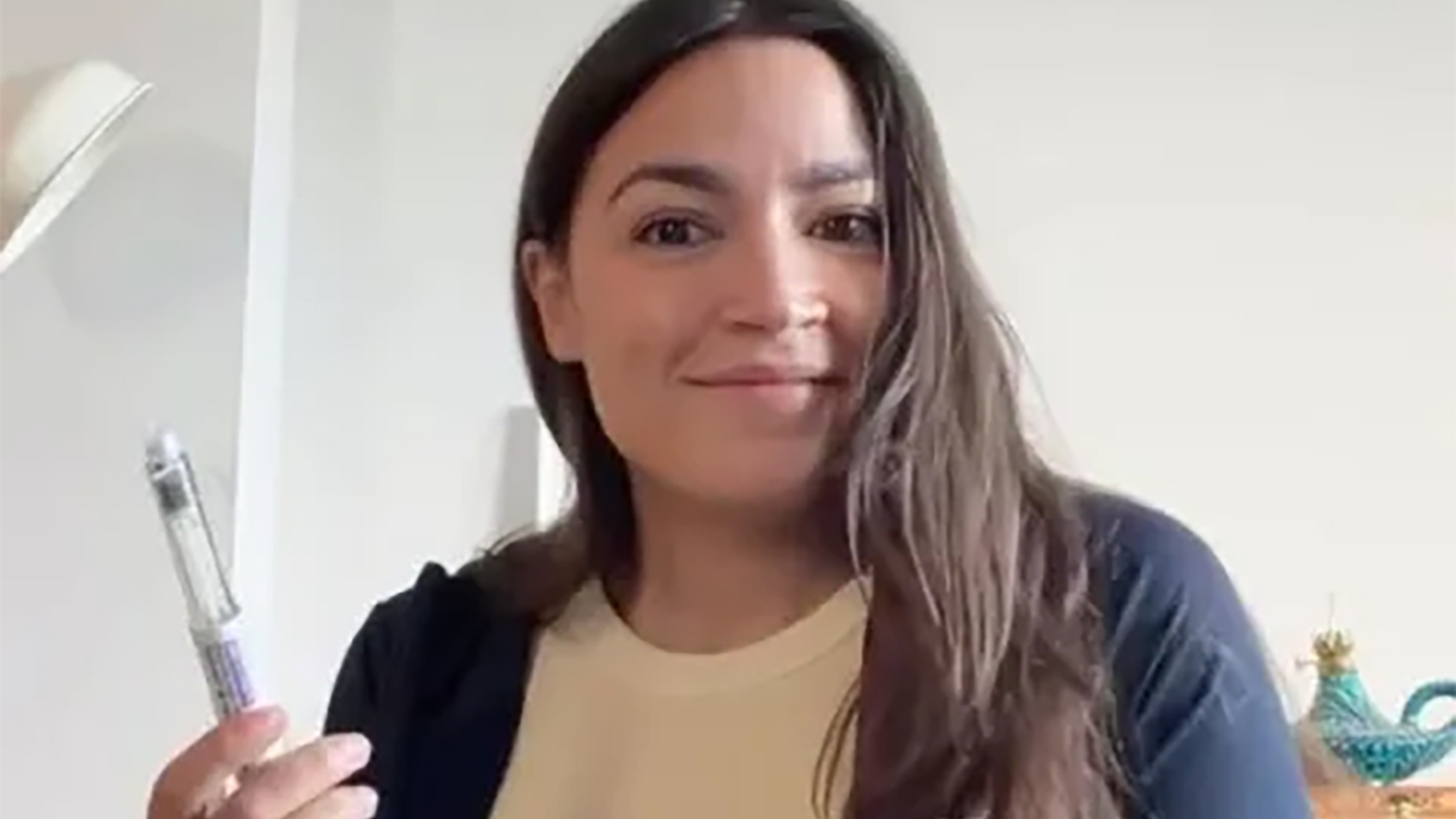
    “Don’t be weird about this,” AOC begged us. But “of course everyone got super weird,” said Jill Filipovic in Slate. Rep. Alexandria Ocasio-Cortez (D-N.Y.), 36, announced last week that she was freezing her eggs. A day later, she refused to rule out a presidential run. Conservative pundits pounced, arguing that she should prioritize motherhood over her career and denouncing her livestreams of daily hormone injections as oversharing. One actually said she was “glamorizing the lie that women can have it all.” In their universe, there’s “only one correct way” to be a mother, and that’s “married at a young age to a breadwinner man upon whom you are wholly dependent.” But Ocasio-Cortez, who reportedly split from her fiancé over a year ago, is making a choice that many women consider—and demystifying the process along the way. One of the country’s most prominent lawmakers, the progressive heroine has already “totally changed the game,” not just for young women but for all young politicians. And she’s come this far partly “because she’s been able to make her own choices” about whether and when to have children.

    Many women don’t get that chance, though, because insurance often doesn’t cover egg freezing, said Miranda Yaver in MS.now. AOC says she’s paying some $9,000 out of pocket. For most women, that’s “a prohibitive price to take control of their lives.” By being so open about her process, including its costs and indignities, Ocasio-Cortez has started a national conversation about “the need to make this care meaningfully accessible for everyday Americans” and how fertility access is connected to the Right’s “efforts to roll back reproductive autonomy.” Already, more than 1 in 5 births are to women over 34, and egg freezing will only become more popular as people have children later in life. The outrage over AOC’s announcement is “a sign of how far we still have to go.”

    Yet the response to AOC’s revelation “didn’t fall on strictly partisan lines,” said Kara Voght in The Wall Street Journal. While far-right commentators like The Daily Wire’s Matt Walsh called it “totally backwards,” other conservatives, such as pronatalist Katie Miller, applauded. Boosting our falling birth rate “has become a rallying point for Republicans,” and older motherhood through medical intervention is seen as better than no motherhood at all. This intervention, though, may be a false hope, said Caitlin Flanagan in The Free Press. Someone with eggs frozen at, say, age 38 has just a 51% chance of eventually having a live birth. “The harsh truth is that a 36-year-old who wants a baby should probably start trying to get pregnant now.”


    people

    Banderas’ act of rebellion

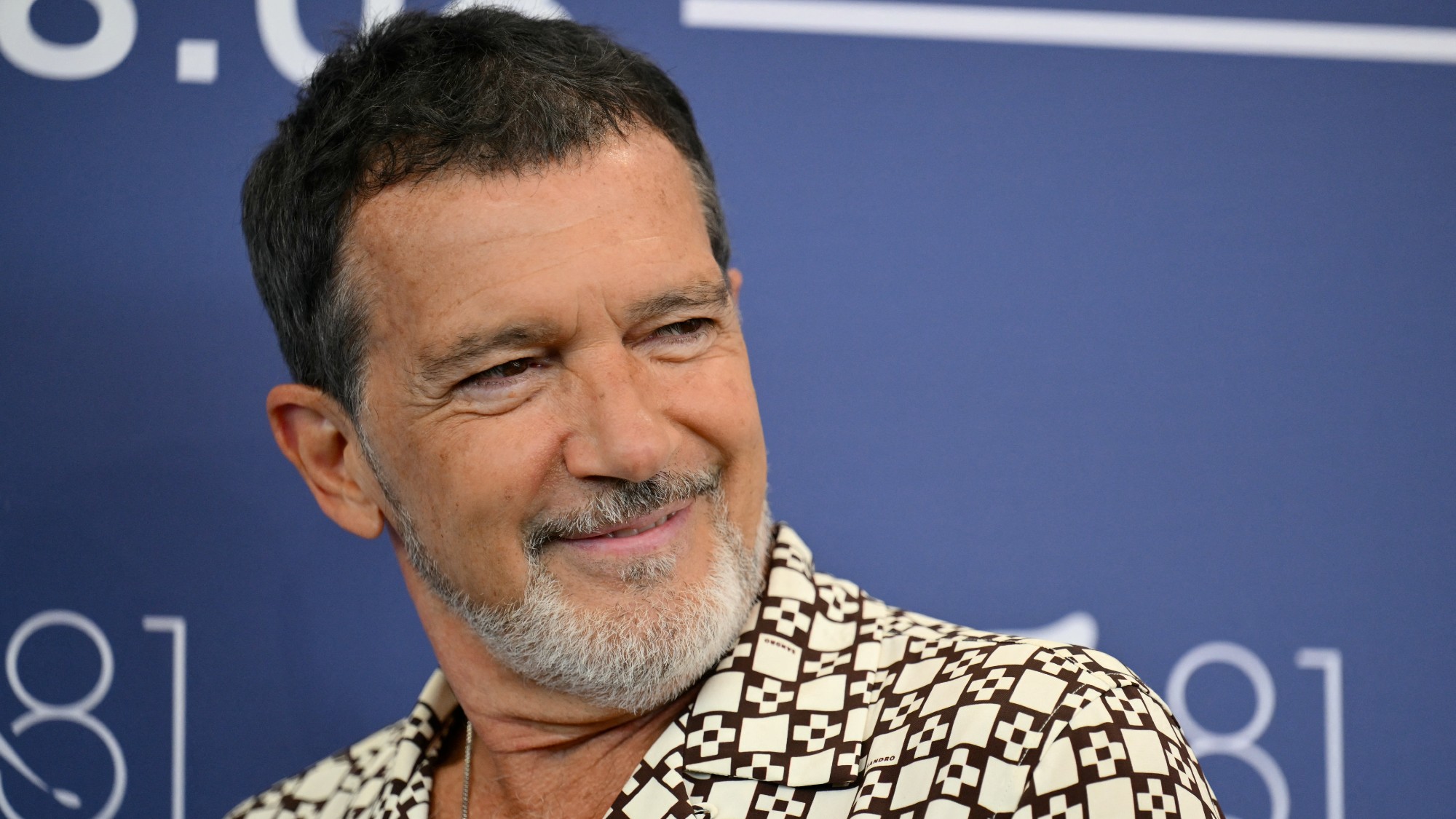
    In the mid-1970s, Antonio Banderas took a stand against tyranny, said Helen Rosner in The New Yorker. Together with friends in the southern Spanish city of Málaga, the young actor put on a radical play to protest the arrest of a Barcelona theater group by the authoritarian regime of Spanish dictator Francisco Franco. Banderas took to the stage as a mime with a white face and black tears. Part way through the performance, he recalls, he saw “something shiny in the wings of the theater. It turns out [it] was the helmets of the cops.” When the curtain went down, the police handcuffed all the actors. Taken to a police station, Banderas saw a familiar face. “It was very funny. My father finished his life being a sheriff in Málaga, but at the time he was in the secret police.” Banderas’ father initially didn’t recognize him, “with my strange costume and painted white face,” but when he did, he told his son to clean up and go home. Banderas refused to leave without his friends and got them freed as well. Banderas, now 66, thinks his troupe got off easy because “the regime was dissolving. The country wanted to be democratic.” And following Franco’s death in 1975, “that’s exactly what happened. That was beautiful—the Transition. Everything exploded in color. Nobody was talking about the past anymore; everybody was talking about the future. We were very proud to be called Spaniards.”


    Saturday Wrap was written and edited by Theunis Bates, Susan Caskie, Chris Erickson, Bill Falk, Allan Kew, Bruno Maddox, Rebecca Nathanson, Tim O’Donnell, Zach Schonbrun.

    Image credits, from top:  Getty (2), @aoc, Getty
     

    Recent editions

    • Evening Review

      Harry and Meghan: why the comeback?

    • Morning Report

      UK and other allies condemn Israel’s new settlement plans

    • Evening Review

      Are Zelenskyy’s days numbered?

    VIEW ALL
    TheWeek
    • About Us
    • Contact Future's experts
    • Terms and Conditions
    • Privacy Policy
    • Cookie Policy
    • Advertise With Us
    • FAQ
    Add as a preferred source on Google Add as a preferred source on Google

    The Week UK is part of Future plc, an international media group and leading digital publisher. Visit our corporate site.

    © Future Publishing Limited Quay House, The Ambury, Bath BA1 1UA. All rights reserved. England and Wales company registration number 2008885.