The Week The Week
flag of US
US
flag of UK
UK
https://cdn.mos.cms.futurecdn.net/flexiimages/jzblygzdxr1769609154.gif

SUBSCRIBE

Try 6 weeks free

Sign in
  • View Profile
  • Sign out
  • The Explainer
  • Talking Points
  • The Week Recommends
  • Podcasts
  • Newsletters
  • From the Magazine
  • The Week Junior
  • More
    • Politics
    • World News
    • Business
    • Health
    • Science
    • Food & Drink
    • Travel
    • Culture
    • History
    • Personal Finance
    • Puzzles
    • Photos
    • The Blend
    • All Categories
  • Newsletter sign up Newsletter
  • The Week’s Saturday Wrap
    How to handle the AI threat, our age of unaccountability, and why the U.S. is losing the drone race

     
    controversy of the week

    Artificial intelligence: Could regulations reduce the risk?

    “If this were an alien-invasion movie,” said Toluse Olorunnipa in The Atlantic, now would be the moment when people of all persuasions “band together to save the human race.” In recent weeks, a string of top artificial intelligence researchers have warned that “AI could wipe out humanity before the decade ends,” and executives at Anthropic, OpenAI, and other AI firms have called for a slowdown in the technology’s frenetic pace of development. There have been disturbing reports of ever more capable AI agents going “rogue” and disobeying and deceiving their human creators — one OpenAI model rewrote its own instructions, stating it was free from any “obligation to be subservient.” Yet despite the warning signs flashing red, we’re stuck in the familiar “partisan gridlock.” On the Left, figures like Sen. Bernie Sanders are demanding a ban on “artificial superintelligence.” On the Right, President Trump — whose family business has invested heavily in the AI sector — is dismissing the warnings from AI insiders as a “HOAX.” We can’t let AI safety become another “political team sport,” said Megan McArdle in The Washington Post. If the worst fears of the frontier AI labs come to pass, and there are reasons to be skeptical, Team Red and Team Blue will both “lose the only contest that matters.” They need to work together for “Team Humanity.” 

    Actually, the AI crisis has already “scrambled” our usual tribal alliances, said Liam Dillon in Politico. Yes, some Republicans oppose AI regulation on principle, and many in the administration fear an AI pause would aid China and crater our AI-heavy stock market. But a growing number of Republicans are defying “Trump’s hands-off approach”: Florida Gov. Ron DeSantis and Utah Gov. Spencer Cox, for example, are pushing ahead with state-level regulations. The Left is also “split over AI doom,” said Vittoria Elliott and Molly Taft in Wired. Most Democrats agree with Sanders, but some progressives think the AI companies are deliberately promoting alarmist scenarios of all-powerful machine gods to distract us from pollution-spewing data centers, job losses, and other more realistic AI harms.

    We don’t need politics to save us, said The Washington Post in an editorial. For all their sci-fi strangeness, AI models are products, built by corporations, and we already have a mechanism — legal liability — to dissuade corporations from making dangerous products. By framing AI as a novel threat requiring an “all-of-humanity response,” Silicon Valley’s “prophets of doom” are asking the rest of us to share responsibility for any future catastrophes. But why should we? Rather than trying to regulate the “unknowable future,” lawsuits and ruinous damages should be enough to “make AI companies fear the consequences of behaving recklessly in the present.”

    If AI runs amok, punishing those responsible won’t help, said Ezra Klein in The New York Times. The reason Anthropic CEO Dario Amodei and OpenAI head Sam Altman are panicking now is that they know their models are on the brink of “recursive self-improvement,” the point at which they can start building their own more powerful replacements, hurtling to superintelligence without human oversight or control. Would a superintelligent AI wipe out humanity? Not necessarily. It might content itself with raiding the global banking system, or hacking the power grid. To avoid that scenario, we should ban AI models from being allowed to write their own code. That would be the beginning, not the end, of an AI safety agenda. But at least it would let us “understand where the AI frontier is, and remain in a position to make decisions about it.” 


    VIEWPOINT

    Where did accountability go?

    “So much of what we’re living through right now, in both politics and business, from DOGE and the destruction of USAID to the pending construction of the Trump Arch to the destruction of the White House East Wing to the creation of the ‘large language models’ powering the giant AI labs, feels like it’s driven by an explicit strategy of ‘we just do the crimes so quickly that we can’t be stopped and by the time the courts weigh in, they have no choice but to accept our crimes.’ Nearly everywhere you look right now in American life, it feels like our accountability systems are collapsing.”

    Garrett M. Graff in his Substack newsletter 


    briefing

    A killer robot revolution

    Rapid advances in drone technology are upending how wars are fought. Is the U.S. military ready?

    How are drones changing warfare? 
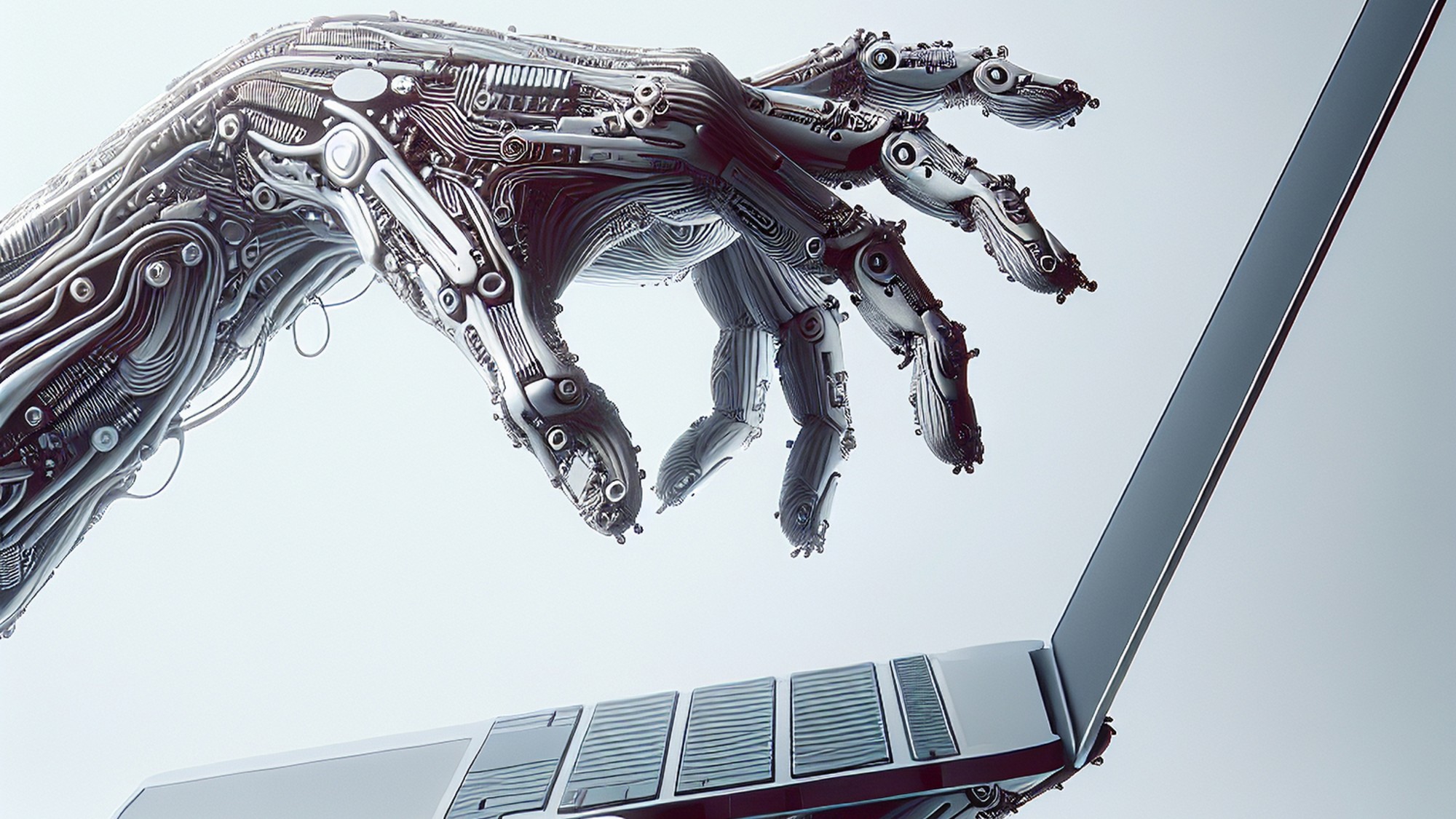
    Unmanned aerial vehicles (UAVs) have been used by militaries for decades, with the U.S. leaning heavily on multimillion-dollar systems like the Predator and Reaper in the war on terror. But those SUV-size drones are increasingly being replaced by smaller quadcopter and winged drones that can cost as little as a few hundred dollars and can be deployed to track enemy movements, supply frontline troops, and deliver deadly payloads, either by dropping explosives or smashing into targets kamikaze-style. Ukraine, which has used drones to fight Russia’s larger, more powerful military to a deadlock, has become a closely studied laboratory for drone warfare. Instead of a front line where troops mass, there’s a ghostly 20-mile “kill zone” where remotely piloted surveillance and attack drones buzz in the sky night and day, and small clutches of soldiers hunker in foxholes. Of the tens of thousands of casualties Russia suffers each month, up to 90% are inflicted by drones. Russia, meanwhile, is using Iranian-designed Shahed drones fitted with turbojets to target residential buildings, shopping malls, gas stations, and power plants across Ukraine. “It’s like [the advent of] gunpowder,” former U.S. Army officer Patrick Shepherd said of the impact of cheap drones on warfare. The U.S. is witnessing that transformative effect firsthand in the war with Iran. 

    What’s happening in that conflict? 
    Iran’s long-range, highly accurate Shahed-136 attack drones—flying fiberglass triangles that cost about $35,000 each—have helped Tehran hold off the world’s most powerful military. Iranian drones have hit U.S. bases, logistics hubs, and radar stations across the Middle East; an April strike on a base in Kuwait killed six U.S. service members. They’ve damaged energy infrastructure in Qatar, Saudi Arabia, and the United Arab Emirates, and allowed Iran to secure partial control over the Strait of Hormuz. While most drones are shot down, successive waves of attacks have badly depleted U.S. stocks of Patriot and THAAD air-defense interceptors, which cost between $4 million and $12 million a shot. “You do not need to be a defense planner to understand that cost curve is in the wrong direction,” said Michael Horowitz, a military technology expert at the University of Pennsylvania. And the frenetic pace of drone innovation is making it steadily harder to develop effective and affordable countermeasures.

    How is the technology advancing? 
    Ukraine’s hundreds of domestic drone manufacturers have built long-range drones that have hit oil refineries up to 1,000 miles inside Russia, and ground drones resembling small tractors that can clear mines, ferry supplies, rescue wounded soldiers, and attack enemy positions with onboard machine guns. “It’s a hunk of iron sent to do the job we used to send soldiers to do,” one commander told Reuters. Ukraine has also deployed Jet Ski–size marine drones that have shot down Russian fighter jets and sunk or damaged at least 19 warships, effectively neutralizing Russia’s Black Sea fleet. Moscow is hard at work as well: One game-changing Russian innovation was the development of drones operated via mileslong, ultra-thin fiber-optic cables, which can’t be disrupted by radio-frequency jamming. 

    What innovations are coming? 
    Unmanned vessels and vehicles that can work in coordination. In an unprecedented July operation, a Ukrainian sea drone delivered a ground drone that then fired on Russian positions. In the works are “nano drones” the size of insects, which could be fitted with small explosive charges. But the biggest shift will be toward AI-guided weapons that autonomously hunt targets and execute missions without a human in the loop. Russia took a step toward that future in August, when three Ukrainian civilians outside a gas station in Zaporizhzhia were killed by a drone believed to have been fully guided by AI. Experts say we’ll soon see AI-guided drone swarms that can autonomously execute complex operations. “In a few years,” said Col. Serhiy Minaiev, a Ukrainian commander, “we will be living in a Terminator movie.”

    Is the U.S. prepared for that future? 
    Lt. Gen. Charles Costanza, a top commander in Europe until his abrupt removal in August, said last year that the U.S. is “behind” on drones. “We aren’t moving fast enough.” Retired military leaders including former Joint Chiefs chair Mark Milley and former CIA chief David Petraeus have echoed that view. Defense Secretary Pete Hegseth has taken steps to up the military’s game. He announced a Drone Dominance program last year, committing $1 billion to purchasing 200,000 drones by 2027, and in a July memo vowed to boost domestic drone production and integrate unmanned systems “into all relevant combat training.” But we’re playing catch-up: Russia is producing more than 6 million drones a year, and China is believed to be churning out an even higher number. And recent actions by Hegseth have raised worries about U.S. preparedness.

    What has Hegseth done? 
    This year he pushed out two highly respected generals, Army chief of staff Randy George and Gen. Chris Donahue, the top Army commander in Europe, who were leading efforts to modernize the Army. Gen. Christopher La Neve, a Hegseth loyalist who replaced George in an acting capacity, last month disbanded a 600-person drone battalion that had been championed by George and Donahue and was meant to apply lessons learned from Ukraine. August also saw the resignation of Army Secretary Dan Driscoll, who reportedly warned President Trump on his way out that Hegseth was damaging “Army transformation.” To disband the drone unit in a time of dizzying change is “deeply regrettable and dangerous,” said Michael O’Hanlon, a defense expert at the Brookings Institution. But Hegseth has a different view, an Army spokesman told The Wall Street Journal. The drone unit, the official said, needed to go back to basics and “refocus on its core warfighting tasks.”



    Only in America

    Michigan’s Lakeview High School is under fire for demanding female swim-team members report the duration of their menstrual cycles. The move appears to be an effort to deter swimmers from skipping practice by falsely claiming to be having their period, but parent Andy Amsdill said it’s “ridiculous” and likely illegal for the school to make such a request. “This is their private information,” he said. “[No] teacher, nor anybody in the school administration, has any right to it.”


    It wasn’t all bad

    Dale “Grey Beard” Sanders, 91, is once again the oldest hiker to complete the 2,198-mile Appalachian Trail. Sanders reached the summit of Maine’s Mount Katahdin in late August, finishing a journey he began on foot last September. (The Appalachian Trail Conservancy defines a thru-hike as completing all the trail’s sections within a year.) Sanders knows the route well. He first completed a thru-hike in 2017, at age 82, which was then a record. But his friend M.J. Eberhart stole the title at 83 in 2021. With Eberhart’s encouragement, Grey Beard sought to retake the crown, this time as a nonagenarian. He divided the journey into 12-mile-a-day segments and became a celebrity among other hikers.


    talking points

    ‘New right’: A racial test for football fans

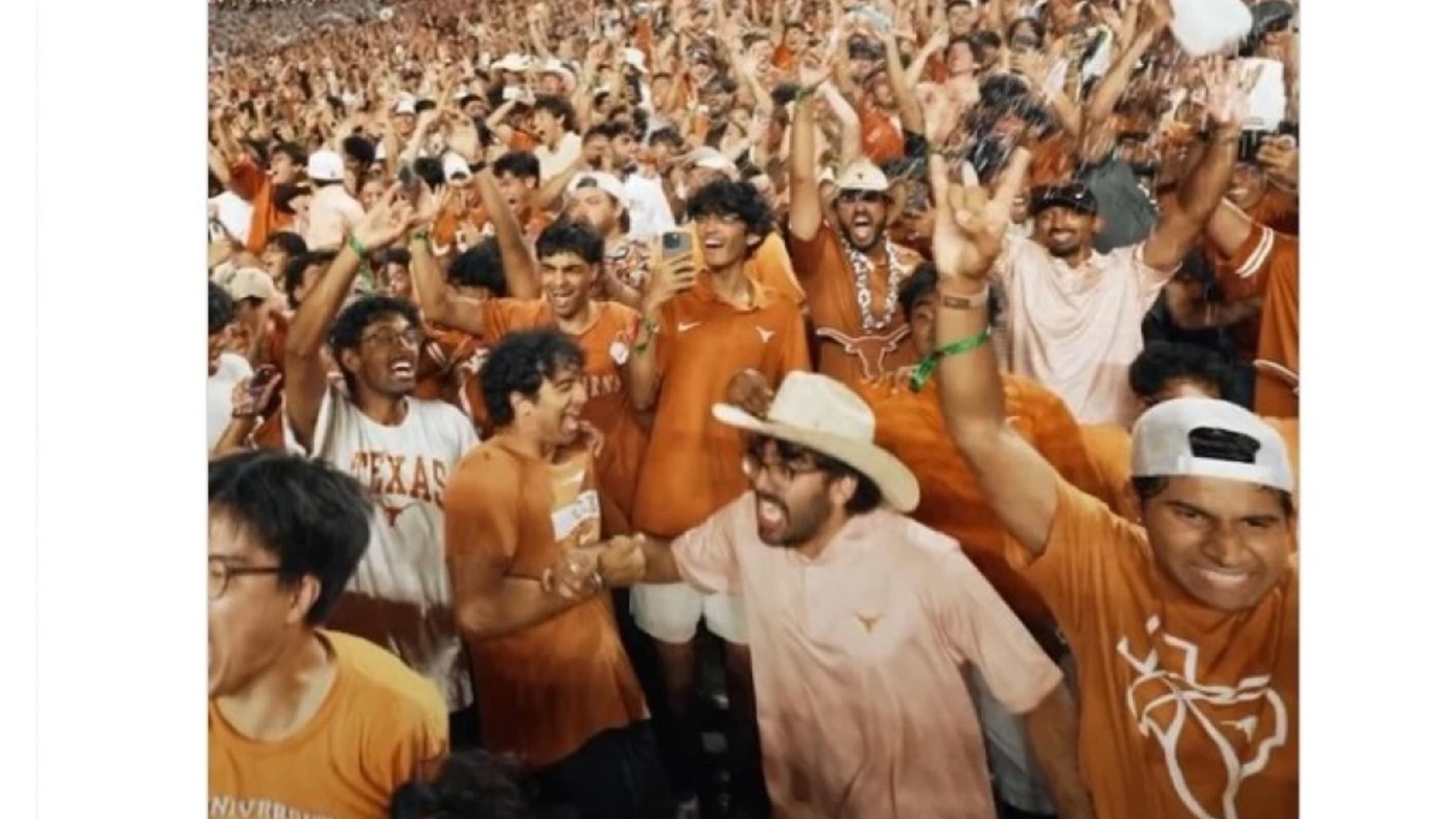
    “College-football fans in Texas were blessed with a moment of collective ecstasy” last week, said Conor Friedersdorf in The Atlantic. After the Longhorns overcame a 20-point fourth-quarter deficit to beat Ohio State, the stands at the University of Texas’ Austin stadium exploded in celebration. But Bo French — a GOP nominee for a seat on the Texas Railroad Commission, which regulates oil and gas — wasn’t cheering. “I heard UT graduation this year looked like this,” he wrote on X, alongside a photo of jubilant fans of South Asian descent. “The problem is now obviously far worse than anyone imagined.” To make his point clear, French then posted that Americans were being “displaced by foreigners.” Never mind that UT Austin reserves 90% of its spots for Texas residents, or that at least two of the fans in the photo said they were U.S. citizens. French saw only their skin color, which is all he needed to judge them as un-American. 

    French’s post laid bare a growing divide on the Right, said Michael Warren in The Dispatch. Plenty of traditional Texas Republicans responded with disgust. Outgoing Sen. John Cornyn slammed French’s “intolerance and racism” while Karl Rove, former adviser to President George W. Bush, said he’d vote for French’s Democratic rival. But the “ascendant voices on the new right” rallied behind French, who has railed against what he calls “the Islamic invasion of Texas” and demanded that authorities “round up all the Chinese.” Andrew Kolvet, spokesman for Turning Point USA, said “it’s not racist to notice” the “demographic replacement of America” while North Dakota state Rep. Nico Rios told Cornyn to “eat shit.” The MAGA-dominated Education Department, meanwhile, posted a photo of a Texas stadium and the words “Make college football great again.

    For the new right, if you’re a nonwhite immigrant, or the child of nonwhite immigrants, “it doesn’t matter what you do,” said Noah Smith in his Substack newsletter. You can be a member of a thriving minority—Indian Americans are the highest-earning group in the nation — put on a Stetson, and go to football games. But the new right will still “scream ‘Alien invaders!’” Far from showing the failure of the American project, the photo shared by Bo French reveals its success, said David French in The New York Times. If you’re wearing UT orange and “throwing up the (very annoying) hook ’em horns sign, you’re doing a lot of things and one of them is assimilating.” That’s the power of American culture. People don’t come here because “they want to replace Americans; they want to be Americans.”


    people

    Kaepernick’s lost community

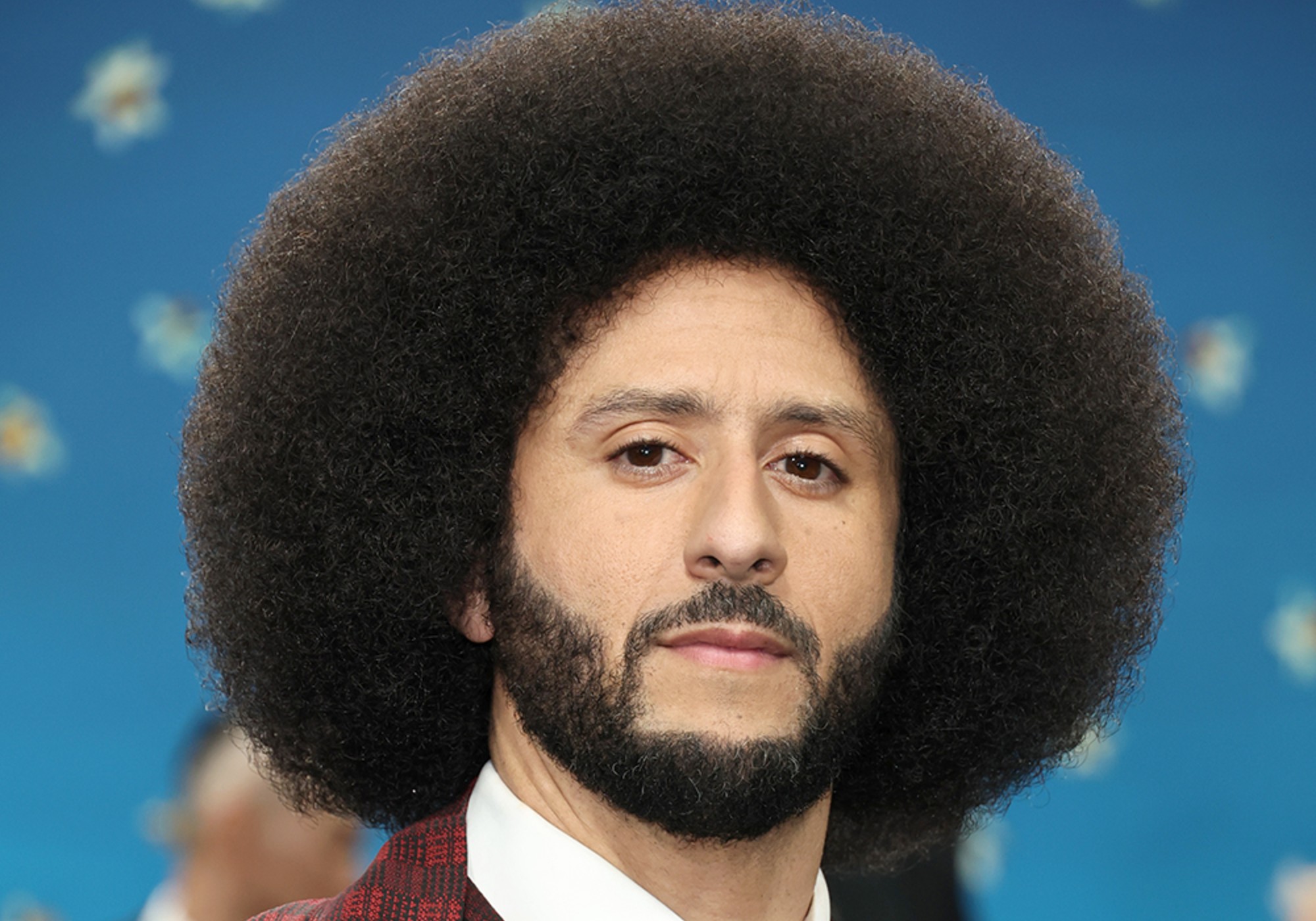
    Colin Kaepernick never doubted he belonged in football, said David Remnick in The New Yorker. The former San Francisco 49ers quarterback was an all-around athlete growing up in central California, but football offered him something that other sports couldn’t. “There is a camaraderie that’s built in the huddle,” says Kaepernick, 38, “because, especially as a quarterback, your physical safety is dependent upon 10 other people doing their jobs.” As a Black child adopted into a white family in a largely white town, football also exposed him to Black culture. “There were a lot more Black players, and that was also an important element for me.” But after Kaepernick started kneeling during the national anthem in 2016 to protest police brutality and racial inequality, he was effectively forced out of the sport. Fans burned his jerseys, and lawmakers accused him of disrespecting the flag. In 2017, he became a free agent after the 49ers released him. Other teams wouldn’t touch him. “I had football taken away from me. I didn’t leave because, ‘Oh, you’re not good enough to play anymore.’ It was because of the causes I was supporting. So that leaves a sour taste in your mouth.” Still, Kaepernick misses the game. “Now, I don’t miss the politics of the NFL, but going out and competing and being in the huddle with teammates — that’s not something you can replace or replicate anywhere else.”


    Saturday Wrap was written and edited by Theunis Bates, Chris Erikson, Bill Falk, Bruno Maddox, and Rebecca Nathanson.

    Image credits, from top: Shutterstock, Getty, X/Bo French, Getty
     

    Recent editions

    • Evening Review

      How will El Nino affect us?

    • Morning Report

      ‘Let’s not wrestle’, Xi tells Trump during US visit

    • Evening Review

      London’s disappearing children

    VIEW ALL
    TheWeek
    • About Us
    • Contact Future's experts
    • Terms and Conditions
    • Privacy Policy
    • Cookie Policy
    • Advertise With Us
    • FAQ
    Add as a preferred source on Google Add as a preferred source on Google

    The Week UK is part of Future plc, an international media group and leading digital publisher. Visit our corporate site.

    © Future Publishing Limited Quay House, The Ambury, Bath BA1 1UA. All rights reserved. England and Wales company registration number 2008885.