President Trump’s immigration crackdown is separating parents from their children.
What is the administration doing?
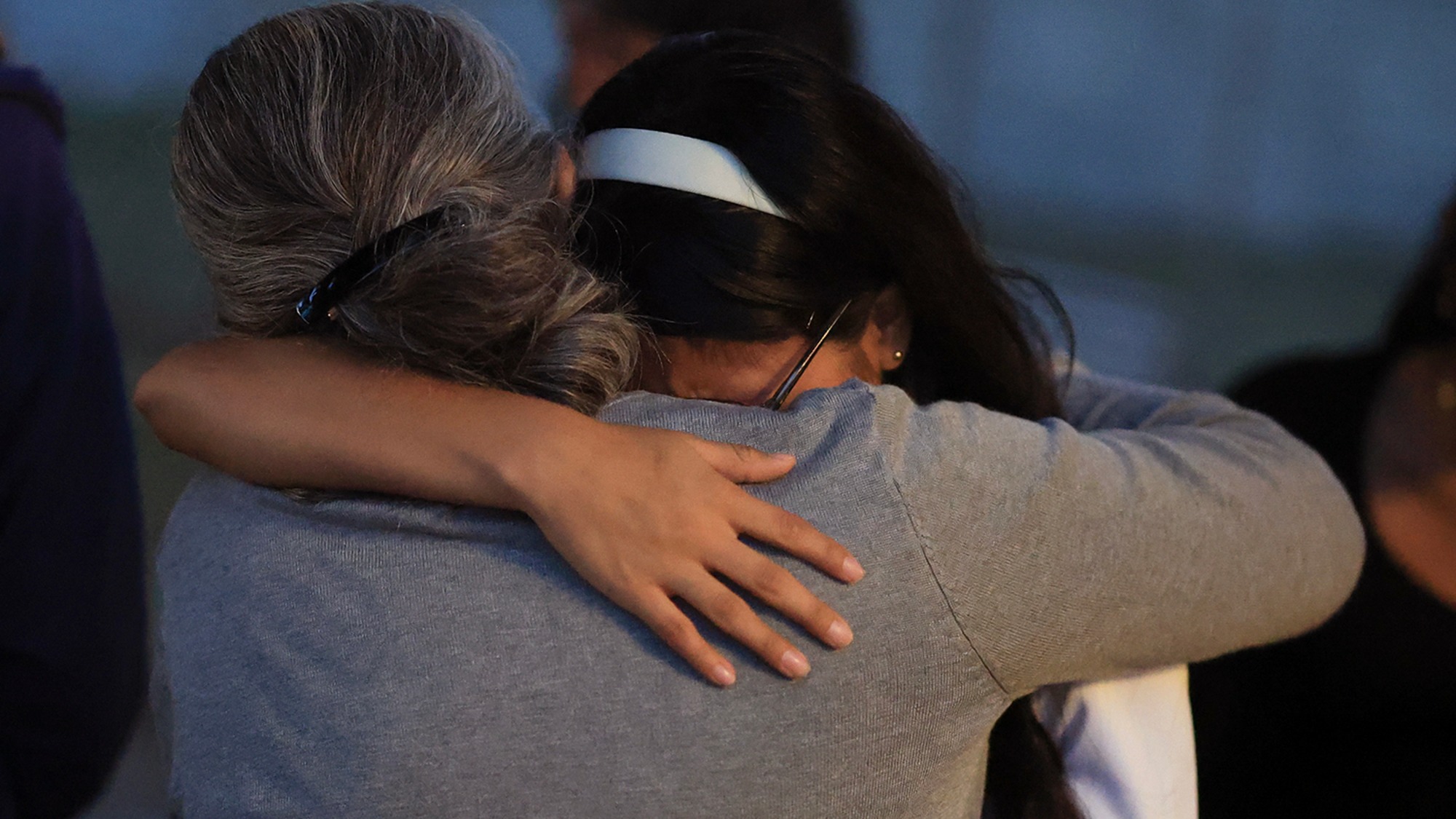
In a first in U.S. history, the government has separated tens of thousands of children from parents who were arrested on immigration violations, often deporting them without their kids. Many such parents entered the U.S. legally as asylum seekers and have been working and raising families while pursuing citizenship. In April, the Brookings Institution counted more than 146,000 children who are U.S. citizens and have had a parent deported; more than 22,000 have had both parents deported. Sometimes deportees are given the option to take their children with them—but not always. When Physicians for Human Rights interviewed women deported to Honduras this year, they found that many had not been asked if they had children, while others simply had their kids taken. One was parted from her 2-month-old breastfeeding baby. Migrant advocates say the crisis mirrors 2018, when the first Trump administration’s policy of separating families at the southern border sparked an uproar. “It’s leading to all the same forms of trauma,” said Kelly Kribs, an attorney for immigrant children. “But the speed and the scale of the separations now is at a level we’ve never seen before.”
What happens to children left in the U.S.?
Many go to relatives or friends, but because deportees have little or no time to arrange for care, some end up in foster care. When Marlyn, a Venezuelan with a pending asylum application, landed in ICE detention after a traffic stop in Alabama, her two young children, including a 2-year-old just weaned, were left with her co-worker. When she chose to accept deportation rather than endure prolonged detention in a case likely to fail, she said she begged to have her children sent with her. “I told them, ‘I have no one to take care of them.’ But they never did anything.” Nearly a year later, Marlyn has been unable to arrange extradition for her toddler, who doesn’t recognize her in video calls. Some parents choose to leave their kids behind because they are returning to countries roiled by violence. One Haitian woman, identified by The Guardian only as L.T., made the wrenching decision to leave her sick baby with a grandmother, knowing that there wouldn’t be medical care in gangplagued Haiti. Now she’s racked by fear that her daughter could wind up with strangers. “I’m terrified of losing my baby,” she said.
What does the law say?
The law allows for parents to be deported without their children, but until last year there were protections. ICE policy held that federal agents should avoid separating families and either deport them together or confirm a caregiver is in place. The Trump administration revised the policy to say agents should do that “when operationally feasible,” which advocates say gives ICE leeway to ignore it. The administration insists it doesn’t intentionally separate families, and that this only occurs when parents make the choice to self-deport. But critics say otherwise. ICE is intent on meeting its deportation quotas, said Sen. Ron Wyden (D-Ore.), even “if that means tearing families apart and traumatizing children.” Migrant advocates also cite a growing trend of children being taken from parents and put into federal custody.
Why is that happening?
Children of detainees are being reclassified as unaccompanied minors and sent to the Office of Refugee Resettlement. When Luis, a construction worker from Venezuela, was detained with his 11-year-old son, Andrés, after being arrested in El Paso, he said agents removed Andrés and transferred him to ORR instead of sending him to his grandfather. Case workers said Andrés couldn’t sleep in foster care and screamed for his parents at night. It’s not clear how common such reclassifications are, but Mother Jones spoke to a dozen lawyers who confirmed the trend. “They’re kidnapping people’s kids and keeping them in government custody,” said Jen Smyers, who was a Biden-era ORR official. There’s a process for applying to get them out, but the administration has made it arduous—to protect children from predators, it says—and ICE has arrested undocumented people who apply.
Are minors ever deported alone?
Frequently. An analysis by Pro Publica found that judges have issued over 10,000 removal and voluntary departure orders for unaccompanied minors every month, a rate four times higher than in Trump’s first term. Most of these children came from Central American countries riven by violence and economic upheaval, have no criminal record, and are pursuing legal residence. Minors with Special Immigrant Juvenile Status, granted to those who’ve suffered parental abuse or neglect, used to be protected from deportation, but the Trump administration ended that policy. It also ended $200 million in annual funding for the Acacia Center for Justice, a nonprofit that provides legal services to migrant children.
Has there been pushback?
Not much. Migrant advocates say there’s been a notable shift from 2018, when blowback over family separations led to legal challenges, bipartisan opposition, and an eventual climbdown. This time, there’s no explicit policy to challenge in court, and the separations are happening outside public view—no media images of children in cages. Advocates also cite less resistance within the administration, as staffers who might have objected have left or been laid off. The fallout in human trauma will be vast, experts say, especially for the youngest children. “They are left with a sense of abandonment that’s kind of imprinted,” said Michele Heisler, a doctor with Physicians for Human Rights. Her organization also documented signs of trauma among separated mothers, including panic attacks and uncontrollable crying. The “gratuitous level of cruelty,” she said, “is hard for all of us to understand.