The Week UK
flag of US
US
flag of UK
UK
https://cdn.mos.cms.futurecdn.net/flexiimages/jzblygzdxr1769609154.gif

SUBSCRIBE

Start your trial today

Sign in
  • View Profile
  • Sign out
  • The Explainer
  • Talking Points
  • The Week Recommends
  • Podcasts
  • Newsletters
  • From the Magazine
  • The Week Junior
  • More
    • Politics
    • World News
    • Business
    • Health
    • Science
    • Food & Drink
    • Travel
    • Culture
    • History
    • Personal Finance
    • Puzzles
    • Photos
    • The Blend
    • All Categories
  • Newsletter sign up Newsletter
  • The Week’s Saturday Wrap
    Democrats’ next steps, reforming fraternities, and the GOP’s midterm mistakes

     
    controversy of the week

    Democrats: How should they use their new power?

    “Winning was the easy part,” said Kristal Thompson in The Atlanta Journal-Constitution. Still giddy after last week’s sweeping victories, some Democrats are now signaling that when they take control of Congress in January, they will use their healthy House and Senate majorities for “political score settling.” Rep. Robert Garcia, incoming chair of the House Oversight Committee, has advised every member of President Trump’s administration to “lawyer up,” while Sen. Ed Markey promised that between investigations of Elon Musk, ICE, and Trump’s vanity construction projects, “they are going to need to plant new forests for all the subpoenas we’ll be printing.” But that is not what “we the people” want. “Where wrongdoing has occurred,” yes, there must be accountability. But if Democrats spend the next two years “consumed by endless investigations,” instead of delivering “relief from rising costs,” their return to power will be short-lived. 

    Americans don’t want Democrats to “just ‘move on,’” said Jan-Werner Müller in The Guardian. About 90% of last week’s voters cited government “corruption” as a top concern. For our future civic health, the nation needs a full accounting of the Trump administration’s “unprecedented” grift, from Trump’s crypto schemes to the sketchy oil deals in Venezuela. And accountability also means impeaching Trump’s most “egregious” Cabinet members—including Defense Secretary Pete Hegseth, who has committed war crimes in Iran and the Caribbean, and Health Secretary Robert F. Kennedy Jr., who has used his office to undermine American science. Democrats may as well focus on accountability, said David A. Graham in The Atlantic, because affordability isn’t happening. Come January, they’ll learn they have “few direct levers to bring down prices” and little hope of bipartisan action with a president who has vowed to become “Mr. Veto.” 

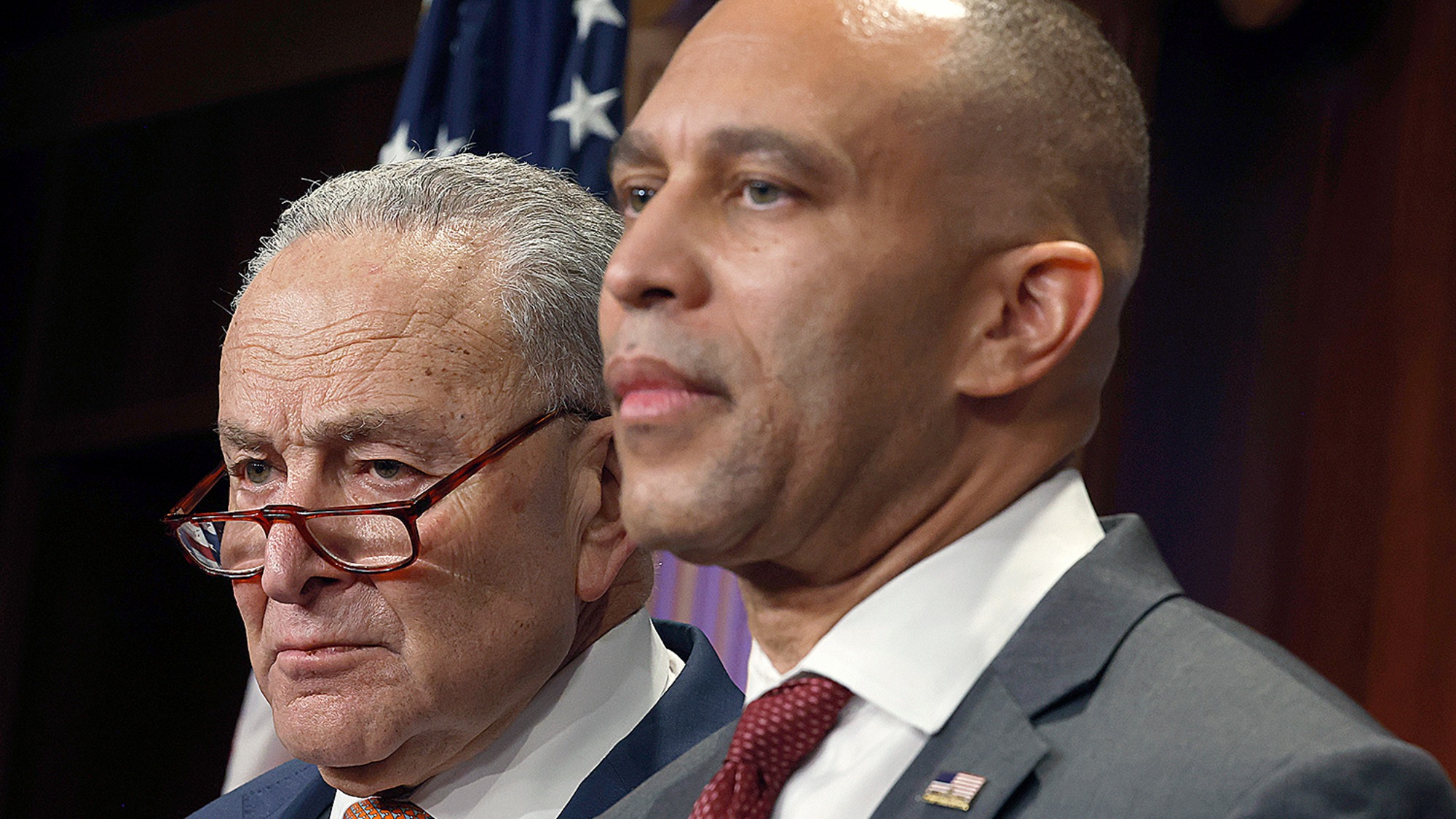
    “Democrats can’t fix the inflation picture overnight,” said Rana Foroohar in the Financial Times, but they’re far from powerless. They can defund the war in Iran. They can pass a bill reversing Trump’s ruinous tariffs. They can vote to restore the funding that Trump’s “big, beautiful bill” stripped from Medicaid and drive home the insanity of a health system where people with no insurance have to go to the ER for basic care. Even if Trump vetoes it all, the goal must be to connect the dots between “today’s cost of living crisis and the broader economic systems that need to change.” That might require a change in Democratic leadership, said Michael Tomasky in The New Republic. Only the conflict-shy Chuck Schumer and Hakeem Jeffries—expected to be the next Senate majority leader and House speaker, respectively—would agonize over whether to pursue affordability or accountability. Democrats can and must do both behind leaders who understand the “risks of under-reach.” 

    These “factional fights” feel “almost like relics of a bygone era,” said Lauren Egan in The Bulwark. The biggest wins last week were delivered by Democrats who don’t fit in “neat ideological boxes,” like Sens.-elect Annie Andrews in South Carolina, who opposes both Kennedy’s MAHA movement and Medicare for All, and James Talarico in Texas, a champion of his state’s oil and gas sector. Democrats lack a “comprehensive economic agenda,” said The New York Times in an editorial. But if they govern the way those candidates campaigned, embracing “commonsense populism” and rejecting the excesses of the woke era, the party will at least “change its image among working-class Americans.” That is a necessary first step to “an enduring Democratic majority in Washington.” 


    VIEWPOINT

    Appropriate corruption

    “The American people expect a certain amount of corruption in government because government is composed of people, and men aren’t angels. They’ll accept a normal amount if the government keeps a strong economy and peace. But fail on the economy and peace and they’ll see your corruption and be angered by it. And if you give them corruption that is showy and shameless, they will punish you. They will admit to themselves that you are unusually sleazy and moneygrubbing—Bitcoin! Crypto! Charges of pardons for sale! Federal contracts for the companies of the sons! PLS WIRE AMEX 100K SOONEST!—and they will turn on you.”

    Peggy Noonan in The Wall Street Journal


    briefing

    The dark side of brotherhood

    The Cornell University rape case has turned a spotlight on sexual assault at fraternities.

    What happened at Cornell? 
    In her lawsuit filed this fall, a student known as Jane Doe accused seven fraternity members of gang rape. She said she went to the Chi Phi house for a consensual sexual encounter but that fraternity brothers later pressured her into taking ketamine and alcohol and invited others to sexually assault her. Messages flew on the house’s group chat saying “Free pussy” was available, with one brother answering, “Shop still open?” The men deny raping her, and no criminal charges have been brought in the 2024 incident. But the story has sparked a national conversation about women’s safety on campus—and the responsibility of Greek organizations for fostering a party culture that treats women like sex objects. Ever since the 1978 film Animal House portrayed Greek life as a hedonistic bacchanal, fraternities have been implicated over and over again in episodes of brutal, sometimes deadly, hazing as well as numerous sexual assaults. “There’s been no substantive reform,” said Douglas Fierberg, lawyer for the family of a fraternity brother who died during a 2011 hazing ritual, “despite all the kids dying, despite all the women being raped.” 

    How many students are in fraternities? 
    Nationwide, some 7% of men at four-year colleges are in Greek life, but at some schools it is central to socializing: The figure is around 30% at Cornell and over 70% at Virginia’s Washington and Lee University. Many young men follow their fathers and grandfathers into houses, continuing a family legacy; others join for the ready-made friend group and lifelong connections. Studies show students in Greek life have better mental health and a stronger sense of belonging and are more likely to pursue graduate degrees. Over half of Greek-affiliated alumni report finding a job within two months of graduation, compared with just 36% of nonaffiliated alums. Given those benefits, it’s no surprise that fraternity membership has rebounded this decade after reaching a low in 2020, and at least 10 schools invited fraternities onto their campuses for the first time last year. Too often, though, the bonding among brothers revolves around heavy alcohol consumption. 

    Is there a problem with alcohol? 
    Nearly 90% of fraternity members report binge drinking, compared with just over 60% of other students. They’re also more likely to report overconsuming alcohol after they leave college, and fraternity membership is actually associated with dying earlier. There may be some self-selection for both drinking and poor treatment of women. In one study, nearly half of fraternity members said they joined specifically for the party culture, while another study found that men who strongly endorsed traditional gender roles were more likely to pledge. University of Arkansas professor Jacquelyn Wiersma-Mosley found that when it comes to sexual violence on campus, the “biggest predators” were men involved with Greek life. Some men join explicitly seeking “power and status,” says University of Oregon psychologist Jennifer Freyd. “There is a tradition in fraternities of objectifying women’s bodies.” 

    Where does that lead? 
    In a 2019 survey, a quarter of female undergraduates said they’d been assaulted or groped—often at fraternity houses. Cornell briefly suspended fraternity parties in 2022 after one student was sexually assaulted and at least four others were drugged at fraternity-affiliated houses all in the same weekend. This year, three women reported sexual assault at the University of Tennessee, with two suspecting they were drugged at fraternities. At the University of Arkansas, a male student, 19, was charged with raping a woman this year at the Kappa Sigma house; he denies any wrongdoing. Lucy Taylor, who runs a podcast about excesses in Greek life, says she dropped out of a sorority at the University of Maryland after a fraternity member raped her. Sorority sisters there, she said, were instructed not to leave a fraternity party until midnight to avoid giving offense. “It was just normal if someone didn’t remember hooking up with someone from the night before,” Taylor said. 

    What can colleges do? 
    In the wake of the Cornell case, many people have called on universities to abolish fraternities altogether. But most universities hesitate to do so. They don’t want to punish the vast majority of law-abiding fraternity brothers for the crimes of a few—and they fear backlash from Greek alumni, who tend to be generous donors. Because the fraternities are national organizations, not university groups, a school can push them out only to see them move two blocks down the street. “The bad behavior just goes further off campus,” said historian Nicholas Syrett of the University of Wisconsin, “where it gets less oversight from school officials.” But there’s another option: Go co-ed. 

    Has that been successful? 
    Several prominent schools in the Northeast have transitioned from Greek chapters to a residential housing system that offers similar benefits of group living but are coed and run by the school. Williams College did this in the 1960s, Amherst College in the 1980s, and Maine’s Bowdoin College in the 1990s. Others have forced Greek fraternity chapters to open up to women. That hasn’t always worked. Connecticut’s Trinity College tried it in 2012, but women refused to join the coed fraternities and men refused to join the coed sororities; by 2015, the single-sex chapters were back. Where it does work, though, it is transformative. Wesleyan University went coed in 2014 after several harrowing cases of sexual assault, and it now boasts three co-ed fraternities and one sorority. “The campus today is safer and it is more equitable,” said its president, Michael Roth. Most important, “the incidence of reported sexual violence is way down.”


    Only in America

    One of the U.S. Capitol rioters pardoned by President Trump crashed a convention of cat owners in Seattle last week, mistaking it for a gathering of “furries.” In viral footage of the incident, rightwing activist Jake Lang accuses staff and costumed greeters at the Sea-Meow Convention of “sexualizing children” and having “orgies with each other every single weekend.” Lang’s rant continues even as it’s explained to him that the event is a fundraiser for shelter cats.


    talking points

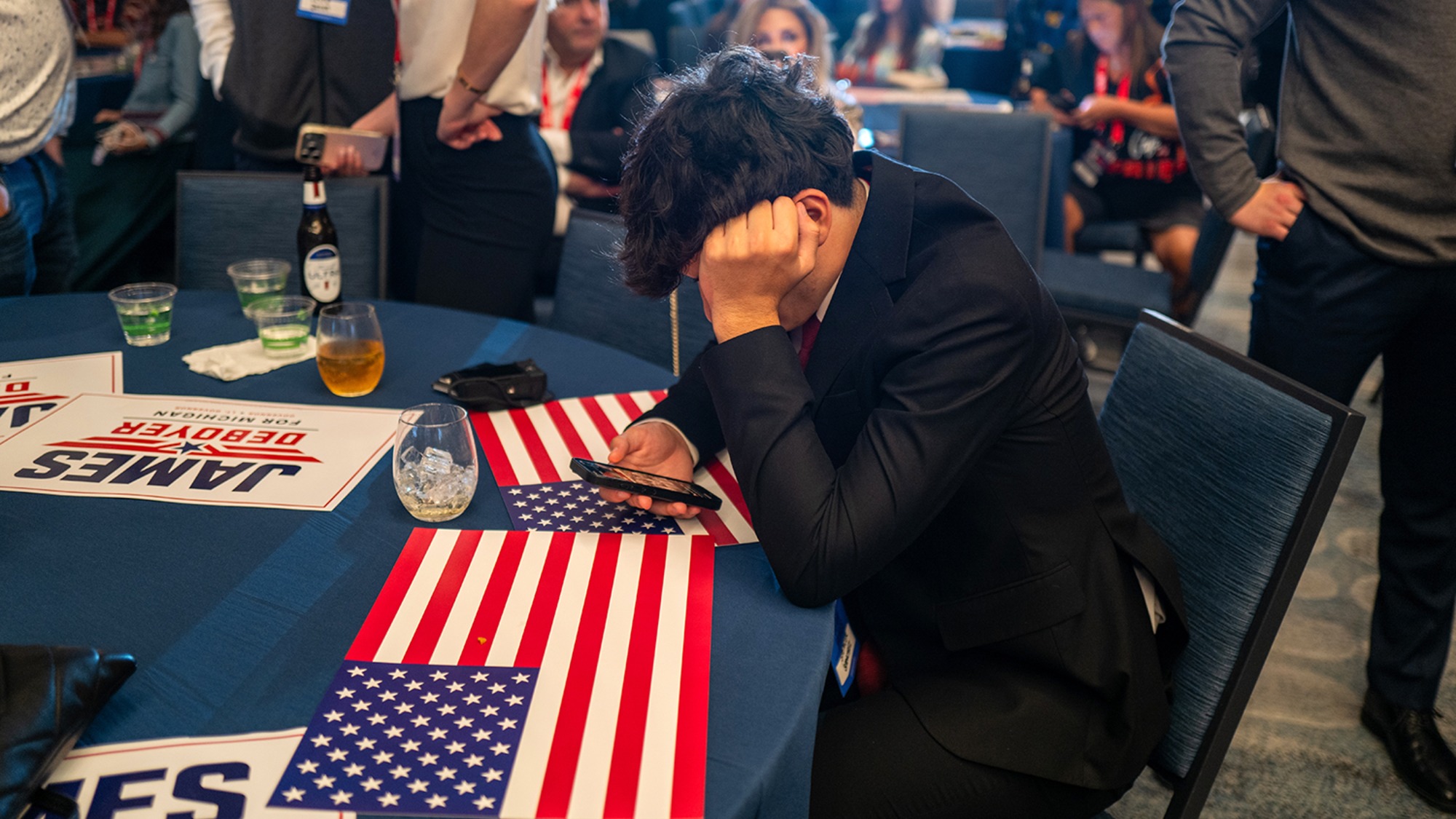
    Midterms: Explaining the GOP’s crushing defeat

    “It was the war, stupid,” said Sohrab Ahmari in UnHerd. After Democrats last week won both the House and Senate and turned Texas, North Carolina, Ohio, and other red bastions blue, Republican lawmakers and party insiders have been trying to figure out why the midterms went so wrong. There is a simple explanation: “President Trump and the GOP broke their pledge of peace, launched an ill-conceived war with Iran, and thus exacerbated an affordability crisis they’d been elected to solve.” Vice President JD Vance gets it. “The reason we lost is the war,” he wrote in an election postmortem. Exit polls back him up. About 90% identified “cost of living” as a key factor in their vote, and 60% called the Iran war a mistake. Iran hawks have tried to shift the blame to Trump’s tariffs, said Michael Brendan Dougherty in National Review. They note that after “Liberation Day” in April 2025, Trump’s economic approval rating started to decline by about 1.3 percentage points a month. But that rate of decline nearly doubled after war erupted in February, causing gas to spike from $2.98 a gallon on average to $4.15 on Election Day. And when GOP pollsters asked Republicans who were not planning to cast a ballot what would get them to vote, “their top two answers were ending the war and addressing inflation.” 

    Yes, the war helped sink Republicans, said Tanner Greer in The New York Times. But there’s another big problem Vance conveniently avoided: “plain, old-fashioned graft.” In multiple preelection polls, voters cited government corruption as their top concern. Trump was elected in 2024 as a swamp-draining populist, and voters expected him to act like one. Instead, Americans “got a parade of millionaires and billionaires cashing in at their expense”—including Trump, who has added nearly $3 billion to his wealth. This was powerful campaign material for Democrats, and it powered Sen. Jon Ossoff’s 18-point victory in Georgia. In rally after rally, he railed against the “Mar-a-Lago mafia” and the “crook president and his crook family.” It was “a winning message.” 

    Democrats got a lot of other things right, said River Page in The Free Press. They ran everywhere, spending money and rallying support in deep-red states and districts the party hadn’t seriously contested in years. And their candidates wisely zeroed in on local issues and shunned the culture war. Adam Hamilton, the first Democrat to win a Senate race in Kansas since 1932, promised “to fight the tariffs that have hurt farmers and secure funding for rural hospitals.” In Texas, Sen.-elect James Talarico stuck with issues like the “unpopular data centers popping up across rural communities,” and shrugged off GOP attempts “to turn the race into a referendum on transgender issues.” Then there’s the fact that the Democrats who scored the biggest upset wins “all seem...nice?” said Nick Catoggio in The Dispatch. Hamilton, a love-thy-neighbor Methodist pastor; Annie Andrews, a South Carolina pediatrician headed for the Senate; and Iowa Sen.-elect Josh Turek, a former Paralympian, all come across as pleasant and unmalicious. Meanwhile, Republicans like Ohio gubernatorial candidate Vivek Ramaswamy—who turned the childhood sexual abuse suffered by his rival into a campaign ad—fell flat. “Maybe, after 10 years of electing jerks, Americans have tired of it.” 

    Latino voters were crucial to Democrats’ big wins, said León Krauze in The Washington Post. In 2024, those same voters helped return Trump to the White House, and commentators heralded the emergence of a new, multiracial Republican coalition. But two years later, Latinos supported Democrats 70% to 29% in House races, according to a New York Times survey—a 30-point swing left that helped Democrats win every House district on the U.S.-Mexico border. “Trump has only himself to blame.” To hold on to those voters, he just had to keep his economic promises and not mistake Latinos’ support for border security as “a license for indiscriminate cruelty.” He did neither. 

    It’s no surprise Trump messed this up, said Jonathan Chait in The Atlantic. While his supporters and opponents often talk about his supposed “aura of mastery,” Trump is actually “bad at politics.” He lost the popular vote in 2016, lost the House in the 2018 midterms, and lost to Joe Biden in 2020. Sure, 2024 was an “unambiguous victory,” but even that came against “a clumsy fill-in candidate for an unpopular administration.” Trump is an effective challenger who can channel “discontent with his opponents,” but that doesn’t translate into “effective governing.” Indeed, the only reason his first term wasn’t a total dumpster fire is because sensible advisers and senators kept him in check; this time around, there were no restraints. If you want to blame the GOP’s midterm disaster on anything, blame “Trump’s entire second term,” said Sean Trende in RealClearPolitics. Every decision he made—the war, the tariffs, the ICE raids, the vanity construction projects, the Qatari plane, the Epstein files—alienated some constituency. The GOP didn’t lose because of one single thing. “It was all the things.”

     
     
    people

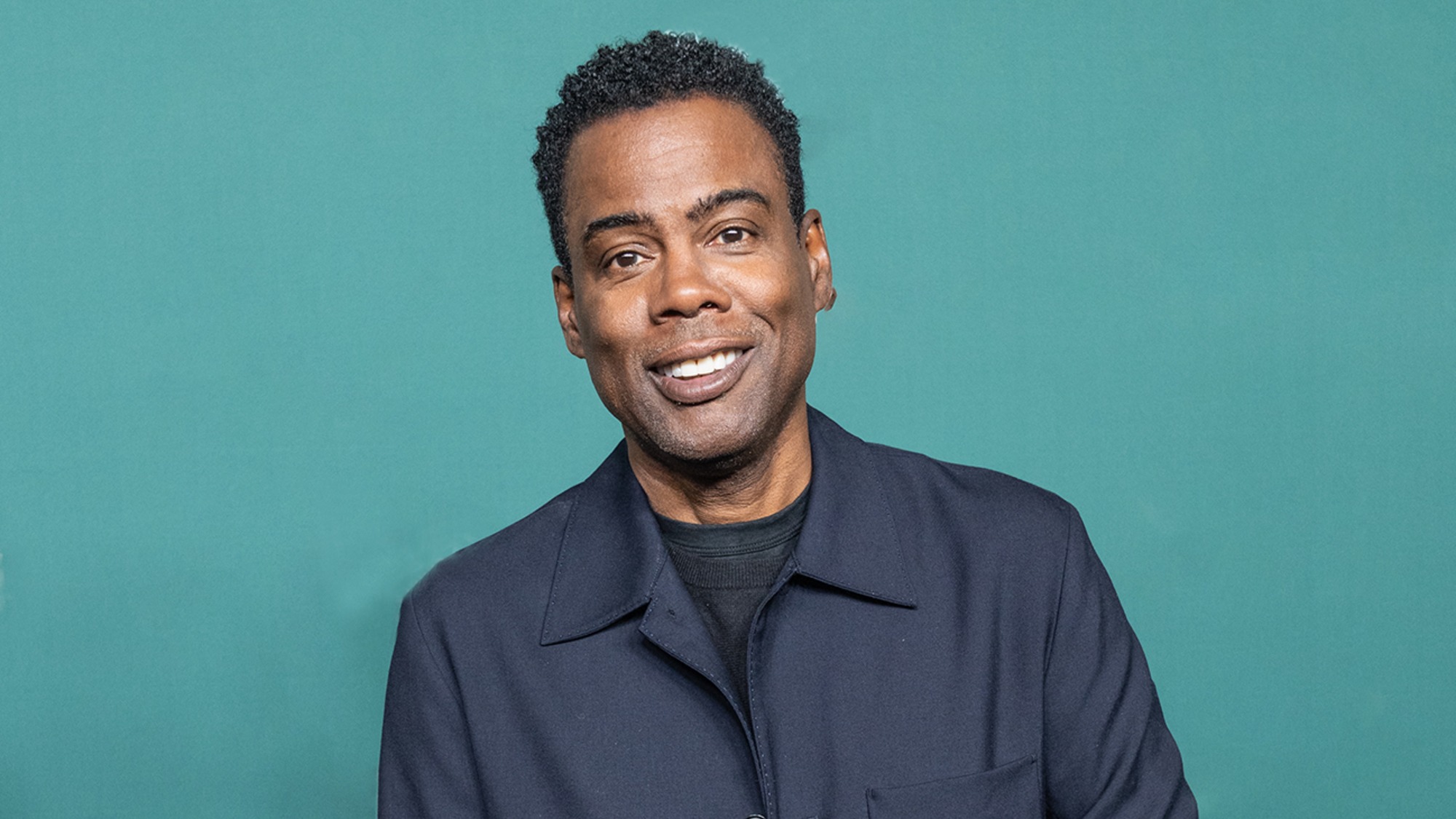
    Why Rock can’t take a hint

    Chris Rock knows he’s acted coldly to a lot of people over the years, said Zach Baron in GQ. But until about a decade ago, he chalked it all up to being a famous comedian. “I used to just blame everything on celebrity,” says Rock, 61. “It’s like, ‘Oh, we’re not connecting because I had a chronic unique-ism.’ I thought I was so f---ing unique.” Turns out, Rock has Nonverbal Learning Disorder, which makes it hard for him to pick up on social cues. “I’m not one for a hint. You got to tell me exactly what you want, what you mean.” He was diagnosed with the disorder around 2018, after a friend’s comment led him to get a cognitive assessment. Post-diagnosis, previous interactions suddenly made sense. “It made me realize how insensitive a lot of my behavior was throughout the years.” He was already in a period of self-reflection following his 2016 divorce. “I was not a great husband. I watched a lot of porn. I wasn’t kind. I cheated.” He’s not proud of any of it, “but it’s something I had to go through. It’s like every Marvel movie, the [superheroes] have to test their powers. They’re assholes. They’re lifting up ocean liners and try to go to the sun, then they crash down because they realize they’re not God.” Rock, too, had to test himself after finding early success. “I definitely realized I wasn’t God or anywhere near him, and I was severely humbled, as I should have been.”


    Saturday Wrap was written and edited by Theunis Bates, Susan Caskie, Allan Kew, Bruno Maddox, Rebecca Nathanson, Tim O’Donnell, and Zach Schonbrun.

    Image credits, from top:  Getty; AP; Getty; Getty
     

    Recent editions

    • Evening Review

      Life after Huang: what next for Nvidia?

    • Morning Report

      Besieged Nvidia boss Huang resigns

    • Evening Review

      Burnham’s choice: cost of living or climate?

    VIEW ALL
    TheWeek
    • About Us
    • Contact Future's experts
    • Terms and Conditions
    • Privacy Policy
    • Cookie Policy
    • Advertise With Us
    • FAQ
    Add as a preferred source on Google Add as a preferred source on Google

    The Week UK is part of Future plc, an international media group and leading digital publisher. Visit our corporate site.

    © Future Publishing Limited Quay House, The Ambury, Bath BA1 1UA. All rights reserved. England and Wales company registration number 2008885.