The Week UK
flag of US
US
flag of UK
UK
https://cdn.mos.cms.futurecdn.net/flexiimages/jzblygzdxr1769609154.gif

SUBSCRIBE

Start your trial today

Sign in
  • View Profile
  • Sign out
  • The Explainer
  • Talking Points
  • The Week Recommends
  • Podcasts
  • Newsletters
  • From the Magazine
  • The Week Junior
  • More
    • Politics
    • World News
    • Business
    • Health
    • Science
    • Food & Drink
    • Travel
    • Culture
    • History
    • Personal Finance
    • Puzzles
    • Photos
    • The Blend
    • All Categories
  • Newsletter sign up Newsletter
  • The Week’s Sunday Shortlist
    An inscrutable documentary subject, a reliable rom-com, and the death of literacy

     
    FILM REVIEW

    You Can See Everything

    An eye-to-eye encounter with an unblinking fraudster
    ★★★★ (out of 4)

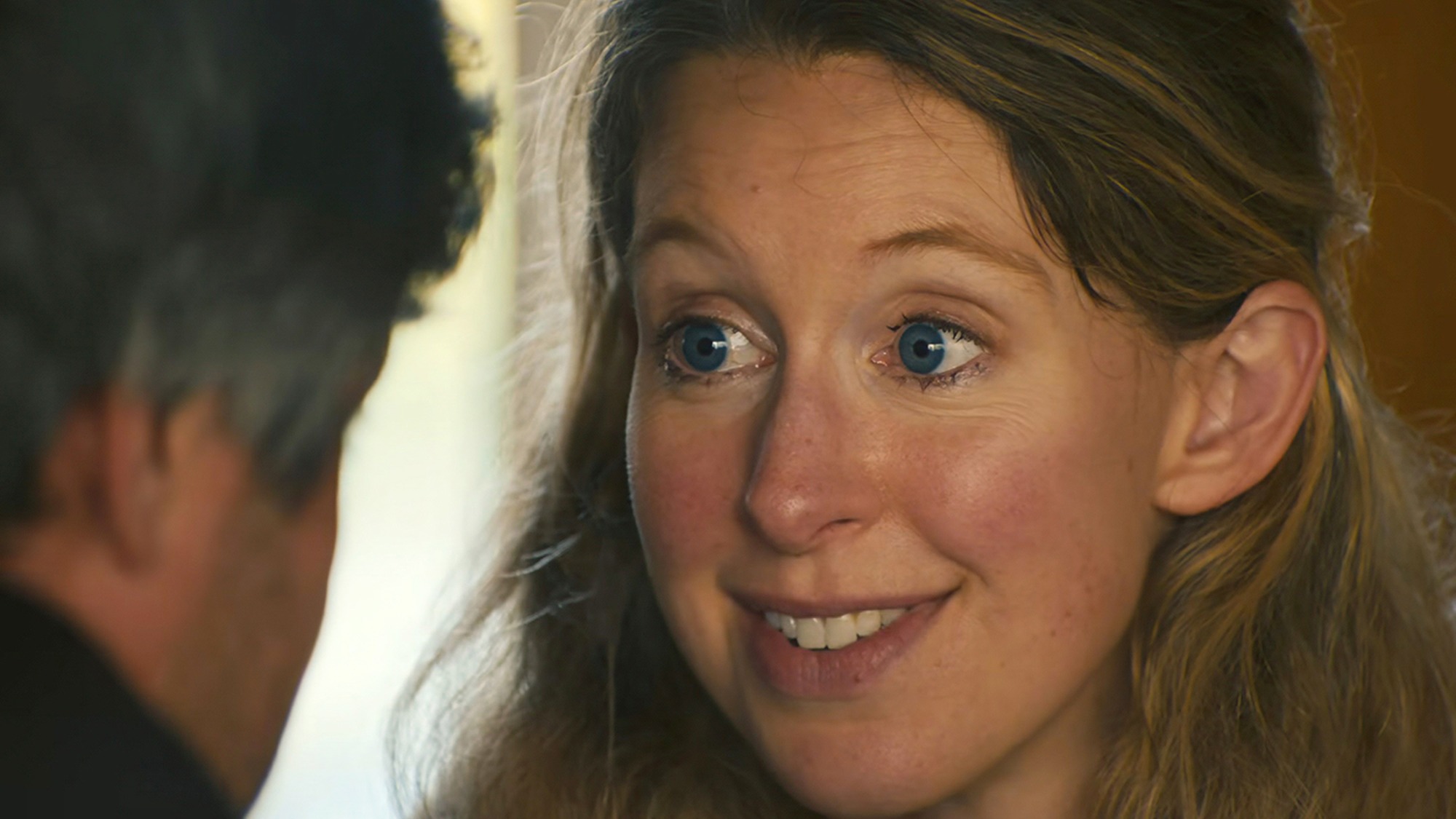
    “No two people will draw the same conclusions from this movie. That is part of what makes it a masterpiece,” said Shane O’Neill in The Washington Post. Nathan Fielder and Lance Oppenheim’s unsettling portrait of convicted Theranos founder Elizabeth Holmes became “the most anticipated documentary of the decade” when an “unnerving” teaser was released last month showing a smiling, unblinking Holmes in extreme close-up staring at Fielder and insisting on her guilelessness. Word spread that shortly before she reported to prison in 2023, she had invited Fielder, the idiosyncratic mastermind behind The Rehearsal, to bring his cameras into her home, and in the resulting three-hour film, “she doesn’t get any less weird or more scrutable.” Somehow “more shocking, thornier, and revealing than billed,” You Can See Everything “plays like an unraveling of certainty in real time,” said Adrian Horton in The Guardian. Holmes continues to insist she did nothing wrong when she became a billionaire a decade ago by touting a breakthrough medical device that her company couldn’t build, said Owen Gleiberman in Variety. Yet when she heads to prison halfway through, bidding goodbye to her husband and two children, this already riveting film “truly takes wing.” Bringing in a stand-in for Holmes, Fielder keeps pushing to understand his subject’s apparent detachment from reality, until the movie becomes “an intricate investigation into, among other things, the incomprehensibility of love,” said Nick Schager in The Daily Beast. In the end, “it’s not just the film of the year.” It’s also “a documentary that stands shoulder to shoulder with the form’s all-time greats.” 


    tv review

    Nobody Wants This

    Joanne and Noah haven’t just lasted; the unlikely pair at the center of this hit romantic comedy now live together. But Kristen Bell’s Joanne still feels like an outsider at the synagogue led by Adam Brody’s Noah even as she explores converting to Judaism in a class taught by a rabbi, played by Sarah Silverman, who’s new to the show. Meanwhile, Noah’s brother, Sasha, is pushed back into the dating world by his wife, Esther, who’s in midlife crisis mode. That makes the existing romantic tension between Sasha and Joanne’s sister, played by Timothy Simons and Justine Lupe, well worth monitoring. Thursday, Oct. 22, Netflix 


    FOOD & DRINK

    Bourbon: An underdog winner

    How much would you pay for the world’s best bourbon? asked Brad Japhe in Food & Wine. What about $25? 

    Old Bardstown Bottled-in-Bond, from Bardstown, Ky.’s Willett Distillery, has topped rivals that cost 10 to 20 times more to win this year’s bourbon trophy at the prestigious International Wine and Spirits Competition. Even for Willett, which releases “some of the priciest American whiskeys on the market,” the 100-proof award winner is an outlier. But the four-year-aged whiskey has history, as it’s derived from the Willett family’s original 1936 mash bill of 72 percent corn, 15 percent malted barley, and 13 percent rye. Unfortunately, there’s a catch, because Willett only distributes its Bottled-in-Bond expression in Kentucky. If you get your hands on a bottle, you might savor the same traits the judges mentioned, including a “balanced dry palate where marmalade and brioche meld seamlessly with a delicate floral touch,” and “a lingering finish full of character and charm.”


    BOOK OF THE WEEK

    The New Dark Ages: The Death of Reading and the Dawn of the Post-Literate Society

    by James Marriott 

    “It is a shame how many people wouldn’t dream of reading James Marriott’s eloquent, learned, and admirably brief book,” said Daniel Akst in The Wall Street Journal. Reading is dying, as the 33-year-old London Times columnist tells us, so it’s inevitable that most of the public will miss out on the joys of following him as he lays out his concerns. The causes of his worries aren’t new. A 2022 survey found that in the previous 12 months fewer than half of American adults had read a book. A year later, another study found that in an average day only 16% read anything for pleasure. Of course, there’s “a lot more at stake” in this decline than good books being left unread. Marriott, by revisiting ties between the rise of mass literacy and mass democracy, “makes a strong case” that long-form reading is a necessary ingredient to sustaining the kind of rational and probing collective dialogue that has made mass democracy possible. 

    Marriott “might be insufficiently pessimistic,” said George F. Will in The Washington Post. Though he’s right that smartphones and the short-form videos they spawn have contributed to reading’s decline, the larger problem is that too many of our fellow citizens have become “pathetically nostalgic for the mental lassitude of preliterate people.” It was not until the 18th century that large numbers of our forebears began reading widely, but we have them to thank for launching the modern age, and today, as childish thinking spreads, we’re seeing that “reason, tolerance, and progress are contingent, not inherent, facets of humanity’s story.” Marriott, “like many alarmists,” builds his argument on cherry-picked data, said Chris Ferguson in Reason. He reports that reading scores for U.S. students hit an all-time low in 2024 without mentioning that they’d peaked in 2012, several years after the advent of smartphones. Meanwhile, the supposed link between literacy and healthy democracies is undermined by the highly literate societies that gave birth to the fascist regimes of 20th-century Germany, Italy, and Japan. 

    “The New Dark Ages is too ominously titled,” said Michael O’Donnell in the Los Angeles Review of Books. Throughout the book, Marriott “thoughtfully acknowledges” evidence that reading and reason might not be utterly doomed, though he could have done more to acknowledge that the work many of us do still requires a lot of reading and writing. “Are we courting the same scenario as the Middle Ages, when a select few held the keys to knowledge, to the exclusion of all others? Probably not.” Still, “the thrust of Marriott’s argument— there is a decline in reading that is antithetical to the progress of the Enlightenment— strikes me as persuasive.” 


    OBITUARY

    Jim Bakker

    The preacher who was felled by his many sins

    Jim Bakker preached prosperity gospel, which holds that piling up earthly wealth is a marker of divine grace. By that metric, Bakker was a blessed man. During his mid-1980s peak, he and his wife, Tammy Faye, pulled in $129 million a year through their television ministry, PTL, short for Praise the Lord (or, to detractors, Pass the Loot). The pair had four homes, a fleet of luxury cars, a 55-foot houseboat, and a gold-plated bathtub. In 1978, they opened Heritage USA, a Christian theme park in South Carolina that drew 6 million visitors a year; by 1986, PTL had 13 million viewers a day. It all hit a wall in 1987, when it came out that Bakker had paid $265,000 to a 21-year-old church secretary, Jessica Hahn, to keep her quiet after she accused him of rape. (He said the sex was consensual.) Two years later, he was convicted of siphoning millions from PTL to bankroll his opulent lifestyle, and he served five years in prison. “Excess and success are close together,” he said in 1985. “Anyone who is successful has got to be excessive.” 

    Bakker grew up in a blue-collar Pentecostal family in Muskegon, Mich., said The Charlotte Observer. A “middling student,” he showed an Eva Marie Saint made a massive impact in her first few films but wasn’t given much of a chance after the 1950s. One of the last living stars of the classic Hollywood era, she won an Oscar for her first role, a shy convent school graduate who falls for Marlon Brando’s disillusioned prizefighter in 1954’s On the Waterfront. In 1957, she played a spy who seduces Cary Grant in the Alfred Hitchcock classic North by Northwest. After that, she frustrated her agent by insisting she would do no more than one picture a year so she could be home for her two children. When she filmed with Grant, she was just two weeks postpartum, and Hitchcock had her clambering around 30 feet up on a movie-set version of Mount Rushmore for the scene where she dangles off the side of the mountain. “I thought, if I tumble, how am I going to hit my mark on that mattress below?” she said. “But coming from the Actors Studio, if you get hurt, you get hurt.” Raised near Albany, N.Y., Saint was the younger daughter of Quaker parents. She attended Bowling Green State University and initially planned to be a teacher like her mother, said the Los Angeles Times. But “on a dare from a friend, she tried “interest in showbiz and a talent for salesmanship.” At 18, he ran over a 3-year-old in a church parking lot, but the boy survived without serious injuries, an apparent miracle that spurred Bakker to attend Bible college. There he met Tammy Faye, whom he proposed to on their third date. The pair dropped out of school and traveled the country preaching and singing before landing a show on the Christian Broadcasting Network. That led to a stint as hosts of The 700 Club, then the launch of The PTL Club in 1976. The program had a “folksy, talk-show style,” said The Washington Post. There were interviews, “upbeat music,” and “relentless fundraising, often punctuated by tearful pleas from one or both of them.” 

    The revelation about Hahn yielded a “spectacular fall,” said Christianity Today. Bakker was convicted on 24 fraud and conspiracy counts, and prosecutors branded him a “brazen con man.” Freed in 1994, he remarried and launched The Jim Bakker Show. With “a new focus on end times,” Bakker lauded Donald Trump and sold survival gear and freeze-dried food. In his later years, his focus was on “the broken and the bruised and the hurt,” he said. “I’m here to say we have a God of second and third chances.”



    Sunday Shortlist was written and edited by Susan Caskie, Ryan Devlin, Chris Erikson, Chris Mitchell, and Matt Prigge.

    Image credits, from top: A24 / Everett; Netflix; Getty; Shutterstock
     

    Recent editions

    • Saturday Wrap

      Could Netanyahu finally lose his grip on power?

    • Evening Review

      Why did the PM ‘gatecrash’ the SNP?

    • Morning Report

      Healey mulls £2bn tax on banks

    VIEW ALL
    TheWeek
    • About Us
    • Contact Future's experts
    • Terms and Conditions
    • Privacy Policy
    • Cookie Policy
    • Advertise With Us
    • FAQ
    Add as a preferred source on Google Add as a preferred source on Google

    The Week UK is part of Future plc, an international media group and leading digital publisher. Visit our corporate site.

    © Future Publishing Limited Quay House, The Ambury, Bath BA1 1UA. All rights reserved. England and Wales company registration number 2008885.