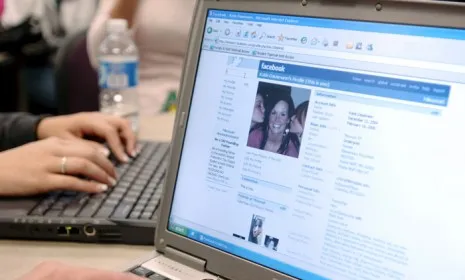
What happens to your Facebook account when you die? Or your Twitter? Who gets the rights to the thousands of songs in your iTunes library? Or access to your email? These are questions the U.S. government is hoping Americans will begin to consider, and Uncle Sam is now suggesting that every web-savvy citizen create a "social media will" to lay out what exactly your loved ones ought to do with your online accounts in the event of your death. Here's what you should know:
What would happen to my accounts if I died without a will?
Sites like Twitter and Facebook let a friend or relative remove a dead person's account if they provide a death certificate, says Meena Hart Duerson at the New York Daily News. Alternatively, loved ones can turn the deceased's page into a memorial tribute. The post-mortem policies of services like Google's Gmail, however, aren't as easy to navigate. Sometimes Google allows an authorized representative access to a deceased user's account, but, out of respect for the privacy rights of the dead person, Google doesn't guarantee that access.
The Week
Escape your echo chamber. Get the facts behind the news, plus analysis from multiple perspectives.
SUBSCRIBE & SAVE
Sign up for The Week's Free Newsletters
Join more than 350,000 subscribers and keep yourself informed with a selection of The Week’s most interesting, enlightening and entertaining stories - plus daily puzzles.
Join more than 350,000 subscribers and keep yourself informed with a selection of The Week’s most interesting, enlightening and entertaining stories - plus daily puzzles.
Latest Videos FromThe Week US
How would a social media will work?
It's much like a traditional will in that "you'll need to appoint someone you trust as an online executor," writes the U.S. government in a blog post. Legally empowered to carry out your wishes, "this person will be responsible for closing your email addresses, social media profiles, and blogs after you are deceased."
Do I really need a social media will?
It's a personal decision. But by some estimates, "nearly a half million people with Facebook accounts passed away last year," says Rebecca J. Rosen at The Atlantic. Friends and family are often left wondering: Should the account be left open? Should it be shut down? Should I turn it into a memorial? If you care about the answers to those questions, leaving a plan in place allows you to have a say.
Should my will include passwords?
The average person manages as many as 25 passwords at a time, using an average of eight of them on a daily basis. But putting that specific information into a legal document can get a bit messy. "Formal wills become public," Naomi Cahn, a professor of law at George Washington University, tells The Atlantic. So you need to be careful what you include, because if you have a formal social media will that's packed with your passwords, theoretically, anyone in the world can access that information.
What can I do instead?
Perhaps enter into an informal agreement with a close friend or relative. Or you can pay a service like Entrustet, Legacy Locker, or Data to scrub your identity from the internet when you're gone.
Sources: The Atlantic, Globe and Mail, New York Daily News, USA.gov