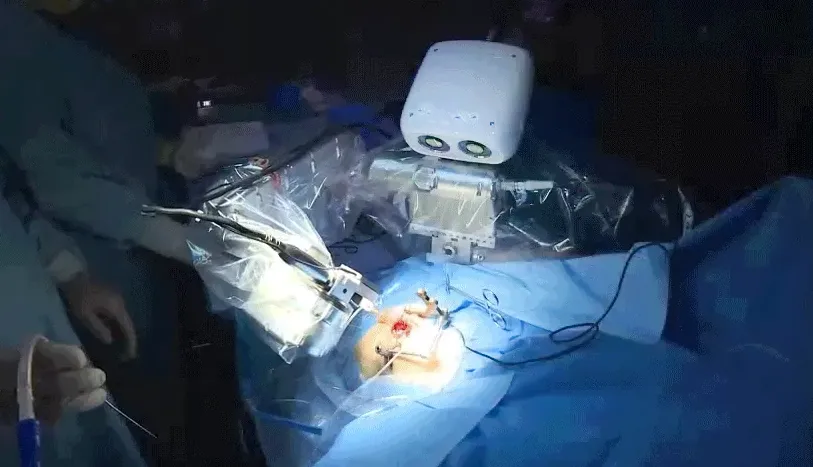
This robot is really good at drilling tiny holes into human skulls
And that's a good thing!
A free daily email with the biggest news stories of the day – and the best features from TheWeek.com
You are now subscribed
Your newsletter sign-up was successful
Surgeons have a new helper: a robot that's been "perfectly designed to drill tiny tunnels in your skull," said Rachel Feltman at Popular Science.
Each year, some 65,000 people with hearing difficulties receive cochlear implants, devices that transmit sound from an external microphone to the patient's auditory nerve. To install an implant, surgeons must drill "a 2.5-millimeter-wide tunnel through a chunk of skull surrounded by facial and taste nerves," a risky procedure that often results in patients losing some residual hearing.
To minimize accidental damage, researchers at Switzerland's University of Bern have developed a robotic surgical assistant that can drill with remarkable accuracy, straying as little as 0.4 mm off target during 99.7 percent of procedures.
The Week
Escape your echo chamber. Get the facts behind the news, plus analysis from multiple perspectives.
Sign up for The Week's Free Newsletters
From our morning news briefing to a weekly Good News Newsletter, get the best of The Week delivered directly to your inbox.
The bot has assisted with four implant operations since last summer; with more fine-tuning, doctors say, it could potentially be used in brain surgery.
A free daily email with the biggest news stories of the day – and the best features from TheWeek.com
-
Trump wants a weaker dollar but economists aren’t so sureTalking Points A weaker dollar can make imports more expensive but also boost gold
-
Political cartoons for February 3Cartoons Tuesday’s political cartoons include empty seats, the worst of the worst of bunnies, and more
-
Trump’s Kennedy Center closure plan draws ireSpeed Read Trump said he will close the center for two years for ‘renovations’