The Week The Week
flag of US
US
flag of UK
UK
https://cdn.mos.cms.futurecdn.net/flexiimages/jacafc5zvs1692883516.jpg

SUBSCRIBE & SAVE

Less than $3 per week

Sign in
  • View Profile
  • Sign out
  • The Explainer
  • The Week Recommends
  • Newsletters
  • Cartoons
  • From the Magazine
  • The Week Junior
  • Student Offers
  • More
    • Politics
    • World News
    • Business
    • Health
    • Science
    • Food & Drink
    • Travel
    • Culture
    • History
    • Personal Finance
    • Puzzles
    • Photos
    • The Blend
    • All Categories
  • Newsletter sign up Newsletter
  • The Week Evening Review
    A meme war, Gerry Adams in court, and abandonment in the wild

     
    TODAY’S BIG QUESTION

    Why is Trump gamifying the war in Iran?

    “We’re winning this fight!” shouts the narrator, as the footage cuts from clips of “Call of Duty” to real-life scenes of US fighter jets and slo-mo missile strikes on Iran. The White House video, titled “Courtesy of the Red, White & Blue”, clocked up 58 million views in three days. A second video, “Justice the American Way”, blended bombing footage with memes and references to “Top Gun,” “Halo” and “Dragon Ball Z”.

    To some, the US administration’s use of imagery from video games and pop culture is just a modern way to celebrate “the nation’s war-fighting power”, said Drew Harwell in The Washington Post. But to others, it’s a “sick and callous joke from the nation’s highest public office”.

    What did the commentators say?
    Donald Trump’s second presidential campaign was “marked by a rage-baiting style of communications”, said Emerald Maxwell on France24, and his social media output has “not shifted tone since he took office”.

    Now, his White House “is transforming the Iran war effort into a meme campaign”, said Harwell in The Washington Post. Trump’s digital team is attempting to “win political points by running serious policy issues through the irreverent lens of internet culture”.

    They’re harnessing “some of the most renowned slivers of 21st-century American popular culture” to “promote the freshly launched war with Iran”, said David Bauder and Lou Kesten at The Associated Press. “It’s hard not to see the thinking here: the more cinematic the content, the more people might support the war.”

    The “sober charts and briefings” of past conflicts have “largely been replaced by a public relations campaign” with a “video-game vibe”, said Helen Coster and Tim Reid at Reuters. Past administrations used PR campaigns to “explain why the US has gone to war”, but for a Trump White House that has “struggled to articulate a clear case” for its operations in Iran, “it’s about how the US has gone to war” instead.

    What next?
    Flash polling suggested that 81% of Republicans “supported Trump’s initial decision to strike Iran”, said Michael Birnbaum in The Washington Post. Yet “even at that early stage”, only 54% supported a prolonged engagement.

    Support among independents and Democrats is even lower and falling. Trump’s “muscular, meme-driven imaging around the war effort” may be building support “within a slice of his existing base”, but “it is less clear that it is winning over sceptics on either side of the political aisle”.


    THE EXPLAINER

    The High Court case against Gerry Adams

    Former Sinn Féin leader Gerry Adams is “as culpable” for IRA bombings on the UK mainland “as the individuals who planted and detonated the devices”, the High Court in London heard yesterday.

    Three men injured in IRA attacks in the English capital are bringing a civil case against Adams (pictured above), who has long denied being a member of the IRA or participating in its operations during the Troubles. He arrived at the Royal Courts of Justice wearing a bulletproof vest.

    What is the claimants’ case?
    The men suing Adams, 77, were injured in the 1973 Old Bailey bombing and the attacks on London’s Docklands and Manchester’s Arndale Centre in 1996.

    In her opening statement, Anne Studd, representing the claimants, told the court that Adams was “directly responsible for and complicit” in the group’s terror attacks in the UK. The claimants would make the case that Adams “was an instrumental force” in the Provisional IRA in Northern Ireland, she said. And while “there is no doubt that the defendant contributed to the peace in Northern Ireland”, the claimants will allege “he also contributed to the war”.

    The court heard that Bill Clinton, who was US president at the time of the Good Friday Agreement, believed there was “credible evidence” that Adams was involved at “the highest level” in the IRA in the 1990s.

    What has Adams said?
    In his opening submission, Adams’ lawyer, Edward Craven, said that Adams “emphatically, unequivocally and categorically” denies being involved in the attacks or being a member of the IRA, and blamed suggestions to the contrary on “people with an axe to grind”.

    Adams, who will testify next week, has vowed to “robustly challenge” what he described as “unsubstantiated hearsay statements”. Speaking outside the High Court after the first day of the trial, he said: “The only thing that I am guilty of is being an Irish republican committed to ending British rule in our country and seeking to unite the people of Ireland on the basis of freedom, equality, peace and solidarity.”

    As it is a civil case, the verdict will be decided by the judge “on the basis of probabilities”, rather than the higher “beyond reasonable doubt” threshold applied in a criminal court. If Adams loses, he will have to pay symbolic “vindicatory” damages of £1 each to the three claimants.


    QUOTE OF THE DAY

    “Mr Watson, come here. I want to see you.” 

    Alexander Graham Bell’s words in the first ever telephone call, exactly 150 years ago today. Transmitted via a wire from the Scottish-born inventor’s Boston laboratory to his assistant Thomas Watson in a neighbouring room, the call changed the history of communications.


    Poll watch

    Labour’s VAT on private school fees has prompted 9% of affected families to remove their child from the independent sector, a survey of 1,167 “high-net-worth parents” suggests. The research, by wealth management firm Saltus, found that of those whose children remain in public education, 68% had made or expected to make financial sacrifices due to the tax, introduced in January last year.


    IN THE SPOTLIGHT

    ‘Alpine divorce’ has daters fearing abandonment

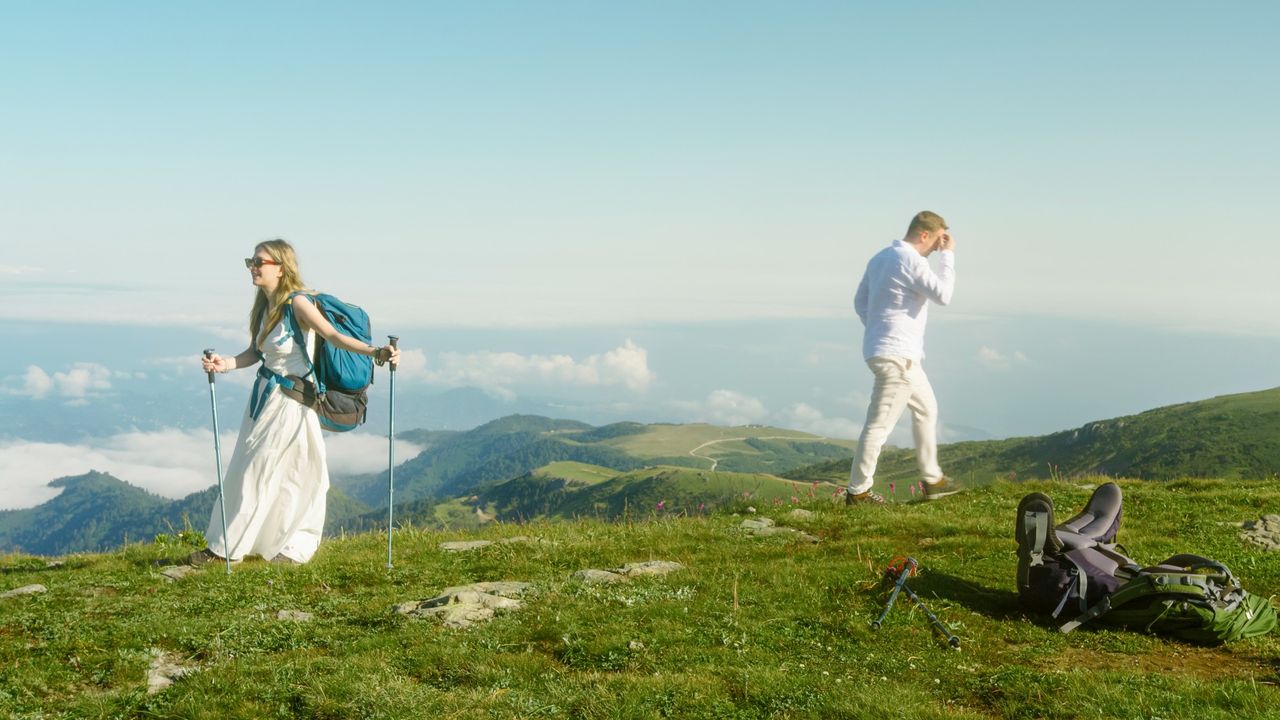
    Social media is buzzing about “alpine divorce”, a horrifying practice that some experts say is a form of abuse. The term refers to when a couple explores nature, during a hike or camping trip, and “one abandons the other in the wilderness to fend for themselves”, said USA Today.

    The name appears to originate from a late-1800s short story called “An Alpine Divorce” by Robert Barr, in which a man “attempts to murder his wife while the two are out hiking on a mountain”. It’s garnering renewed attention thanks to a viral TikTok video that provoked a flood of responses from women sharing experiences of similar abandonments.

    The Plamberger case
    The renewed interest has also been linked to a recent case in Austria that “sparked intense debates” about whether the “more skilled climber should be held liable for mountain tragedies or if responsibility rests with the individual”, said Outside.

    Experienced climber Thomas Plamberger was found guilty of gross negligent manslaughter after leaving his girlfriend, Kerstin Gurtner, about 164ft from the summit of the 12,461ft Grossglockner peak during a hike. Left in “high winds without an emergency blanket”, Gurtner died of hypothermia. Plamberger was given a €9,600 fine and a five-month suspended prison sentence.

    Future implications
    For many, the whole concept confirms their “worst fear” of being in an environment where they “don’t have control over what’s going on” and could be “abandoned somewhere”, Stephanie Sarkis, a psychotherapist specialising in narcissistic abuse, told USA Today. This is a “real fear for people”.

    There are “broader anxieties about trust, safety and power dynamics in relationships”, particularly in remote or high‑risk settings, said Newsweek. Outdoor safety experts have “long emphasised that hiking and climbing partners share responsibility for each other’s well-being”, especially when “experience levels differ”.

    The Plamberger verdict could set a precedent for future cases, Karsten Delap, a professional climber, guide and rescuer, told Outside. It affirms that “if you’re more experienced than your partner, you’re responsible whether you’re a guide or not”.


    Good day 👞

    … for sensible lace-ups, as Donald Trump champions Florsheim leather Oxfords. The president has reportedly been giving pairs of the US brand’s classic dress shoe, which retail for around $145 (£107), to lawmakers, agency heads and White House advisors. “All the boys have them,” an unnamed official told The Wall Street Journal. Another joked that “everybody’s afraid not to wear them”.


    Bad day 🍜

    … for Pot Noodles, which are facing an EU ban as a result of new food labelling rules. Under the proposed changes, 31 meat-related terms including chicken-flavoured and pork-flavoured could not be used on the packaging of vegetarian and vegan food, forcing rebrands of the budget-friendly snack and scores of other popular products.


    PICTURE OF THE DAY

    Splash hit

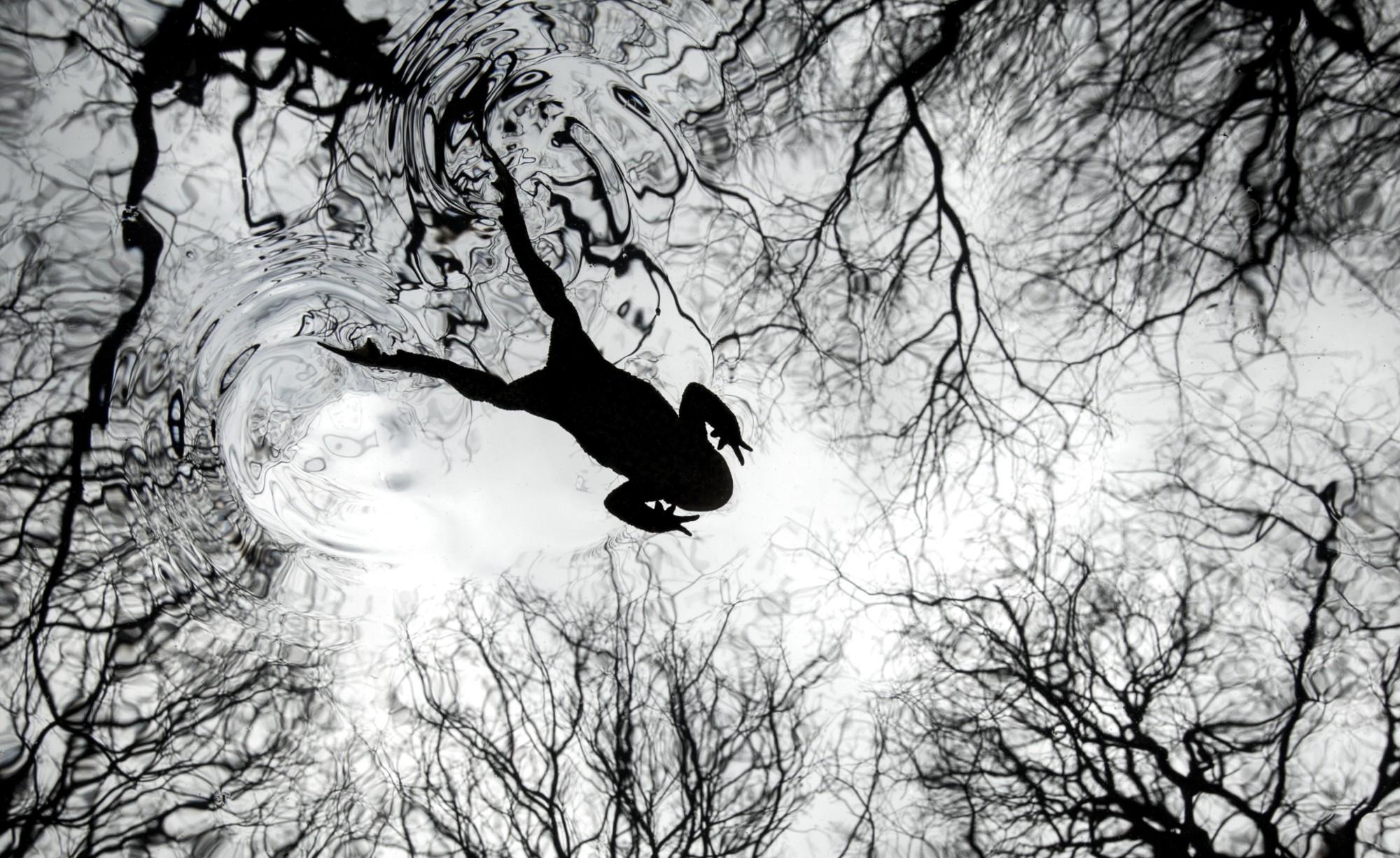
    A toad swims across a Sheffield pond in the top shot at this year’s British Wildlife Photography Awards. The black-and-white image, selected as overall winner from more than 12,000 entries, was taken by Paul Hobson, who built a glass box to house his camera underwater.

    Paul Hobson / British Wildlife Photography Awards


    Puzzles

    Guess the number

    Try The Week’s new daily number challenge in our puzzles and quizzes section

    Play here


    THE WEEK RECOMMENDS

    Thrilling snow holidays

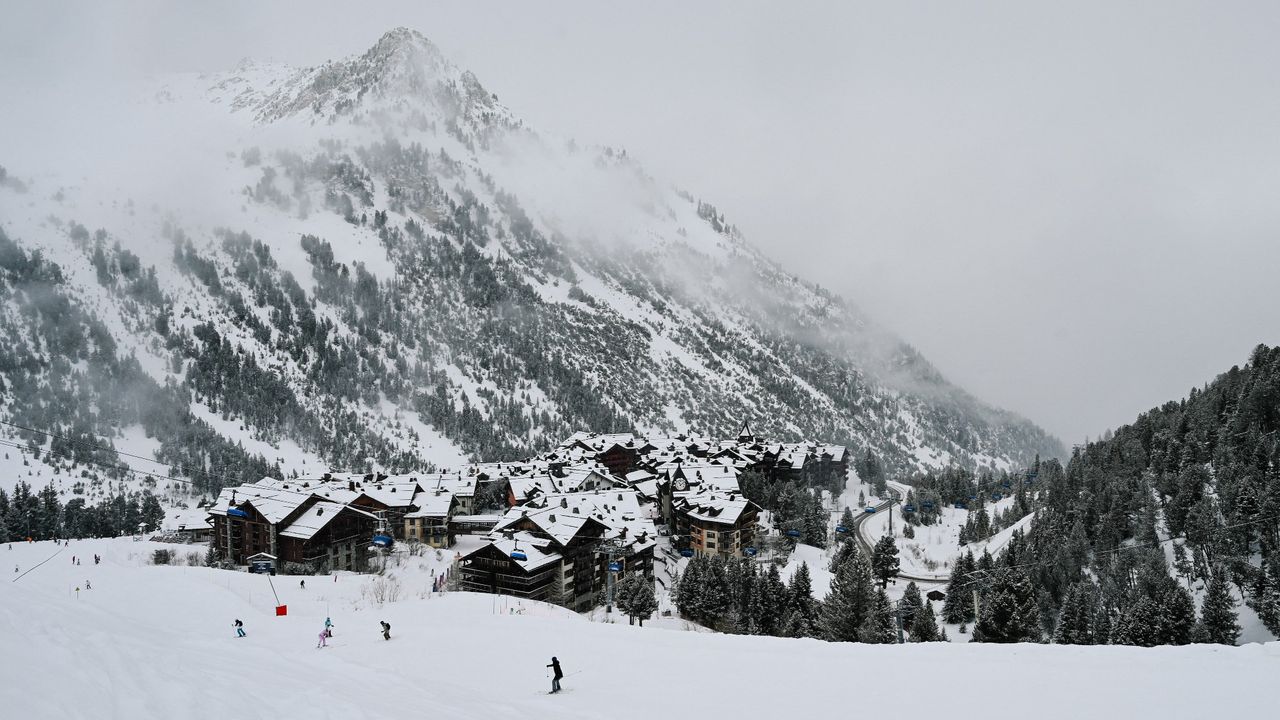
    Skiers from across Europe typically head to the Alps each winter. But before you “(snow)plough on with your usual ski holiday booking”, said The Times, check out the alternative destinations on offer. Here are some of the top options.

    Skijöring in Switzerland
    “Getting from A to B in winter has often required ingenuity” in isolated Alpine communities, said National Geographic. Enter “skijöring”, also known as “horse-powered skiing”. The sport featured in the first Winter Olympics, in Chamonix, France, in 1924. Give it a try in the Alpine resort village of Arosa, where a “horse-drawn sleigh takes riders from railway station to hotel”. The biggest highlight is skijöring across the “sparkling Lake St Moritz”.

    Wolf tracking in Abruzzo, Italy
    Wolves have been “making a comeback” in Italy, said The Times. As a result of rewilding drives in Abruzzo National Park, visitors have the “chance to find out more about this keystone species” and its historical links to the region. As well as making a trip to the Apennine Wolf Museum, the more adventurous can embark on “hikes, snowshoe expeditions and torchlight forays into the surrounding mountains in the hope of sightings and to listen to the howling”.

    Northern Lights tours in Norway
    “Watching the ethereal Northern Lights as they dance across the skies is possibly one of the most awe-inspiring activities you can enjoy on a snow holiday,” said Country Living. Alta, in the far north of Norway, is nicknamed the “Northern Lights city” for a reason. It is one of the best places in the country to see the aurora borealis.


    Statistic of the day

    137,000: How many days a year the Crown Court would need to sit for to keep up with expected demand for criminal cases by 2028-29. Measures being voted on by MPs today, including increasing the number of non-jury trials, would reduce this total to 110,000, according to Ministry of Justice projections.


    instant opinion

    Today’s best commentary

    Ian Huntley’s pointless death
    Steve Gallant on UnHerd 
    The prison killing of Ian Huntley “ultimately makes life less safe for everyone”, writes ex-convict and prison reform campaigner Steve Gallant. Such “vicious acts of violence” shift control of institutions “from formal rules to the unwritten codes” governing inmates, who “leave prison more dangerous than when they arrived”.  This attack goes “to the heart of what kind of penal system our society wants: one that quietly tolerates violence, or one that maintains disciplined authority over even the most hated of prisoners”.

    We Need to Stop Listening to Tony Blair Once and for All
    Steven Methven on Novara Media
    The “apocalyptic vision of Tehran ablaze” appears nightmarish to “most of us”, writes Steven Methven. But not, apparently, to Tony Blair, who “mourned the fact that the UK was not more involved” in the Iran strikes. “Were my hands bloodied with the deaths of up to a million” Iraqis, I’d “think twice before giving my opinion on yet another illegal US adventure”. Blair’s insistence on Britain being America’s lap dog reflects “a dangerous loyalty to an old idea in a fast-changing world”.

    Al fresco dining is overrated
    Julie Bindel in The Spectator 
    “Spring flowers” are emerging and “outdoor-eating aficionados” are “shivering through their fake smiles”, writes Julie Bindel. “It’s not just the cold” and rain that “puts me off” al fresco dining. In summer, there’s “pollen” and “insect stings”. Plus, outdoor seating is “almost always inferior”, waiters are “less attentive”, and “napkins can blow away”. And in London, “awful smells” vie “for attention with your delicious truffle-infused soup”. Just “stay indoors. That’s what restaurants were built for.”


    word of the day

    Blank

    The pages of a newly published book are blank of any content other than the names of its 10,000 authors, who include Philippa Gregory and Richard Osman. “Don’t Steal This Book” is being distributed at the London Book Fair today in protest against AI firms using writers’ work without permission, as the government prepares to release an economic impact assessment of copyright law proposals next week.


    Evening Review was written and edited by Hollie Clemence, Rebecca Messina, Irenie Forshaw, Will Barker, Chas Newkey-Burden, Theara Coleman, David Edwards, Helen Brown and Kari Wilkin, with illustrations from Stephen Kelly.

    Image credits, from top: illustration by Stephen Kelly / Shutterstock; Leon Neal / Getty Images; Sefa Kart / Getty Images; Paul Hobson / British Wildlife Photography Awards; Matthieu Delaty / Hans Lucas / AFP / Getty Images

    Morning Report and Evening Review were named Newsletter of the Year at the Publisher Newsletter Awards 2025
     

    Recent editions

    • Evening Review

      The Iran war could hurt Ukraine

    • Morning Report

      Iran picks a new leader

    • Sunday Shortlist

      A ‘vintage’ Pixar film

    VIEW ALL
    TheWeek
    • About Us
    • Contact Future's experts
    • Terms and Conditions
    • Privacy Policy
    • Cookie Policy
    • Advertise With Us
    • FAQ
    Add as a preferred source on Google Add as a preferred source on Google

    The Week is part of Future US Inc, an international media group and leading digital publisher. Visit our corporate site.

    © Future US, Inc. Full 7th Floor, 130 West 42nd Street, New York, NY 10036.