The Week The Week
flag of US
US
flag of UK
UK
https://cdn.mos.cms.futurecdn.net/flexiimages/jacafc5zvs1692883516.jpg

SUBSCRIBE & SAVE

Less than $3 per week

Sign in
  • View Profile
  • Sign out
  • The Explainer
  • The Week Recommends
  • Newsletters
  • Cartoons
  • From the Magazine
  • The Week Junior
  • Student Offers
  • More
    • Politics
    • World News
    • Business
    • Health
    • Science
    • Food & Drink
    • Travel
    • Culture
    • History
    • Personal Finance
    • Puzzles
    • Photos
    • The Blend
    • All Categories
  • Newsletter sign up Newsletter
  • The Week Evening Review
    PM on the brink, Russia’s ‘Zugzwang’, and an ‘archaic’ voting system

     
    THE EXPLAINER

    Five moments it all went wrong for Starmer

    Keir Starmer swept to power in July 2024 promising “national renewal”. Less than two years later, his premiership is hanging by a thread as more and more of his own MPs and ministers break cover and call for him to go. Here are five moments that brought Starmer to the brink.

    Winter fuel payments
    The Stockport riots and “Freebie-gate” dominated Labour’s first few months in power and helped to ensure the party’s post-election honeymoon was short-lived. But the early decision to introduce means-testing to winter fuel payments for older people had the most toxic effect on support among voters still unsure about what Starmer and his party stood for. Despite the government’s later decision to restore the payments to the majority of pensioners, trust was damaged.

    National insurance rises
    In her first Budget, Rachel Reeves was accused of breaking a key election manifesto pledge not to increase taxes on working people. Increasing the employers’ rate of NI was meant to raise £24 billion in a bid to balance the books, but the Office for Budget Responsibility warned that the move would lead to job losses, a squeeze on pay and lower growth. Although technically not a breach of Labour’s promise, the hike increased the financial strain on small businesses and left a sour taste in the mouths of many voters who felt they had been deceived.

    Welfare U-turn
    Reeves’ proposed £5 billion in disability cuts angered many Labour MPs while failing to address the structural problems of the benefits system. Although Labour ultimately U-turned again, this “failure to hold the line on restraining disability spending” was “when Starmer’s government lost its way”, said The Independent’s John Rentoul.

    The Mandelson affair
    Damaging questions were raised about Starmer’s judgement after Mandelson was sacked as US ambassador last September, following the release of emails revealing the extent of his relationship with Jeffrey Epstein. Starmer’s government was left “embroiled in Britain’s worst political scandal of this century” as a result of the decision to push through Mandelson’s appointment despite concerns within the civil service, said The Economist.

    Local elections
    Growing national unrest came to a head in last week’s local and devolved elections. With Starmer’s personal approval rating tanking and his party squeezed by Reform UK on the right and the Greens on the left, Labour lost scores of seats and councils, as well as control of Wales for the first time in a century.


    TODAY’S BIG QUESTION

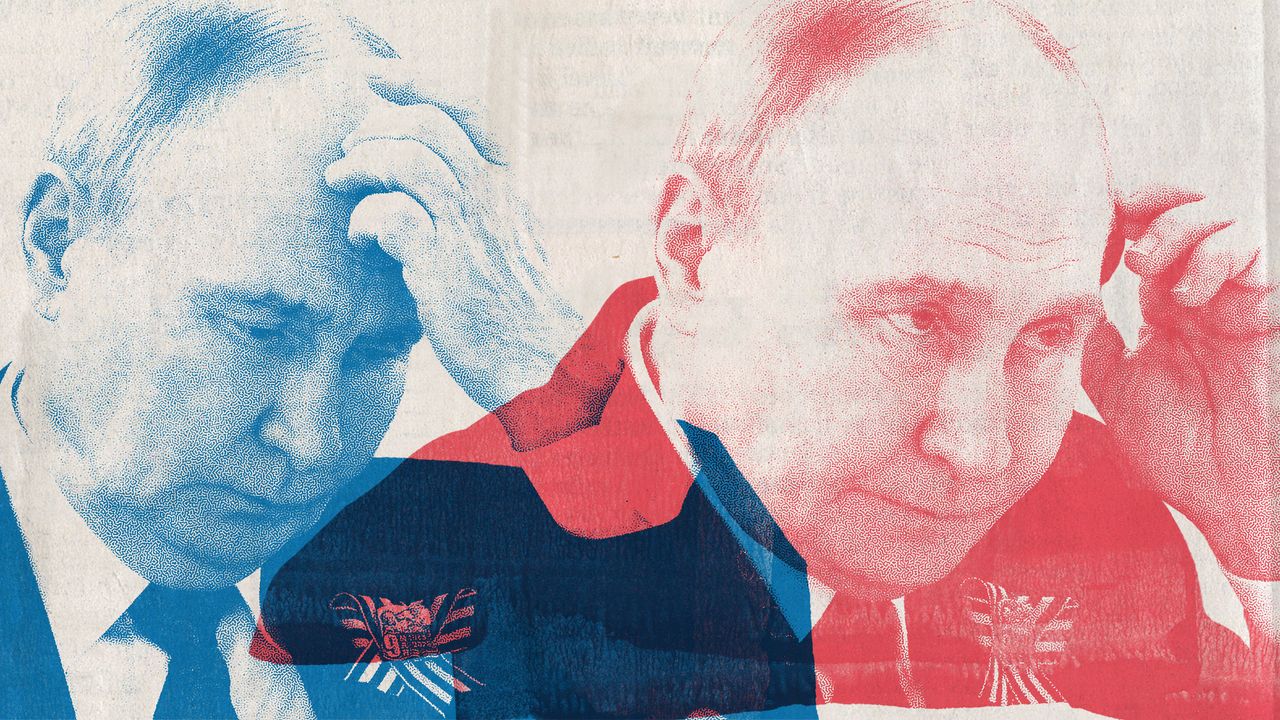
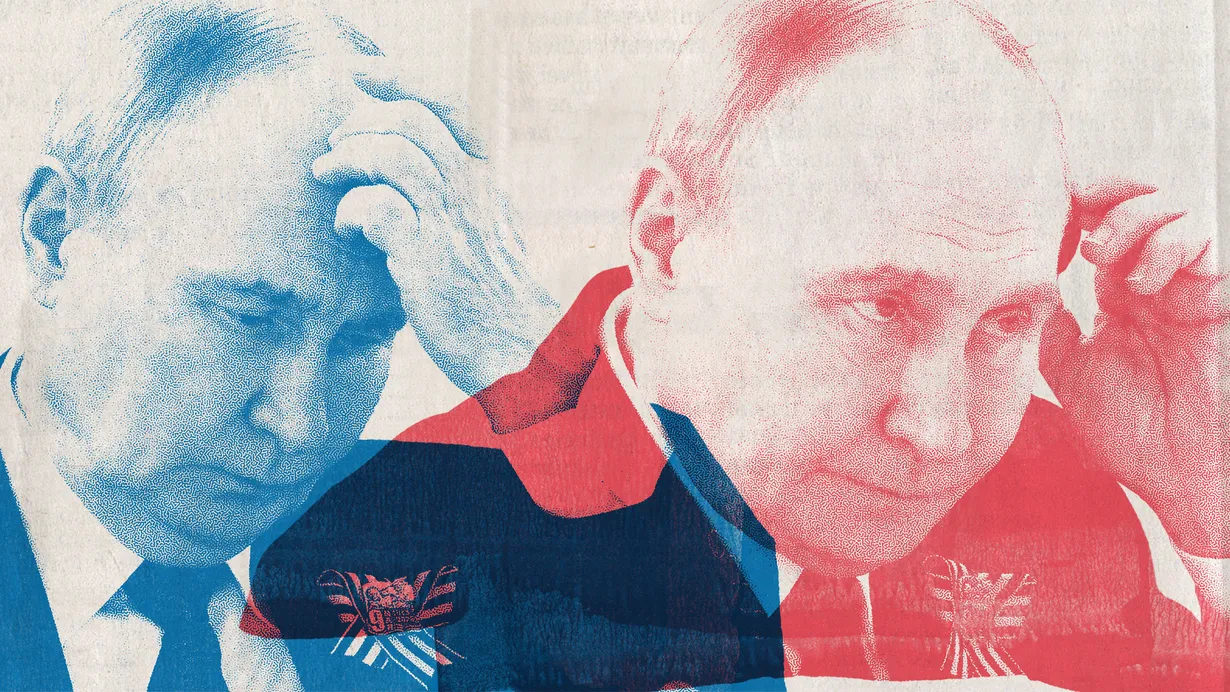
    Is Putin’s chokehold on Russia slipping?

    For nearly a quarter of a century, Vladimir Putin has led Russia as one of the most successful authoritarians on Earth. But more than four years after launching the all-out invasion of Ukraine, the Russian president is in unfamiliar political territory, amid rumours of organised unrest.

    What did the commentators say?
    There is a sense of “mounting unease within the Kremlin” as it grapples with not only domestic and economic problems but also “increasing signs of dissent and setbacks on the battlefield in Ukraine”, said CNN, citing a leaked report from an unnamed European intelligence agency. Following a “wave of assassinations of top Russian military figures and fears of a coup”, Putin’s security has been “dramatically increased” and surveillance systems have been installed “in the homes of close staffers”.

    Putin is “increasingly concerned” about an alleged “plot by members of the Russian political elite to topple him”, said The Times, “or even assassinate him with drones”. The president and his family have “stopped visiting their luxury residences” and he is spending “weeks at a time in bunkers”.

    The leaked report focuses on “growing internal tensions” between Putin and his former defence minister, said the Kyiv Post. Sergei Shoigu, now Russia’s Security Council secretary, is considered a “potential coup risk” for his “continued influence within the military leadership”, although there is no hard evidence of personal “wrongdoing”.

    Putin’s authority has been hit by a “confluence” of factors, said The Economist, including rising wartime costs. Shifting geopolitical winds and the collapse of Russia’s previous “social contract”, in which the state “stayed out of people’s private lives while citizens stayed out of politics”, have created a “situation which in chess is known as a Zugzwang: when every move worsens the position”.

    But this leaked report looks “suspiciously more like a psyop meant to generate paranoia in the Russian elite”, said Mark Galeotti at The Spectator. Putin “may indeed fear direct Ukrainian attack”, but talk of a coup feels more like intelligence agencies providing “their masters with what they want, not need, to hear”.

    What next?
    Revolution is not “imminent”, said The Wall Street Journal, and Putin is unlikely to “be sidelined soon”. But compared to “just last December”, when Russia was “buoyed by hopes” of a US-negotiated Moscow-friendly ceasefire with Ukraine, the “change in mood is remarkable”.


    QUOTE OF THE DAY

    “May I say, well done in the Americas. You were superb, absolutely superb, put that little ratbag in his place.”

    Rod Stewart congratulates King Charles on his state visit to Washington. Charles appeared to laugh off the seeming dig at Donald Trump as he greeted the singer and other guests last night at a London event celebrating the 50th anniversary of The King’s Trust.   


    Poll watch

    Half of British voters think Keir Starmer should stand down, according to a YouGov poll of 4,904 adults yesterday. Less than a third (29%) said the prime minister should continue as leader of the Labour Party and the country, while the rest weren’t sure what he should do. 


    TALKING POINT

    First-past-the-post: no longer fit for purpose?

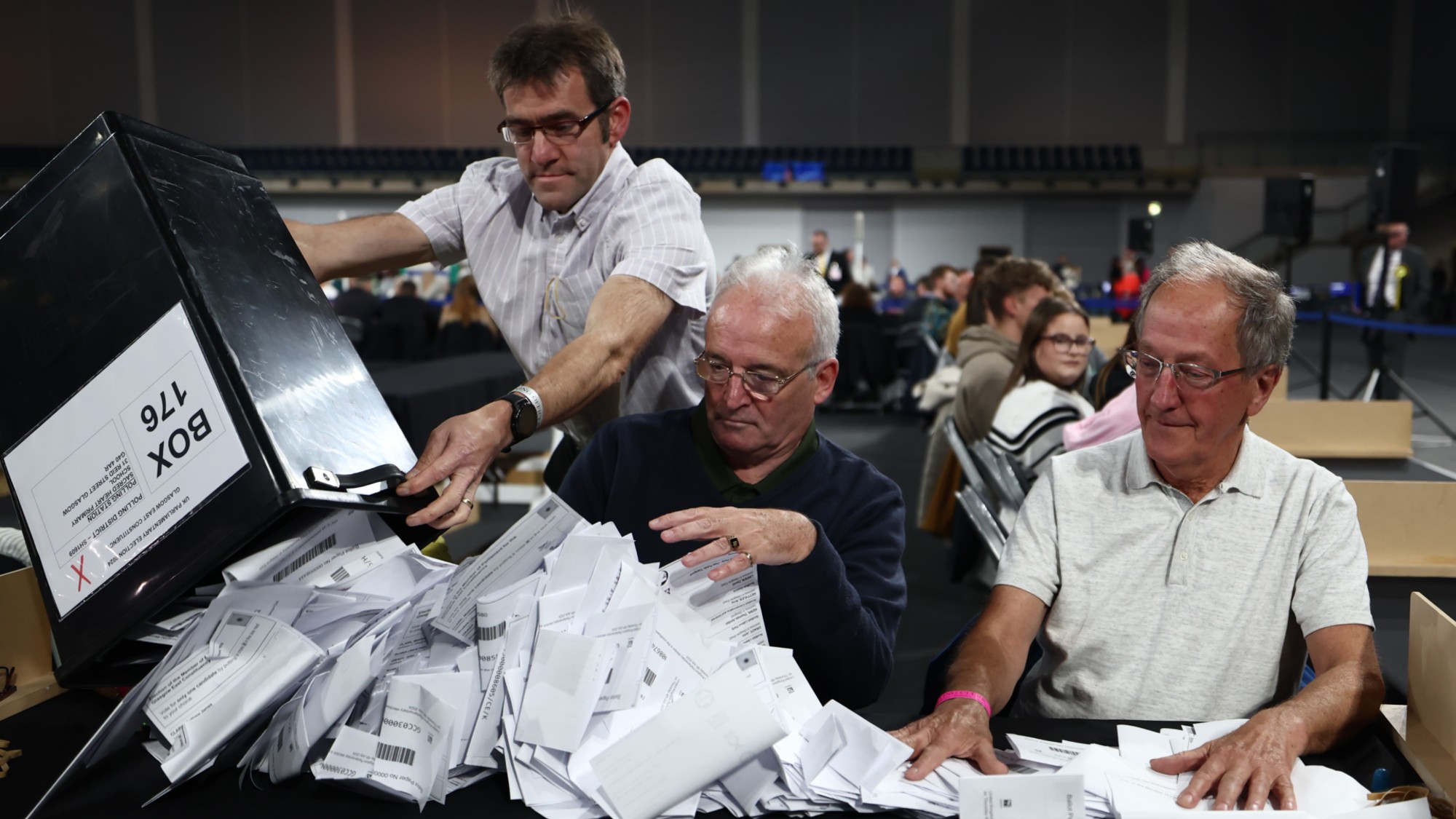
    England’s first-past-the-post electoral system has long been regarded as “a friend of the Conservative and Labour parties”, said political scientist John Curtice on the BBC. The election of the candidate with the most votes in each constituency has stymied small parties, whose votes may be geographically spread. But as the political field becomes more crowded, first-past-the-post “served to exaggerate” the loss of support for the two main parties in last week’s local elections.

    ‘Post-election horse-trading’
    Our “archaic” voting system is “no longer fit for purpose”, said Andrew Grice in The Independent. The traditional argument in the system’s defence was that it delivered stability, but we have “hardly had stable governments in the 10 years” since the EU referendum, and these recent local election results suggest that the “next general election will be unpredictable and chaotic”. We now have five major parties in England, and six each in Scotland and Wales, with nationalists “on the march in both”. It will be very difficult for anyone to win a majority, leading to “post-election horse-trading” between parties in a coalition or “pacts for key Commons votes”.

    Nigel Farage used to “bang on about the need for proportional representation”, the voting system used for the Scottish Parliament and the Welsh Senedd. But – “surprise, surprise” – he “seems to have cooled” on that, now that first-past-the-post offers him a chance of becoming prime minister.

    ‘Tyranny of the minority’
    In a multiparty landscape, first-past-the-post “distorts voter choice”, said political scientist Vernon Bogdanor in the Financial Times. Voters must guess “how to keep out” the party they most dislike, making voting feel like “participating in a lottery”.

    A proportional representation system of transferable votes, in which second and further preferences count, is now “an essential safeguard”, said the FT’s Martin Wolf. We need to protect Britain from the “tyranny of the minority”, in which “a small plurality secures overwhelming power”. 

    For decades, first-past-the-post has “done a sterling job of keeping extremists out”, while the far-right “surged across Europe”, said Gaby Hinsliff in The Guardian. Proportional representation doesn’t mean “an end to the grubby deal-making”. It might create parliaments “roughly reflective of how people actually voted”, but that proportionality “doesn’t always survive the messy process of forming governments”.


    Good day 📺

    … for Wordle, which is being turned into a television game show. US broadcaster NBC has announced that news anchor Nancy Guthrie will host the new adaptation of The New York Times’ online five-letter word puzzle, which will be filmed this summer in the UK, in Manchester, and broadcast here and across the US from next year.


    Bad day 💰

    … for Zack Polanski, who’s admitted he may not have paid the correct amount of council tax while living on a houseboat in east London. A spokesperson for the Green Party leader said he “apologises sincerely for the unintentional mistake” and has “taken steps to pay any council tax he may be found to owe”.


    PICTURE OF THE DAY

    Safe hands

    A Barbary macaque clutches its mother at Trentham Monkey Forest in Staffordshire. The baby is one of four newborns at the sanctuary for the endangered monkeys, which roam freely in a 60-acre forest.

    Josh Torlop / Trentham Monkey Forest


    Puzzles

    Chain Word

    Try The Week’s new daily word challenge in our puzzles and quizzes section

    Play here


    THE WEEK RECOMMENDS

    Why Brazil is having a moment

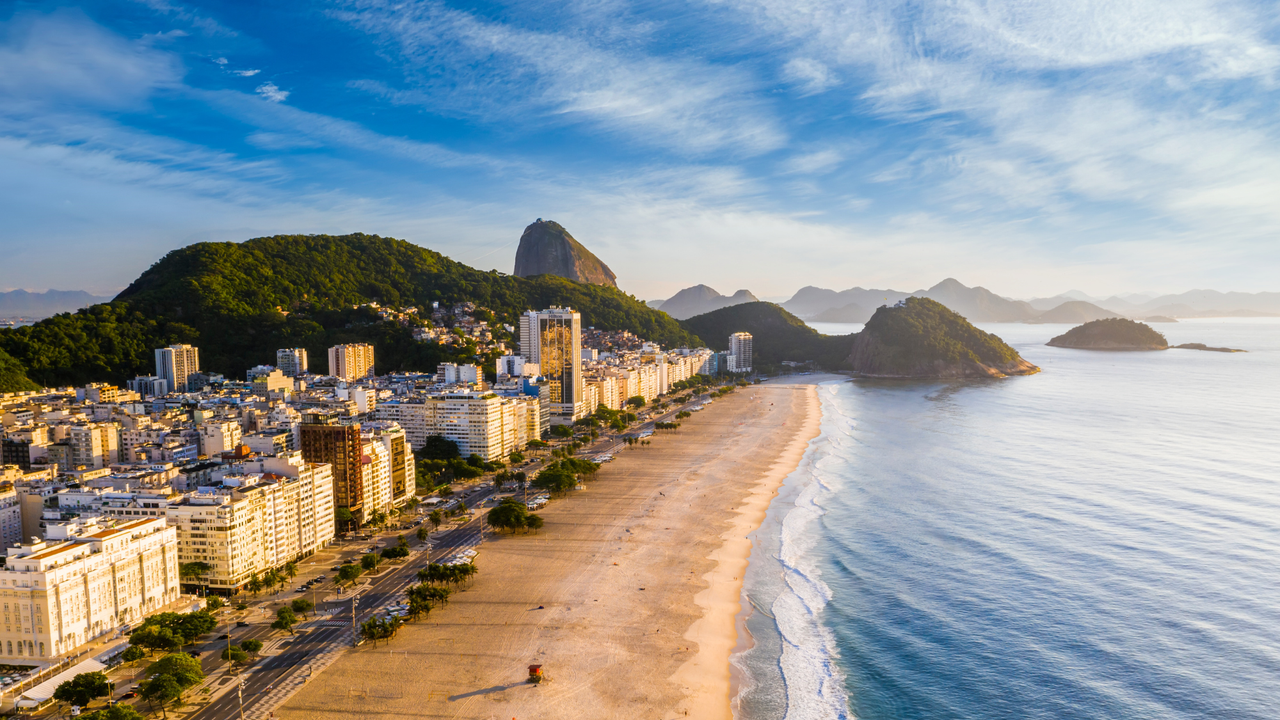
    Brazil is our “destination of the year”, said Jacqui Gifford in Travel + Leisure. With a restaurant scene that’s “on fire”, beautiful “untamed” landscapes, “spectacular” beaches and, of course, unbeatable carnivals, this is the hottest place to visit in 2026. Brazil has seen a 37% year-on-year rise in visitors, thanks in part to an increase in flights from Europe.

    December to March is “peak season” in Brazil, bringing the “heat, summer rains and parties to the streets of Rio de Janeiro for Carnaval”, said National Geographic. Or if you visit during the southern hemisphere’s spring (September to December), consider a wildlife-focused trip with a visit to the Pantanal – the world’s biggest tropical wetland.

    August and September is “peak wild jaguar sighting season”, as the big cats gather along the river banks to hunt for caimans. And if you plan your trip for June (winter in Brazil), the seasonal rainwater lagoons at Lençóis Maranhenses reach their highest levels, ideal for swimming, but the weather is dry and sunny. This is also when humpback whales begin migrating from icy Antarctica to breed in the warmer waters off the coast of Bahia and Rio de Janeiro. It’s well worth booking a tour with Projeto Baleia Jubarte.

    June to November (dry season) is also the best time of year to visit the Amazon. Consider exploring the dense, tropical rainforest on a river cruise, said Chris Moss in The Telegraph. “As a nature-lover and twitcher, I have marvelled at macaws, kingfishers, hummingbirds and giant otters.” Starting from Belém at the mouth of the Amazon, you can sail as far as Iquitos in Peru.


    Statistic of the day

    6,497: The number of obese children and teenagers treated by NHS Complications from Excess Weight clinics since the initiative launched in 2021. Of those children, 423 were aged four when treatment began, according to newly published NHS England data.


    instant opinion

    Today’s best commentary

    Ignore the Hype. The Election Results Show Reform Is in Reverse
    Sam Bright on Novara Media
    The “stupefying media pageantry” around Reform UK’s election victories “has created a disorienting haze”, writes Sam Bright. Reform’s vote share actually dipped from 30% in last year’s local elections to 26% this time around. “The prospect of a Reform majority” in a general election “is getting ever slimmer”, as more people “actively vote against” the party, its supporters wobble over the “decision to absorb a raft of failed former Tory ministers”, and Nigel Farage’s finances come “under growing scrutiny”.

    Will AI turn us all into hipsters and artisans?
    Sarah O’Connor in the Financial Times
    Google DeepMind boffins tell us AI won’t wipe out “demand for human labour” because the wealthy will spend “their money on ‘human-intensive, provenance-rich’” goods, writes Sarah O’Connor. But it’s hardly “idyllic” to have to compete to please a few “elites” with artisanal works. And people “are not very good at telling the difference” between human and AI-generated artworks anyway. Even if there is “demand for more artisans in an increasingly automated future”, it won’t “mean a simple life”.

    Road rage and rows like Benedict Cumberbatch’s are what put me off bikes
    Robert Crampton in The Times
    “Face-offs” like the viral “confrontation between Benedict Cumberbatch and another cyclist” take place “across London numerous times each day”, writes Robert Crampton. After cycling for 30 years, I’ve quit because of the “anger and arrogance” of other bike users. Many are “foaming-at-the-mouth bullies, not caring who or what is in their path”. Morphing “from early adopter green hero” to the current “reviled narcissistic threat”, urban cyclists have made “quite the journey. Sadly in the wrong direction.”


    word of the day

    Rifting

    When the Earth’s crust and upper mantle split apart during the break-up of continents. This process has been happening for “tens of millions of years” in “rift valleys around the world”, said New Scientist. But geologists believe they’ve found a site where rifting is just beginning, in central Zambia. This “doesn’t necessarily mean that in 100 million years you’re going to have an ocean there”, lead researcher Rūta Karolytė told the magazine. “But it is a possibility.” 


    Evening Review was written and edited by Hollie Clemence, Rebecca Messina, Rafi Schwartz, Harriet Marsden, Chas Newkey-Burden, Irenie Forshaw, Adrienne Wyper, Helen Brown and Kari Wilkin, with illustrations from Stephen P. Kelly and Julia Wytrazek.

    Image credits, from top: illustration by Stephen P. Kelly / Getty Images; illustration by Julia Wytrazek / Getty Images; Jeff J Mitchell / Getty Images; Josh Torlop / Trentham Monkey Forest; Anton Petrus / Getty Images

    Morning Report and Evening Review were named Newsletter of the Year at the Publisher Newsletter Awards 2025
     

    Recent editions

    • Evening Review

      Putin’s weakening grip on power

    • Morning Report

      Republicans pull ahead in the gerrymander war

    • Sunday Shortlist

      A young director's ‘exquisite’ debut

    VIEW ALL
    TheWeek
    • About Us
    • Contact Future's experts
    • Terms and Conditions
    • Privacy Policy
    • Cookie Policy
    • Advertise With Us
    • FAQ
    Add as a preferred source on Google Add as a preferred source on Google

    The Week is part of Future US Inc, an international media group and leading digital publisher. Visit our corporate site.

    © Future US, Inc. Full 7th Floor, 130 West 42nd Street, New York, NY 10036.