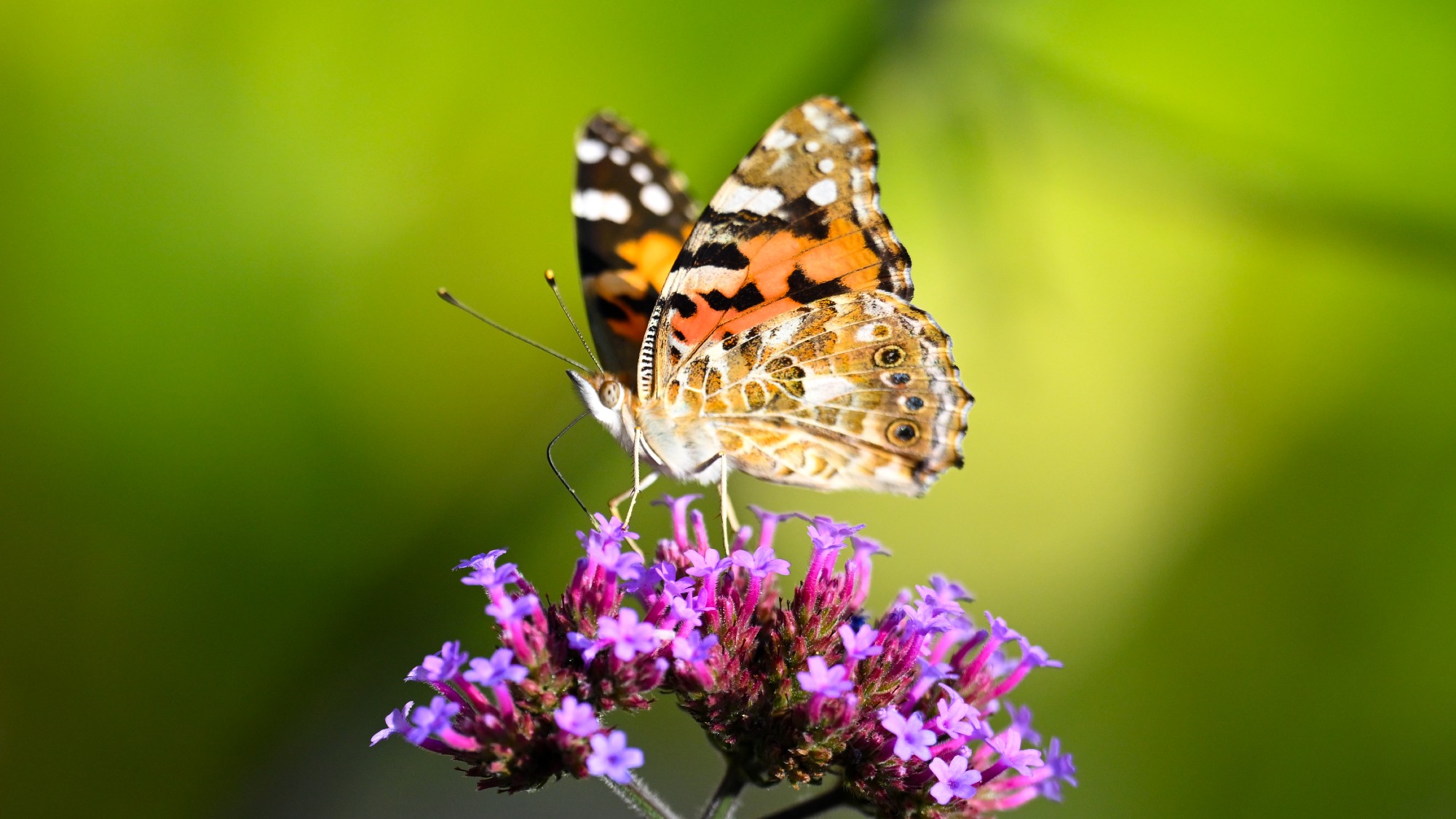
The UK is seeing huge numbers of colourful migrants this summer, in what was widely predicted to be the largest arrival of painted-lady butterflies for 17 years.
“We are in the midst of a miracle,” said wildlife writer Simon Barnes in The Observer. During the last painted-lady spike, in 2019, they arrived in their hundreds of thousands. Clouds of the butterflies are now being spotted once again, as Butterfly Conservation’s annual Big Butterfly Count – the world’s largest citizen-science insect count – gets under way.
What are painted ladies?
Formally known as Vanessa cardui, they are medium-sized orange butterflies with black markings and, on their forewing tips, white spots on a black background. Every year, in a spectacular long-distance migration, they fly from the desert fringes of North Africa, the Middle East and central Asia to mainland Europe and then Britain and Ireland. Each September, they then fly south again, completing a 9,000-mile round trip and one of the world’s longest insect journeys. “They can move from egg to adult in less than six weeks,” said Barnes in The Observer, so it might take “three or four” generations to reach the UK.
In an average year, the number of painted-lady arrivals in the UK hovers around 15,000, although some years, hardly any reach our shores. But butterfly experts are confidently predicting a surge in numbers this year, in “a once-in-a-decade ‘painted lady summer’”, said The Guardian.
Why are numbers spiking?
It’s down to a combination of “favourable early spring conditions in southern Europe”, the recent heatwaves and “benign southerly winds”, said The Guardian. The last time this happened, in 2019, more than 420,000 painted ladies were recorded in the UK. But that pales in comparison to the record year of 2009, when more than two million painted ladies arrived in the UK over a two-day period in May. Over the course of that summer, there were a “barely credible” billion painted ladies, said Barnes.
Despite the excitement about the “painted-lady summer”, butterfly numbers in the UK have long been decreasing, according to Butterfly Conservation. Sightings hit record lows in 2024, although there was “improvement” in 2025. More than three-quarters of butterfly species are in decline as a result of factors including climate change, habitat loss, pollution and plant pesticides.
|