The Week US The Week US
flag of US
US
flag of UK
UK
https://cdn.mos.cms.futurecdn.net/flexiimages/jacafc5zvs1692883516.jpg

SUBSCRIBE & SAVE

Less than $3 per week

Sign in
  • View Profile
  • Sign out
  • The Explainer
  • The Week Recommends
  • Newsletters
  • Cartoons
  • From the Magazine
  • The Week Junior
  • More
    • Politics
    • World News
    • Business
    • Health
    • Science
    • Food & Drink
    • Travel
    • Culture
    • History
    • Personal Finance
    • Puzzles
    • Photos
    • The Blend
    • All Categories
  • Newsletter sign up Newsletter
  • The Week Evening Review
    Escalation in Yemen, small-boat processing, and the WhatsApp phone scam

     
    TODAY’S BIG QUESTION

    Will Saudi-Houthis conflict escalate?

    Saudi Arabia has vowed a firm response to the deadly attacks on the kingdom’s airports and oil and gas facilities by Yemen’s Houthi rebels. “The events of recent weeks are serious. Our response must be equally serious,” said Energy Minister Prince Abdul Aziz bin Salman today.  There is “no room for fear in the vocabulary of Saudis”.

    The Iran-backed Houthis said their latest drone and missile strikes – including an attack on Riyadh’s King Khalid International Airport that killed 13 people and injured more than 300 – were launched in retaliation for “brutal Saudi aggression” against areas they control in western Yemen.

    What did the commentators say?
    “No political slogan, ideological grievance or claim of resistance can justify turning airports into targets,” said Hani Hazaimeh on Arab News. The Houthis are reckless, and Saudi Arabia “has every right to defend its citizens” and “critical infrastructure”. All thought of “diplomatic theatre is over”; now is “the time for effective action”.

    The Houthis are “drawing from Iran’s playbook” and “vowing a painful escalation” by targeting Saudi infrastructure and “imposing a global economic cost”, said Mostafa Salem on CNN. Putting Saudi troops on the ground in Yemen would plunge the nation into an “expensive and grinding ground war” and undercut Crown Prince Mohammed bin Salman’s carefully cultivated image of a “stable, investment-friendly kingdom and global tourism hub”.

    But the airport death toll is “bewilderingly high” for the Saudis, who are “unaccustomed to such fatalities”, said Nesrine Malik in The Guardian, and that’s “likely to prompt a bloody response”. If so, the kingdom faces a “long, intractable war with a resourceful and impassioned antagonist, one willing to sustain a high degree of pain in ways that Riyadh can’t match without orienting itself entirely towards war”. 

    What next?
    The Houthi attacks on the Saudis could “drive global oil prices even higher”, said Sky News’ Middle East correspondent Adam Parsons. “Were the Houthis to put a stranglehold” on the Bab-al-Mandab Strait, “it would have a major influence on trade that would hit the price of oil”.  This would “anger Donald Trump, who sees the price of oil as such a barometer of his own success”. The US president has said he is reviewing the situation and is “going to look at” joining any Saudi response.


    THE EXPLAINER

    How the UK processes small-boat arrivals

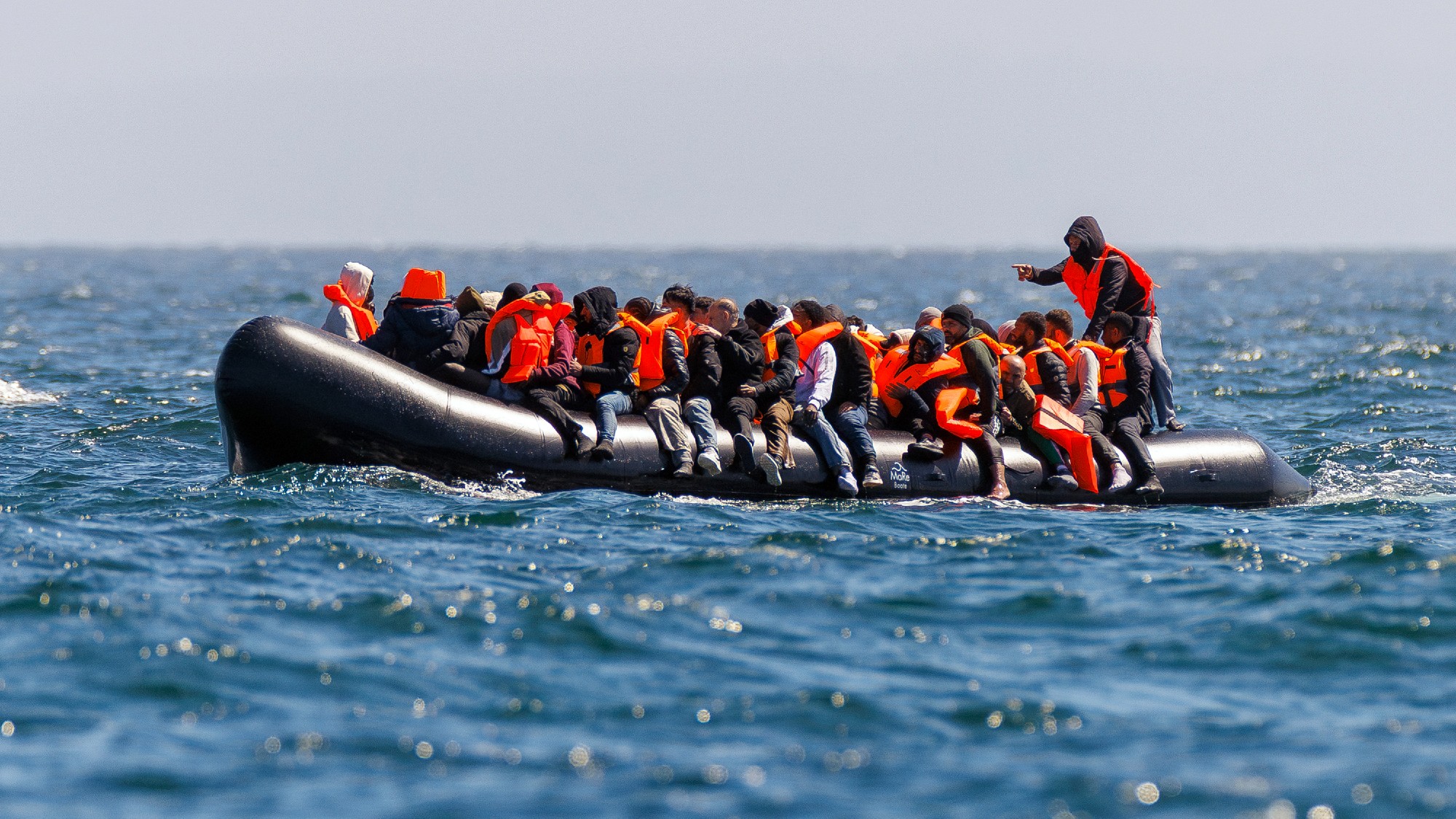
    The UK government’s “one in, one out” deal with France has been scrapped, turning the spotlight back on the contentious issue of small-boat crossings. 

    About 1,500 people have been removed to France since the scheme began just over a year ago. Home Secretary Shabana Mahmood estimated the deal had cost about £56,000 for every person sent back to France. More than 40,000 migrants arrived in Britain in small boats while the deal was in place. 

    What happens when they arrive?
    Entering the UK without a visa or valid entry clearance is an offence under British law, carrying a potential prison sentence. People who arrive in the UK on small boats without prior clearance are intercepted, detained for processing, and then usually enter the asylum system.

    Initially, Border Force personnel or the coastguard picks up the boats at sea or meets them when they land on UK shores.

    Where are they taken?
    Officials take all arrivals by coach to processing centres, of which the main one is a former military base at Manston in Kent. There, they undergo a temperature check and are searched. Photographs and fingerprints are taken for basic identity checks.

    Some are granted immigration bail. They are released and transferred to short-term Home Office accommodation, but those thought to pose a significant risk of harm, or who did not claim asylum, may be transferred to an immigration removal centre. 

    New arrivals are placed in what the Home Office calls “initial accommodation”. They’re then moved to longer-term “dispersal accommodation” – flats or houses of multiple occupation, often in areas such as the Northwest of England, where housing is cheaper – until an asylum decision has been made. 

    What rules apply?
    If, after being processed, asylum seekers are judged to be “destitute”, as most are, they are eligible for accommodation and subsistence while their claims are being assessed. They cannot choose where they live and must sleep at their designated accommodation every night. 

    Most are not allowed to work. While their claims are being evaluated, they are given a modest weekly allowance – around £49 a week if their accommodation is self-catered, or £9.95 if meals are provided. Most temporary migrants are not eligible for mainstream welfare benefits. 


    QUOTE OF THE DAY

    “The prime minister is a liar. Yes, a liar.”

    Nigel Farage tells reporters that Andy Burnham’s claims about Russian interference in the Brexit referendum are “outrageous”. The PM told “The Rest Is Politics” podcast that after first entering No. 10, he was given a “clear answer” that Moscow meddled in the 2016 vote.


    Poll watch

    Almost half (49%) of women’s football pros are considering quitting the sport early, as low wages and increasing pressure take a toll, according to the Fifpro union. In a global survey of more than 800 players, 59% of those who said they might make an early exit cited pay, while 46% pointed to rising psychological stress.


    IN THE SPOTLIGHT

    The ‘Add me on WhatsApp’ scam on the rise

    It begins with a call from a UK mobile, a robotic voice and a request to “add my number on WhatsApp”. It seems innocuous, even silly, but it could be the opening move in calculated fraud.

    The UK’s data watchdog is investigating a sudden spike in “robo call” complaints. The Information Commissioner’s Office recorded more than 3,600 complaints in September – a six-year high. And a spokesperson told the BBC Radio 4’s “You and Yours” that millions more are probably getting the calls, with some falling prey to the scams.

    ‘Endgame scenarios’
    The automated calls often hint at a job offer. People who are looking for work can be tricked by the sense of urgency, and by their familiarity with WhatsApp, into joining the suggested group and becoming the target of a scammer.

    There are several “endgame scenarios” for the scammers, said tech specialist Silvio Stathie on Bitdefender’s cybersecurity blog. The “ultimate goal is to persuade victims to disclose sensitive personal and financial information”, such as bank details, credit card numbers and personal identification data. Links posted in the WhatsApp group could install malware on the victim’s device or enable the scammers to get remote access.

    ‘Red flag’
    The easiest way to protect yourself is not to engage. After all, “there’s really no reason” to follow the instructions of a “completely unsolicited call”, said The Tab. It might also be wise to turn on two-step authentication for your WhatsApp account: this provides an “additional layer of protection” by blocking an account takeover, even if you’re tricked into handing over your SMS registration code.

    However keen you might be to follow up job opportunities, said the Which? consumer group, treat as a “red flag” any that offer “too good to be true” promises of high pay or flexible hours, or require you to “invest money into work equipment“ in advance. And only ever sign up to recruiters who are “established and reputable”.

    If you think you have been taken in by a “robo call” recruitment scam, block and report the WhatsApp messages. If you’ve lost any money, call your bank immediately, using the number on the back of your bank card, and report what’s happened to Report Fraud.


    Good day 🎭

    … for West End firsts, as Sacha Baron Cohen signs to make his stage debut in Quentin Tarantino’s debut play “The Popinjay Cavalier”. Opening in London in March, the production is set in 1830s Europe and is billed as a “rambunctious comedy of deception and disguise inspired by the grand swashbuckling epics of stage and screen”. 


    Bad day 🍻

    … for pub culture, with Britain’s boozers closing at a rate of one a day, according to industry data. An analysis by the British Beer and Pub Association found that 295 permanently shut their doors in the first nine months of the year, and the total is expected to reach 360 by the end of December. 


    PICTURE OF THE DAY

    Bowled over

    Australia’s Alex Carey is clean bowled by Anrich Nortje on day four of the first Test match against South Africa in Durban. The home team need a world-record 421 runs to win as the match heads into its final day tomorrow.

    Marco Longari / AFP / Getty Images


    Puzzles

    Chain Word

    Try The Week’s daily word challenge in our puzzles and quizzes section, which also includes sudoku and Guess the Number

    Play here


    THE WEEK RECOMMENDS

    Best ‘broad-shouldered’ white wines for autumn

    As the weather cools and “socks go on”, it’s time to ditch light summery white wine for the “big, hearty, broad-shouldered” whites that can do justice to a “comforting lasagne”, said Jane MacQuitty in The Times.
    Autumn calls for full-bodied whites that deliver a “hefty wallop” of flavour, fruit and alcohol. Those that have spent time on sediment or oak chips, or been fermented and aged in oak, tend to have the “rich, creamy, nutty” flavours that complement comfort food.

    One of the best “cockle-warming” options is chardonnay from Australia, California or South America. These winemakers tend to “ramp up the flavour to full volume”. Bodega Catena Zapata make some “cracking” wines in Argentina and their 2021 Angelica Zapata Chardonnay is a “gorgeous, toasty, vanilla-scented mouthful, with stylishly integrated oak”.

    I keep an eye out for whites that are “like a good cardigan, at once coddling and breathable”, said Mina Holland in The Guardian. For “ripeness, body and freshness”, try Galicia in northern Spain. Aldi’s specially selected albariño from the Rías Baixas appellation “rarely disappoints”, or try a “fuller bodied godello” from nearby Valdeorras, such as the Wine Society’s Exhibition range.

    For “spiced stews and curries”, you can’t beat “aromatic central European wines, such as a zippy, limey Mosel riesling”. Tesco Finest Steep Slopes “hits the spot when paired with a spicy takeaway”, and at £8, won’t blow a hole in your budget.


    Statistic of the day

    19,145: The number of potential driving violations spotted by AI-powered cameras during a two-week trial in the West Midlands. State-of-the-art systems installed outside Ladywood and Fallings Park fire stations in Birmingham and Wolverhampton showed motorists risking lives by driving without seatbelts or while using mobile phones, among other suspected offences.


    instant opinion

    Today’s best commentary

    Burnham needs to realise the EU isn’t the club we left
    Andrew Tettenborn in The Spectator
    Our prime minister hints “that he is open to calls to rejoin” the EU, writes law professor Andrew Tettenborn, but it wouldn’t be “a return to the comfortable certainties of the pre-Brexit era”. We would “face hard bargaining” over the Euro and have to accept recent changes that make new joiners “second-tier” members. We’d be subject to “taxation we never voted for” while being “constantly scrutinised to ensure” we conform with EU values. The sooner Andy Burnham discovers “the truth, the better”.

    The terrifying prospect of President Pete Hegseth
    Anne McElvoy in The Independent
    The US defence secretary’s “plan to publicly gun down” the Fort Hood killer has caused worldwide “revulsion”, writes Anne McElvoy. But “less attention” is being given to Pete Hegseth’s motives. As he eyes “a run for the White House”, it’s “no accident” that “at the centre of this story” is a military base in a state that “hangs in the balance” in the upcoming midterm elections. This “unscrupulous showman” is fighting for Maga prominence “at the expense of his country’s reputation”.

    Yes, it’s been a tough week for the Greens: but don’t lose sight of how we’re transforming British politics
    Zack Polanski in The Guardian
    Since I became leader, the Green Party has “transformed the electoral landscape” as a “serious threat” to Labour from the left, writes Zack Polanski. There have been “questions about my approach” to the “imperfect” conference motion “Zionism is racism”, but I don’t think it’s “the job of a political party to tell people what to believe”. But nor will I “tolerate antisemitism”. “Our party democracy must now evolve to meet” our growth, making our processes more robust and “giving leaders more responsibility to set” strategy.


    word of the day

    PhotoTat

    A new type of tattoo ink that can be switched on and off with different wavelengths of light. According to a study in the journal Matter & Light, the PhotoTat system could allow people to conceal or change colours and images embedded in their skin, and could also have more practical applications, including medical tattoos visible only when a doctor needs to see them.  


    Evening Review was written and edited by Jamie Timson, Rebekah Evans, Chas Newkey-Burden, Irenie Forshaw, David Edwards, Helen Brown and Kari Wilkin, with illustrations from Stephen P. Kelly.

    Image credits, from top: illustration by Stephen P. Kelly / Getty Images  / AP Photo; Dan Kitwood / Getty Images; Celiaosk / Getty Images; Marco Longari / AFP / Getty Images; Maria Korneeva / Getty Images
     

    Recent editions

    • Saturday Wrap

      Justice at Cornell?

    • Evening Review

      The growing trade deficit

    • Morning Report

      Hegseth trumpets livestreamed execution

    VIEW ALL
    TheWeek
    • About Us
    • Contact Future's experts
    • Terms and Conditions
    • Privacy Policy
    • Cookie Policy
    • Advertise With Us
    • FAQ
    Add as a preferred source on Google Add as a preferred source on Google

    The Week US is part of Future US Inc, an international media group and leading digital publisher. Visit our corporate site.

    © Future US, Inc. Full 7th Floor, 130 West 42nd Street, New York, NY 10036.