The Week US
flag of US
US
flag of UK
UK
https://cdn.mos.cms.futurecdn.net/flexiimages/jacafc5zvs1692883516.jpg

SUBSCRIBE & SAVE

Less than $3 per week

Sign in
  • View Profile
  • Sign out
  • The Explainer
  • The Week Recommends
  • Newsletters
  • Cartoons
  • From the Magazine
  • The Week Junior
  • More
    • Politics
    • World News
    • Business
    • Health
    • Science
    • Food & Drink
    • Travel
    • Culture
    • History
    • Personal Finance
    • Puzzles
    • Photos
    • The Blend
    • All Categories
  • Newsletter sign up Newsletter
  • The Week Evening Review
    Budget takeaways, ‘circadian depression’, and Man Utd in crisis

     
    TODAY’S BIG QUESTION

    Is ‘breathing space’ Budget enough?

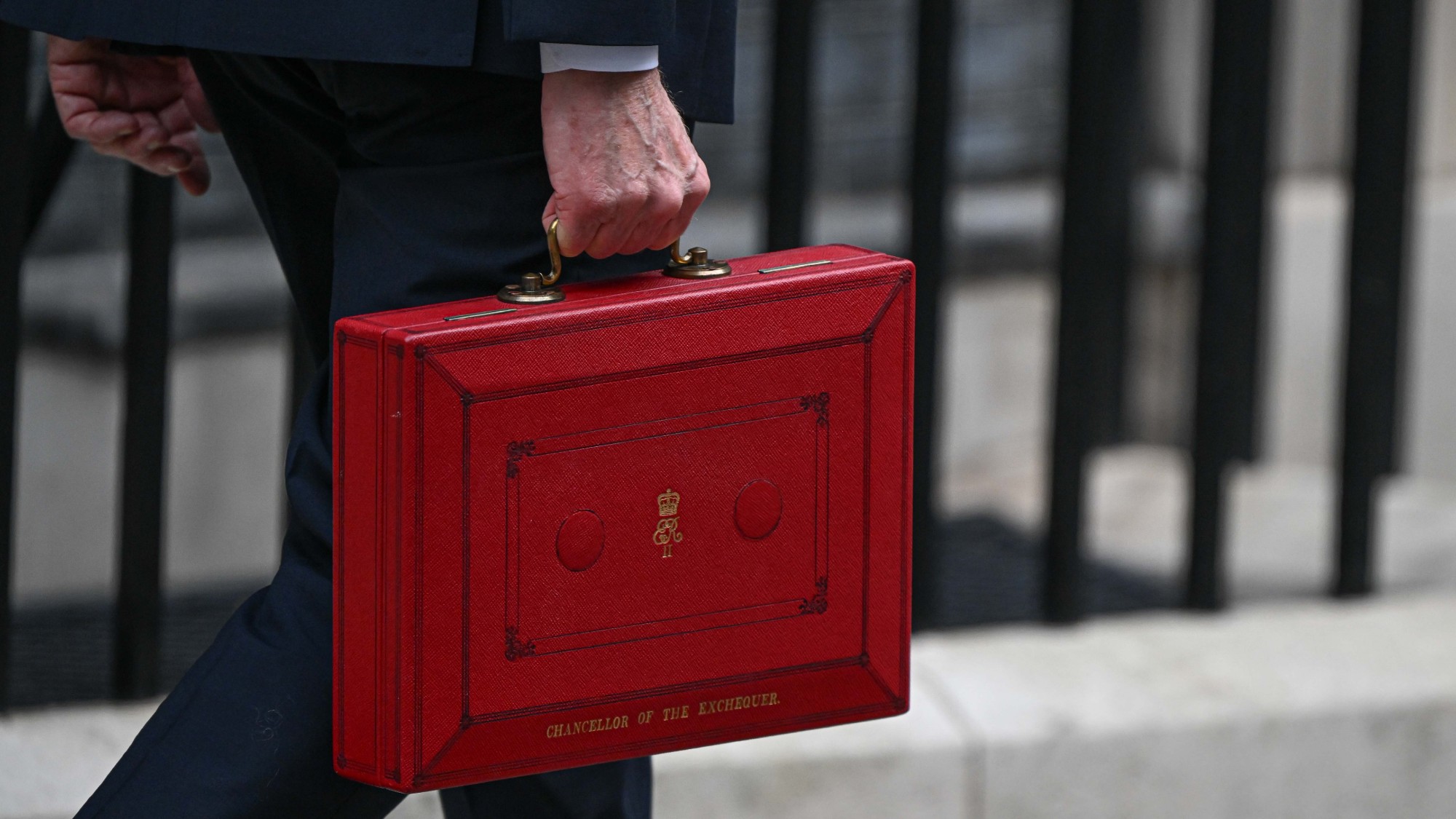
    The biggest announcement in today’s low-key Budget was that millions of UK households will get a £100 payment this winter to help with rising energy bills. Chancellor John Healey “is trying to portray himself as a realist”, said The Spectator’s James Heale. But “will it be sufficient”?

    What did the commentators say?
    Healey “has chosen to let fiscal headroom, the government’s cushion against economic shocks, do much of the heavy lifting in this Budget”, said The Times’ chief political correspondent Aubrey Allegretti. His modest plans allow him to “avoid topping up the buffer by resorting to major spending cuts or tax rises, which would have risked a backlash from Labour MPs”. But the UK is still “set to borrow more in each of the next five years than previously planned”, said Sky News’ economic and data editor Ed Conway.

    “I am struck by the softly populist tone this Budget is taking,” said pollster Luke Tryll on X. The government is “targeting areas” that the “public have little sympathy for (landlords, gambling, banks) in exchange for broader (if not deeper) cost of living relief”. Yet “this is a government with narrowing space”, said political commentator Lewis Goodall in a post, “and this Budget sums that up”. From a political standpoint, “it has no mandate to implement” Andy Burnham’s more ambitious ideas, and economically, “it hasn’t the space to spend or borrow more”. The result is today’s “micro-measures”. And that all means the “fresh democratic energy” of an early election is “becoming likelier if polls hold”.

    What next?
    Today has proved that the Budget “just isn’t the main event this time”, said Politico’s UK political editor Dan Bloom. The next seven weeks are expected to bring former minister Alan Milburn’s “review of the benefit system, a UK-EU summit, a ‘10-year plan’ and a white paper on ‘rewiring the state’”. Then next year is the spending review. “That’s when the really hard choices will come.”


    THE EXPLAINER

    Circadian depression: what scientists are saying

    A possible new subtype of depression caused by “people’s body clocks being out of whack” has been identified by researchers, said New Scientist. Affecting an estimated one in four people with severe depression, “circadian depression” appears to respond less readily to treatment with standard antidepressants such as SSRIs.

    What is circadian depression?
    It’s “characterised by disrupted sleep, low energy and reduced physical activity during the day”, said Nature. Circadian depression appears to be linked to dysregulation in the body’s internal clock and seems to affect women more than men. Although seasonality can aggravate symptoms, it doesn’t necessarily trigger them, as happens with seasonal affective disorder.

    The researchers asked 11,380 people with severe depression about their symptoms and sleep patterns. Nearly a quarter (23%) met at least three of six proposed criteria for circadian depression, which include identifying as a “night owl” and experiencing significant seasonal changes in sleep, mood, appetite or energy. This correlation was “not a formal diagnosis”, said The New York Times, but is evidence of a “suggested subtype”.

    How might it be treated?
    What’s “critical” about this circadian type of depression is “its poor response to the standard therapies”, psychiatrist Ian Hickie, who co-authored the University of Sydney study, told The Guardian. Sufferers could benefit instead from treatments, such as melatonin or light therapy, that specifically target the body’s circadian rhythms. The coordination of your body clock “underpins your mood, your metabolism, your concentration, your sleep-wake cycle and many other key factors”. Exposure to daylight in the morning, and avoiding artificial light, large meals and exercise after dark, can help keep body clocks on track.

    What are the caveats?
    Circadian depression is a “plausible” condition, said US chronotherapeutics expert Michael Terman. But the study findings don’t establish a new diagnosis, he told The New York Times, or prove that circadian depression responds to different types of treatment.

    A major limitation of the study, acknowledged by its authors, is that the participants’ sleep-wake cycles were self-reported. Participants were also mostly of European ancestry, and so more diverse studies are “needed to replicate our findings”, the researchers said.


    QUOTE OF THE DAY

    “They’re fine people. The election was very strange, and I thought it was terrible.”

    Donald Trump tells reporters why he approved US visas for defeated Brazilian presidential candidate Flávio Bolsonaro and his family. Bolsonaro jetted to Miami today after Brazil’s Supreme Court ordered him to surrender his passport amid money-laundering allegations.


    Poll watch

    Around two-thirds (65%) of Americans were unaware of this week’s Israeli general election, according to a Politico poll of 2,083 US adults. Only 22% expressed a positive view of current PM Benjamin Netanyahu, while 48% had no opinion, and only 15% had heard of opposition leader Gadi Eisenkot.


    TALKING POINT

    Can Manchester United stop the rot?

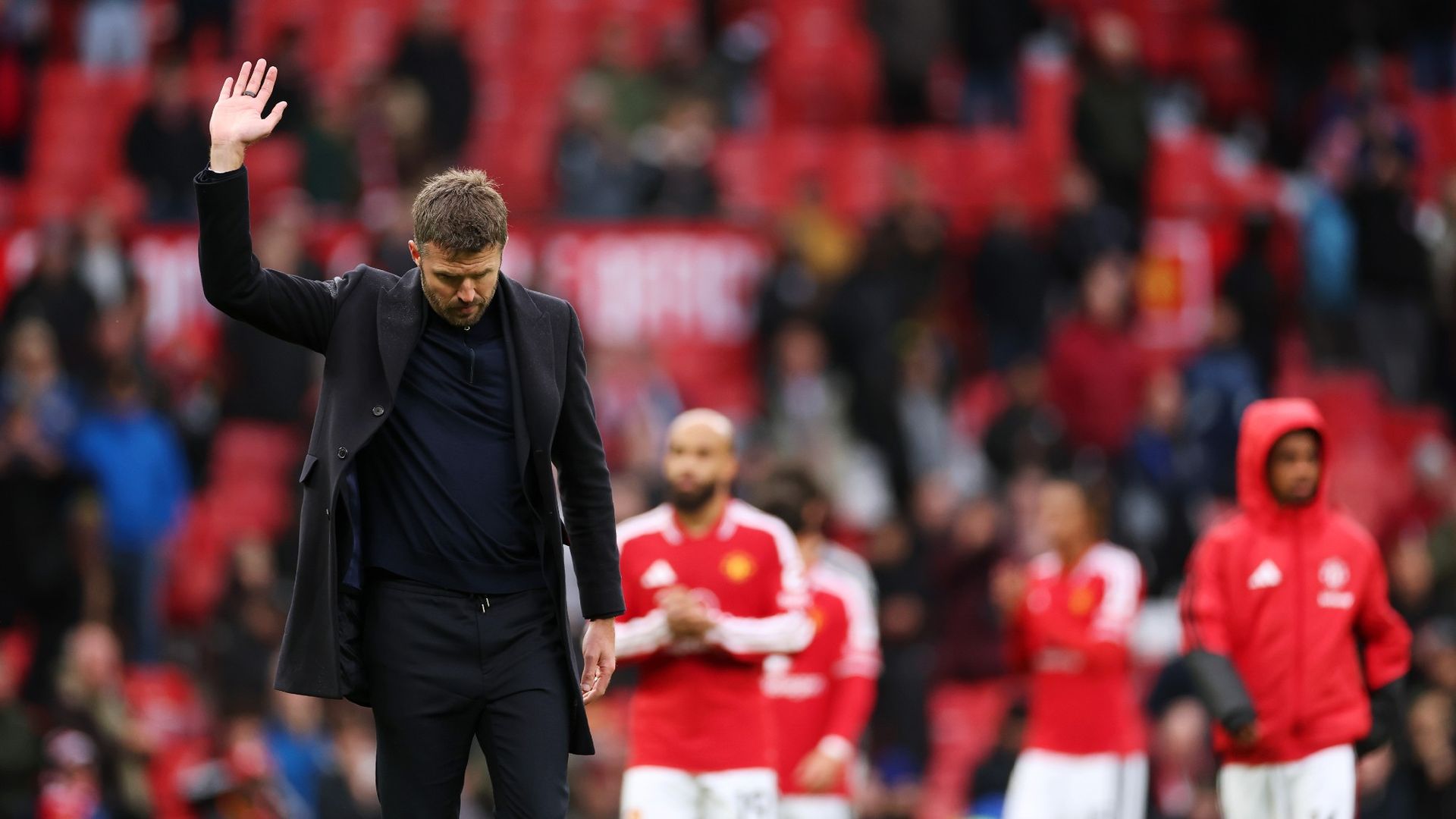
    Manchester United are stuck in a “doom spiral”, said The Telegraph, and their “collapse” under manager Michael Carrick is the “latest sorry episode in the post-Sir Alex Ferguson era”. The 13-times Premier League champions have made their worst start to a league season in 40 years, going eight games without a win, leaving them just one point above the relegation zone.

    ‘Dysfunction and decay’
    Carrick follows a succession of managers who have delivered “dysfunction, discord and disinterested performances that leave you wondering what on Earth this team is meant to look like”, said The Athletic.

    These failures are a “reflection of the club’s ownership, a regime that has taken so much out of United”, in the form of more than £1 billion in interest payments, refinancing costs and bond buybacks. The arrival of billionaire Jim Ratcliffe as a minority shareholder in early 2024 was meant to mark a new beginning, but “his decision-making has been even worse than that of the previous Glazer-led regime, which is really saying something”.

    “Sign whichever players you want, hire whichever manager”, it makes no difference, said The Observer. Nothing does when clubs have become “rotten institutions addicted to chaos and dysfunction and decay”.

    ‘Think big again’
    A resurgence is possible, said The Telegraph. United’s “old rivals Arsenal pulled themselves out of a similar, if not even more perilous, situation a few seasons ago”, by following a three-fold strategy that could also work for the Red Devils. First, “be brutal with underperforming, overpaid stars”. Second, “trust the power of youth”. Third, and perhaps most important, “culture is king”. Young talent can only thrive in the right environment, even if that means removing “problematic older players”.

    “United’s priority should be to think big again, and invest big” in developing a squad that is up to the challenge ahead, said FourFourTwo. “Where are the fighters, the Crerands and Robsons, Keanes and Rooneys?”

    But the prospects are not good, said The Athletic: “the club is rotting from the top down”, and the future rests in the hands of the likes of the Glazers, Ratcliffe, chief executive Omar Berrada and football director Jason Wilcox. “Doesn’t bode well, does it?”


    Good day 💷

    … for workplace transparency, as the UK’s equality watchdog recommends giving employees the right to know how much their colleagues earn. As part of the push to reduce pay discrimination, the Equality and Human Rights Commission also wants to ban employers from asking potential hires about their current salary.


    Bad day 📦

    … for Evri, which scored the lowest rating in Ofcom’s annual survey of customer satisfaction with UK parcel delivery services, for a fourth consecutive year. Only 26% rated the courier as satisfactory, while 42% were unhappy with its performance. Amazon and FedEx shared the top spot in the league table, with satisfaction ratings of 56%.


    PICTURE OF THE DAY

    Bahamian rhapsody

    King Charles inspects the guard of honour at a Royal Bahamas Defence Force base in Nassau. The royal’s next stop on his nine-day Caribbean tour is Guyana, followed by Antigua and Barbuda, where he will attend the Commonwealth Heads of Government Meeting.

    Chris Jackson / Getty Images


    Puzzles

    Chain Word

    Try The Week’s daily word challenge in our puzzles and quizzes section, which also includes sudoku and Guess the Number

    Play here


    THE WEEK RECOMMENDS

    The One About Matthew Perry: a ‘thoughtful’ portrait

    Netflix’s three-part documentary about Matthew Perry is “at heart a simple, sad story”, said Lucy Mangan in The Guardian. In 2023, at the age of 54, the actor was found floating face down in a hot tub at his Los Angeles home. An autopsy found that he died from the acute effects of ketamine. While his death generated lurid headlines, this series is “unexpectedly candid, thoughtful and genuinely intimate”, exploring the life of the late “Friends” star with “nuance and depth”.

    “The One About Matthew Perry” features interviews with his family and “closest lifelong friends”, said Carol Midgley in The Times. Perry’s sister, Mia Perry Bowick, sketches a portrait of a “sensitive soul they loved and lost to a remorseless drug and alcohol addiction”, providing a “cautionary tale” about fame. Despite his privilege and wealth, he was in the “dangerous position” of being surrounded by “vultures” who sought to exploit his addiction to “enrich themselves”.

    If director Mary Robertson had lost the “generic padding” and trimmed the series to a 100-minute feature-length documentary, it “probably would have been a better project”, said Daniel Fienberg in The Hollywood Reporter. Still, Robertson handles the key moments with “subtlety and intimacy”, creating a “generally non-exploitative examination of addiction and celebrity”.

    It’s a “tragic tale but a familiar one”, said Benji Wilson in The Telegraph. Perry was “desperate to be famous” so he could “distract everyone from how miserable he was by being funny”. Chandler Bing, “in other words, was his alter ego”.


    Statistic of the day

    710,000: How many people were killed by excessive heat globally in 2023, according to new estimates published in The Lancet. The journal’s annual Countdown report warned that the number of heat-related deaths continued growing after the signing of the 2015 Paris Agreement, reaching a total of three million in the following seven years.


    instant opinion

    Today’s best commentary

    On condemning comedians
    Ben Sixsmith on The Critic
    In a “juvenile attempt to be outrageous”, Irish comedian Vittorio Angelone snickered about a woman’s rape, writes Ben Sixsmith. He’s since apologised – and “he should feel bad” for making such an “obnoxious” joke – but “I don’t think he should be denied” a “platform”. Comedians must be free to “push the boundaries” without “seething with anxiety over whether their next joke might ruin their career”. Accountability should encourage “reflection, discussion, understanding and growth”, not “vindictive and intimidating” punishment.

    Young people are inheriting an impossible world. Of course they are taking to the streets
    Masuma Ahuja on The Nerve
    “The rent is too high, the schools aren’t good enough, there aren’t enough jobs,” writes Masuma Ahuja. No wonder young people, in countries ranging from Serbia to Brazil, are challenging the “broken system” and demanding “more liveable” conditions for everyone. “Technology and political narratives have sown division and disconnection”, but these street protests show “how intertwined our fates and fortunes are”. Shared struggles transcend race, gender and religion, uniting us in a “deafening chorus” of calls for change.

    The new celebrity power pose? It looks more like a cat licking its bottom
    Carol Midgley in The Times
    “I want you to know” that I’m writing this “lying on the sofa with one leg high in the air, ramrod-straight”, writes Carol Midgley. It’s the new power pose for “the thirst-trap photograph famous ‘midlife women’ are posting”, including Victoria Beckham, to show “how flexible and supple” they are. But “we mustn’t be judgmental” about their “bendy bragging”. It must be a “hard life” trying “to stay not just relevant but always sexy, sexy, sexy to keep on reaping those likes”.


    word of the day

    Hopescrolling

    The antidote to doomscrolling, according to Labour. In a bid to counter social media posts “running Britain down”, the party is sharing positive news in a new Substack newsletter described as a “place for hopescrolling”. “Is that where you scroll and hope your council tax doesn’t go up again?” asked one wag on X.


    Evening Review was written and edited by Rebecca Messina, Jamie Timson, Harriet Marsden, Elliott Goat, Chas Newkey-Burden, Irenie Forshaw, Helen Brown, David Edwards and Kari Wilkin, with illustrations from Stephen P. Kelly.

    Image credits, from top: Rasid Necati Aslim / Anadolu / Getty Images; illustration by Stephen P. Kelly; Dan Istitene / Getty Images; Chris Jackson / Getty Images; Reisig & Taylor / NBC / Getty Images
     

    Recent editions

    • Evening Review

      A corporate reckoning

    • Morning Report

      Trump’s topsy-turvy Comey retribution campaign

    • Evening Review

      Will the AI bubble pop?

    VIEW ALL
    TheWeek
    • About Us
    • Contact Future's experts
    • Terms and Conditions
    • Privacy Policy
    • Cookie Policy
    • Advertise With Us
    • FAQ
    Add as a preferred source on Google Add as a preferred source on Google

    The Week US is part of Future US Inc, an international media group and leading digital publisher. Visit our corporate site.

    © Future US, Inc. Full 7th Floor, 130 West 42nd Street, New York, NY 10036.