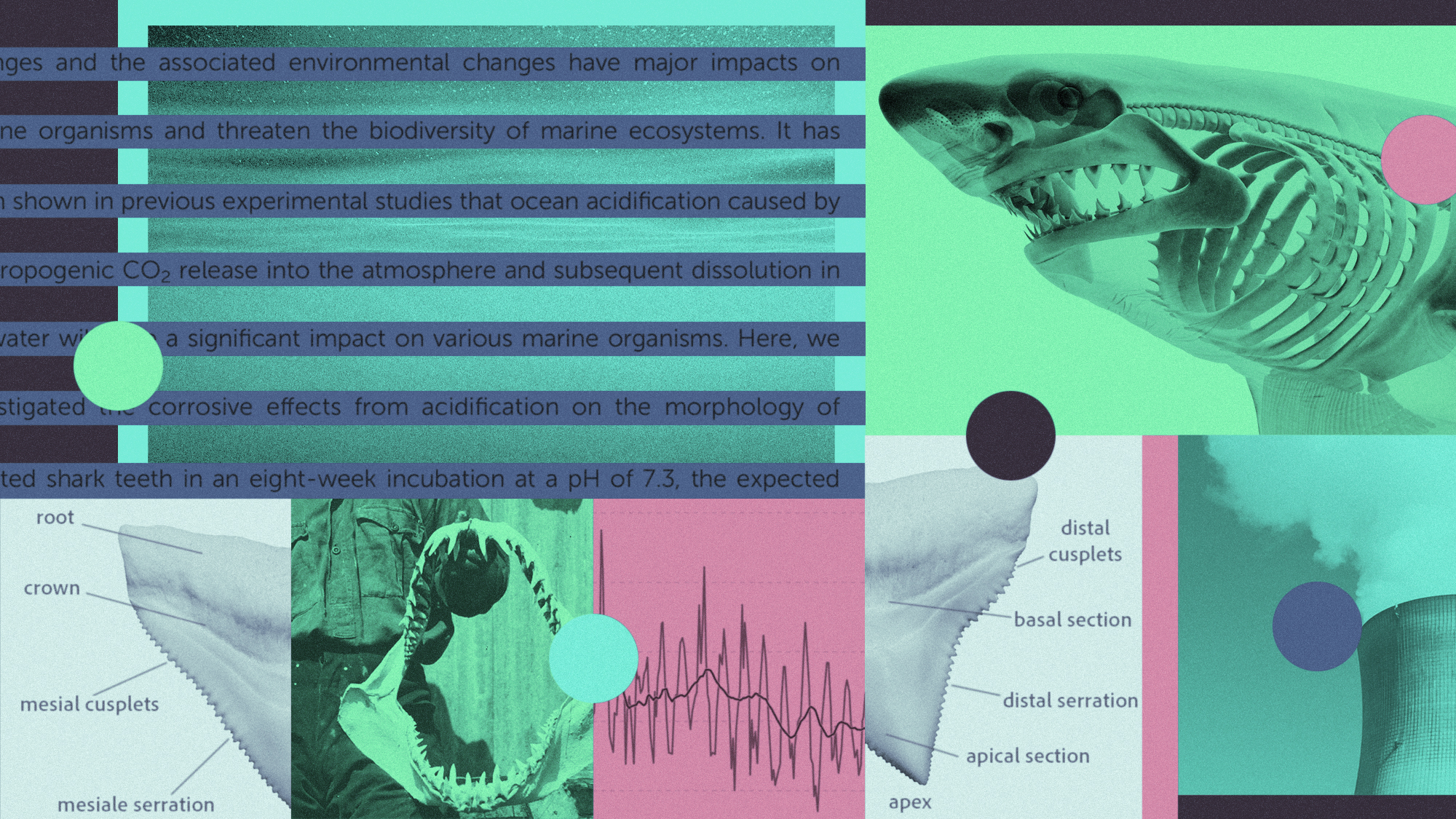
While many people are scared of sharks thanks to their rows of razor-sharp teeth, the changing waters might be rendering the creatures from “Jaws” a little less fearsome. Growing acidity in the world’s oceans is changing the structure of sharks’ teeth, scientists investigating the “corrosive effects from acidification” on the “morphology” of those teeth reported in a marine science journal. This weakening of the teeth of the apex predators could affect the broader marine ecosystem, too.
The study was helmed by a group of German scientists examining the effects of ocean acidity. The scientists “investigated the corrosive effects from acidification on the morphology of isolated shark teeth,” said the study, which was published in the journal Frontiers in Marine Science. The average ocean pH is currently 8.1, according to the National Oceanic and Atmospheric Administration, but it is expected to become more acidic in the coming centuries.
The dental stress “would add to sharks’ other problems, which include prey shortages caused by overfishing,” said The Guardian. Many shark species can replace lost teeth naturally, but increasing ocean acidity could “speed losses past replacement rates.” And more than just sharks could be affected, as there could be “effects on the teeth of ocean predators in general when they are highly mineralised structures like we have in sharks,” Maximilian Baum, the study’s lead author, said to The Guardian.
The study’s “main takeaway is that not only small organisms like corals or mollusks are at risk: even the teeth of apex predators show visible damage under acidified conditions, suggesting that ocean acidification could impact sharks more directly than previously assumed,” Baum said to CNN. |