The Week The Week
flag of US
US
flag of UK
UK
https://cdn.mos.cms.futurecdn.net/flexiimages/jacafc5zvs1692883516.jpg

SUBSCRIBE & SAVE

Less than $3 per week

Sign in
  • View Profile
  • Sign out
  • The Explainer
  • The Week Recommends
  • Newsletters
  • Cartoons
  • From the Magazine
  • The Week Junior
  • Student Offers
  • More
    • Politics
    • World News
    • Business
    • Health
    • Science
    • Food & Drink
    • Travel
    • Culture
    • History
    • Personal Finance
    • Puzzles
    • Photos
    • The Blend
    • All Categories
  • Newsletter sign up Newsletter
  • WeekDay AM: 10 Things you need to know this morning
    Xi in the UK, a Minneapolis pullback, and Serena Williams floats shock return

     
    today’s diplomacy story

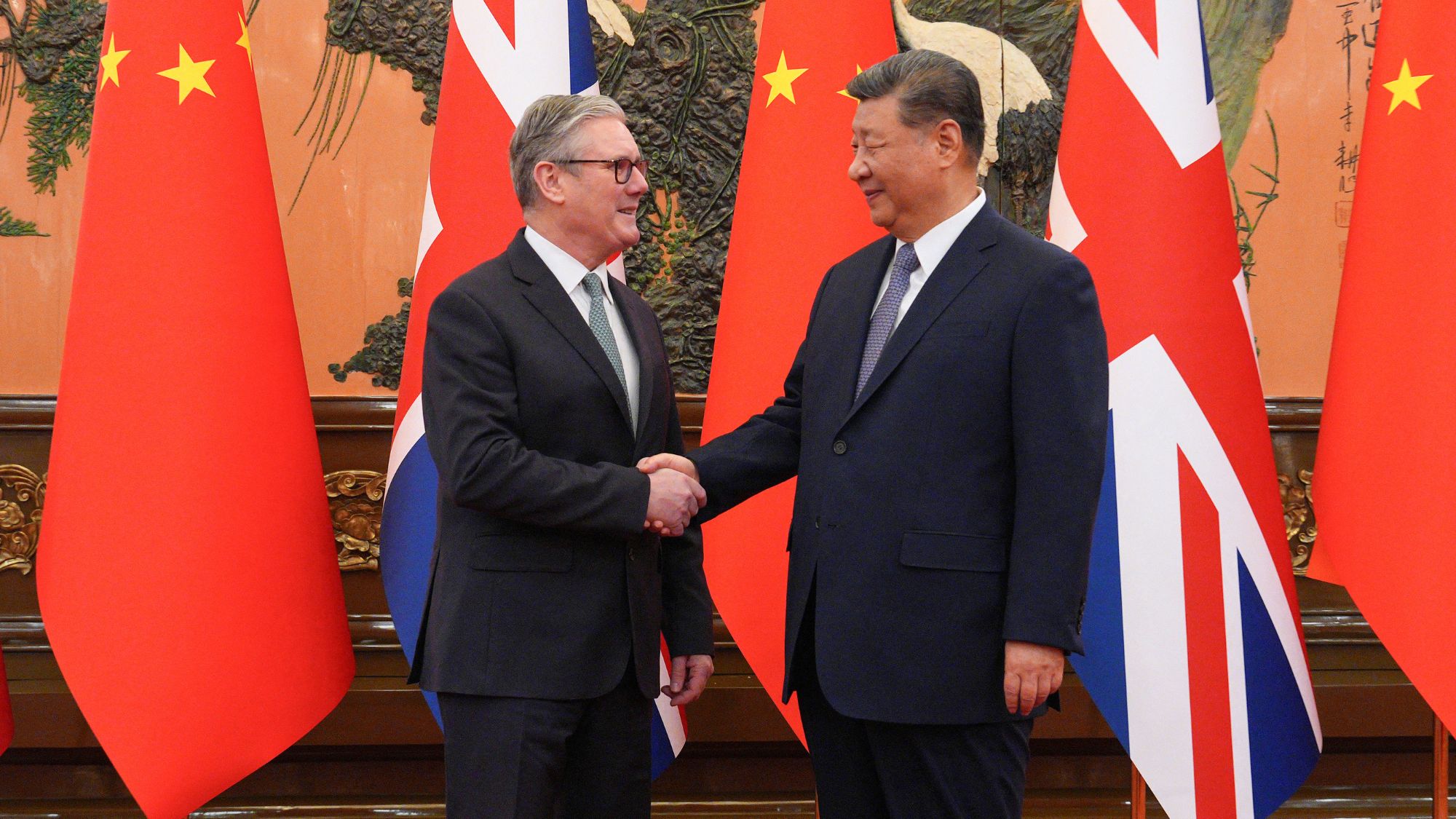
    Starmer opens door to UK visit for Xi

    What happened
    Keir Starmer has signalled that he may be open to a future visit by Chinese president Xi Jinping, a move that has intensified debate over the UK’s shifting approach to Beijing. The suggestion emerged during Starmer’s three-day trip to China, the first by a British prime minister in eight years, as the government sought to move relations out of what Starmer has previously described as an “ice age”. The visit has delivered concrete outcomes, including eased visa rules for British travellers, lower tariffs on Scotch whisky and new economic cooperation agreements. 

    Who said what
    Asked about a possible return visit, Starmer’s spokesperson said a reset relationship with China was “beneficial to British people and British business”, while stressing that future engagements would be set out later. Commons Speaker Lindsay Hoyle said it would be “wrong to let Xi into their workplace” while Chinese sanctions on British MPs remain in place. 

    “What was the point of Starmer’s Chinese love-in”, asked Ben Riley-Smith in The Telegraph. Conservatives described the trip as “kowtowing”, and it is clear that “doubts remain over the payoff” for the UK. Yet amid the “perils and promise” of Starmer’s visit, “at a time of global turmoil, the UK cannot afford to shun closer links with one of the world’s pre-eminent and fastest-growing economies”, said The Independent’s editorial board.

    What next? 
    Further talks are expected, but analysts say sanctions, parliamentary bans and security concerns could complicate any invitation to Xi.


    today’s international story

    White House signals pullback of agents in Minneapolis

    What happened
    The White House has indicated it may reduce the number of federal agents deployed in Minneapolis following the fatal shooting of two civilians during an immigration enforcement operation. The deaths of Renee Good and Alex Pretti have sparked protests in the city and nationwide, along with mounting political pressure. 

    Who said what
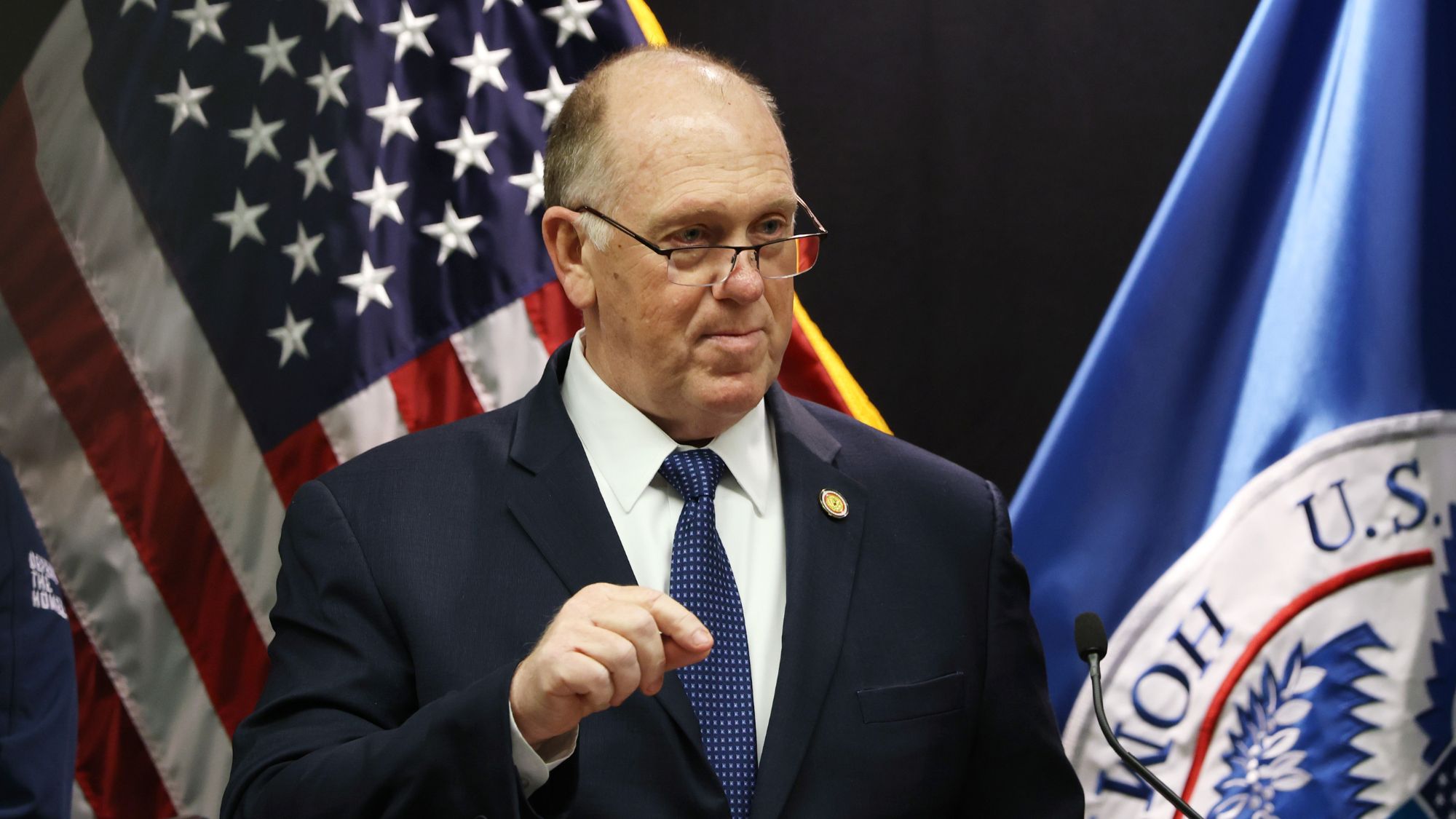
    Border enforcement chief Tom Homan (pictured above) said the administration was open to scaling back forces if local authorities cooperated, insisting: “We are not surrendering our mission at all. We’re just doing it smarter.” 

    With its aggressive immigration operations in Minneapolis and other cities, the Trump administration is “squandering whatever good will it had and increasing the chances of a blue wave in the midterms”, said David French in The New York Times. “The problem, however, is that the administration is playing a different game. It’s not trying to win hearts and minds, but rather impose its will”.

    What next?
    Talks between the White House and lawmakers continue, with Department of Homeland Security funding and operational limits at the centre of negotiations.


    Today’s sport story

    Tennis great Williams floats shock comeback

    What happened
    Serena Williams has refused to rule out making a return to tennis. Williams denied she was considering a comeback in December when it emerged she was re-entering the sport’s drug testing pool. But the 23-time Grand Slam singles champion was less dismissive about the question in an interview on The Today Show in the United States. “I’m just having fun and enjoying my life right now,” Williams said when the idea of a potential playing return was put to her. “That’s not a yes or no. I don’t know. I’m just gonna see what happens.”

    Who said what
    “No person that doesn’t have intentions to play professional tennis is going to put themselves in that list,” said former US men’s No.1 Jim Courier about the testing pool that places onerous restrictions on players. “Serena denied (in December) she’s coming back, but I think unless she gets injured there is no doubt she’s going to play somewhere at some point.

    Williams “would not even be the oldest member of her family on the tour if she does return”, said the BBC’s tennis correspondent Russell Fuller. Venus is 45 and the “possibility of playing doubles with her sister one last time may be the motivating factor for Serena”.

    What next?
    Players are only eligible to return to competition once they have spent six months in the testing pool. Williams’ name appeared on a document published by the sport’s drug testing pool on 6 October.


    It’s not all bad

    Nearly 50 years after a US clean-energy experiment began beneath the University of Minnesota, the technology is returning at scale. A new development in the university’s St Paul campus will use groundwater deep underground to store summer heat and release it in winter, providing low-emissions heating and cooling for about 850 homes. Researchers say the aquifer-based system, powered partly by solar energy, could cut household energy bills sharply and reduce emissions by up to 74%. With thousands of similar systems already operating overseas, supporters say the model could be adapted in cities around the world.


    under the radar

    Nipah virus outbreak brings back Covid-era surveillance

    There have been two confirmed cases of Nipah virus in a hospital in West Bengal, India. Close to 200 people were also exposed to the infection. This has sparked concern across Asia, as the virus is extremely contagious. Several Asian countries have now instituted Covid-era airport screenings to monitor the spread of infection for which there’s currently no vaccine or cure.

    This zoonotic infection originates from direct contact with infected animals – mainly flying fox bats and pigs – or their contaminated tissues and secretions. The disease can spread easily from person-to-person through contact with bodily fluids and cause minor to severe infections with a fatality rate of between 40% and 70%. 

    Those infected are “typically sick for 3 to 14 days with fever, headache, cough, sore throat and difficulty breathing,” said the Centers for Disease Control and Prevention. In more severe cases, people may experience “brain swelling (or encephalitis), where severe symptoms can include confusion, drowsiness and seizures,” which can lead to coma in 24 to 48 hours. Symptoms may appear anywhere from four to 14 days after infection.

    While this virus is making headlines now, Nipah was first discovered in Malaysia in 1999. Since then, outbreaks have “occurred almost annually in Asia, particularly in Bangladesh and India,” between December and April, said The Washington Post. 

    But the current outbreak is West Bengal’s first since 2007. This represents a “return of Nipah to this area after a long gap”, Lauren Sauer, the director of the Special Pathogen Research Network at the University of Nebraska Medical Center, said to the Post, “which is concerning from a surveillance standpoint”.


    on this day

    30 January 1969

    The Beatles perform their last live gig, a 42-minute concert on the roof of Apple Corps HQ in London. This week four artworks by the band’s original bass player, Stuart Sutcliffe, were unveiled at the Liverpool Beatles Museum.


    Today’s newspapers

    ‘Elections revolt’

    “Revolt over cancelled elections”, says The Telegraph, as “a string of councillors resign over axed votes”. Keir Starmer has opened the door to a UK visit by Xi as the “China relationship” is “reset”, The Guardian says. “Is that it?” asks the Daily Mail after “capitulation in Beijing”. “Iranian guard corps to be treated as terrorists by UK”, says The Times. “Companies scoop $22bn in contracts from Trump’s immigration agencies”, the Financial Times says.

    See the newspaper front pages


    tall tale

    Tub-thumping victory

    A capybara, aptly named Prune, has won the “long bath showdown”, a competition held across multiple zoos in Japan. Each capybara is timed for how long they willingly remained in the bath, with Prune emerging victorious with a time of 1 hour, 45 minutes and 18 seconds. She lasted nearly 15 minutes longer than Koharu in second place, and fought off competition from four-time annual speed-eating contest winner Hechima, affectionately dubbed the “watermelon queen”, who finished fourth.


    Morning Report was written and edited by Arion McNicoll, Jamie Timson, Will Barker, Ross Couzens, and Chas Newkey-Burden, with illustrations by Marian Femenias-Moratinos.

    Image credits, from top: Carl Court / Pool / AFP via Getty Images; Scott Olson / Getty Images; Chandan Khanna / AFP via Getty Images; Illustration by Marian Femenias-Moratinos / Getty Images.

    Morning Report and Evening Review were named Newsletter of the Year at the Publisher Newsletter Awards 2025
     

    Recent editions

    • Morning Report

      ICE backlash spreads to federal court

    • Evening Review

      Businesses walk an ICE-y line

    • Morning Report

      Kristi Noem on thin political ice

    VIEW ALL
    TheWeek
    • About Us
    • Contact Future's experts
    • Terms and Conditions
    • Privacy Policy
    • Cookie Policy
    • Advertise With Us
    • FAQ
    Add as a preferred source on Google

    The Week is part of Future US Inc, an international media group and leading digital publisher. Visit our corporate site.

    © Future US, Inc. Full 7th Floor, 130 West 42nd Street, New York, NY 10036.