Britain is following Australia in banning under-16s from social media. How have such efforts worked out Down Under?
Why did the Australian ban happen?
Parents the world over worry about the role that social media plays in all kinds of adolescent problems: sleep deprivation, eating disorders, self-harm, cyberbullying, grooming and more. Australia is proud of its groundbreaking public health policies (in 2011 it became the first nation to require plain packaging for tobacco products), and in May 2024 two separate campaigns – one led by a radio DJ, the other by Rupert Murdoch’s Australian tabloids – began to publicise the harrowing stories of parents whose children had died following social media cyberbullying. This led to a groundswell of support for a ban.
Influenced by the American psychologist Jonathan Haidt, who blames the smartphone for a disastrous “great rewiring” of childhood, South Australia’s state premier developed legislative proposals. Anthony Albanese’s Labor government, which was then seeking re-election, rushed a federal law through that November, taking advantage of a rare instance of broad political consensus: the conservative opposition had already pledged to enact a ban.
How does the Australian ban work?
It puts the onus on tech companies rather than their users: there are no penalties for parents or children. Instead, social media companies have to satisfy Australia’s eSafety commissioner that they’ve taken reasonable steps to prevent anyone under 16 who’s located in the country from having accounts on their platforms, with penalties of up to £26 million for any company in breach.
The list of affected platforms includes Instagram, Snapchat, TikTok, Tinder, Twitch, X/Twitter and YouTube, though not WhatsApp or YouTube Kids (there is a complex definition of a social media site, which requires a platform’s “significant purpose” to be interaction between users, and for it to allow content sharing). No fines have been issued yet, but Facebook, Instagram, Snapchat, TikTok and YouTube are currently under investigation for potential violations.
How well has it worked?
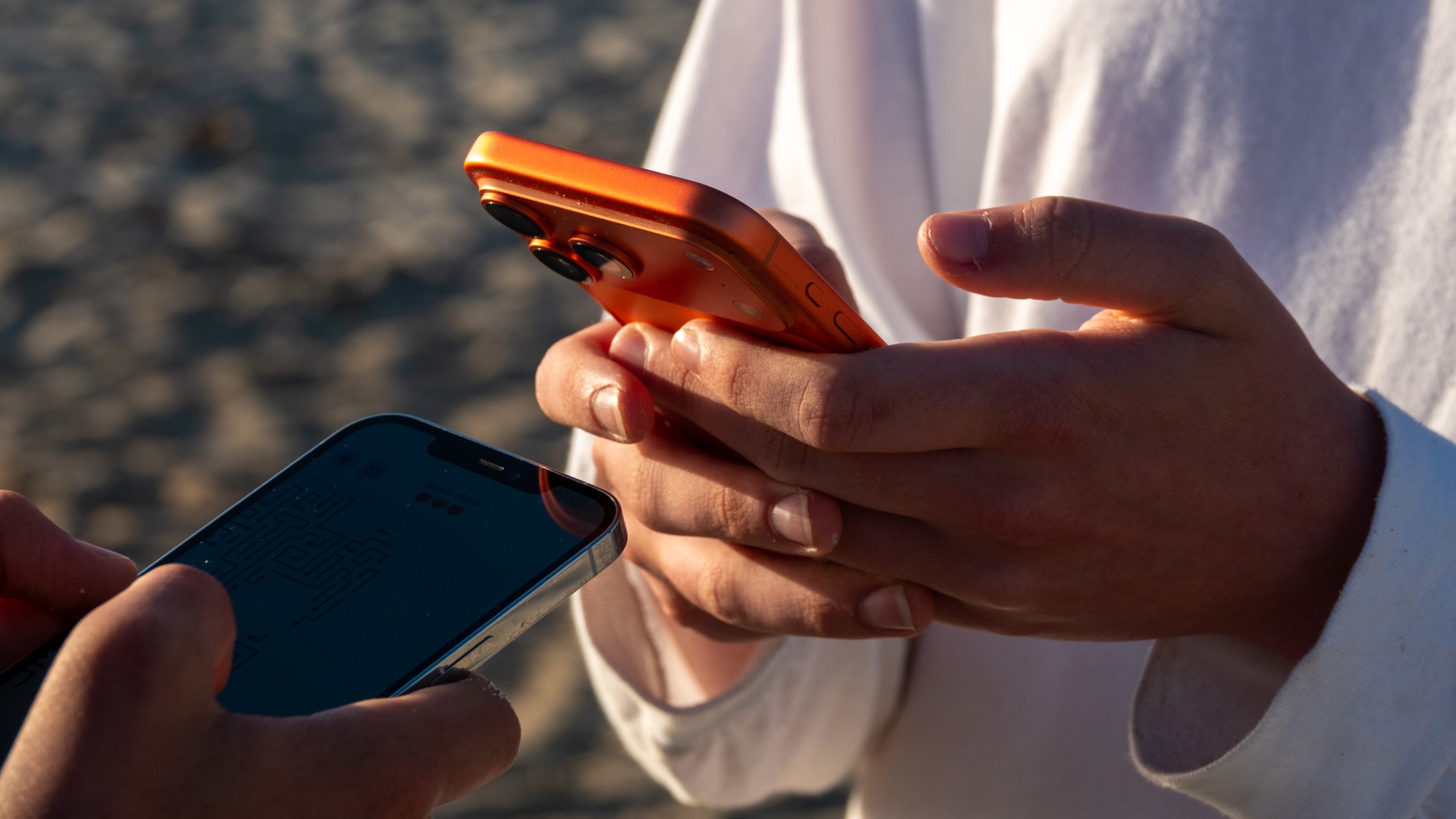
Social media platforms deactivated 4.7 million accounts when the new rules came into force on 10 December 2025. The ban has been, at best, partially effective. According to an April poll by the Molly Rose Foundation, a UK online safety charity founded by the family of a teenager who took her own life after being exposed to self-harm content, by March, 61% of Australian 12- to 15-year-olds who previously had accounts on restricted platforms still had one.
Critics of the ban – including tech companies, aware that at least 13 other countries considering similar policies are watching closely – say this proves it’s a flop. Proponents say that a 39% fall is a good start, and that changing the culture is more important than instant results; 59% of Australian adults think the ban has been reasonably effective.
Why hasn’t it worked better?
According to the poll, 66% of parents whose children still had access said that “no action” had been taken by the platform to remove or deactivate an account. Around a quarter had been successfully able to get around an age check. Much smaller numbers either used a virtual private network (VPN) to make it look as if they lived abroad, or enlisted a family member to set up an account.
The eSafety commissioner’s first report into the issue blamed “poor practices” by platforms, such as allowing children to repeatedly try to get past age verification checks. But in the view of many analysts, the fundamental problem is that age verification is hard to do, and opens up a can of worms.
How does the British plan differ?
On 15 June, Keir Starmer announced an “Australia plus” plan, to come into force early next year. The proposal is an under-16s ban on much the same list of platforms, with additional restrictions on livestreaming and communication with strangers on gaming sites such as Minecraft and Roblox. Access to AI chatbots that offer “sexualised content” will also be restricted for 16- and 17-year-olds.
The government is looking into other measures for this age group: midnight to 6am digital curfews, and disruption of addictive features such as infinite scrolling. The ban should theoretically be popular: polls consistently show that around three-quarters of the public think social media platforms have a negative impact on young people and support some kind of age restriction. However, many practical problems, and principled objections, remain.
What are the main objections?
The evidence that social media is harmful is ambiguous. Harm appears to spike with heavy use (three to five hours per day), but moderate use correlates in some studies with positive well-being; social media is very important to many teenagers today, and can also be a lifeline for troubled or isolated children.
Most get their news from social media now; in Australia, more than half of affected teenagers reported a significant drop in news access. The Molly Rose Foundation argues that forcing the platforms to incorporate “safety by design” – content controls, limited scrolling – is far better; if children are in theory banned, the companies can disclaim responsibility.
And even if a ban works, there’s a “migration effect”: children forced off mainstream sites use messaging apps and gaming sites instead, or darker corners of the web, or use VPNs to evade restrictions.
What does Australia show us?
Australia’s experience shows that it’s difficult to stop determined teenagers from accessing social media. In the UK, there is not yet a clear plan for resolving the central issue of age verification. The regulator Ofcom has been asked to produce a plan for “highly effective age assurance”. In Australia, as in Britain, however, there is widespread support for attempting to shift the social norms around the issue; and, as with underage drinking and smoking, the public seems to think restrictions are worth trying even if they don’t work perfectly.
The vexed question of verification
From a government’s point of view, a central problem with age verification is that the more accurate it is, the more data about themselves people have to give tech companies.
A Department for Science, Innovation and Technology consultation suggested that checks would be done by facial age estimation. If this came back with a “low confidence” score, the platform could offer an alternative method, such as uploading a photo ID. The “strongest possible” way of enforcing it would be for every social media user to be verified. In theory, this could mean millions of users sharing biometric data and sensitive information. In Australia, face-scanning quickly became a bit of a joke: “One of my friends printed out a photo of Michael Jackson and used that on the face recommendation ID thing and it worked,” Norman, 14, told Australia’s ABC News.
Yoti, the company that provides face scanning for TikTok and Instagram, responded that it has “anti-spoofing technology” to prevent this, but most platforms have chosen not to use it. New age-verification rules for porn sites introduced in the UK under the Online Safety Act last year led to a big drop in traffic to legally compliant sites, and a rise in visits to non-compliant sites – as well as an increase in the use of VPNs.