The Week The Week
flag of US
US
flag of UK
UK
https://cdn.mos.cms.futurecdn.net/flexiimages/jacafc5zvs1692883516.jpg

SUBSCRIBE & SAVE

Less than $3 per week

Sign in
  • View Profile
  • Sign out
  • The Explainer
  • The Week Recommends
  • Newsletters
  • Cartoons
  • From the Magazine
  • The Week Junior
  • Student Offers
  • More
    • Politics
    • World News
    • Business
    • Health
    • Science
    • Food & Drink
    • Travel
    • Culture
    • History
    • Personal Finance
    • Puzzles
    • Photos
    • The Blend
    • All Categories
  • Newsletter sign up Newsletter
  • Saturday Wrap, from The Week
    A deportation scandal, a drug consumption room and birthright citizenship

     
    controversy of the week

    Shabir Ahmed: why can’t he be deported?

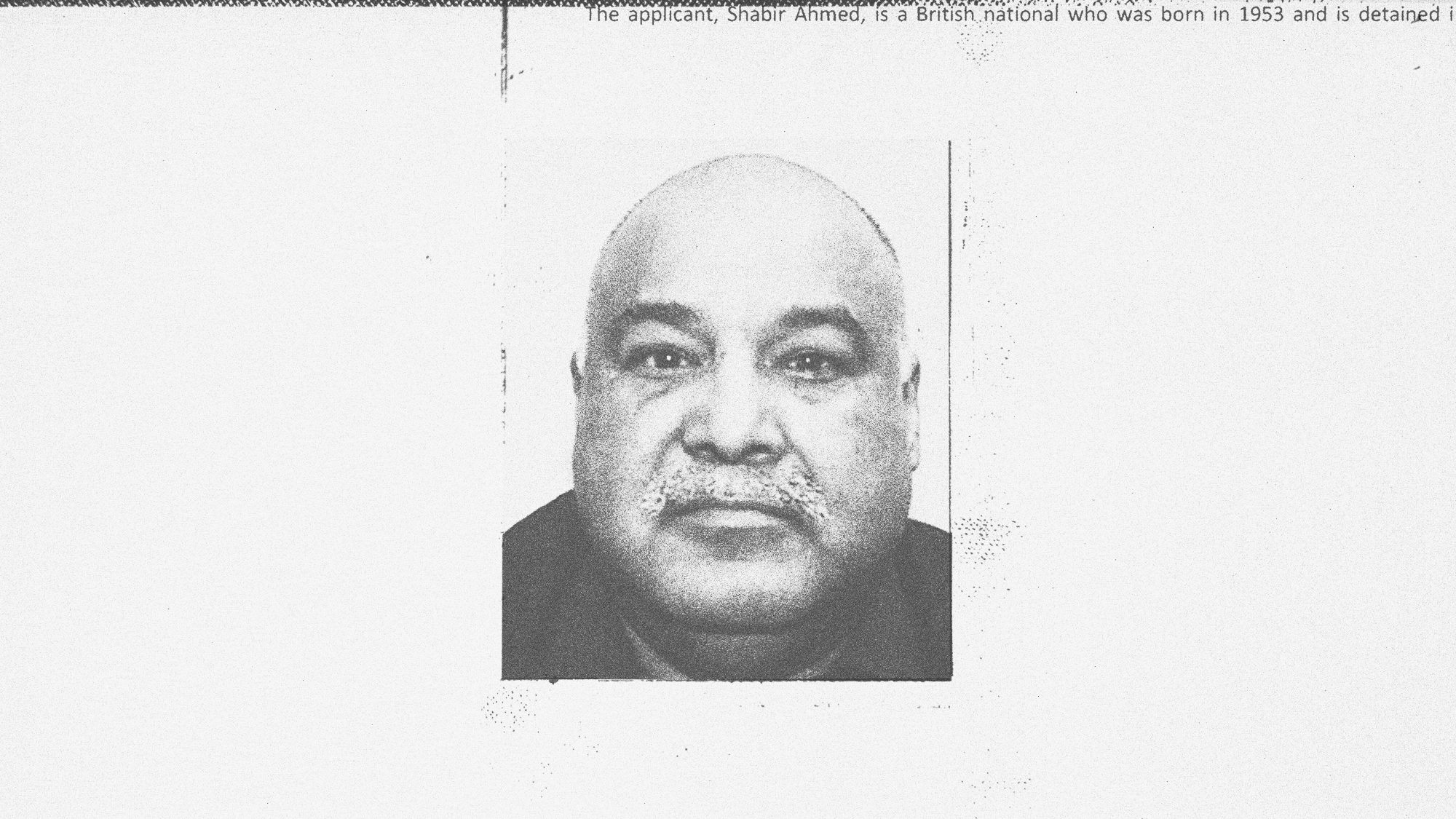
    If you want to understand why voters have lost faith in the mainstream parties, “one name will suffice”, said Stephen Pollard in The Spectator: Shabir Ahmed. He was the ringleader of a Rochdale grooming gang that subjected girls as young as 12 to unspeakable horrors between 2008 and 2010. Ahmed alone was convicted of multiple child rape offences in 2012 and sentenced to 22 years in jail. The dual British-Pakistani was stripped of his British citizenship at the time, and his victims were led to believe that he’d be deported after completing his sentence. 

    But last week, Ahmed walked free from prison, having served just 14 years; and it turns out that he can’t be deported owing to a provision in the 1971 Immigration Act that prevents Commonwealth citizens who entered Britain before 1973 from being removed. How pathetic. “The law could be changed in a day if there was the political will to do so.” 

    Andy Burnham is among those demanding action, said John Rentoul in The Independent. The presumptive prime minister said he would ask the home and foreign secretaries to review “all possible options” to remove this “vile criminal” from Britain, and the government has indicated that it is open to changing the law. Even if the law is changed, though, ministers would likely still face a challenge under the European Convention on Human Rights; and Pakistan would need to agree to take Ahmed back, which it has refused to do. The Home Office could try to force Pakistan’s hand by, say, threatening to restrict its citizens’ access to visas, but that would be quite a big step. Chances are, Burnham’s team, like Keir Starmer’s before it, will review the options in Ahmed’s case before “concluding that it is all very difficult”. 

    Officials in Pakistan insist that Ahmed, who arrived in the UK as a child, is our problem, not theirs, said Dominic Lawson in The Sunday Times – and they’re right. The real scandal is not that we can’t deport him, but that he was released after serving just two-thirds of his sentence. As of 2020, such early release is automatic for the most serious offenders (other than those given life sentences), to help free up space in our overcrowded prisons (other offenders are typically released on licence at the halfway point). 

    It didn’t matter that parole officers had, as recently as 2024, deemed Ahmed to be unrepentant and unsafe to be released. Ahmed should have been given a life sentence. Then at least he could have been let out only after satisfying a parole board that he no longer presented an unmanageable risk.


    Briefing of the week

    Britain’s first drug consumption room

    The Thistle in Glasgow provides a safe, clean space for users to inject illegal drugs

    How does this facility work? 
    The Thistle, which opened as a three-year pilot in Calton in Glasgow in January 2025, allows people to take drugs under the supervision of NHS staff. Upon arrival, users receive a needle, spoon, swabs and advice on injecting technique – an infrared vein scanner is used to help people locate safe injection sites. There are eight mirrored booths, where they can inject their own drugs – mostly cocaine, heroin or both (“snowballing”). Staff check they haven’t overdosed. Users, for whom the facility offers an alternative to unsafe, unsanitary public spaces, can then move to a recovery area equipped with comfortable chairs.

    After that, they can visit the lounge area, which has a kitchen, TV and board games, as well as showers and laundry facilities. Here nurses, mental health workers and other staff offer support, from treating wounds to referrals for rehabilitation or housing services.  

    Why was The Thistle opened? 
    The first drug consumption room (DCR) opened in Bern, Switzerland, in 1986. Now, there are more than 100 operating worldwide, mostly in western Europe, Canada and Australia. Such rooms are designed to prevent overdose deaths and the spread of needle-borne diseases; to help connect “hard-to- reach” users with services that might help them; and to reduce public nuisance (discarded needles, crime, and so on).

    Calton, a deprived area of Glasgow’s East End, has a high concentration of homeless drug users. The Thistle was first proposed in 2016 in response to a major HIV outbreak among drug users. By 2018, Scotland had Europe’s highest drug death rate per capita. It still does today, while Glasgow’s rate is more than double the national average. 

    How is the facility legal? 
    The Misuse of Drugs Act 1971 makes not just possession of drugs but the supply of drugs paraphernalia an offence; and, though this is a grey area, the occupiers of buildings where drugs are used may also be liable. Holyrood was supportive of The Thistle, but drug laws are reserved to the UK Parliament, and the Home Office was opposed. After a decade of wrangling between Holyrood and Westminster, Scotland’s Lord Advocate cleared the way, by issuing a statement that it is not in the public interest to prosecute individuals inside the facility for possession of drugs. 

    How many people use it? 
    So far, more than 750 individuals have used the service, almost 80% of them male. In its first year, The Thistle made over 600 referrals to health and social services, and delivered 13,000 care interventions. Seven in 10 injections at The Thistle are of cocaine – linked to 52% of Glasgow’s drug-related deaths in 2024. Demand for the service has risen sharply: monthly visits climbed from 336 in January 2025 to 1,533 in May 2026 – a 356% increase. Overdose figures there rose in tandem: in May 2026, staff responded to 19 overdoses, usually by administering oxygen or the drug naloxone. Yet after more than 13,600 injections and 186 emergencies, no one has died in the facility (a man died outside in March, in circumstances not yet explained).  

    So it helps prevent drug deaths? 
    While a detailed evaluation is ongoing, Scotland’s policing inspectorate has already credited the facility with a “small but significant” reduction in local drug deaths. The research suggests DCRs are effective in this respect. According to the most recent studies, no death has ever been recorded inside one, though tens of thousands of overdoses have occurred. Sydney’s DCR alone has overseen more than 1.35 million injections and responded to over 12,000 overdoses without a single fatality in 25 years. By comparison, one study found that outside DCRs, around one in 15 overdoses was fatal, rising to one in eight with heroin.

    Advocates stress, however, that The Thistle is “not a silver bullet” for citywide and national issues. Drug deaths in Scotland actually rose in 2025. Public Health Scotland identified an influx in nitazenes, a synthetic opioid much more potent than heroin, as a likely factor. 

    What do critics of The Thistle say? 
    DCRs are a “harm reduction” strategy. Opponents argue that they sustain addiction at the expense of rehabilitation. “We have to take out addiction as a norm,” says Dr Carlton Brick of the University of the West of Scotland. “If all we can do is intervene to keep them alive when they overdose, I think that is a problem.” The Thistle is also relatively expensive, with annual running costs of £2.3 million; it spent £5,000 on two needle bins. Critics argue this money could be better spent promoting recovery. In 2025, its costs worked out at more than £4,000 per person – approaching the £6,000 starting price of a standard 28-day private rehabilitation.

    The Thistle is also unpopular among some local residents, who argue that it attracts drug users and anti-social behaviour. In its first four months, 175 complaints were made about needles left near the facility, although the council said drug litter found at local hotspots actually fell by 79% between May and November.

    Will more DCRs be rolled out? 
    While the Home Office says it will consider “any evidence” the pilot produces, it has shown little appetite for supporting DCRs. Its longstanding position is that it opposes them, owing to concerns that they break the Misuse of Drugs Act, pose ethical quandaries for medical staff, and could create a “honeypot effect”, attracting drug users to a particular area. Even The Thistle’s fate is itself unclear, and will depend on an independent evaluation, which will continue until late 2029. In 2024, the last year for which figures have been released, England and Wales recorded their highest rate of drug-related deaths since records began: 63 per million. The EU average is around 25. Scotland’s is still exceptionally high, at 191 per million. The next highest in Europe is Estonia, at 135 per million; the USA’s is around 230.

    HI7: needles and coffee 
    The world’s largest drug consumption room sits in the former meat-packing district of Vesterbro in Copenhagen. Walking inside, one might easily mistake the building, with its industrial interior, high ceilings and polka-dot glass walls, for an art gallery. Staff are apparently well-accustomed to tourists wandering in accidentally. H17 opened in 2016, four years after Denmark legalised DCRs and moved to harm-reduction policies. It sees between 800 and 1,300 “consumptions” a day. The architecture is supposed to enhance a feeling of safety and well-being for the individuals who come there. Featuring 43 “consumption spaces” – 10 for injections, 33 “inhalation areas” – and a café, it even offers 24-hour residential services if needed. Funded largely by Copenhagen Municipality, H17 offers meals, showers and even small paid jobs, such as cleaning the entrance for €13 an hour.

    Denmark’s drug policies are based on harm reduction and pragmatic, limited enforcement; Sweden, by contrast, takes a “zero tolerance”, criminal justice-based approach. Denmark has higher levels of recreational drug use than Sweden, but lower levels of serious substance disorders and overdose deaths.



    Spirit of the age

    Keir Starmer has often been accused of sounding robotic; but that could be a compliment. For a study, researchers gathered real answers given by politicians to questions on BBC’s Question Time in 2020/21, and asked AI to produce some alternative responses. They then showed both sets to nearly 950 adults, and asked them to rate them. The AI answers, it turned out, were perceived as more authentic, relevant and coherent than the real ones.


    VIEWPOINT

    An English grad in No. 10

    “Thanks to Andy Burnham, we are now on the cusp of having, at last, a prime minister with an English degree. English graduates proliferated in the post-war education boom, but few gained more than a toehold on power. The closest one got to No. 10 was Michael Gove. Politics has a crucial literary angle: the words pledged in manifestos, delivered at the despatch box, enshrined in law. The ‘narrative’ and the ‘messaging’. Since the building blocks of any vision are words, it’s not too fanciful to think a leader with a more poetic cast of mind than Keir Starmer (Burnham loves Shakespeare and Tony Harrison) might articulate national feeling more successfully.” 

    Tanjil Rashid in The New Statesman


    talking point

    Birthright citizenship: Trump’s Supreme Court defeat

    Thank heavens for that, said Mark Joseph Stern on Slate. To the relief of democrats everywhere, the US Supreme Court has ruled that the first sentence of the 14th Amendment – which states that “all persons born or naturalised in the United States, and subject to the jurisdiction thereof, are citizens of the United States” – means exactly what it says. In short: birthright citizenship is a fundamental American right, and Donald Trump can’t repeal it via executive order. 

    The amendment was created in 1868 to protect newly freed slaves and ensure that the US would “never again tolerate an underclass denied full equality by accident of birth”. The constitutional position is so clear that it’s shocking that only a slender majority of the justices on the Supreme Court supported last week’s ruling. The vote should have been 9-0, not 5-4. 

    Trump has a point about birthright citizenship, said Dace Potas in USA Today. America’s policy is “unusually generous” – only around 32 other countries have a similar rule, and it does create an incentive for people to travel to America just to give birth. Birth tourism is thought to account for between 20,000 and 26,000 US births annually. The practice has grown particularly among Chinese nationals, some of whom use birth tourism agencies to arrange for maternity hotels in the US. 

    But while there are legitimate reasons to narrow the application of this citizenship provision, Trump was wrong to seek to override it by executive order. The proper way to do so would be through a constitutional amendment. 

    But there’s really no need, said Amanda Frost in The Atlantic. Birth tourism accounts for less than 1% of America’s 3.6 million annual births, and it’s “already illegal”. Under a 2020 regulation, American officials can deny a tourist visa to a woman whose primary purpose in coming to the US is to give birth. Nor are loads of illegal migrants trying to sneak over the border to exploit this rule. They’re primarily looking for jobs, which is why the rate of such migration plummets during US recessions. It’s also extremely hard under US law for undocumented parents to gain legal status based on a child’s citizenship. 

    The real reason Trump is so obsessed with ending birthright citizenship, one can’t help feeling, is simply that “he wants to redefine the meaning of American to exclude the descendants of newcomers – many of whom are not white”.


    It wasn’t all bad

    An 11-year-old boy taking part in the Three Peaks Challenge last month found himself doing so alongside the Princess of Wales. Ted Haslam, who has been paralysed from the chest down since he was three owing to a spinal tumour, ran into the princess three times on the mountains. She chatted to him the first time they met, as he was being carried in his wheelchair up Ben Nevis, and asked about his progress when they met again, at two points on Scafell Pike. These encounters ensured that his feat won worldwide publicity – and he has now raised more than £25,000 for Molly Ollys Wishes, a charity that supported him during his cancer treatment.


    People

    Helen Skelton

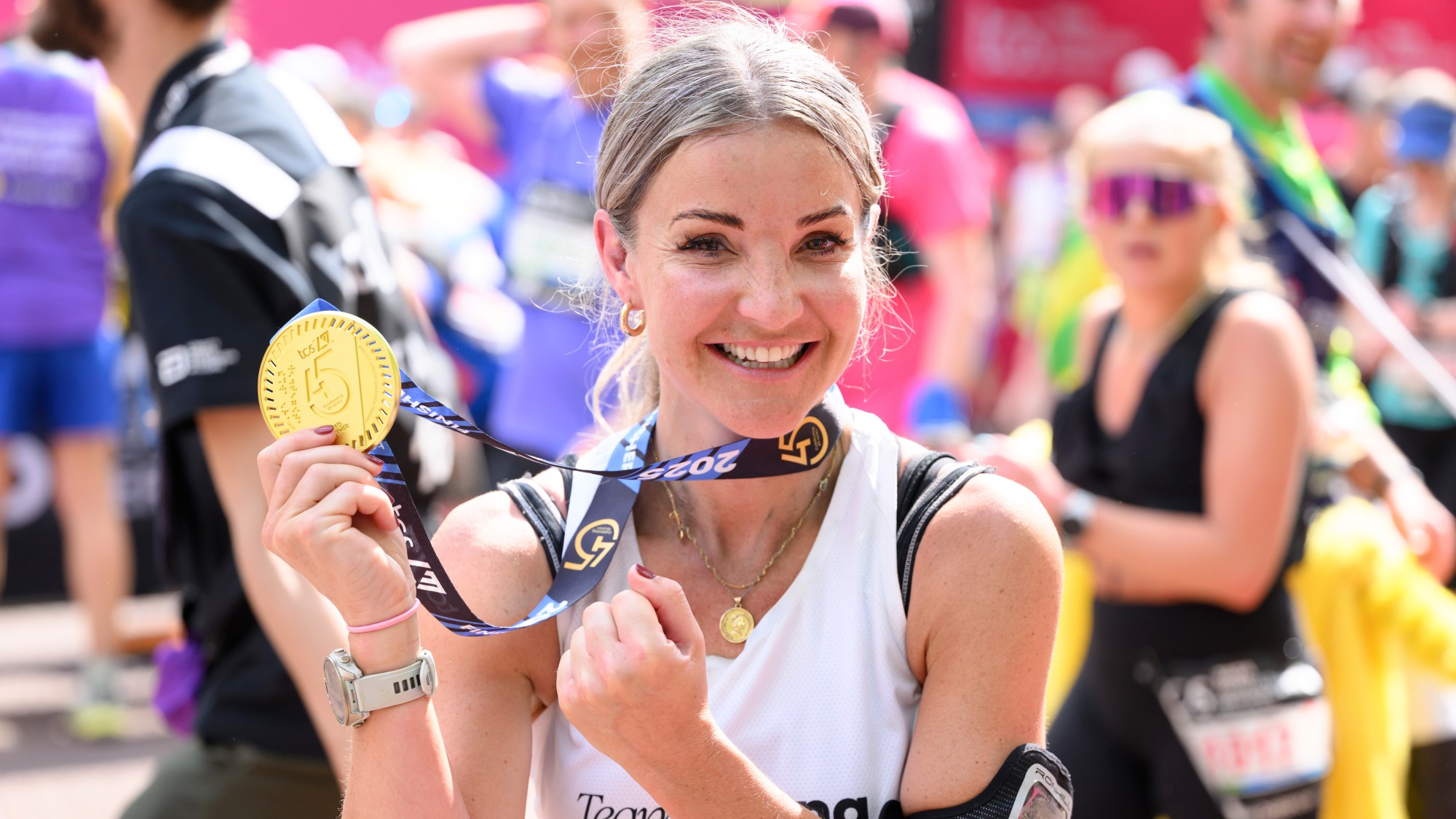
    When the TV presenter Helen Skelton appeared on “Strictly Come Dancing” in 2022, she was in a fragile state, says Julia Llewellyn Smith in The Times. Seven months earlier, her husband, the rugby player Richie Myler, had abruptly left her for another woman – weeks after the birth of their third child. It had been all over the tabloids, and she felt exposed and humiliated. On the show, her defiant, high-kicking dance to Cabaret’s “Mein Herr” brought the house down – and made her a poster girl for wronged women. 

    Yet for Skelton, this turnaround was entirely in character. Having grown up on a farm in Cumbria, she had seen at a young age that “shit literally happens; animals die”; and that, at work, you reap what you sow. Her parents had no time for moaning, and she is as hard as nails: she has run the Namibian desert ultramarathon, cycled to the South Pole, and kayaked 2,000 miles down the Amazon. There have been unplanned feats too, such as giving birth to her second child alone on the kitchen floor, while her one-year-old son hit her over the head with a plastic sword. “He thought we were playing dinosaurs.” 

    She was in her 20s when she put herself through her first ultramarathon. A cousin had died at the same time as she was going through a painful break-up. “It hurt so much, but I remember maybe naively thinking if I put myself in a situation where life was so difficult and so horrible, where I was physically broken, maybe I’d be ready for whatever shit stuff life throws at me.”


    Image credits, from top: Greater Manchester Police / Stephen P. Kelly; Jane Barlow / Pool / Getty Images; Graeme Sloan / Bloomberg / Getty Images; Karwai Tang / WireImage / Getty Images
     

    Recent editions

    • Morning Report

      Outrage over ICE’s killing of Houston migrant crosses border

    • Evening Review

      Trump’s new red scare

    • Morning Report

      Platner’s exit triggers Maine scramble

    VIEW ALL
    TheWeek
    • About Us
    • Contact Future's experts
    • Terms and Conditions
    • Privacy Policy
    • Cookie Policy
    • Advertise With Us
    • FAQ
    Add as a preferred source on Google Add as a preferred source on Google

    The Week is part of Future US Inc, an international media group and leading digital publisher. Visit our corporate site.

    © Future US, Inc. Full 7th Floor, 130 West 42nd Street, New York, NY 10036.