The Week The Week
flag of US
US
flag of UK
UK
https://cdn.mos.cms.futurecdn.net/flexiimages/jacafc5zvs1692883516.jpg

SUBSCRIBE & SAVE

Less than $3 per week

Sign in
  • View Profile
  • Sign out
  • The Explainer
  • The Week Recommends
  • Newsletters
  • Cartoons
  • From the Magazine
  • The Week Junior
  • More
    • Politics
    • World News
    • Business
    • Health
    • Science
    • Food & Drink
    • Travel
    • Culture
    • History
    • Personal Finance
    • Puzzles
    • Photos
    • The Blend
    • All Categories
  • Newsletter sign up Newsletter
  • Sunday Shortlist, from The Week
    A ‘gallopingly eventful’ biopic and ‘breathtakingly executed’ theatre

     
    Theatre Review

    Edinburgh hits to catch on tour

    Acclaimed shows from the Edinburgh festivals 

    Evita Too

    Sh!t Theatre’s non-Lloyd Webber production tells its own version of the extraordinary story of Isabel Perón, the former go-go dancer who became the first female president of Argentina, leading the country for 18 months before being ousted by a military coup. It’s a “rad-fem riot of a show”, said Neil Cooper in The Herald – a heady mix of song, dance and naked roller-skating.
    Tours to Ipswich, Bristol, Canterbury and Salford, 6 November-9 January; judithdimant.com

    Bryony Kimmings: Bog Witch
    The performance artist’s latest show turns her ironic eye on her decision to relocate to a tumbledown cottage in the countryside. The subject is a familiar one, but she “makes it fresh, organic and akin to a vital ritual of renewal”, said Dominic Cavendish in The Telegraph. Having begun lightly, the story “spirals into a tempest of upset”, before ending in a place of “fragile wellness”. It is “lovely stuff”.
    Tours to Lancaster, Cardiff and Leeds, 11 September-1 October; bryonykimmings.com

    Bigfoot Ripped My Dog in Half I Saw It
    This “brilliantly conceived” show from New Yorkers Xhloe and Natasha is about two teenagers who stage fake Bigfoot sightings in their Appalachian town. When a neighbour’s dog is found torn to pieces, it starts a panic. Combining deft acting with “intense acrobatic athleticism”, this is “one of the sharpest, most significant, and most breathtakingly executed physical theatre shows of the year”, said Joyce McMillan in The Scotsman. 
    Soho Theatre, London, 7-26 September


    Film REVIEW

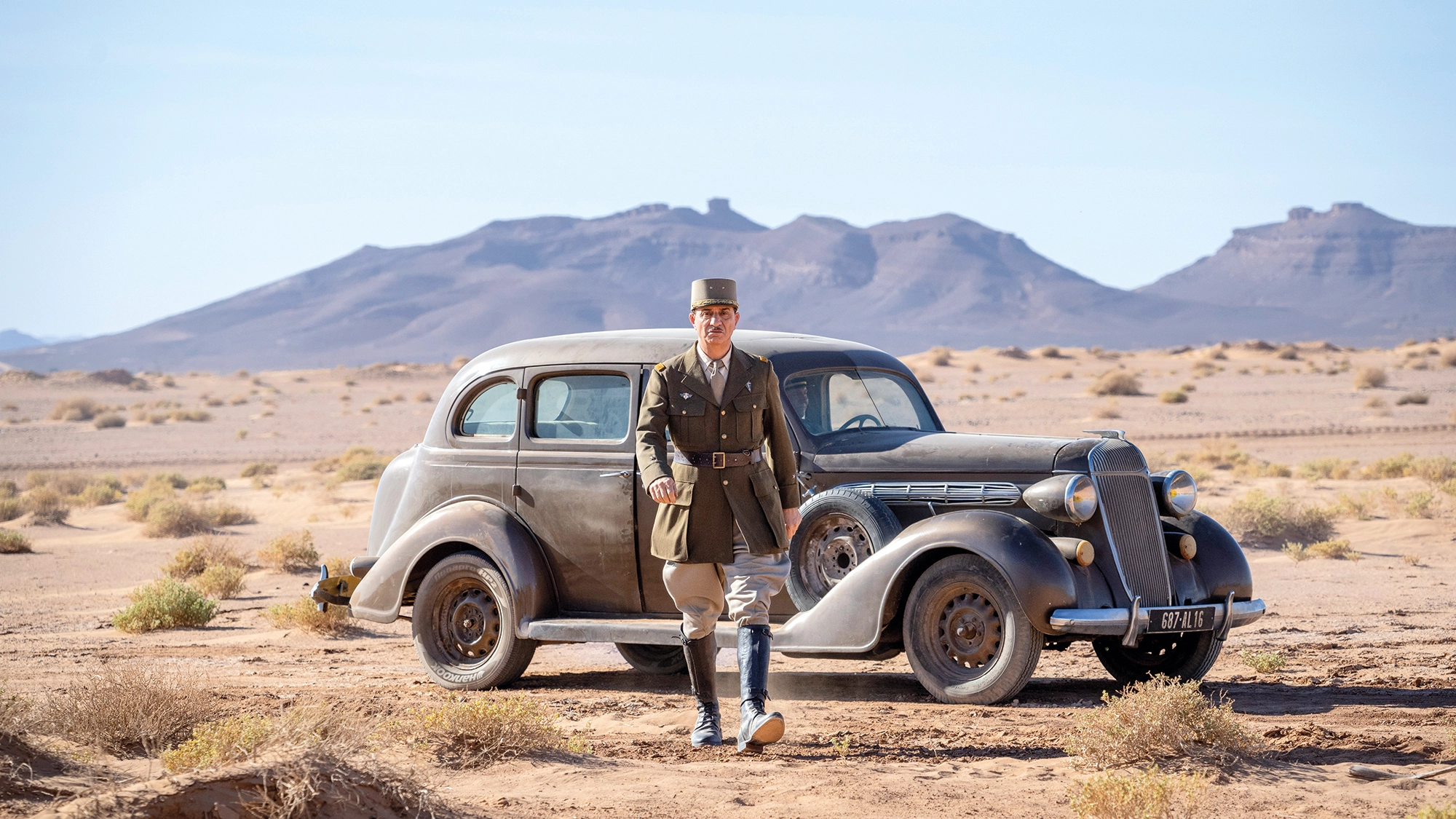
    De Gaulle: Résistance

    Epic portrait of ‘lofty’ general who led the Free French

    The British and Americans have been making big-budget films about the Second World War for decades, said Ed Potton in The Times but “Gallic cinematic triumphalism has been more muted”. So “bravo” to Antonin Baudry for producing this “entertaining, and sometimes moving portrait, of Charles de Gaulle”.

    The first part of a two-part epic (the second comes out later this month), it is focused on his flight to London in 1940, and the founding of his Free France movement, and culminates in a lavish recreation of the Battle of Bir Hakeim. Simon Abkarian plays the general, steering a “delicate path between pathos, comedy and dignity”; Simon Russell Beale once again takes the role of Winston Churchill (speaking mainly in French).

    Perhaps because its source is a biography by a British historian – Julian Jackson – “this very enjoyable and gallopingly eventful” biopic has an “element of amused detachment”, said Peter Bradshaw in The Guardian. It is naturally sympathetic to the “lofty” and faintly preposterous general who refused to accept the dishonour of Vichy France’s capitulation to the Nazis; Churchill, his great supporter and, in some ways, creator, found him exasperating but also saw in him a kindred spirit, “a romantic maverick and patriot”.

    For reasons that become clear, the film’s narrative is split between de Gaulle and the resistance fighter Fernand Bonnier de la Chapelle. This “lumbers” the film with another story to tell, and leaves less time to explore de Gaulle’s “strange, dislocated life in wartime London”, said Phil de Semlyen on Time Out. As a result, the future president remains an elusive figure. Hopefully, part two will focus more on the man, and less on the myth.


    PODCAST REVIEW

    Invisible Hands: The American Century

    There’s something “quite cool” about the casual way David Dimbleby’s new podcast drops in historic moments from his own back catalogue, said James Marriott in The Times. “I want to introduce you to a man I met 50 years ago in Tehran,” says Dimbleby; “it was 1976 when I interviewed him.”

    The man in question is the last Shah of Iran, whom Dimbleby quizzed on the methods used by his nation’s secret service to extract confessions from dissidents. Or there’s a recording of him asking President Clinton about whether oral sex counts as sexual relations. “You don’t get that on Joe Rogan.”

    The series, “Invisible Hands: The American Century”, is a “fascinating” account of the United States’ rise to hegemony after the Second World War – a tale of power-brokers, institution-building, “telegrams and anger” that is “potentially dry stuff”. It packs a lot in, and listeners “will have to concentrate”. But the producers have worked hard to make it an accessible, “ear-grabbing” listen – and Dimbleby brings both “valuable gravitas”, and also an “endearing” willingness to embrace the “chattier atmosphere” demanded by this kind of show.


    BOOK OF THE WEEK

    The Ego Trip

    by Kimon de Greef 

    The chemical compound 5-MeO-DMT, secreted by the Sonoran Desert toad, has been dubbed the “Everest” of psychedelics, said Olivia Goldhill in the New Scientist. Whereas LSD creates hallucinations, the “god molecule”, as some call it, “completely shatters all perception”. A trip lasts no more than half an hour but “creates a total obliteration of the ego”.

    Smoking 5-MeO-DMT has been a fringe practice since the 1980s but it has recently become better known – with adherents including Mike Tyson, who in 2019 described taking the drug as “almost like dying and being reborn”. In “The Ego Trip”, the journalist Kimon de Greef charts its history, with a particular focus on one of its main popularisers, the Mexican doctor Octavio Rettig Hinojosa. The story de Greef tells is “often dark” but his book is “compelling”.

    Rettig Hinojosa – or Octavio, as he prefers – “burst onto the Silicon Valley scene” in 2013, when he gave an online talk describing how 5-MeO-DMT had helped him kick his crack cocaine addiction, said Kristen Martin on Bloomberg. Presenting “smoking toad” as an “ancient Mesoamerican ritual”, he claimed to have been introduced to it by the Seri tribe, who live in the Sonora region of northwestern Mexico. Often dressed in “Seri garb”, he went on to “serve toad” to thousands.

    “If you’re familiar with the guru playbook, you know where this is going,” said Susannah Cahalan in The New York Times. Octavio “bragged about the number of clients he had bedded” and dosed children as young as five with his “medicine”. He was filmed “kicking and slapping a terrified man”, forcing him to take more hits of toad. At least two people have died after attending his ceremonies. De Greef offers an “enthralling and galling travelogue into the deeply weird underbelly of the psychedelic renaissance”.

    “A different writer might have been tempted to go gonzo, to smoke toad himself, and to come back with stories of ego death, the space-time continuum and the rest of it,” said Oliver Bullough in The Guardian. Mercifully, de Greef resists that temptation. He remains “clear-eyed” throughout “The Ego Trip” (except when Octavio dupes him into trying an “essential oil” which proves to have been laced with an LSD-like substance). As well as charting Octavio’s story, de Greef offers “entertaining digressions”, including into “how pharmaceutical companies are harnessing 5-MeO-DMT for their own ends”. The result is a “highly enjoyable” book that sheds light on some extremely “grim” practices.


    OBITUARY

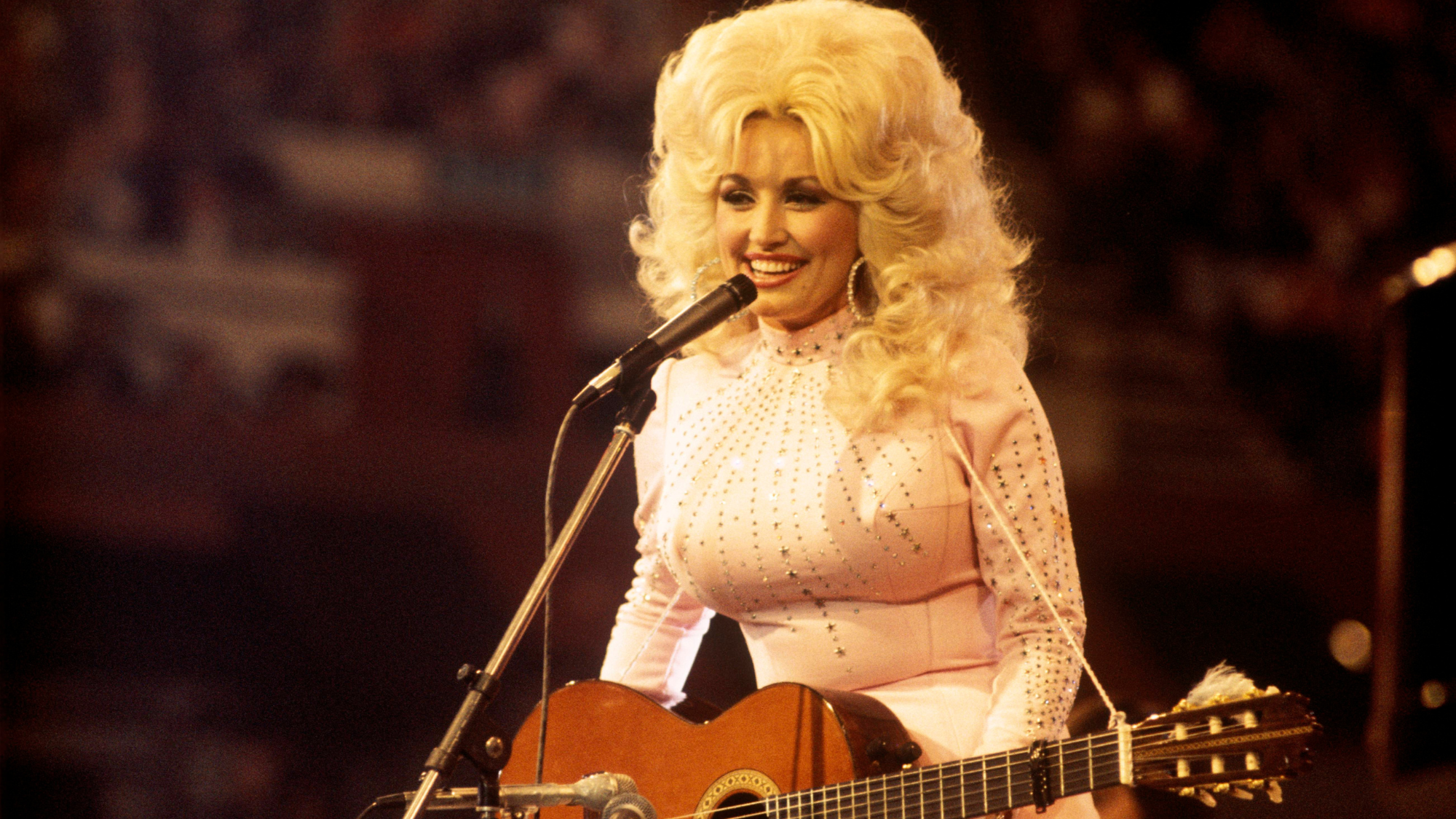
    Dolly Parton

    Country musician who became an international icon

    Dolly Parton “used her talent, intelligence and extraordinary looks to escape first poverty, and then the restrictive, sexist world of American country music”, said The Telegraph. She went on to become not just a vastly successful recording artist and an actress, but an “entrepreneur, philanthropist and international icon”. “I don’t look real,” Parton once said, but her taste for glitter and gilt “came from a very serious place”, she said: it was “a poor country girl’s idea of glamour”.

    “Her childhood sounds like the plot of a country song,” said The Guardian. And indeed songs such as “My Tennessee Mountain Home” (1973) were based on her early years in the isolated Smoky Mountains hamlet of Locust Ridge. She was raised in a log cabin on the banks of the Little Pigeon River, the fourth of 12 children of Avie Lee (née Owens) and Robert Lee Parton. Parton’s part-Cherokee mother kept house. Her father, an illiterate tobacco farmer, was so cash-strapped that he paid the doctor who helped deliver her with a sack of cornflour. Even so, it was, she said, a childhood full of love. Her uncle Bill Owens, a professional musician, helped her to get a regular gig performing on a local radio and TV station, for which she was paid $5 (£3.70) a week. In 1959, when she was 13, he took her to Nashville, where she met Johnny Cash and played at the Grand Ole Opry, one of country music’s biggest stages. She returned to graduate from high school – the first in the family to do so – then boarded a Greyhound bus to Nashville. 

    On her first day in the city, Parton met her future husband, Carl Dean, a building contractor, outside a launderette. Recalling how they met, she said she was struck by how he looked her in the face – “a rare thing for me”. On their first date, Dean, who later avoided the limelight and stayed in Tennessee while Parton toured the world, took her to his family’s home, telling his mother: “Fix this girl a plate. She’s the one I’m going to marry.” The pair, who duly married two years later, remained together until Dean’s death last year. “He gives me freedom”, was her explanation for their marriage’s longevity. They didn’t have children, but they raised several of Parton’s younger siblings. 

    Before her career took off, Parton initially struggled to make ends meet. But aged 19, she was signed by Monument Records, which released her 1966 single “Dumb Blonde” (“this dumb blonde ain’t nobody’s fool”). It caught the attention of the singer Porter Wagoner, who invited her onto his popular TV show from 1967. Over the next seven years, they released 21 hit duets together. She also pursued a solo career, and had a series of hits, of which the biggest was “Jolene” (1973). (The inspiration for the song came from a red-headed bank clerk who allegedly used to flirt with Dean.) Wishing to escape Wagoner’s controlling influence, she left the partnership, writing “I Will Always Love You” as a parting tribute to him. The song ended up making her $10 million (£7.4 million) in royalties from Whitney Houston’s 1992 cover alone. In 1979, Wagoner sued Parton, arguing that he had been the springboard for her success; not wanting the case to go to court, she settled for $1 million (£739,000).

    By the late 1970s, Parton “was the biggest star in country music and decided to turn her attention to achieving a similar dominance in the pop world”, said The Times. Crossover hits such as “Here You Come Again” (1977) followed; while “9 to 5” topped the charts in the US in 1981. The record’s success was assisted by her movie debut in the film, in which she played a secretary who stands up to her sexist boss, alongside Lily Tomlin and Jane Fonda. 

    “Yet by the middle of the decade, as she approached 40, a younger generation of female country stars was emerging and her pre-eminence waned.” Parton was dropped by her label in 1986. She invested much of her songwriting royalties in the Dollywood theme park in Pigeon Forge, Tennessee, near her birthplace. It opened in 1986, featuring a replica of her childhood cabin. It was soon a great commercial triumph – swelling her fortune to around $500 million (£369 million) – and an important employer in the area. Her singing career had a renaissance from the late 1990s: she returned to her country roots, finding critical acclaim once more with albums such as “The Grass is Blue”. Fans, including a strong LGBTQ+ base, kept her albums in the charts, and her tours sold out. In 2014, aged 68, she donned a white rhinestone-studded trouser suit to perform to 180,000 people at Glastonbury in the “legends” slot. 

    When she died, Parton was “an international superstar and an unlikely feminist heroine”, said The Washington Post. She was also a celebrated philanthropist, having founded the Imagination Library, which has given out more than 300 million books to children – among many other acts of charity. She insisted she didn’t “do politics”, saying “I have too many fans on both sides of the fence”, and remained a rare unifying figure in a polarised US. Above all, Parton wanted to be remembered as a songwriter: she wrote more than 3,000 songs. “You’re putting something in the world that wasn’t there yesterday,” she said, “and which you hope people are still going to be singing after you’ve gone.”




    Image credits, from top: Malgosia Abramowska; Rosie Powell; White Rabbit; David Redfern / Getty
     

    Recent editions

    • Evening Review

      The Pentagon in turmoil

    • Morning Report

      Democrats notch rare wins in redistricting war

    • Evening Review

      Who runs the world?

    VIEW ALL
    TheWeek
    • About Us
    • Contact Future's experts
    • Terms and Conditions
    • Privacy Policy
    • Cookie Policy
    • Advertise With Us
    • FAQ
    Add as a preferred source on Google Add as a preferred source on Google

    The Week is part of Future US Inc, an international media group and leading digital publisher. Visit our corporate site.

    © Future US, Inc. Full 7th Floor, 130 West 42nd Street, New York, NY 10036.