The counterculture icon who rallied Woodstock
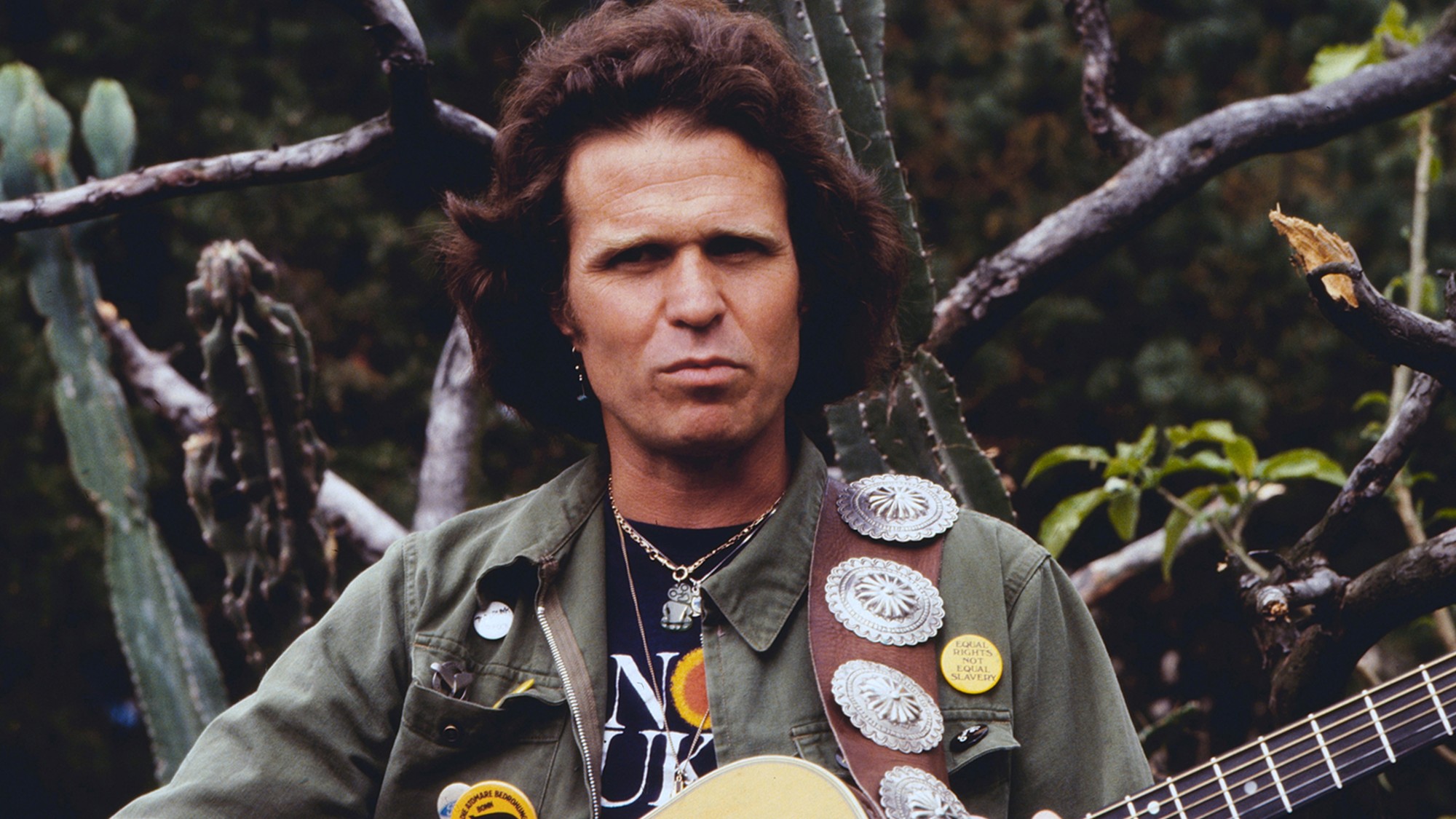
Through his darkly funny folk songs, Country Joe McDonald narrated the struggles of a generation radicalized by the Vietnam War. He was best known for his Vietnam War protest anthem, “I-Feel-LikeI’m-Fixin’-To-Die Rag” (1965). But it was the cheer he led just before that at Woodstock that rallied the audience to the cause. He and his psychedelic folk-rock group Country Joe and the Fish used to open shows with a chant of “F-I-S-H” and have the crowd shout along. By the time they got to Woodstock, they’d replaced that with a more vulgar four-letter word. “From the moment I yelled ‘Give us an F,’ it became a folk protest moment,” McDonald said in 2002. “There was a certain in-your-face Kurt Cobain–ness about it that matched the attitude of the time pretty well.”
Raised in El Monte, Calif., by Communist Party members who “named him for Joseph Stalin,” Joseph Allen McDonald was born to be a leftist and an activist, said The Washington Post. After a stint in the Navy, he attended college in Los Angeles and planned to transfer to UC Berkeley but ended up busking on the streets there instead. He became a major “presence in the Bay Area music scene,” dating Janis Joplin, putting out the arts and politics magazine Rag Baby, and writing psychedelic folk songs. His seminal “I-Feel-Like-I’m-Fixin’-To-Die Rag” was completed in less than an hour, said The Guardian. The deadpan talking track was a “mock celebration of war and early, senseless death” from the jaded viewpoint of a draftee. “And it’s one, two, three, what are we fighting for? / Don’t ask me I don’t give a damn / Next stop is Vietnam.” The song established him as a counterculture icon.
McDonald never achieved the mainstream success of peers like the Grateful Dead or Jefferson Airplane, but he “remained true to his musical instincts and lyrical themes,” said The New York Times. One album explored feminism, another environmentalism, and his 1986 album Vietnam Experience looked back at the effects and legacy of the war. His final studio album, 2017’s 50, celebrated his own half-century as a singer- songwriter and political rebel. “I think the ‘Summer of Love’ thing was manufactured by the media or something, because I don’t remember us thinking, Wow, this is the ‘Summer of Love,’” he said in 2018. “I never felt a part of it, but I was really thrilled and happy to be a hippie.” |