The Week US The Week US
flag of US
US
flag of UK
UK
https://cdn.mos.cms.futurecdn.net/flexiimages/jacafc5zvs1692883516.jpg

SUBSCRIBE & SAVE

Less than $3 per week

Sign in
  • View Profile
  • Sign out
  • The Explainer
  • The Week Recommends
  • Newsletters
  • Cartoons
  • From the Magazine
  • The Week Junior
  • More
    • Politics
    • World News
    • Business
    • Health
    • Science
    • Food & Drink
    • Travel
    • Culture
    • History
    • Personal Finance
    • Puzzles
    • Photos
    • The Blend
    • All Categories
  • Newsletter sign up Newsletter
  • The Week’s Sunday Shortlist
    Portrait of a tech titan, marital diplomacy, and stealth millionaires

     
    FILM REVIEW

    Musk

    A damning portrait of the world’s richest man
    ★★★ (out of 4)

    “As a character study, Musk is fascinating,” said Bilge Ebiri in NYMag.com. “As a warning about our future, it’s terrifying.” Alex Gibney’s nearly four-hourlong documentary, which has drawn insults and legal threats from its subject, “gives us both the myth and the reality,” turning back the clock on Elon Musk’s story to revisit all the pitches he’s made for his business ventures that have obscured troubling truths—such as the deadly unreliability of the self-driving software in Tesla’s cars. Viewers will come away convinced the world’s richest man mostly excels at self-promotion; they’ll also be frightened by the power he’s accrued. Still, you have to wonder: “Will it speak primarily to the converted?” Though Gibney’s film will surely spawn viewer nightmares, said Ben Croll in The Wrap, “it takes some time getting there.” The first half, which covers Musk’s early history as an entrepreneur, “charts a trajectory of upward failing” that enriches him enough to fund SpaceX, his reputationmaking breakthrough. The “more scabrous”  postintermission second half paints him as a man undone by the pandemic shutdown, but turns devastating only when it details how many millions will die as a result of his detour into slashing government jobs and aid programs for President Trump. When Ashley St. Clair, a recent Musk ex and the mother of one of his 14 known children, calls him “a nuke,” it chills. Some of Gibney’s daring formal choices, including having many of his subject’s past public statements spoken by a computer-animated Musk avatar, prove distracting, said David Fear in Rolling Stone. Still, once Musk builds its case that a man with a god complex has built an empire whose satellites, rockets, social media platform, and personal wealth give him enormous sway over our present and future, “it’s hard not to feel a deep sense of despair.”


    tv review

    The Diplomat

    International diplomacy is hard, marital diplomacy is often harder. Season 4 of this outstanding political thriller opens soon after the disappearance of a nuclear-weaponized Russian submarine off the U.K. coast. As bad as that is for Russian-British relations, it’s a bigger challenge for Keri Russell’s title character, U.S. Ambassador Kate Wyler. Kate’s marriage and job are both imperiled because she has learned that her husband, the U.S. vice president played by Rufus Sewell, conspired with Allison Janney’s President Grace Penn to steal the weapon covertly. Allying with Penn’s husband may be Kate’s best hope. Thursday, Oct. 15, Netflix 


    FOOD & DRINK

    Wine: Bordeaux bargains

    Many great Bordeaux wines “don’t cost anywhere near” the three-figure prices associated with the region’s superstar châteaus, said Ray Isle in Food & Wine. Bordeaux produces a lot of cabernet- and merlot-based wine, and with several good vintages now on shelves, this is an excellent time to sample a few value options. 

    2022 Château de Fontenille Cadillac Côtes de Bordeaux ($25)
    This 50-50 cabernet-merlot blend delivers “full plush tannins” and “a little citrus peel acidity to wrap things up.” 

    2022 Connétable Talbot Saint-Julien ($40)
    A nice example of an excellent vintage, this Bordeaux “has plenty of spicy fruit and supple tannins, ending on an intriguing herbal-minty note.” 

    2021 Château de Pez Saint-Estèphe ($41)
    The nose and palate of this “surprisingly affordable” offering from a prestigious château suggest “graphite, oak toast, and blackberries.”


    BOOK OF THE WEEK

    The Everywhere Millionaire: Who Is Really Rich in America and How They Got There

    By Owen Zidar and Eric Zwick

    “When we talk about wealth, mainly we talk about billionaires,” said John Lanchester in The New Yorker. “But what if there were another group that, without drawing much attention, had grown collectively 13 times richer than the Forbes 400?” In their “brilliant” new study, economists Owen Zidar and Eric Zwick call attention to America’s Main Street millionaires, in particular the roughly 3 million owners of private businesses whose household net worth is at least $5 million. These are often stealth magnates—car dealers, beverage distributors, partners in law firms or medical practices—and they tend to have amassed their wealth through sustained hard work. “Unfortunately, there is a shadow side,” because they’ve also been so effective at wielding political clout that they’ve helped make life harder for many Americans. For now, “the best we can probably do about this concentration of wealth and power is to see it and name it, and that’s what Zidar and Zwick have done.” 

    The authors’ “eyeopening” account traces the rise of everywhere millionaires to the Tax Reform Act of 1986, said Greg Rosalsky in NPR.org. The bipartisan congressional bill cut tax rates, setting the top individual tax rate lower than the corporate tax rate. This triggered an explosion of so-called pass-through businesses, which pass profits directly to owners, who in turn pay taxes on that income at the lower rate. In 1980, pass-through businesses were small potatoes. “By 2011, they were generating more income than all traditional U.S. corporations combined—and accounting for most of the rise in the share of income flowing to the top 1%.” Zidar and Zwick, who identified this new millionaire class by diving deep into IRS records, have now attached their findings to “a colorful cast of characters,” including Chicago hot dog king Dick Portillo and other gogetters who started with nothing and made fortunes on surprising long-term bets. 

    “Zidar and Zwick tell this story with admirable clarity and precision,” said Nico Taylor in The Baffler. Though their “quasi-scholarly” language “can be bland at times,” it’s “a testament to the authors’ expository finesse that they manage to make fiscal history occasionally gripping.” Their book will be “of great interest” to readers who believe the rich now have the system rigged, said The Economist. As the authors point out, many everywhere millionaires enjoy the same luxuries as billionaires without attracting negative attention, and meanwhile they win new tax breaks and push through regulations that limit competition in their fields, including real estate sales, medicine, and law. But as critical as the book can be of millionaires, it “will appeal even more to those who hope to join their ranks.” Clearly, “much of the spoils of capitalism are still won by those who roll their sleeves up,” and “that is a great thing.”


    OBITUARY

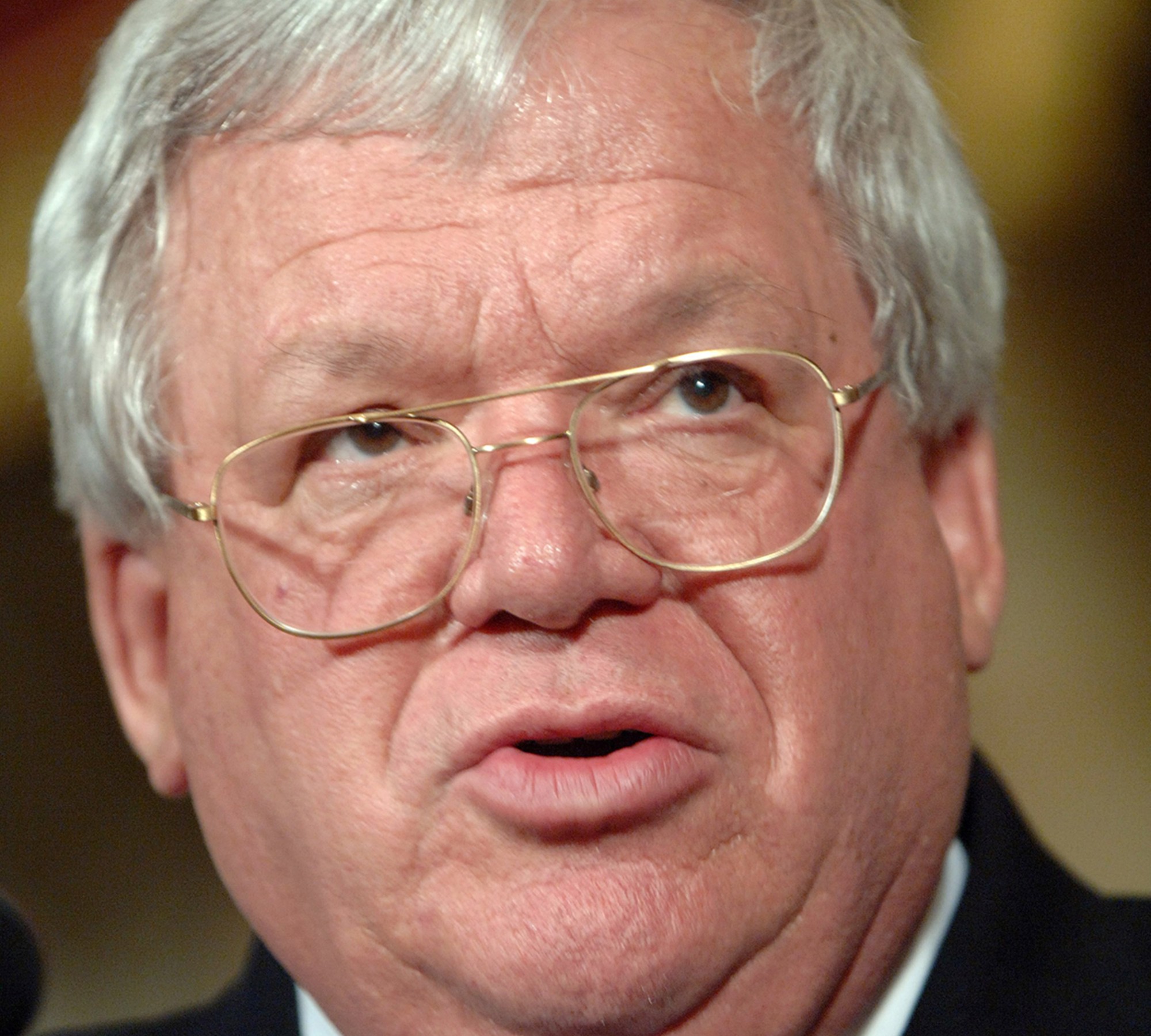
    The GOP House speaker who abused teen boys

    Dennis Hastert ascended to the House speakership on his reputation for moral rectitude, then ended his career disgraced by revelations of his sexual abuse of teenage boys. A former high school wrestling coach, the Illinois congressman was elevated unexpectedly in 1999, after Rep. Bob Livingston (R-La.), set to replace outgoing speaker Newt Gingrich, confessed to extramarital affairs and resigned. It was a scandal Republicans didn’t need at a time when they were assailing President Bill Clinton for his affair with a White House intern, so they drafted Hastert, a Midwestern family man with a reputation for homespun decency. It would be years before that image was shattered by Hastert’s 2015 conviction for making secret payments to cover up his abuse of a former student. Hastert, who served a 15-month sentence, admitted that as a coach he’d abused wrestlers as young as 14. “They looked to me,” he said, “and I took advantage of them.” 

    John Dennis Hastert grew up in Aurora, Ill., where his father ran a farming supply business, said The Times (U.K.). He wrestled in high school and, after graduating from Wheaton College, became a teacher and wrestling coach in Yorkville, Ill. “A beloved local figure” who won a state title in 1976, he used his popularity as “his springboard into politics,” serving three terms in the state legislature before being elected to Congress in 1987. As speaker, he helped muscle through major elements of President George W. Bush’s agenda, said Reuters, including tax cuts and an expansion of Medicare to cover drug costs. He “contributed to the increasing partisan divide” by passing conservative bills with “little or no outreach” to Democrats and adopting the so-called Hastert Rule—that only bills supported by a majority of Republicans would be granted a floor vote. 

    The longest-serving Republican speaker, he lost the post after Democrats retook the House in 2006, said The Washington Post. Leaving Congress the following year, he settled into a “comfortable life” as a high-paid lobbyist. His “unraveling” began in 2013, when his large withdrawals of cash attracted the attention of federal investigators. They eventually determined he’d paid $1.7 million in hush money to a man he’d molested decades earlier. With the statute of limitations long passed, he was convicted only of illegally hiding the payments, but he admitted in court to abusing the boys. “Nothing is more stunning,” said the sentencing judge, “than having the words ‘serial child molester’ and ‘speaker of the House’ in the same sentence.” 


    Sunday Shortlist was written and edited by Susan Caskie, Ryan Devlin, Chris Erikson, Chris Mitchell, and Matt Prigge.

    Image credits, from top: Bleecker Street Media; Netflix; Portillo’s; Getty
     

    Recent editions

    • Saturday Wrap

      Justice at Cornell?

    • Evening Review

      The growing trade deficit

    • Morning Report

      Hegseth trumpets livestreamed execution

    VIEW ALL
    TheWeek
    • About Us
    • Contact Future's experts
    • Terms and Conditions
    • Privacy Policy
    • Cookie Policy
    • Advertise With Us
    • FAQ
    Add as a preferred source on Google Add as a preferred source on Google

    The Week US is part of Future US Inc, an international media group and leading digital publisher. Visit our corporate site.

    © Future US, Inc. Full 7th Floor, 130 West 42nd Street, New York, NY 10036.