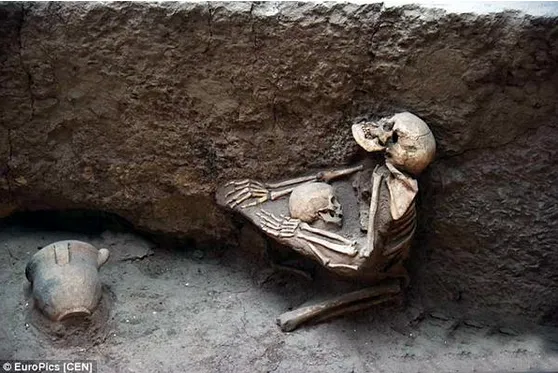
Archaeologists unearthed proof of a mother's love in Qinghai province, China, when they discovered the 4,000-year-old skeletons of a mother and child still locked in a dying embrace. The two skeletons are frozen in time, preserved in the stance they took in their final moments before an earthquake wiped out China's "Pompeii of the East" around 2,000 BC. The mother's arms are draped around her son in what archaeologists believe to be both an embrace and an attempt to protect her son as catastrophe hit.
The Week
Escape your echo chamber. Get the facts behind the news, plus analysis from multiple perspectives.

Sign up for The Week's Free Newsletters
Join more than 350,000 subscribers and keep yourself informed with a selection of The Week’s most interesting, enlightening and entertaining stories - plus daily puzzles.
Join more than 350,000 subscribers and keep yourself informed with a selection of The Week’s most interesting, enlightening and entertaining stories - plus daily puzzles.


