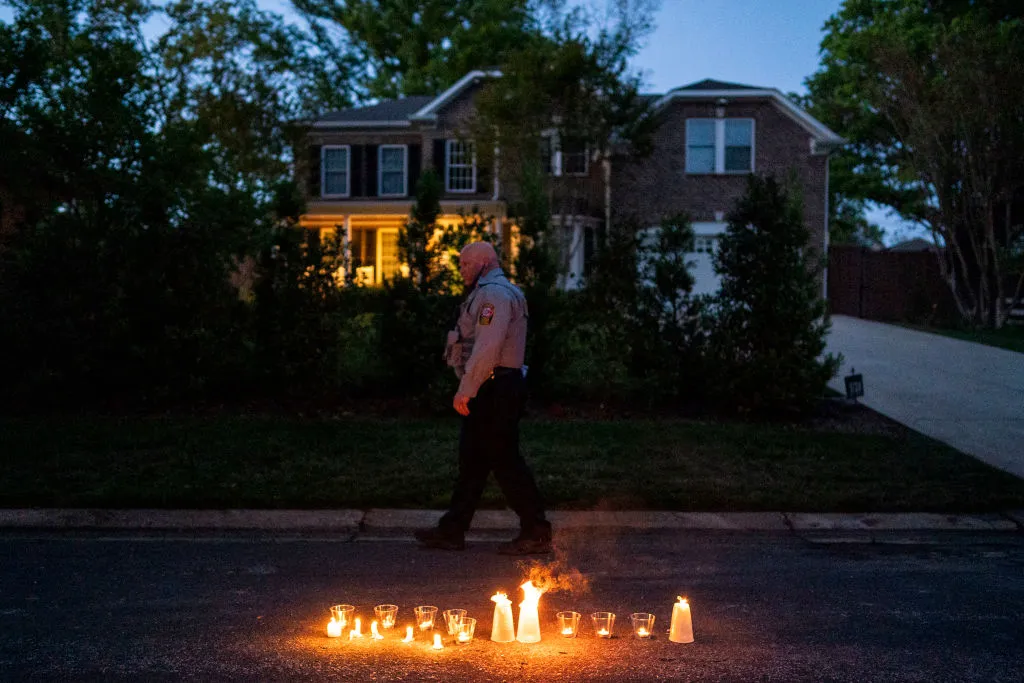
Senate approves police protection for SCOTUS families rattled by protests
A free daily email with the biggest news stories of the day – and the best features from TheWeek.com
You are now subscribed
Your newsletter sign-up was successful
The U.S. Senate voted on Monday to grant police protection to the families of Supreme Court justices, who have faced protests outside their homes after a leaked draft decision enraged abortion rights activists, NPR reported.
The Supreme Court Police Parity Act, which was introduced by Sens. John Cornyn (R-Texas) and Chris Coons (D-Del.), passed the Senate by unanimous consent and will now go before the House of Representatives.
The bill empowers the Supreme Court Police — at the direction of the chief justice and the Marshal of the Supreme Court — to provide protection to "any member of the immediate family of the Chief Justice, any Associate Justice, or any officer of the Supreme Court if the Marshal determines such protection is necessary."
The Week
Escape your echo chamber. Get the facts behind the news, plus analysis from multiple perspectives.
Sign up for The Week's Free Newsletters
From our morning news briefing to a weekly Good News Newsletter, get the best of The Week delivered directly to your inbox.
Existing federal law allows the Supreme Court Police to protect justices, officers, guests, and employees of the Supreme Court, but not their families.
On Monday night, around 100 demonstrators protested in front of the Alexandria home of Justice Samuel Alito, who authored the opinion. Protests have also sprung up in front of the homes of Chief Justice John Roberts and Justice Brett Kavanaugh.
It is a federal crime to protest in front of a court or a judge's home with the intent of influencing the court's decision. It is not, however, illegal to protest outside a judge's home for other reasons, such as expressing outrage.
A free daily email with the biggest news stories of the day – and the best features from TheWeek.com
Grayson Quay was the weekend editor at TheWeek.com. His writing has also been published in National Review, the Pittsburgh Post-Gazette, Modern Age, The American Conservative, The Spectator World, and other outlets. Grayson earned his M.A. from Georgetown University in 2019.
-
Local elections 2026: where are they and who is expected to win?The Explainer Labour is braced for heavy losses and U-turn on postponing some council elections hasn’t helped the party’s prospects
-
6 of the world’s most accessible destinationsThe Week Recommends Experience all of Berlin, Singapore and Sydney
-
How the FCC’s ‘equal time’ rule worksIn the Spotlight The law is at the heart of the Colbert-CBS conflict
-
Rubio boosts Orbán ahead of Hungary electionSpeed Read Far-right nationalist Prime Minister Viktor Orbán is facing a tough re-election fight after many years in power
-
Key Bangladesh election returns old guard to powerSpeed Read The Bangladesh Nationalist Party claimed a decisive victory
-
Epstein files topple law CEO, roil UK governmentSpeed Read Peter Mandelson, Britain’s former ambassador to the US, is caught up in the scandal
-
Iran and US prepare to meet after skirmishesSpeed Read The incident comes amid heightened tensions in the Middle East
-
EU and India clinch trade pact amid US tariff warSpeed Read The agreement will slash tariffs on most goods over the next decade
-
Israel retrieves final hostage’s body from GazaSpeed Read The 24-year-old police officer was killed during the initial Hamas attack
-
China’s Xi targets top general in growing purgeSpeed Read Zhang Youxia is being investigated over ‘grave violations’ of the law
-
Panama and Canada are negotiating over a crucial copper mineIn the Spotlight Panama is set to make a final decision on the mine this summer