Sign up to get Today’s Best Articles in your inbox
Join 350,000+ subscribers and keep yourself informed with a selection of
The Week’s most interesting, enlightening and entertaining stories - plus daily puzzles.
You are now subscribed
Your newsletter sign-up was successful
Want to add more newsletters?
An account already exists for this email address, please log in.
Canada and Russia clash in Ukraine Twitter spat
A pointed tweet claims Crimea for Russia and leaves eastern Ukraine 'conveniently unillustrated'
Russia's Nato delegation posted a tweet yesterday restating Russian ownership of Crimea during a bad-tempered Twitter spat with their Canadian counterparts.
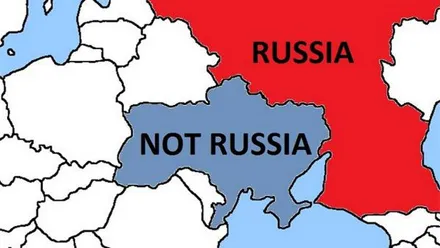
The Canadian Nato delegation had posted a "helpful geography lesson" for Russian soldiers whom Moscow claimed had become lost and accidentally entered southeastern Ukraine. The tweet went viral yesterday and was retweeted 32,000 times.
Ukraine had released a video of the Russian paratroopers on Tuesday, claiming it had captured them inside its eastern border. Russian military sources said the men had crossed the border "by accident".
The Week
Escape your echo chamber. Get the facts behind the news, plus analysis from multiple perspectives.
Join more than 350,000 subscribers and keep yourself informed with a selection of The Week’s most interesting, enlightening and entertaining stories - plus daily puzzles.
Join more than 350,000 subscribers and keep yourself informed with a selection of The Week’s most interesting, enlightening and entertaining stories - plus daily puzzles.
In response to the claim, the official Twitter account for Canada's Nato delegation tweeted an image of the region, highlighting which parts were "Russia" and which parts were "not Russia".
Geography can be tough. Here’s a guide for Russian soldiers who keep getting lost & ‘accidentally’ entering #Ukraine pic.twitter.com/RF3H4IXGSp — Canada at NATO (@CanadaNATO) August 27, 2014
Russia responded with a tweet of its own, in which it declared sovereignty over the Crimean Peninsula – which is not recognised by most of the rest of the world.
The map also partly shades Abkhazia and South Ossetia, which have both declared their independence from Georgia.
Helping our Canadian colleagues to catch up with contemporary geography of #Europe @CanadaNATO pic.twitter.com/MjzRxpFFfN — Russians at NATO (@natomission_ru) August 28, 2014
Part of the area of eastern Ukraine that is currently experiencing heavy fighting between Ukrainian forces and pro-Russian separatists has been "conveniently left unillustrated," the BBC says.
Sign up to get Today’s Best Articles in your inbox
A free daily email with the day’s biggest news and analysis – and the best features from TheWeek.com