The Week The Week
flag of US
US
flag of UK
UK
https://cdn.mos.cms.futurecdn.net/skoGBi9qKFoUtnNWkovjJQ.jpg

SUBSCRIBE

Try 6 Free Issues

Sign in
  • View Profile
  • Sign out
  • The Explainer
  • Talking Points
  • The Week Recommends
  • Podcasts
  • Newsletters
  • From the Magazine
  • The Week Junior
  • More
    • Politics
    • World News
    • Business
    • Health
    • Science
    • Food & Drink
    • Travel
    • Culture
    • History
    • Personal Finance
    • Puzzles
    • Photos
    • The Blend
    • All Categories
  • Newsletter sign up Newsletter
  • The Week Evening Review
    Normalising the Taliban, human rights, and ice-cream politics

     
    THE EXPLAINER

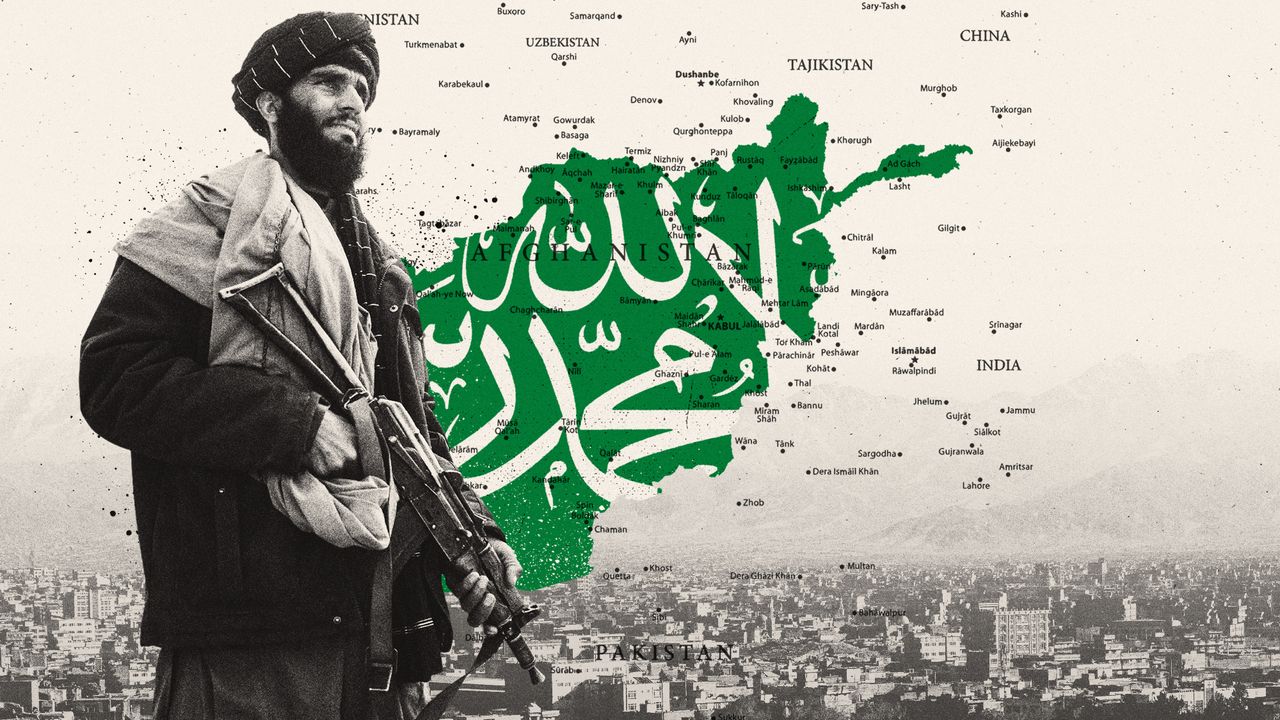
    Normalising relations with the Taliban in Afghanistan

    Months after Russia became the first country to formally recognise Afghanistan’s Taliban government, the regime “has begun to emerge from diplomatic isolation”, said the Financial Times. India has joined a growing list of countries seeking a reset after severing diplomatic ties when the Taliban retook power in 2021, as leaders seek a potential new ally in trade, counterterrorism and the deportation of migrants. 

    What is India doing?
    India hosted Afghanistan’s Foreign Minister Amir Khan Muttaqi in October, marking the first overseas diplomatic trip by a senior Taliban official since the group’s return to power. New Delhi subsequently announced that it would be “upgrading its technical mission” in Kabul to a “full-fledged embassy”, said Al Jazeera.

    For India, the Taliban “represents a ‘lesser evil’” compared with terrorist groups such as al-Qaida and Isis-K, said Chietigj Bajpaee of Chatham House’s South Asia, Asia-Pacific Programme. A key goal is to stop Afghanistan from “re-emerging as a hub for militancy and terrorism”. 

    How about the rest of the world?
    China was the first country to accredit an ambassador from the Taliban, and has pursued what analysts describe as “durable de facto recognition”, as Beijing eyes Afghanistan’s reserves of critical minerals and resources. Russia also sees potential for “commercial and economic” cooperation and counterterror efforts, the country’s Foreign Ministry said after formally recognising the Taliban government in July.

    No Western nations are talking about recognition, but Germany, Switzerland and Austria have all recently sent delegations or welcomed Taliban officials. Germany says it wants to work with the group directly to resume deportations of convicted Afghans. 

    What’s in it for the Taliban?
    Afghanistan’s rulers hope that increased international engagement will “translate into much-needed economic aid and investments”, said the FT. But there is “little sign of this taking place yet”. 

    “The Taliban still presides over a pariah state, shunned by most of the world,” said Modern Diplomacy. The “partial diplomatic thaw” has brought no “real economic relief” to the group, which “remains locked in a dangerous cross-border dispute with Pakistan and trapped by financial isolation”.


    today’s big question

    ECHR: is Europe about to break with convention?

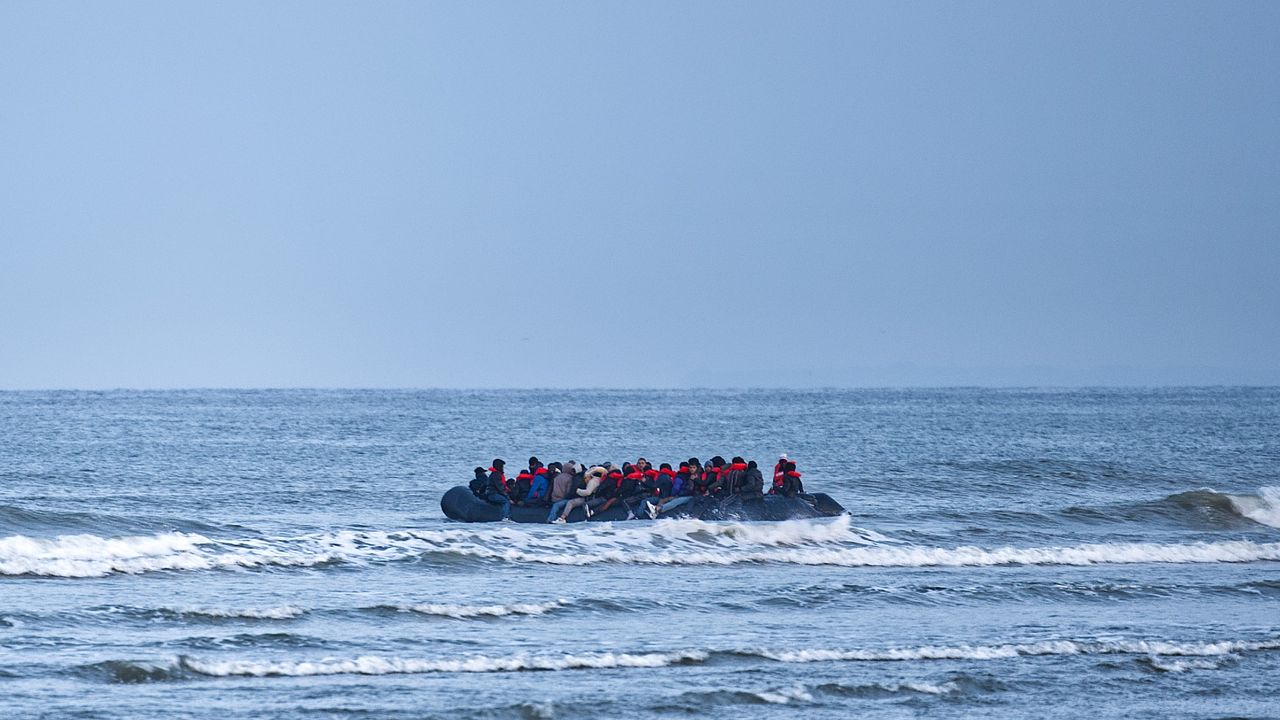
    European leaders have taken an “important first step” towards a political declaration on migration and how the European Convention on Human Rights is applied, according to the Council of Europe’s secretary general. They support a new recommendation to deter smuggling of migrants “with full respect for human rights”, said Alain Berset.

    Keir Starmer is leading calls to modernise the interpretation of the ECHR. The “current asylum framework was created for another era”, he said in a joint article with Danish PM Mette Frederiksen in The Guardian. It should “evolve to reflect the challenges of the 21st century”.

    What did the commentators say?
    Starmer has sent his two closest allies, Justice Secretary David Lammy and Attorney General Richard Hermer, to Strasbourg to make the case for updating the convention. They have “one task in mind”, said Andrew McDonald on Politico’s London Playbook: “securing reforms to the ECHR to save his Labour government and the 75-year-old treaty from those on the right who want to ditch both entirely. No pressure!”

    Some human rights campaigners, Labour peers and MPs have condemned the government for pushing for changes, “arguing they could open the door to countries abandoning some of the world’s most vulnerable people”, said Pippa Crerar and Rajeev Syal in The Guardian.  The PM, critics warn, “should not be diluting protections that pander to the right”.

    But both critics and supporters of the ECHR, which came into force in 1953, acknowledge that it is “woefully outdated” and “does not reflect today’s reality of people-smuggling gangs and the weaponisation of migrants by rogue states”, said The Telegraph. There is “no suggestion that EU leaders will scrap the ECHR”, as some parties on the right “dream of doing”, but a growing number of member states are calling for it to be “‘reinterpreted’ to address current migration challenges”.

    What next?
    The Council of Europe’s Berset said that the “living instrument” of the convention is possible to adapt, and work will begin next year. The key parts of the ECHR that have been identified as in need of an update are Article 8, which deals with the right to family life, and Article 3, about the right not to be subjected to torture or inhumane treatment. Restrictions on the application of Article 8 are crucial to the radical asylum reforms outlined by Shabana Mahmood last month.


    QUOTE OF THE DAY

    “Change hat, shoes, pluck eyebrows.”

    A to-do list found among Luigi Mangione’s belongings following his arrest over the fatal shooting of UnitedHealthcare CEO Brian Thompson in New York City last year. Another note shown at his pre-trial hearing read: “Keep momentum, FBI slower overnight.”


    Poll watch

    Nearly three-quarters of Britons (74%) are in favour of an Australian-style ban on social media for under-16s, according to a YouGov poll of 5,050 people. Although backing was highest among older respondents, 60% of those aged 18 to 24 would also “strongly” or “somewhat” support a similar ban in the UK.


    in the spotlight

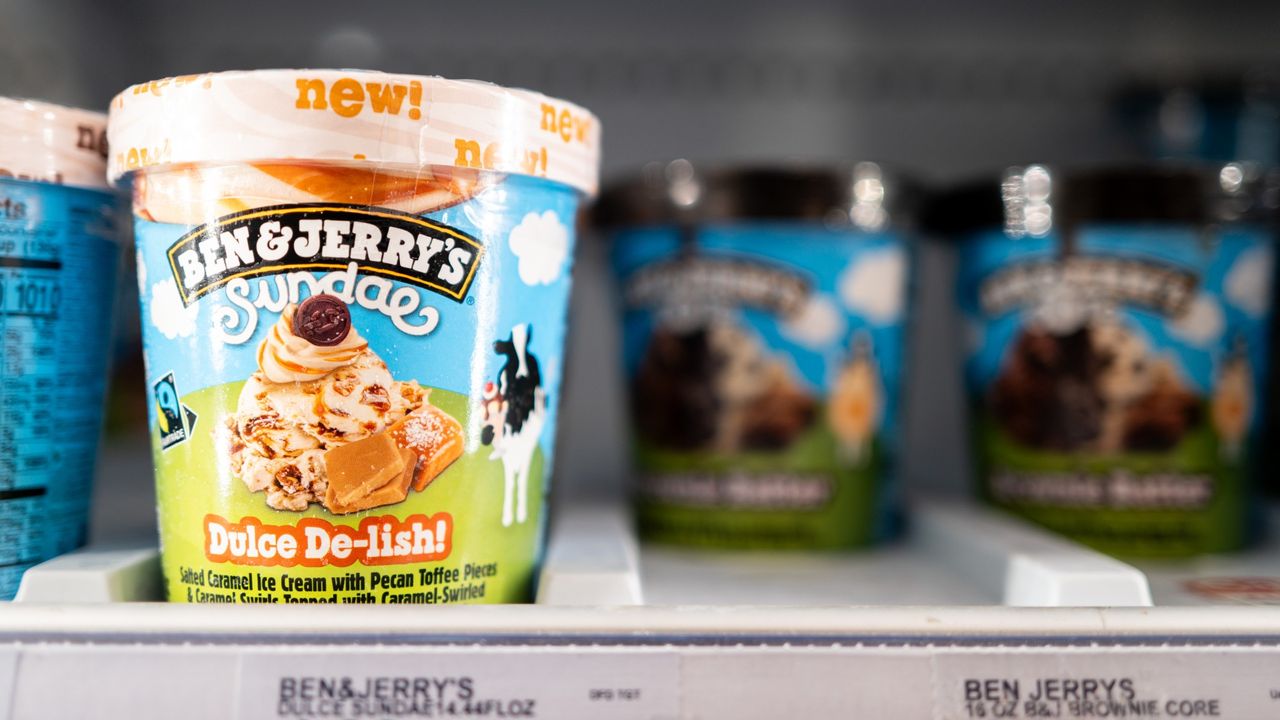
    Phish food for thought: Ben & Jerry’s political turmoil

    Investors are cooling on Ben & Jerry’s amid an escalating spat between the brand founders and the ice-cream’s owners.

    The Magnum Ice Cream Company, which also owns Cornetto and Wall’s, completed a spin-off from parent firm Unilever this week and began trading on the European stock market as a standalone business, but its initial valuation was “significantly lower” than expected, said The Times.

    Unilever, and now Magnum, have been embroiled in a “war of words” with founders Jerry Greenfield, who quit in September, and Ben Cohen. The pair have accused both companies of silencing the brand’s “social mission”, after Magnum boss Peter ter Kulve said they should “hand over to a new generation”.

    ‘Vocal about their dissatisfaction’
    The “long-running legal spat” about the “powers to define the company’s direction” has threatened to “overshadow the demerger”, said Madeleine Speed in the Financial Times. Since Ben & Jerry’s was acquired by Unilever in 2000 for $326 million, Greenfield and Cohen have become “increasingly vocal about their dissatisfaction with the direction of the brand”.

    Unilever has suggested that Ben & Jerry’s history of pro-Gaza activism “risks derailing” the success of the spin-off of its ice-cream division, said Tom Haynes in The Telegraph. The brand claimed last year that Unilever had “tried to silence” elements of its social mission in the Middle East.

    ‘Corporate activism is melting’
    Cohen claims that he and Greenfield have been “muzzled”, said The Times, while “Unilever believes it has acted reasonably”. In late 2023, Unilver agreed to allow its subsidiary to speak on the Israel-Gaza conflict if Ben & Jerry’s “also condemned Hamas terrorism and called for the release of hostages taken in October of that year”. And Unilever is hardly “the only big company that shies away from antagonising the White House”.

    Greenfield’s departure from the brand that he co-founded almost 50 years ago was the latest episode in the “broader reckoning” taking place in Donald Trump’s second term, said David Kaufman in Monocle. The administration’s promotion of “anti-diversity, America-first mindset” is at odds with the “feel-good, save-the-world, ‘kumbaya’ philosophy” that has fuelled Ben & Jerry’s marketing.


    Good day 💍

    … for life-long love, which comes naturally to humans, according to new research. A Cambridge University anthropologist analysed the proportions of full and half-siblings within various species to rank monogamy rates, and found that humans were in the “premier league”, with exclusivity levels comparable to those of beavers and meerkats.


    Bad day 💏

    … for teenage romance, as Verona imposes strict limits on tourist access to “Juliet’s balcony”. In response to overcrowding, visitors are now only allowed into the courtyard below the balcony if they have a €12 ticket to the adjoining museum, in the medieval building once owned by the family thought to have inspired Shakespeare's Capulets.


    picture of the day

    ‘High Five’

    A young gorilla shows off his athleticism while playing with his peers in Rwanda’s Virunga Mountains. The image, by British photographer Mark Meth-Cohn, is the winner of the 2025 Nikon Comedy Wildlife Awards. 

    Mark Meth-Cohn / Nikon Comedy Wildlife Awards


    Puzzles

    Daily crossword

    Test your general knowledge with The Week’s daily crossword, part of our puzzles section, which also includes sudoku and codewords

    Play here


    THE WEEK RECOMMENDS

    Best poetry books of 2025

    Whether you’re a budding poet or looking for a special gift for a bookworm, these 2025 releases are worth reading from cover to cover.

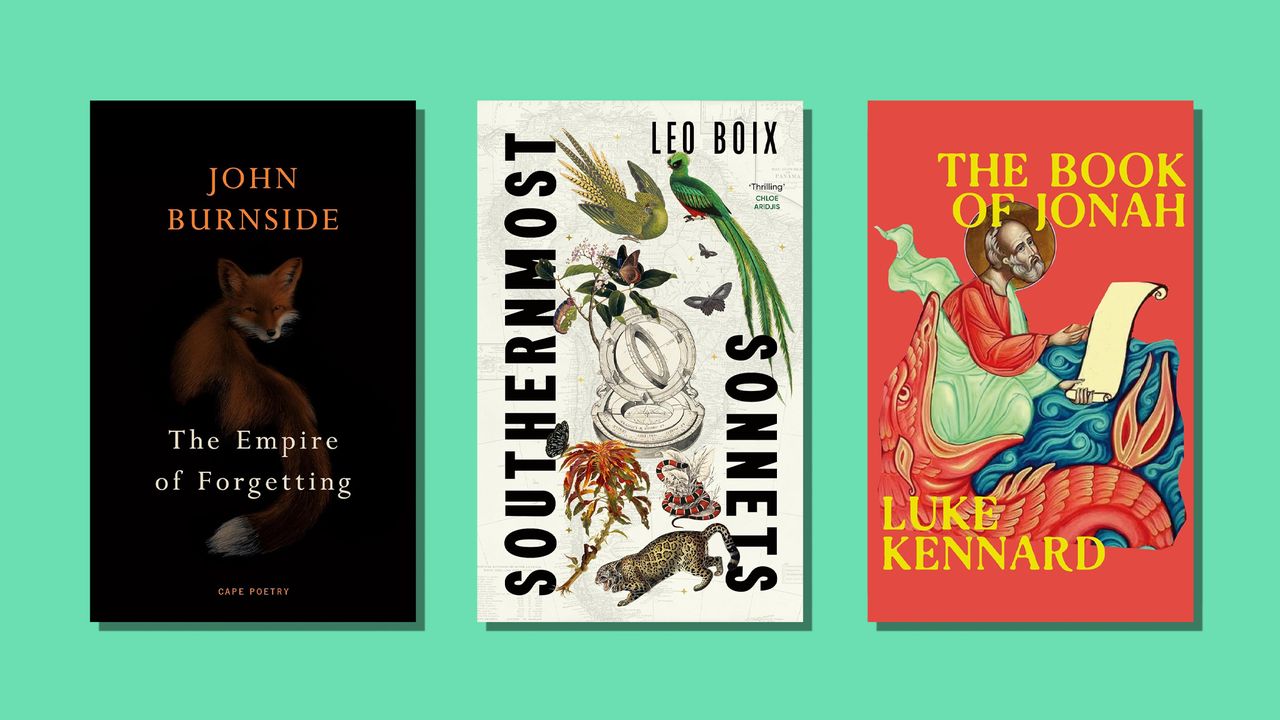
    The Book of Jonah, by Luke Kennard
    In his latest collection, Kennard “daringly” remixes his “source material and inspirations”, moving the biblical Jonah “into a world of arts conferences”, said The Guardian. Poems that initially appear lengthy and opaque are “made welcoming with an irresistible energy”, said The Telegraph, and are “liable to leave you both smiling and wincing within the same breath”.

    The Empire of Forgetting, by John Burnside
    The late Burnside “conveyed an infectious love of the world” that is “heightened” in his posthumous collection, said the Financial Times. “His laser-sharp eye for the beauty of nature” remains unerring in a moving, personal collection that confronts mortality, drawing on Burnside’s own health issues and brushes with death.

    Chaotic Good, by Isabelle Baafi
    This “playful and sharp” examination of escaping a toxic marriage is a must-read, said The Guardian. Shortlisted for the T.S. Eliot Prize and winner of the Jerwood Prize for Best First Collection, Baafi’s debut collection is packed with poems that “absolutely know their power and revel in it”.

    Southernmost: Sonnets, by Leo Boix
    The Argentinian-British poet’s second collection comprises 100 sonnets covering everything from “religion and upbringing” to “love and sexuality”, said The Telegraph. “Unflinching in its attention to Argentine history”, it includes “lively anecdotes” about Boix’s family, alongside a “reckoning with the long shadow of colonialism”.


    Statistic of the day

    17.7%: The proportion of A&E patients receiving care in non-standard areas such as corridors, waiting rooms and cupboards, according to a Royal College of Emergency Medicine study. The college’s president said the analysis of data from 165 A&E departments showed that the “shameful practice of corridor care is endemic”.


    instant opinion

    Today’s best commentary

    FIFA’s World Cup Sycophancy Is Dirtying the Beautiful Game
    Lara Williams on Bloomberg
    Football’s governing body is “ingratiating” itself with Donald Trump, the man who “pulled his nation out of the Paris Agreement”, writes climate change columnist Lara Williams. Players at next year’s World Cup will face “extreme heat”, and “the new trend of hosting events” across different countries will generate the tournament’s “highest carbon footprint”. By “sidling up to climate deniers” and “making deals with heavy polluters”, Fifa will turn “the beautiful game ugly”.

    Why Center Parcs is hell on earth
    Annie Kinsella in the Daily Mail
    “Thrice I have been duped by the lie that a good time can be had with family and friends in man-made forests just off the M1,” writes Annie Kinsella. Center Parcs is a “pine-filled purgatory” full of “Sweaty Betty-clad, cycling, jogging, badminton-playing morons”. But children “love it, obviously”, which is why “I will have to go again”. “My holiday dream” of filling a “rustic French farmhouse” with friends and “some nice fromage” will “remain a fantasy”.

    Believe me, Taylor and Travis, there’s nothing like a good marital argument
    Carol Midgley in The Times
    “I read that Travis Kelce said he and Taylor Swift haven’t had ‘a single argument’” and “my first thought was, ‘Good God, how boring!’”, writes Carol Midgley. “How dull it must be to agree on everything” and never have a “proper, palate-cleansing slanging match”. They “must be like those dolls constantly nodding in perpetual assent. I don’t think I could bear it.” A “good ding-dong” is “excellent for flushing the gunk out of your marital pipes”.


    word of the day

    Inequality

    The global wealth gap has reached new extremes, with the top 10% of income-earners making more than the other 90% combined, according to the 2026 World Inequality Report. The richest 0.001% of the world’s population – fewer than 60,000 people – control three times more wealth than the poorest half.


    Evening Review was written and edited by Rebecca Messina, Jamie Timson, Harriet Marsden, Will Barker, Elliott Goat, Chas Newkey-Burden, Irenie Forshaw, Adrienne Wyper, Helen Brown and Kari Wilkin, with illustrations from Stephen Kelly.

    Image credits, from top: illustration by Stephen Kelly / Getty Images; Bartek Langer / NurPhoto / Getty Images; Brandon Bell / Getty Images; Mark Meth-Cohn / Nikon Comedy Wildlife Awards; Jonathan Cape / Chatto & Windus / Picador

    Morning Report and Evening Review were named Newsletter of the Year at the Publisher Newsletter Awards 2025
     

    Recent editions

    • Morning Report

      Australia’s sweeping social media ban begins

    • Evening Review

      How did NHS maternity care go so wrong?

    • Morning Report

      Europe rallies around Ukraine at ‘critical moment’

    VIEW ALL
    TheWeek
    • About Us
    • Contact Future's experts
    • Terms and Conditions
    • Privacy Policy
    • Cookie Policy
    • Advertise With Us
    • FAQ
    Add as a preferred source on Google

    The Week UK is part of Future plc, an international media group and leading digital publisher. Visit our corporate site.

    © Future Publishing Limited Quay House, The Ambury, Bath BA1 1UA. All rights reserved. England and Wales company registration number 2008885.