The Week The Week
flag of US
US
flag of UK
UK
https://cdn.mos.cms.futurecdn.net/flexiimages/jzblygzdxr1769609154.gif

SUBSCRIBE

Try 6 weeks free

Sign in
  • View Profile
  • Sign out
  • The Explainer
  • Talking Points
  • The Week Recommends
  • Podcasts
  • Newsletters
  • From the Magazine
  • The Week Junior
  • More
    • Politics
    • World News
    • Business
    • Health
    • Science
    • Food & Drink
    • Travel
    • Culture
    • History
    • Personal Finance
    • Puzzles
    • Photos
    • The Blend
    • All Categories
  • Newsletter sign up Newsletter
  • The Week Evening Review
    Mandelson row, Trump’s mental state, and friction-maxxing

     
    THE EXPLAINER

    Peter Mandelson vetting: who knew what, and when?

    Keir Starmer has addressed the Commons this afternoon over the appointment of Peter Mandelson as ambassador to the US, following last week’s revelation that the Labour grandee was approved by the Foreign Office despite failing internal vetting.

    Officials in No. 10 are said to be “confident” that their internal fact-finding review will prove Starmer “was kept in the dark over the details of the process until Tuesday night and therefore did not mislead Parliament”, said The i Paper.

    What happened?
    Mandelson was appointed by Starmer as the UK’s ambassador in Washington in December 2024, but he was sacked last September, after Downing Street said new information about the extent of his relationship with Jeffrey Epstein had emerged.

    It’s now known that in January 2025, Mandelson failed a “developed” vetting carried out by UK Security Vetting, a division of the Cabinet Office. The decision to overrule the vetting recommendation was reportedly made by the Foreign Office without Downing Street’s knowledge. According to The Guardian, the rarely-used power was deployed on the understanding that the prime minister wanted the appointment to proceed.

    What did Starmer know?
    The so-called Mandelson files released so far do not show that Starmer was advised that Mandelson did not pass the security vetting process. However, he was advised that vetting should be completed before any appointment was confirmed, said Sky News. The timings “appear to suggest that the prime minister ignored the advice”.

    Starmer last week said he was “absolutely furious” that he wasn’t made aware that Mandelson had failed the security vetting, and has insisted that he would have reversed the appointment had he known.

    Who did know?
    The Foreign Office’s top civil servant, Olly Robbins, was “one of the few people who knew the true outcome of the vetting process” at the time, said The Telegraph. He decided to override the recommendation not to approve the peer for the US ambassador role, although he is thought to have “harboured private concerns about the appointment”. Robbins was sacked on Thursday after the revelations became public.

    Allies of Foreign Secretary Yvette Cooper and her predecessor, David Lammy, say neither of them was aware of the failed vetting.


    TODAY’S BIG QUESTION

    Has Trump lost it?

    For some, it was threatening to wipe out an entire civilisation; for others, it was posting an image of himself as Jesus. But whatever the trigger, questions are now being asked openly about whether Donald Trump is mentally fit to hold the office of US president.

    “Let’s not pussyfoot around talking about his ‘erratic’ or ‘unpredictable’ behaviour,” said former Guardian editor Alan Rusbridger in The Independent. “Let’s just say all the signs are that he is positively unhinged.”

    What did the commentators say?
    Calling the US president insane “is not meant as playground abuse”, said Matthew Parris in The Times. By saying that, “I mean Donald Trump is mentally ill; that he is of unsound mind; that he is suffering from substantial cognitive decline”. If he worked at a bank, as a pilot, a solicitor or GP, or in many other lesser offices than the American presidency, “urgent discussions would be taking place among colleagues about his mental fitness for the post”.

    A Reuters-Ipsos poll in February found that 61% of Americans, including 30% of Republicans, believed Trump had become more “erratic with age”, while the number of people who believed he was “mentally sharp and capable of handling challenges” had fallen from 54% in 2023 to 45%.
    But for his supporters, the president’s increasingly erratic behaviour is merely proof of his “unorthodox personality”, said Iker Seisdedos in El País. They argue that this is simply the “unpredictable and approachable style of someone who has no regard for the conventions of traditional politics”.

    What next?
    Last week, House Democrats put forward legislation to create a commission to assess whether Trump is unfit to serve. But passing the bill “is a long shot in a Republican-controlled Congress”, said Arwa Mahdawi in The Guardian.

    Two years ago, Congressional Republicans eagerly scrutinised Joe Biden’s “every word, his every stumble, even the mechanics of how he signed documents”, said Juan Williams in The Hill, but that “chorus of critics on Capitol Hill is now silent”. Most of those in Trump’s own party “apparently think their responsibility” is to back him no matter what – even if that means an “unsteady hand in control of the nation’s nuclear arsenal”.


    QUOTE OF THE DAY

    “Being pessimistic about the enemy is the same as being wise.”

    Iran’s Foreign Ministry spokesperson Esmaeil Baghaei tells reporters that Tehran is “certainly not optimistic” about reaching a deal with the US. “No decision” had been made about attending fresh talks in Pakistan, he said, ahead of the expiration tomorrow of the two-week ceasefire.


    Poll watch

    Almost two-thirds (65%) of Brits would back the Green Party’s proposal to cap bosses’ pay at ten times the salary of their lowest-paid staff, according to a YouGov survey of 6,137 people. While support was highest among Green voters, the majority of Tory and Reform voters also “somewhat” or “strongly” support the idea.


    IN THE SPOTLIGHT

    ‘Friction-maxxing’: fighting back against tech dependency

    From ordering groceries online to using AI to write emails, technology is making life exponentially easier. But while that might be appealing, experts warn that constantly outsourcing our thinking can be detrimental in the long term. Some are recommending a new trend, called friction-maxxing, that seeks to reintroduce discordance into our lives.

    ‘Tolerance for inconvenience’
    Although many everyday tasks are simpler in the digital world, “living a frictionless life may not be the best for your cognitive function over time”, said The Washington Post. It’s the neurological equivalent of “having a personal trainer lift the weights for you”, neuroscientist Lila Landowski told the newspaper.

    Tech companies are “making us think of life itself as inconvenient”, said sociologist ​​Kathryn Jezer-Morton on The Cut, and as an endeavour from which we should retreat into “digital padded rooms of predictive algorithms and single-tap commands”. Our “love of escaping is one of humanity’s most poetically problematic tendencies, and now it’s being used against us”. But we can defend ourselves through friction-maxxing, which is not “simply a matter of reducing your screen time”. Rather, it requires “building up tolerance for inconvenience” and “the vagaries of being a person living with other people in spaces that are impossible to completely control”.

    ‘Feel genuinely alive’
    Friction-maxxing could take the form of navigating by road signs rather than Google Maps, or arranging to meet up with friends in person rather than doing video calls. It could be not using ChatGPT to get information that could be learned from a book or by asking other people. Each of these acts might seem insignificant, but an “orientation toward friction is really the only defence we have against the life-annihilating suction of technologies of escape”, said Jezer-Morton.

    Friction-maxxing could “play a valuable role in reorienting yourself away from tech dependency” and back towards “embracing the effort that makes people feel genuinely alive and fulfilled”, said Mashable. No one needs to optimise their life in “pursuit of a proverbial gold star”.


    Good day 🌷

    … for spring blooms, as the recent sunny spell after the mild, wet winter creates perfect conditions for bluebells, tulips, wisteria and other seasonal blossoms. “Spring has arrived notably early in the south this year,” said the Royal Horticultural Society’s director of gardens Tim Upson.


    Bad day 🚽

    … for spending a penny, as the Royal Society for Public Health warns of a “significant shortfall” of public toilets, with just one for every 15,481 people. The number of public loos in England has fallen by 14% since 2016, creating toilet “deserts” in areas across the country, the charity said in a new report.


    PICTURE OF THE DAY

    Budding friendship

    South Korea’s President Lee Jae-myung and India’s Prime Minister Narendra Modi plant a sapling together outside Hyderabad House in New Delhi. Lee arrived yesterday for a three-day state visit aimed at strengthening trade ties between the two nations.

    Sajjad Hussain / AFP / Getty Images


    Puzzles

    Guess the number

    Try The Week’s daily number challenge in our puzzles and quizzes section

    Play here


    THE WEEK RECOMMENDS

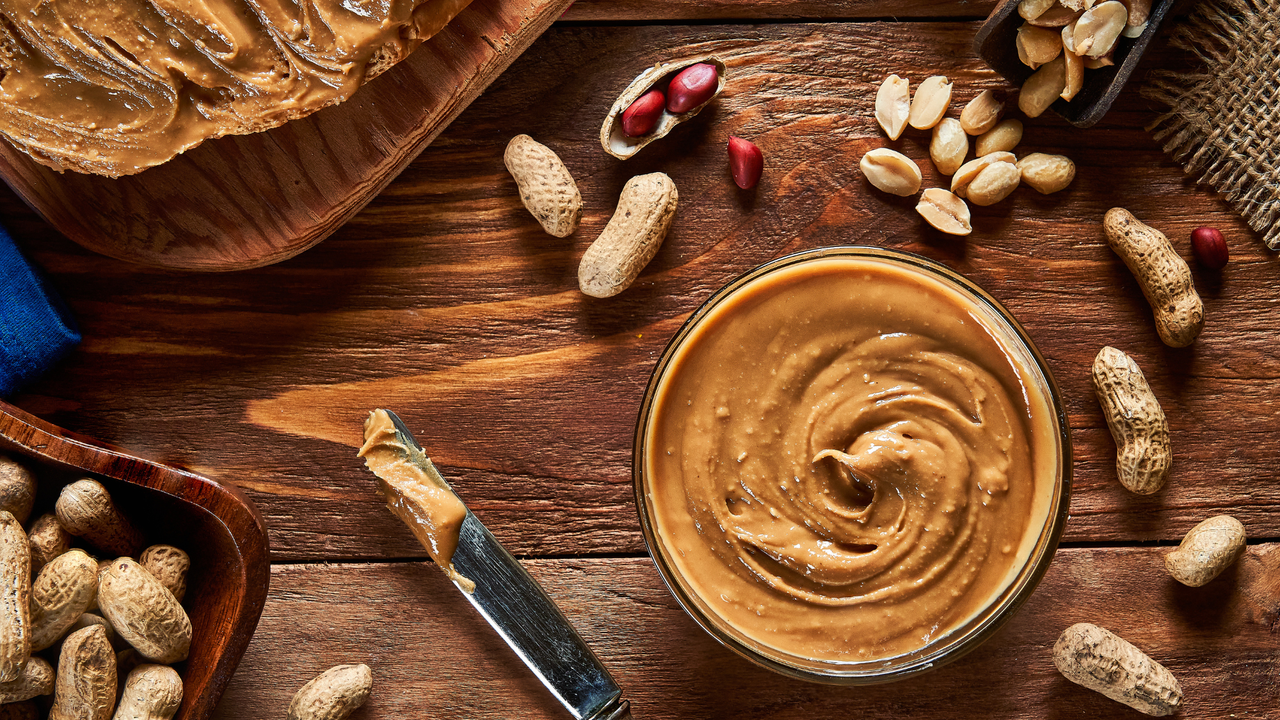
    Nut butters to go nutty over

    “It wasn’t long ago that crunchy or smooth was the sum total of our nut butter options,” said Sue Quinn in The Telegraph. But now the “humble peanut is jostling for shelf space with almond, cashew and pistachio” spreads.

    Filled with “fibre and healthy fats, it’s easy to see why nut butters appeal to the health-conscious”, said Lauren Shirreff in The Telegraph. They are a fantastic source of protein, “especially for people who are following plant-based or vegan diets”, nutritionist Jenna Hope told the paper. A 30g serving of peanut butter contains around 8g of protein, which is “roughly the same as that in a large egg”, and nearly 3g of fibre.

    Almond butter is arguably one of the best alternatives to peanuts. It ticks lots of boxes, having the “most fibre” of any nut butter, said Shirreff, and “fewer calories”. And although it has “marginally” less protein than peanut butter, it’s “packed with magnesium and calcium”.

    The easiest ways to eat nut butters include “on a slice of sourdough” or “poured over porridge”, said Stacey Smith in Women’s Health. But there are more creative uses, too – a dollop of pistachio butter can be “placed under the skin of a chicken breast pre-roast for extra crispy, sweet-nutty moisture”, said Autumn Swiers on Tasting Table.

    Just be sure to check labels for additional ingredients, said nutritionist Brianna Sommer on Delish. “I would look for a pure nut butter that has no added anything.”


    Statistic of the day

    5,575: The number of NHS health visitors in England, down by 45% since 2016, according to a BBC analysis. The Institute of Health Visiting has warned that some have “unmanageable” caseloads of up to 1,000 families, and is calling for a limit of 250 to ensure a safe and effective service.


    instant opinion

    Today’s best commentary

    Trump’s presidency is what evil looks like: absurd, frightening, cruel
    Nesrine Malik in The Guardian
    What’s “so bewildering about the cruelty” in Gaza, Lebanon and Iran is “how it has been allowed to pass”, writes Nesrine Malik. “Donald Trump hovers above the circus of death and chaos” and is seemingly animated by “little more than momentary impulses and resentments”. His “lack of vision or ideology” can make him appear “less dangerous than the authoritarians of the past”. But “evil is composed of frivolity and nonchalance and fragility” as well as “brutality”.

    In Britain, even the toasters are part of our class war
    Lucy Mangan on The i Paper
    Class “permeates the entire way of life on this wonderfully septic isle of ours”, writes Lucy Mangan – even toasters. Cheap ones can’t accommodate any “actual loaf-shaped bread”, just “the small, perfectly square slices of the cheapest bread around”, so buy a “plebeian toaster” and it’s “plebeian bread for you”. Money always dictates “where you stand in the pecking order”. “All of which is to say two things”: “we need a revolution” and “don’t scrimp on your toaster”.

    Selfish strikers have failed to read the room
    Libby Purves in The Times
    Strikes “sometimes” elicit a “good degree of public sympathy”, says Libby Purves. But as the RMT union prepares for two 24-hour walkouts in London this week, Tube drivers should note that the world of “work has shifted”. The gig economy is booming, but many of its workers “would rather be employed” and have protections, paid holiday and sick pay. Perhaps “those who lead strikes should remember they are sabotaging the lives and incomes of millions more vulnerable”.


    word of the day

    Sold

    The name of a 2006 young-adult novel by Patricia McCormick about a teenage victim of sex trafficking in India. “Sold” is the most controversial book in US libraries, according to an American Library Association report on the titles subject to the most bans and attempted bans. Stephen Chbosky’s “The Perks of Being a Wallflower” was last year’s second-most challenged book. 


    Evening Review was written and edited by Rebecca Messina, Elliott Goat, Will Barker, Irenie Forshaw, Theara Coleman, Chas Newkey-Burden, David Edwards, Adrienne Wyper, and Kari Wilkin.

    Image credits, from top: Justin Tallis / AFP / Getty Images; Kent Nishimura / AFP / Getty Images; Malte Mueller / Getty Images; Sajjad Hussain / AFP / Getty Images; Helen Camacaro / Getty Images

    Morning Report and Evening Review were named Newsletter of the Year at the Publisher Newsletter Awards 2025
     

    Recent editions

    • Morning Report

      Starmer faces Commons grilling over Mandelson row

    • Sunday Shortlist

      An ‘icily compelling’ adaptation of Albert Camus’ novella

    • Saturday Wrap

      Turmoil at the Pentagon

    VIEW ALL
    TheWeek
    • About Us
    • Contact Future's experts
    • Terms and Conditions
    • Privacy Policy
    • Cookie Policy
    • Advertise With Us
    • FAQ
    Add as a preferred source on Google Add as a preferred source on Google

    The Week UK is part of Future plc, an international media group and leading digital publisher. Visit our corporate site.

    © Future Publishing Limited Quay House, The Ambury, Bath BA1 1UA. All rights reserved. England and Wales company registration number 2008885.