The Week The Week
flag of US
US
flag of UK
UK
https://cdn.mos.cms.futurecdn.net/flexiimages/jzblygzdxr1769609154.gif

SUBSCRIBE

Try 6 weeks free

Sign in
  • View Profile
  • Sign out
  • The Explainer
  • Talking Points
  • The Week Recommends
  • Podcasts
  • Newsletters
  • From the Magazine
  • The Week Junior
  • More
    • Politics
    • World News
    • Business
    • Health
    • Science
    • Food & Drink
    • Travel
    • Culture
    • History
    • Personal Finance
    • Puzzles
    • Photos
    • The Blend
    • All Categories
  • Newsletter sign up Newsletter
  • The Week Evening Review
    A ‘disastrous’ deal, income stacking, and a ‘furore’ in the literary world

     
    TODAY’S BIG QUESTION

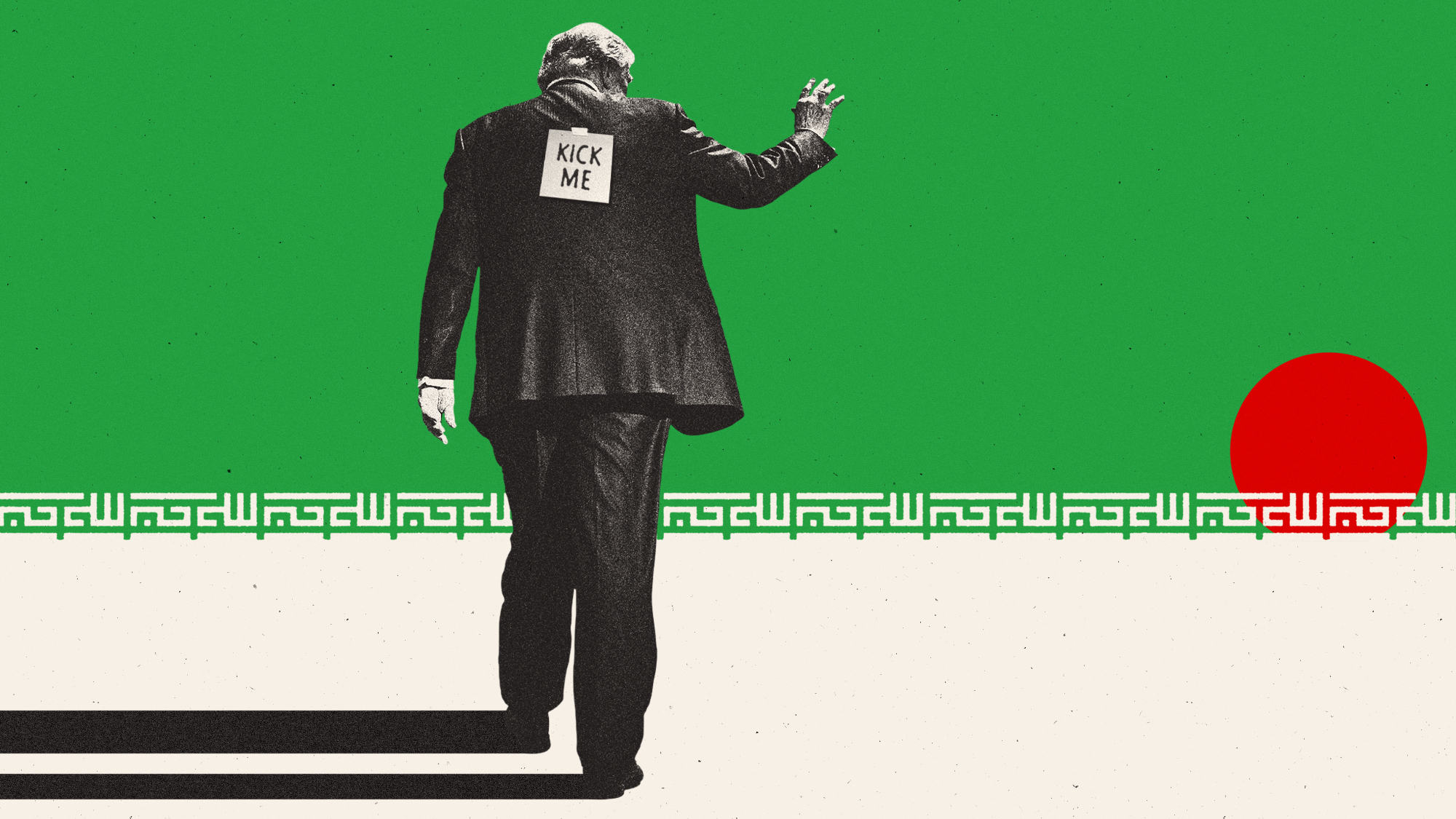
    Iran deal: is Trump the loser?

    Donald Trump’s claim that the US and Iran are closing in on a peace deal has been met with criticism even from within his Republican Party. Although the details haven’t been made public, Iran is said to have agreed to reopen the Strait of Hormuz, without charging tolls, and to dispose of its stockpile of highly enriched uranium. In return, the US would cease hostilities, unfreeze billions of dollars of assets and gradually remove economic sanctions.

    But Republican Senator Ted Cruz said it would be a “disastrous mistake” to leave Iran “able to enrich uranium and develop nuclear weapons, and having effective control” over the strait.

    What did the commentators say?
    The “grim reality” is that by closing the Strait of Hormuz, Iran gained more “leverage” in the peace talks, said Gideon Rachman in the Financial Times. Now, the US seems poised to agree to a deal that “threatens to leave Iran in a stronger position than before the war began”. Trump likes to “deride” the nuclear non-proliferation agreement that Barack Obama negotiated with Iran in 2015 but, in many ways, this looks “worse”.

    The framework of the deal described by US officials would be a “series of compromises, well short of the capitulation that Trump sought”, said David Ignatius in The Washington Post. Iran hasn’t accepted his demand that its highly enriched uranium be delivered to the West, nor agreed to give up its “right to enrich” in the future. But Trump “doesn’t appear to have any better options”.

    Some Republicans are arguing that “peace could bring a pay-off for voters” by lowering petrol prices and easing inflation, said CNN’s Stephen Collinson. But recovering from the strait’s closure will take time.

    There’s no way to spin this humiliating “catastrophe”, Middle East expert Danny Citrinowicz told The New Yorker. Rather than toppling the regime, the US and Israel have “ended up strengthening” it.

    What next?
    Even if this deal is agreed, it’s “not a final settlement”, said the BBC; this “memorandum of understanding” seems simply to involve a 60-day extension of the ceasefire and a plan for further negotiations on “some of the thorniest issues”, including Iran’s nuclear programme. That timeline seems “rather compressed”, said CNN’s Collinson. “History shows Iran would love to drag the United States into a prolonged period of inconclusive diplomacy that lasts months or years.”


    THE EXPLAINER

    The surge in income stacking

    Sometimes one is not enough – that’s the conclusion a growing number of people are drawing about their sources of income. In a trend known as income stacking, workers are increasingly “taking on multiple jobs to build financial security” through a “side hustle or freelance work on top of a full-time job, or several part-time roles”, said CNBC.

    Why is income stacking becoming more popular?
    A record high of 1.35 million adults in the UK had at least two jobs last year, according to the Office for National Statistics. “The rising cost of living is just one part of the picture,” said business media brand Fast Company. Younger people starting their careers are no longer “buying into what they see as a broken social contract, where a linear path up the career ladder is seen as the most reliable route to success and financial stability”. This generation is also plugged into social media, where freelance work is modelled “in the form of influencers, content creators and podcasters”.

    What are the benefits?
    As well as the extra money, income stacking provides a safety net in the event of job loss, with an alternative income source to fall back on. “Putting all your eggs in one corporate basket is risky business right now,” said The Independent. Some people are using their extra income to invest, save for retirement or pay off student loans. Juggling multiple jobs can also offer a shortcut to building skills and job experience, which can translate into further opportunities down the road.

    Does it work for everyone?
    “As the Middle East energy crisis continues and the cost of everything from food to fuel keeps rising, it’s unsurprising almost everyone is scrambling to earn extra cash to cushion the fall,” said The Independent. But workers have to be careful not to “breach an employer’s code of conduct” by taking on additional jobs. And not everyone has the time and energy for income stacking. There is a realistic danger of “hustle culture’s worst enemy: burnout”.


    QUOTE OF THE DAY

    “That was one of her favourites – ‘Stop making my macho men cry all the time’.” 

    “Rivals” screenwriter and executive producer Laura Wade tells the Hay Festival that while Jilly Cooper was relaxed about how her book was adapted for the small screen, “she would send us notes” if Rupert Campbell-Black (played by Alex Hassell) got emotional “too often”.


    Poll watch

    Most parents (86%) would back cinema-style age ratings for social media content. In a British Board of Film Classification survey of 2,000 adults with children aged 12 to 17, 55% said viewing harmful or inappropriate content was their top concern when it came to their child’s well-being.


    IN THE SPOTLIGHT

    AI row casts a shadow over literary prize

    Controversy over whether a prize-winning short story was created using AI has “sparked a furore” in the literary world, said The Guardian. Jamie Nazir’s “The Serpent in the Grove” was named the winner in the Caribbean category of the Commonwealth Prize this month. But “a few syntactical tics” and “the verdict of an AI detection platform” has raised doubts that it was written entirely by Nazir – an accusation that the Trinidadian author reportedly denies.

    Smelling a rat
    The judging committee said the winning story is told in a “voice of restraint and quiet authority”, with “sublime” language that is “precise yet richly evocative”. But “literary sleuths smelled a rat”, said LitHub. “Off a hunch”, Ethan Mollick, a professor who studies AI, ran the story through Pangram, a program that claims to detect AI writing with 99% accuracy; the results came back with “100% red flags”.

    Granta, the magazine that published the winning story, said it was investigating the allegations. The foundation that awarded the prize said all entrants were required to confirm that their submission was their own work and not created with AI assistance. 

    Stemming the tide of AI slop
    The accusation is “another episode” in an “ongoing, frenetic conversation” about “whether artists and creators are passing off AI-generated work as their own”, said The Guardian, and whether publishers “will be able to reliably catch them doing it”. Such episodes have “fuelled discourse around the telltale signs of AI writing”, including frequent use of specific words (for example, “delve”), a “profusion of em dashes” and a predilection for “vague, soft intensifiers” such as “quietly powerful” and “deeply transformative”.

    Commonwealth Foundation director-general Razmi Farook has promoted an “ideal of placing complete trust in writers”, said Wired, but that may not “be enough to stem the tide of AI slop” in “everything from high literature to scientific research”. And the “biggest bummer is to come”, said LitHub. Although “winning a literary prize is one small step” for AI, it’s “sure to be catnip for the pushers touting the technology’s creative potential”.


    Good day 🎶

    … for Daniel Harding, after the British conductor was appointed to lead one of the most influential orchestras in the US. The 50-year-old, who is also a part-time commercial airline pilot, will take over from Venezuelan conductor Gustavo Dudamel next year as the Los Angeles Philharmonic’s music director. 


    Bad day 📽️

    … for Hollywood’s older women, who are four times less likely to star in a film than talking animals, according to new research. An analysis by the Age Without Limits campaign found that only five of the 100 highest-grossing films of the past three years featured a woman aged over 60 in a leading role, while about 20 starred chatting creatures. 


    PICTURE OF THE DAY

    Landmark visit

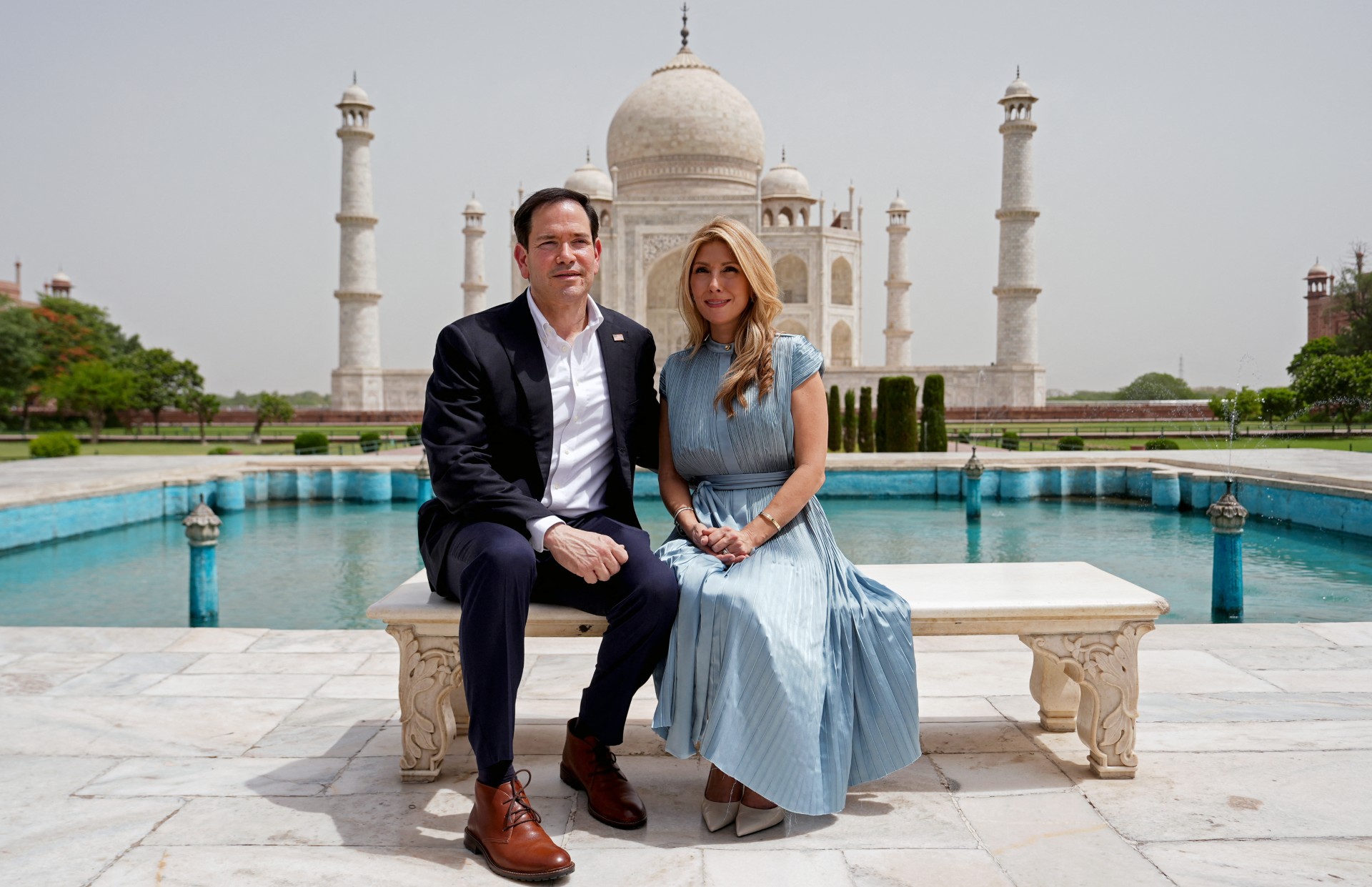
    Marco Rubio and his wife, Jeanette, pose in front of the Taj Mahal before concluding a four-day trip to India. The US secretary of state and Prime Minister Narendra Modi held talks on energy, trade and defence in a bid to repair ties between their countries.

    Julia Demaree Nikhinson / Pool / AFP / Getty Images


    Puzzles

    Chain Word

    Try The Week’s new daily word challenge in our puzzles and quizzes section

    Play here


    THE WEEK RECOMMENDS

    Lesser-known cultural destinations worth exploring

    Avoiding crowds while still experiencing the best of a culturally dynamic city is a win-win. At these spots, you can enjoy more elbow room while seeing the sights, and more chances to connect with locals.

    Chachapoyas, Peru
    In the mountains of northern Peru sits Chachapoyas, a city named in honour of the civilisation that lived there from around AD800 to 1470. The Chachapoyas, or “Warriors of the Clouds”, built several important sites in the area, including Kuélap. This ancient fortress, built around AD500, comprises “towering defensive walls, over 420 circular dwellings and panoramic views”, said Time Out.

    Matera, Italy
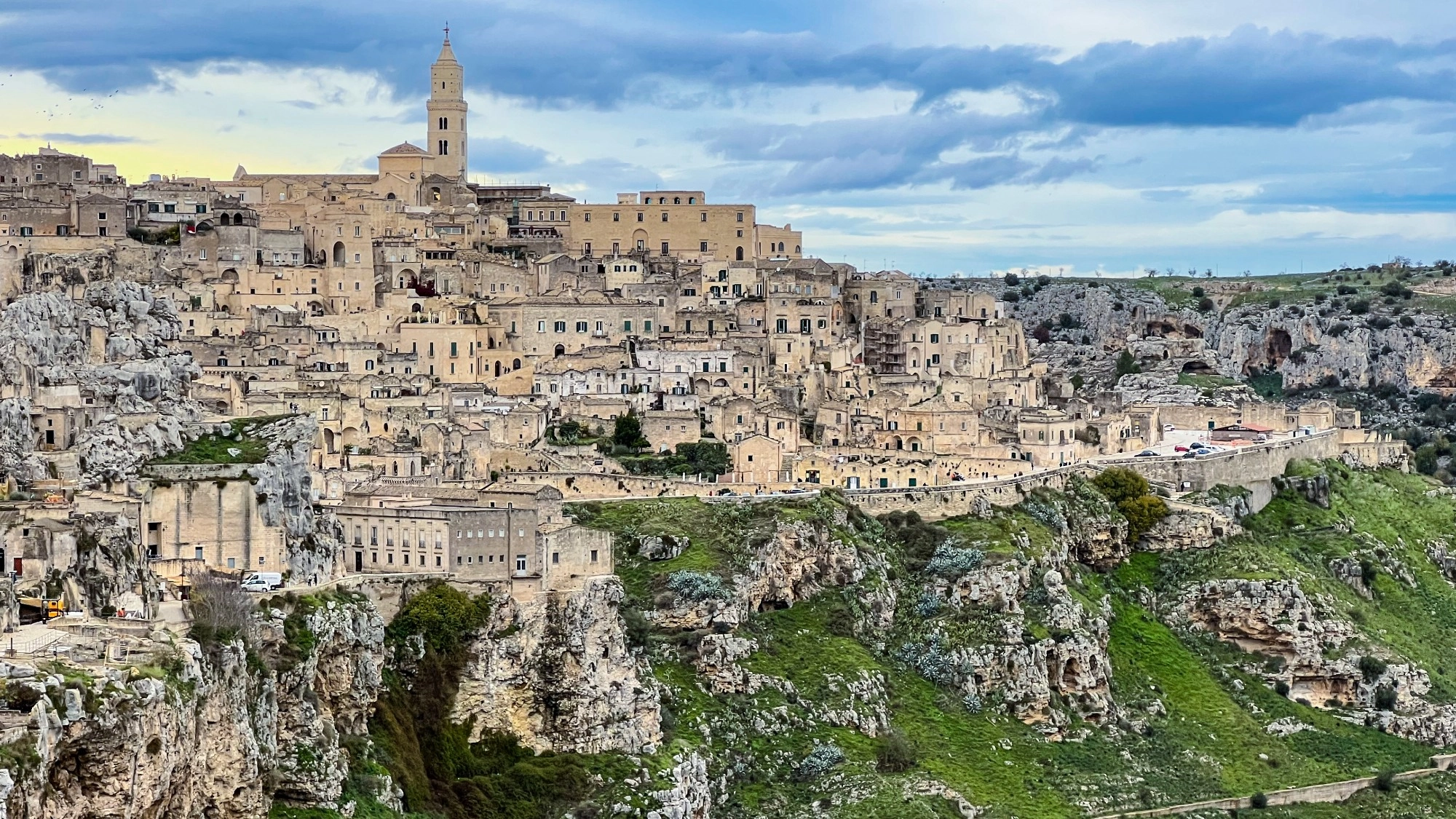
    Known as the City of Stone, Matera offers visitors a glimpse of what life was like in this region some 10,000 years ago. Sassi di Matera (pictured above), a network of cave dwellings carved into limestone, is its centrepiece. The extraordinary Unesco World Heritage Site features more than 100 rupestrian churches.

    Meknes, Morocco
    For a “relaxed slice of authentic Moroccan life”, head to Meknes, said Lonely Planet. There’s plenty to do, starting with a trek to the “buzzy” Place El Hedim to see the Bab Mansour gate and wander through the Dar Jamai Museum housed in a 19th century palace.

    Polonnaruwa, Sri Lanka
    More than 800 years ago, when Polonnaruwa was Sri Lanka’s capital, it was a “thriving” religious and commercial centre, said Lonely Planet. After a series of invasions and natural disasters, the city was abandoned, but the “glories of that age” remain. Polonnaruwa’s archaeological “treasures” include hundreds of temples, statues, tombs and stupas in a “compact core”.


    Statistic of the day

    £2,618.16: How much former SNP chief executive Peter Murrell spent on two Feuilles pepper and salt grinders, using money that he embezzled from the party. Nicola Sturgeon’s estranged husband has admitted embezzling more than £400,000 over 12 years to pay for personal purchases ranging from a £1,199 telescope to a £3,231 coffee machine. 


    instant opinion

    Today’s best commentary

    Autistic people are enduring state-sanctioned torture in the UK. Yet we do nothing
    Ian Birrell in The i Paper
    It’s been 15 years since “the BBC ‘Panorama’ exposé of abuse at Winterbourne View”, a hospital where people with learning disabilities were “beaten, brutally restrained and bullied”, writes Ian Birrell. And “almost nothing has changed”. Hundreds of people with autism and learning disabilities are still “trapped in psychiatric hellholes”, as “revelations about abuse, regulatory failures, missed targets” and “ignored whistleblowers” pile up. Locking up vulnerable people because of “deficiencies in social care” is “medically and morally indefensible”.

    The fun police are outlawing the art of harmless flirtation
    Rowan Pelling in The Telegraph
    I recently told a young man that he was “drop-dead gorgeous”, then “started fretting” that this “was some kind of mild sex crime”, writes Rowan Pelling. We’re “encouraged to feel hostile” to anyone using “courteous words to make others feel good”, and male “gallantry” has been “recast as creepiness”. But “if you haven’t had some experience of innocent compliments”, you can’t sort the “gallants” from the “wrong-uns”. Identifying “smooth-talking snakes is a life skill, as is learning how to receive a compliment gracefully”.

    Loathed ‘Americanisms’ often have an origin closer to home
    The Times editorial board
    “To an ear trained on the King’s English, Americanisms often register with a clunk,” says The Times. “When did airline passengers begin to ‘deplane’?” And “what self-respecting adult” would “wear a ‘fanny pack’”? But some “of the most jarring Americanisms” were actually “entrenched on this island” first. Shakespeare habitually used verbs as nouns, and “fall” was an early English word for “spring”. “In berating our cousins on linguistic grounds, we Brits have gotten rather ahead of ourselves.”


    word of the day

    Disarm

    AI must be “disarmed”, Pope Leo has warned in his first encyclical letter. “The word is strong, I know, but deliberately chosen,” he told crowds gathered at the Vatican yesterday to hear his interpretation of Catholic doctrine. Just as the “Church has long been working for nuclear disarmament”, AI must also be prevented from becoming “an instrument of domination, exclusion and death”. 


    Evening Review was written and edited by Hollie Clemence, Rebecca Messina, Harriet Marsden, Becca Stanek, Chas Newkey-Burden, Catherine Garcia, Helen Brown, Natalie Holmes and Kari Wilkin, with illustrations from Stephen P. Kelly.

    Image credits, from top: illustration by Stephen P. Kelly / Getty Images; SolStock / Getty Images; Wang Yukun / Getty Images; Julia Demaree Nikhinson / Pool / AFP / Getty Images; Kelly Cheng / Getty Images

    Morning Report and Evening Review were named Newsletter of the Year at the Publisher Newsletter Awards 2025
     

    Recent editions

    • Morning Report

      Murrell admits SNP embezzlement

    • Morning Report

      Who’s afraid of AI?

    • Sunday Shortlist

      A ‘once-in-a-blue-moon’ production

    VIEW ALL
    TheWeek
    • About Us
    • Contact Future's experts
    • Terms and Conditions
    • Privacy Policy
    • Cookie Policy
    • Advertise With Us
    • FAQ
    Add as a preferred source on Google Add as a preferred source on Google

    The Week UK is part of Future plc, an international media group and leading digital publisher. Visit our corporate site.

    © Future Publishing Limited Quay House, The Ambury, Bath BA1 1UA. All rights reserved. England and Wales company registration number 2008885.