The Week The Week
flag of US
US
flag of UK
UK
https://cdn.mos.cms.futurecdn.net/flexiimages/jzblygzdxr1769609154.gif

SUBSCRIBE

Try 6 weeks free

Sign in
  • View Profile
  • Sign out
  • The Explainer
  • Talking Points
  • The Week Recommends
  • Podcasts
  • Newsletters
  • From the Magazine
  • The Week Junior
  • More
    • Politics
    • World News
    • Business
    • Health
    • Science
    • Food & Drink
    • Travel
    • Culture
    • History
    • Personal Finance
    • Puzzles
    • Photos
    • The Blend
    • All Categories
  • Newsletter sign up Newsletter
  • The Week Evening Review
    Disappearing rivers, escalation in Ukraine, and a parasite warning

     
    IN THE SPOTLIGHT

    The crisis of Europe’s disappearing rivers

    Extreme weather conditions are “leaving Europe’s waterways parched, triggering a series of compounding crises”, said The Guardian. Germany’s Low-water Information System this week recorded extremely low levels at 43% of its measuring stations along the Rhine and at 59% along the Danube, in a rapidly spreading problem that is impacting shipping, energy and tourism.

    Low ebb
    Two countries have had to take special measures to protect nuclear power plants normally cooled by the Danube: Hungary is temporarily closing its Paks plant, which supplies around half the nation’s electricity, while Romania has blown up rocks to redirect water. The crisis has also hit energy production in Austria, where run-of-river hydropower plants are generating 30% less electricity than usual.

    “Energy is ⁠not the only loser,” said Reuters. With Rhine water levels so low at key points, cargo ships can only carry 20% to 30% of their normal load without risk of grounding, which is pushing up freight costs as more vessels are needed to ship goods.

    Current conditions are also “a pain for tourism”, said The Wall Street Journal. Last week, 186 passengers had to be rescued when a cruise liner ran aground on the Danube, and several cruise operators have had to cancel voyages. Falling water levels have revealed more welcome surprises, however, including the exposure of Second World War battleships and even the remains of an ancient woolly mammoth.

    ‘Fingerprint of a changing climate’
    Heatwave-related disruption could challenge the region’s “already stressed economy”, said The Wall Street Journal. A 10-month drought in 2018 wiped nearly 0.4% points off German GDP growth, according to Kiel Institute for the World Economy estimates. The “crucial unknown” right now is how long this drought will last.

    “The heat dries the soil, empties the rivers and drives up demand for water all at once,” hydrologist Hannah Cloke told CNN. “That is the fingerprint of a changing climate.”

    These river disruptions, said Bloomberg, will function as a “test of how quickly the region can adapt infrastructure built around 20th-century conditions” to a 21st-century climate where “extreme low water” is more likely to be the norm.


    TODAY’S BIG QUESTION

    Can deadly escalation in the Ukraine war be stopped?

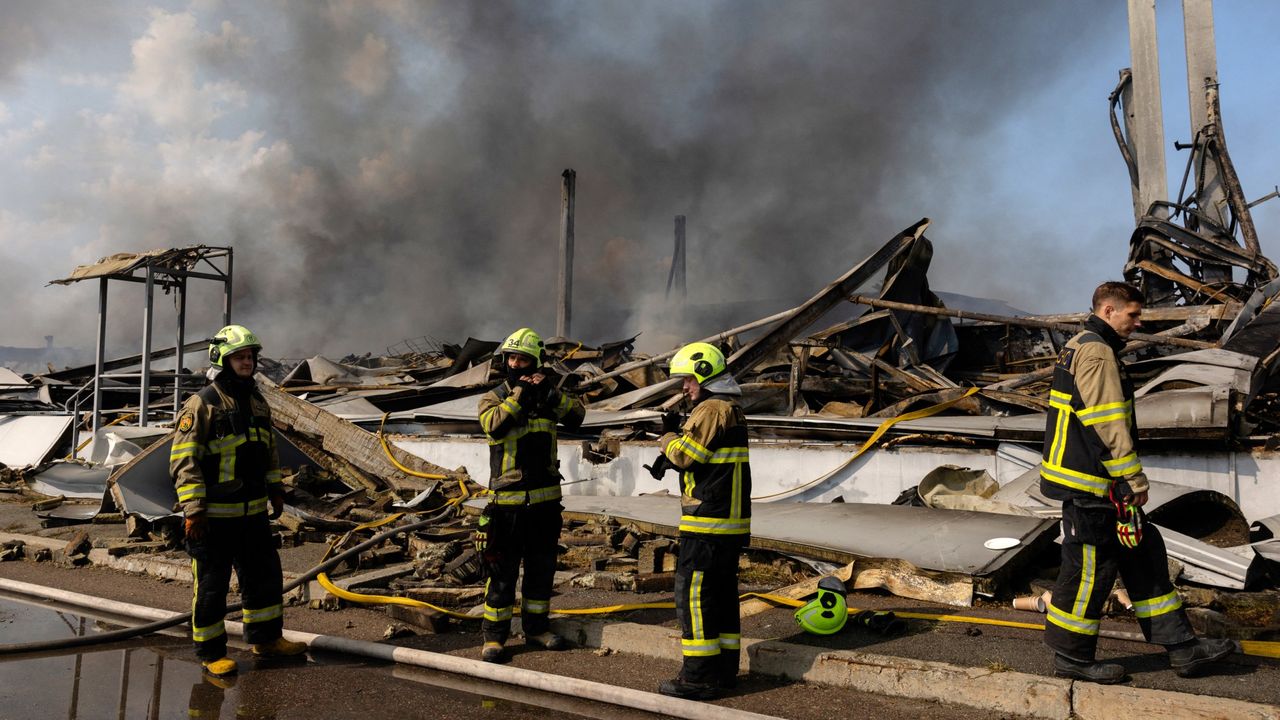
    The Ukraine war has entered a “dangerous new phase”, said Sky News’ Moscow correspondent Ivor Bennett. Russian strikes on Kyiv claimed the lives of 17 Ukrainians overnight, days after seven people were killed by a Ukrainian drone attack on a crowded Russian Black Sea beach. “More and more civilians” are dying on both sides as the conflict intensifies on multiple fronts, with neither side showing signs of withdrawing.

    What did the commentators say?
    The Black Sea beach attack marked a “shift in the war”, said The Independent’s world affairs editor Sam Kiley. Ukraine may not have a policy of attacking civilian targets, but as it “steps up its war inside the Russian Federation, there have been, and will be, more civilian deaths”. Despite a reshuffle of top commanders, and being “outgunned, outmanned and outsized by the invaders”, Ukraine remains on the front foot. As it presses home the advantage, and “strikes deeper at Moscow, these tragedies will multiply”.

    Europe must “seize the moment” and provide Ukraine with critical technologies and assistance on “military recruitment, retention and mobilisation”, said Lesia Ogryzko on the Atlantic Council website. Ukraine’s recent progress provides a “rare window of opportunity to increase the pressure” on Vladimir Putin.

    But even as these strikes intensify, Putin has shown “no sign of backing down”, said Russian expert Professor Stephen Crowley in The Nation. Ukraine’s European allies should focus on bringing about “difficult but necessary” negotiations to end the war, through temporary lifting of sanctions or thawing diplomatic relations, even if some might argue that would give the Russian leader a “way out of his war of choice”.

    What next?
    “Only Washington has the combination of access, leverage and political weight to lead a comprehensive diplomatic effort,” said former White House adviser Thomas E. Graham in The New York Times. But the conflict has now entered a “dangerous escalatory spiral”, and the US must act imminently, “before escalation closes the diplomatic opening that exhaustion has begun to create”.


    QUOTE OF THE DAY

    “I would worry about any mum feeling pressurised that there is somehow a kind of an ideal birth experience to live up to.” 

    Yvette Cooper shares her fears about “traumatic” recent maternity scandals, including trusts prioritising “natural” labour over medical intervention. In an interview with The Guardian, the health secretary said she was planning a “personal crusade” to reform NHS maternity care.


    Poll watch

    Almost half (47%) of Labour Party members believe the government is spending too much on welfare, while only 21% think benefits funding is too low, according to a survey by the ThinkLabour think tank. But 73% of the 788 members polled were in favour of increased spending on social care.


    THE EXPLAINEr

    Cyclosporiasis: parasitic stomach bug reaches the UK

    UK health authorities have warned holidaymakers to take precautions against cyclosporiasis, a parasitic stomach bug spread via contaminated produce. A total of 67 cases were recorded in the UK between 30 April and 15 July, according to the Health Security Agency. The vast majority involved travellers returning from Mexico.

    More than 10,000 confirmed cases of cyclosporiasis have been reported in the US, which imports large amounts of produce from its southern neighbour. Two deaths this week in Michigan were the first reported fatalities linked to the outbreak.

    What is cyclosporiasis?
    Cyclosporiasis is a form of food poisoning caused by the parasite Cyclospora cayetanensis. It can result in “watery, and sometimes explosive, diarrhoea and other stomach problems”, as well as a low-grade fever in some cases, said leading US medical centre the Cleveland Clinic. Symptoms can start any time between two and 14 days after consuming contaminated food or water.

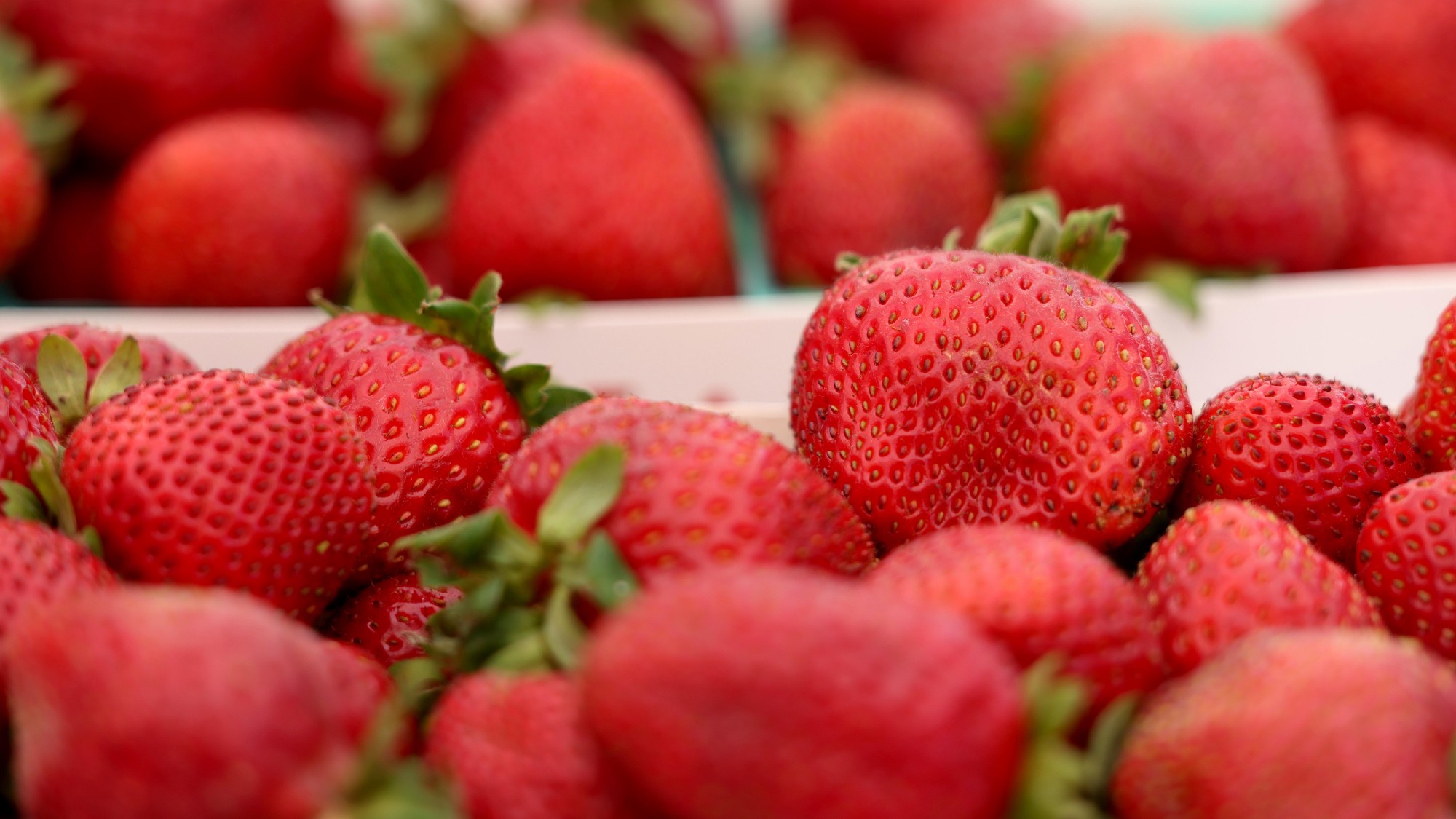
    The parasite is more common in tropical countries, but since mid-June, cases have been spiking in the US even among people who had not travelled abroad recently. Investigators have yet to pinpoint the cause of the multistate outbreak, but the most likely culprits are “things that grow in fields”, infectious diseases expert David Freedman told CNN. That includes plants “that you might put in a salad or use as a garnish” such as lettuce leaves and herbs, and fresh fruit such as strawberries and blueberries.

    How is it treated?
    Antibiotics can help clear the infection. If untreated, cyclosporiasis can result in “severe dehydration and other complications”, said the Cleveland Clinic. But with proper treatment, “most people feel better after a week or two”, though some “may still have occasional bouts of diarrhoea for up to a month”.

    What can be done to prevent infection? 
    Health authorities advise people travelling to areas known to harbour cyclospora to follow good food and water hygiene measures. That includes drinking bottled water only, avoiding raw produce such as fresh fruit, salads and herbs, and ensuring all food is thoroughly cooked before eating.


    Good day 🕵️

    … for British intelligence, after MI6 was rated Europe’s top foreign intelligence service. France’s General Directorate for External Security came in second in the review by French magazine L’Express, which asked 60 secret service officials in 25 European countries to rank their peers. The Slovak Information Service got the lowest rating.


    Bad day ✍️

    … for authors, who can’t compete with AI-generated fiction, according to a new study. In tests led by researchers from Pennsylvania’s Villanova University, readers were unable to differentiate between stories written by ChatGPT and those written by humans – and tended to prefer the AI versions.


    PICTURE OF THE DAY

    Turkish delight

    A supporter of Turkey’s Trabzonspor football club kisses a banner celebrating the arrival of its latest signing, former Liverpool star Mohamed Salah. The Egyptian forward touched down in Istanbul this morning to begin a two-year deal with the Süper Lig side.

    Ozan Kose / AFP / Getty Images 


    Puzzles

    Chain Word

    Try The Week’s new daily word challenge in our puzzles and quizzes section

    Play here


    THE WEEK RECOMMENDS

    Rachel Cusk’s best books

    Rachel Cusk is no stranger to controversy. Her candid memoirs on the perils of motherhood and her messy divorce drew some hostile reactions, and her latest book – “Life of M” – has sent the rumour mill into overdrive amid claims that a character is based on Natalie Portman. But the British novelist has also transformed autofiction and scooped multiple literary awards for her icy dissections of human behaviour. Here we take a look at some of her best books.

    A Life’s Work: On Becoming a Mother (2001)
    Cusk’s “brutally honest and somewhat confronting” memoir about motherhood sparked an almighty backlash and accusations of child-hating, said Rhiannon Lucy Cosslett in The Guardian. But it’s also “bitterly funny”, and remains “one of the best, and least sentimental”, accounts of pregnancy, childbirth and caring for a newborn.

    Outline (2014)
    The first book in Cusk’s “groundbreaking” trilogy of the same name follows “divorced novelist and mother-of-two” Faye on her journey to Athens to teach a writing course, said The Guardian. Unfolding through a series of conversations with people she “meets along the way”, a conventional plot is “practically non-existent”, which turns out to be a “revelatory” decision. “Really, it’s a masterpiece.”

    Coventry (2019)
    In her first book of essays, Cusk proves her non-fiction can be as “coolly glittering” as her novels, said Dwight Garner in The New York Times. She writes with “candour”, “seriousness”, and a “subtle” touch about themes including “her obligations as mother, daughter, citizen, artist and breadwinner”. These are “first-rate” essays, well worth reading.


    Statistic of the day

    5,400mph: The speed at which a 4,000kg section of SpaceX’s Falcon 9 spacecraft was travelling when it crashed into the Moon this morning. The discarded second-stage rocket, which is around the size of a five-storey building, has been hurtling through space since the Falcon 9 launched in January 2025.


    instant opinion

    Today’s best commentary

    The justice system is collapsing
    David Shipley in The Spectator
    Early prisoner releases are “already putting the public at greater risk”, writes former prisoner David Shipley. Reoffending rates are up and “the tagging system is broken”. With no “real rehabilitation happening in jails”, we’re just “sending people out to commit more crime”. I’m glad the worst sex offenders won’t now be released early, but “it’s not enough”. We need sufficient capacity to “jail those we want to jail”, even if that requires “legislation to force the building of new jails”.

    Flies are everywhere right now – but there is a simple £10 solution
    Tom Bawden in The i Paper
    “Repeated heatwaves” have “created ideal breeding conditions” for flies, writes Tom Bawden. My top tips for keeping them away are to clear food from bins, use screens on doors and power up your fans, as “flies cannot fly well in moving air”. They’re also repelled by “essential oils like eucalyptus, lavender or peppermint”, which cost around a tenner, so rub some around windows to force them out, while welcoming house spiders “with open arms”.

    I’m Begging You: Never Write With A.I.
    Bret Stephens in The New York Times
    Writing with AI is “mentally enfeebling”, writes Bret Stephens. It’s “an escalator toward a result when you really need to make a daily habit of taking the stairs”. Writing makes us “subject our thinking to the effort of articulation”; the “considered word” has “staying power and moral weight”. By “accelerating the decline of writing”, AI is undermining “society’s collective ability to reason”. Words written without a machine are an “act of resistance against an ever-dumber world”.


    word of the day

    Grym

    A Welsh word meaning “power”, “might” or “force”. The Jedi concept of the Force is being translated as “grym” in the first-ever Welsh-language dub of “Star Wars: A New Hope”. The actors voicing the dubbed version, set to air on S4C on Christmas Day, include Matthew Rhys, Aimee-Ffion Edwards and Rhys Ifans.


    Evening Review was written and edited by Rebecca Messina, Jamie Timson, Will Barker, Devika Rao, Chas Newkey-Burden,  Harriet Marsden, Elliott Goat, Helen Brown, Adrienne Wyper and Kari Wilkin, with illustrations by Stephen P. Kelly

    Image credits, from top: illustration by Stephen P. Kelly / Getty Images / Reuters; Tetiana Dzhafarova / AFP / Getty Images; Genaro Molina / Los Angeles Times / Getty Images; Ozan Kose / AFP / Getty Images; Farrar, Straus & Giroux / Faber & Faber

    Morning Report and Evening Review were named Newsletter of the Year at the Publisher Newsletter Awards 2025
     

    Recent editions

    • Morning Report

      Drone attack in Ukraine branded ‘human safari’

    • Evening Review

      Lessons from Michael Gove

    • Morning Report

      Burnham delays early release and excludes rapists

    VIEW ALL
    TheWeek
    • About Us
    • Contact Future's experts
    • Terms and Conditions
    • Privacy Policy
    • Cookie Policy
    • Advertise With Us
    • FAQ
    Add as a preferred source on Google Add as a preferred source on Google

    The Week UK is part of Future plc, an international media group and leading digital publisher. Visit our corporate site.

    © Future Publishing Limited Quay House, The Ambury, Bath BA1 1UA. All rights reserved. England and Wales company registration number 2008885.