The Week The Week
flag of US
US
flag of UK
UK
https://cdn.mos.cms.futurecdn.net/flexiimages/jzblygzdxr1769609154.gif

SUBSCRIBE

Try 6 weeks free

Sign in
  • View Profile
  • Sign out
  • The Explainer
  • Talking Points
  • The Week Recommends
  • Podcasts
  • Newsletters
  • From the Magazine
  • The Week Junior
  • More
    • Politics
    • World News
    • Business
    • Health
    • Science
    • Food & Drink
    • Travel
    • Culture
    • History
    • Personal Finance
    • Puzzles
    • Photos
    • The Blend
    • All Categories
  • Newsletter sign up Newsletter
  • The Week Evening Review
    Reform’s welfare cuts, Brazil’s election, and Jason Arday’s death

     
    TODAY’S BIG QUESTION

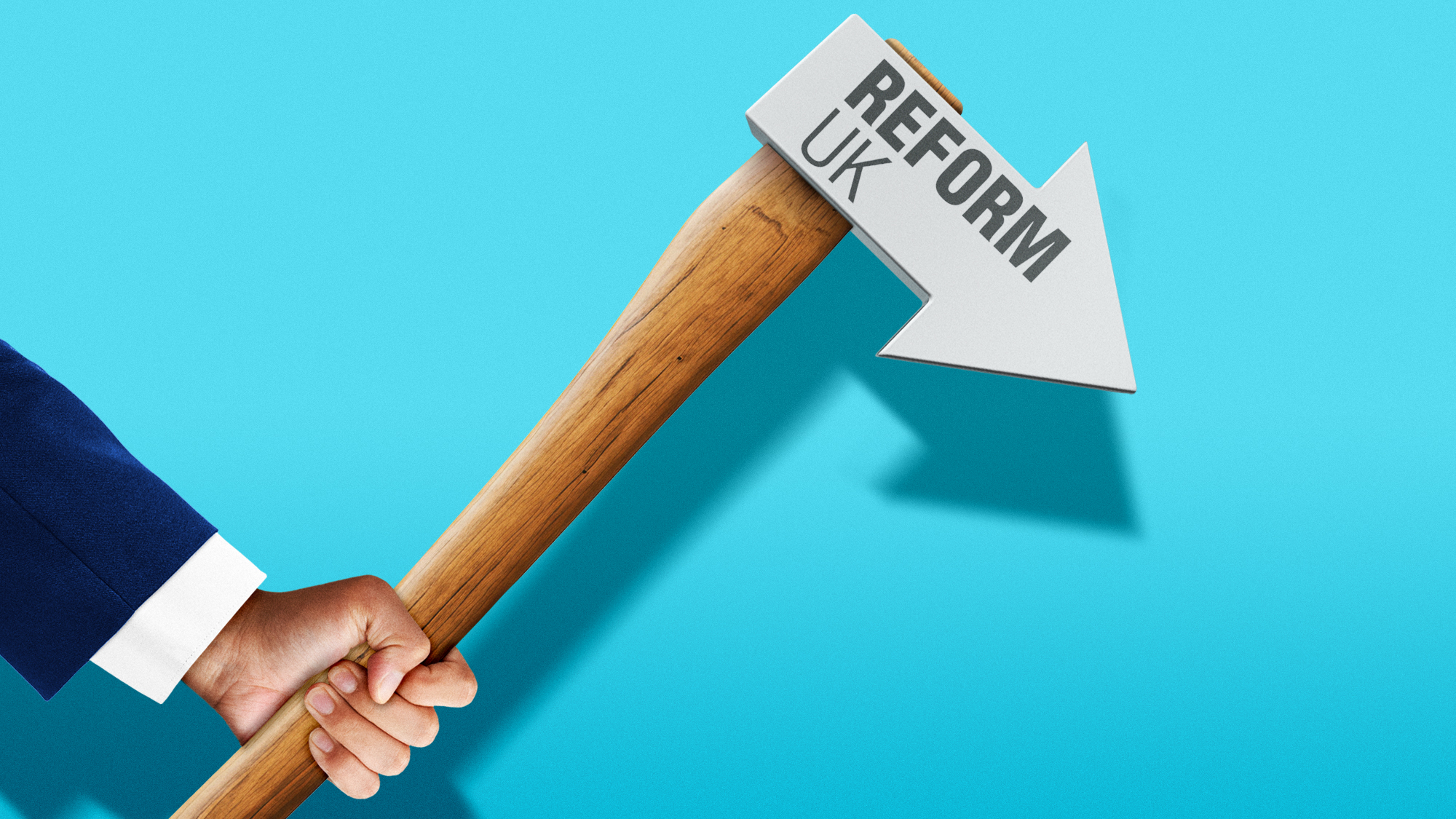
    Are welfare cuts Reform’s stumbling block?

    Reform UK’s newly unveiled plans to cut £50 billion per year from the welfare bill are “extremely ambitious” but also a “political risk”, said Ben Chu on BBC Verify. Under the proposals, outlined yesterday by Robert Jenrick, long-term welfare claimants who are fit to work would be forced to do community work, and foreign nationals would be banned from claiming benefits.

    Personal Independence Payments (Pip) to disabled claimants would also be scrapped and replaced with a “health security allowance”, with more stringent eligibility criteria that could exclude up to two-thirds of current recipients.

    What did the commentators say?
    The exclusion of foreign nationals from claiming most UK benefits is just another “calculated bang on the populist drum”, said an editorial in The Times. The majority “don’t qualify in the first place”, and many of those with indefinite leave to remain would have a “near-certain chance of being granted British citizenship should they apply”.

    For the Reform base, a more pressing issue is the “proposed abolition of Pip”, said journalist Fraser Nelson in his Substack newsletter. “Every Reform MP sits on more Pip claimants than the majority that elected them.” A total of 6,011 residents claim Pip in Jenrick’s seat of Newark, where he was elected as a Conservative with a majority of 3,572. And almost all of Reform’s target seats are “heavily welfare dependent”. Jenrick risks going into the next election as “the Pip-snatcher, the grim reaper of welfare”.

    The Reform approach is not without “flaws”, said an editorial in The Telegraph. But the party’s “ambitious” vision to overhaul a system that is growing at an “unsustainable” pace is “laudable”.

    What next?
    The government said it is “already reforming welfare” and “narrowing the gap between Universal Credit standard and health rates”, by reintroducing face-to-face assessments and investing £3.5 billion in employment support. But “it remains to be seen” whether Andy Burnham is willing to prioritise welfare reforms “over his ambitious plans for regional devolution or social care”, said Rupert Yorke, former deputy chief of staff to Rishi Sunak, in The i Paper.


    THE EXPLAINER

    Brazil election: left and right battle it out for the future

    Brazilian President Luiz Inácio Lula da Silva has fired the starting gun on the next presidential election, and it’s shaping up to be the country’s closest and most consequential political contest in decades. But a “two-man race” has “increasingly become a three-way fight” involving Donald Trump, said The Wall Street Journal.

    Who’s in the race?
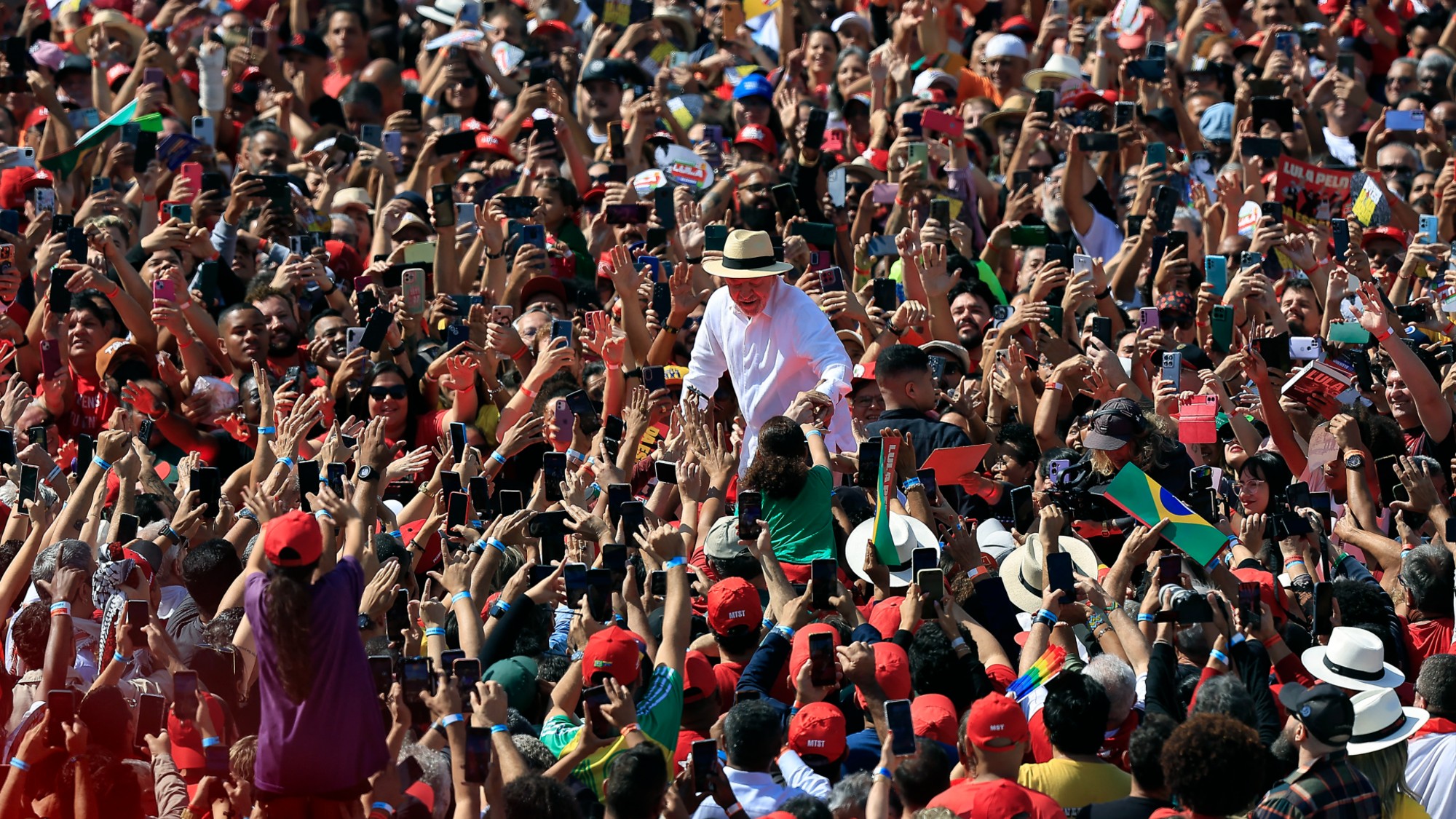
    Incumbent Lula (pictured above) is seeking re-election for the centre-left Workers’ Party, and has vowed not to let the “shameless” right-wing return to power. If the 80-year-old wins, Brazil would be the only left-wing major economy left in South America.

    His chief rival will be Flávio Bolsonaro, the 45-year-old son of populist former president Jair Bolsonaro, who is serving a 27-year prison sentence for attempting a coup after losing office in 2022. The younger Bolsonaro is considered to be “running as the political heir to his father”, said The Wall Street Journal.

    What is the likely outcome?
    If no one wins more than 50% of the votes on 4 October, the two front-runners will progress to a second-round runoff on 25 October. A recent poll suggests that a runoff would see Lula get 47%, with Bolsonaro on 44%.

    Bolsonaro’s campaign “took a mighty blow in May”, when leaked recordings revealed that he had asked for money from a “disgraced banker at the heart of Brazil’s largest-ever bank fraud”, said The Economist. Lula’s approval ratings are high, but he is “seen as weak” on corruption and crime – both top voter concerns.

    What is Trump’s involvement?
    Lula has accused the US president of trying to interfere in the October election on behalf of Bolsonaro, as “tit-for-tat visa disputes and US tariffs” plunge US-Brazilian relations to “their lowest point in years”, said The Wall Street Journal.

    The US president has recently “turned up the heat”, said The Guardian. He has proscribed Brazil’s two biggest criminal groups as terrorist organisations, a move that some observers fear could be laying the groundwork for “a US military intervention”.

    “This reflects a dangerous convergence between Washington’s long-standing interventionist instincts in Latin America” and “the interests of Brazil’s far-right”, said Brazilian journalist Raphael Tsavkko Garcia on Al Jazeera.


    QUOTE OF THE DAY

    “Please never forget that in life, it’s not about doing what’s easy; it’s about doing what’s right.”

    A senior Fifa executive sacked after criticising Gianni Infantino’s abandoned World Cup sell-off plan tells colleagues “everything will be OK in the end”, in an internal email seen by Sky News. “If it’s not OK,” Kevin Lamour wrote, “it’s not the end.” 


    Poll watch

    Two-thirds (65%) of British adults are in a relationship, while 9% have never had a romantic partner, according to a YouGov survey of 1,882 people. Almost half (48%) of the nation’s current relationships have lasted for more than 20 years.


    TALKING POINT

    Jason Arday: trial by media?

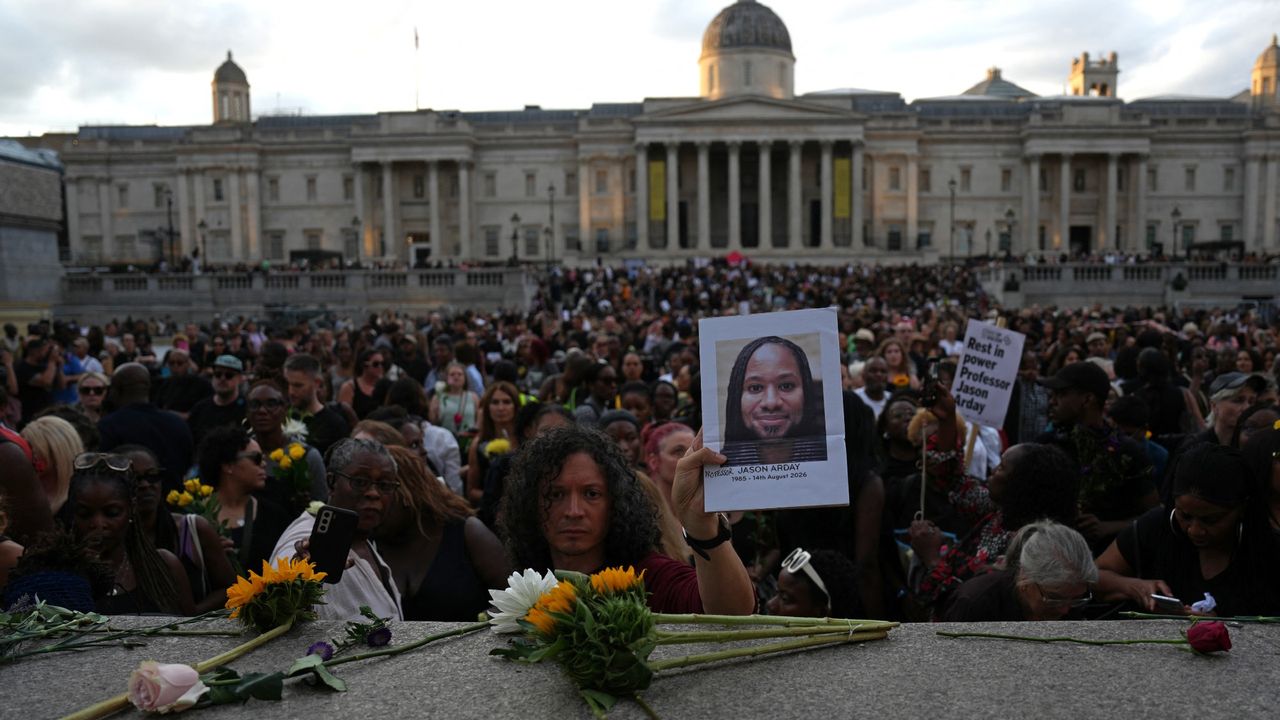
    Public figures have joined friends of Jason Arday to call for a public inquiry into the “witch hunt” faced by the former Cambridge professor before his death. Labour MP Diane Abbott, actor Jameela Jamil and Green Party leader Zack Polanski are among 30,000 signatories of a letter to the prime minister about the “relentless harassment” suffered by Arday amid media allegations of plagiarism and questions about some of his claimed achievements. Last night, thousands of mourners gathered in London’s Trafalgar Square for a vigil organised by Stand Up to Racism.

    ‘Institutional murder’
    The Spectator and The Telegraph ran “article after article about Arday”, said University of Oxford professor Sneha Krishnan on Al Jazeera, but there were also attacks from the left, including Novara Media. “Many academics are investigated for misconduct in their scholarship” but “none should involve public shaming or racist glee”. Arday’s “harassment and death” is tantamount to “institutional murder” by a media ecosystem that has repeatedly shown itself to be “infused with anti-Black racism”.

    Getting to the bottom of plagiarism allegations is “in the public interest”, said Stephen Bush in the Financial Times, and for the sake of Cambridge University and its academic integrity, “exposure does matter”. But in this case, the coverage was never free from a “miasma of race”.

    This was a “death by a thousand headlines”, said Alan Rusbridger in Prospect. “Torrents of verbiage cascaded” from journalists, but none of it was directed at the “troubled history” of Nathan Cofnas, the “race realist” who “claimed the credit for unmasking Arday”. Unfortunately, “Fleet Street in full pursuit can only manage one narrative at a time”.

    ‘Media did its job properly’
    “The basic job of the press is to find out the truth,” said Charles Moore in The Telegraph. And it discovered “substantial untruths, seriously damaging to the reputation“ of one of our greatest universities, “and reported them”. Arday denied allegations of plagiarism but acknowledged errors in his work.

    “The media is the only institution in this entire tragic scandal that did its job properly,” said Brendan O’Neill in The Spectator. The leftist spin is that “hacks hounded him into despair”, but the truth is that journalists “found a story and they told it” – unlike Arday’s colleagues who “failed to prize merit over identity”.


    Good day 🍺

    … for a quiet pint, as Wetherspoons bans customers from playing music and videos on their phones and taking calls on loudspeaker. The chain said other patrons across its 792 pubs were “being driven nuts” by the noise, so “we are kindly asking phone users to pipe down” and use headphones or put their phones on mute. 


    Bad day 💔

    … for Barking and Dagenham, which has been named the least friendly place in England. The east London borough came last in a ranking of local authority areas based on government data about feelings of local pride, community participation and loneliness. The Isles of Scilly topped the friendliness index in the National Conversation project’s study of social division. 


    PICTURE OF THE DAY

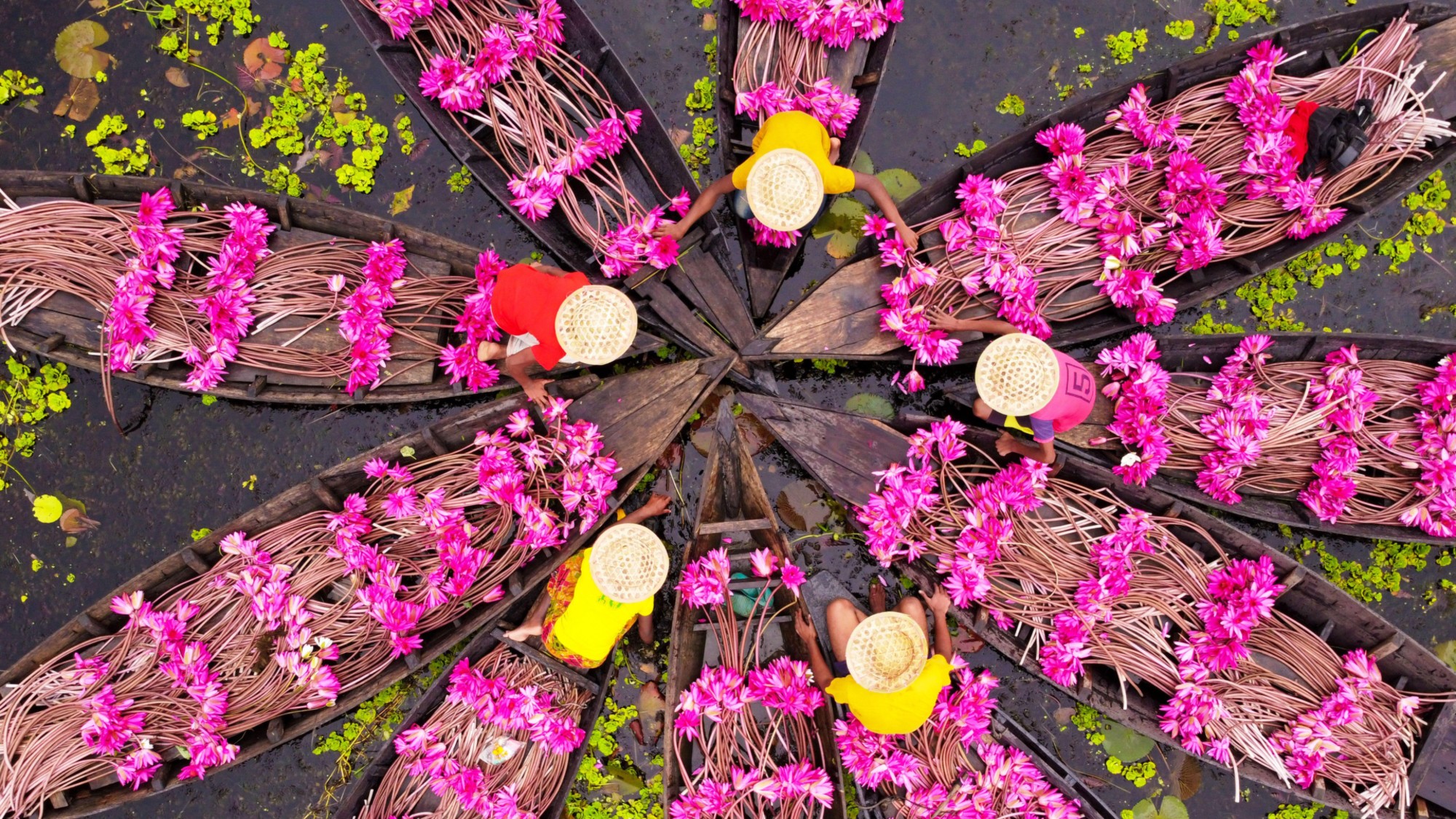
    Gilding the lily

    Farmers arrange bunches of pink water lilies in their boats in Barishal, Bangladesh. The flowers bloom across more than 10,000 acres of the region’s wetlands during monsoon season, when they are hand-picked, tied into bundles and sold at local markets.

    Joy Saha / Alamy Live News


    Puzzles

    Chain Word

    Try The Week’s daily word challenge in our puzzles and quizzes section, which also includes sudoku and Guess the Number

    Play here


    THE WEEK RECOMMENDS

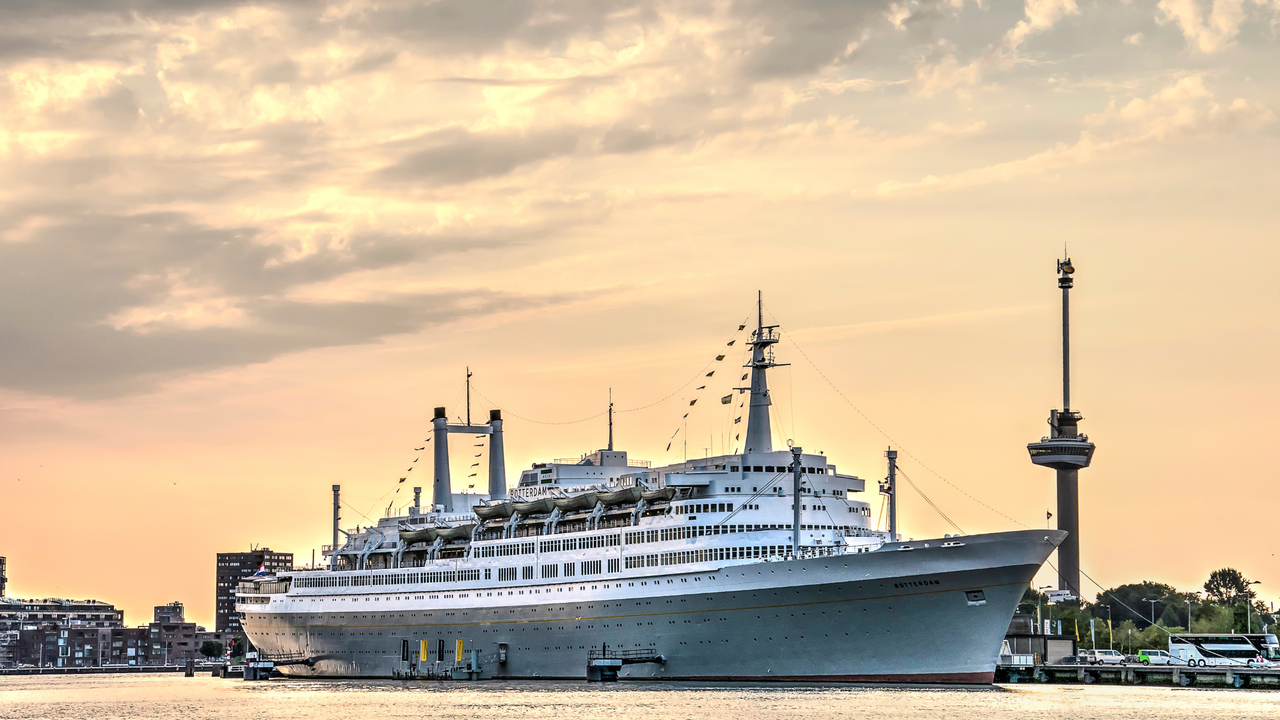
    The ‘vibrant’ reinvention of Rotterdam’s Katendrecht

    Katendrecht was “once at the heart of the world’s busiest port” and home to a “lively sailors’ quarter”, said Pat Riddell in The Guardian. But this “thin peninsula” on the south bank of the Nieuwe Maas River in central Rotterdam has undergone a dramatic transformation.

    The regeneration of historic warehouses has seen the former red-light district turn into one of the city’s “most vibrant” spots, with craft breweries, boutique shops and galleries popping up everywhere. The opening of the Fenix museum of migration last year further boosted the “formerly downtrodden” neighbourhood’s “lively cultural and arts scene”.

    Set within a “century-old warehouse”, this “showstopper” of a museum uses art to portray migration “not as an abstraction or headline, but as a shared human experience”, said Karen Bershtein in Time magazine. Inside, a “mirrored, double-helix steel staircase” winds up to “sprawling views of the River Maas” and the city. Contemporary works include the “Suitcase Labyrinth”, a striking installation “assembled from thousands of donated pieces of luggage”. And “don’t miss the Nederlands Fotomuseum”, where you can see a vast collection of Dutch photography, said Derek Robertson in Time Out.

    Evenings are easy to fill at the Theatre Walhalla, an intimate venue that hosts an eclectic programme of more than 300 performances each year. It’s also worth trying to catch a family-friendly show at the youth circus school, Circus Rotjeknor. And, when it comes to food and drink, said Riddell in The Guardian, Delistraat is “buzzing from morning to night”. 


    Statistic of the day

    50%: The proportion of UK local authorities where homes are taking longer to sell compared with a year ago. The national average selling time has remained unchanged at 42 days, according to Zoopla, but the regional gap has widened. The fastest-selling area is Falkirk, at an average of 11 days, while the slowest is Melton in the East Midlands, at 76 days. 


    instant opinion

    Today’s best commentary

    Andy Burnham is choosing jobs over climate security. That’s a big risk
    Gaby Hinsliff in The Guardian
    It’s “jarring” to see our “new prime minister spending the hottest summer on record” discussing “drilling for oil and gas in the North Sea” and “easing net zero targets”, writes Gaby Hinsliff. Andy Burnham is pitching himself “as a net zero pragmatist”: “not complacent” about climate change but “instinctively protective” of jobs threatened by green policies. But his party expects more from a leader who has “the political skills to sell difficult answers, and the emotional intelligence to manage the fallout”.

    How did British singers get so posh?
    Ella Dorn in The New Statesman
    “Browsing through Spotify sometimes feels like reading the Sloane Ranger Handbook”, writes Ella Dorn. Singer and DJ Fred Again “comes from landed gentry”, and Paloma Faith, Yungblud and Arlo Parks all went to private school. “We’re too fixated on algorithmic streaming services to worry about local talent”, so the cultural machine “that created Britpop and Merseybeat” has disappeared. The “exceptionally talented” can still make it without connections, but “with old-money poshness, you get ‘ins’” with record executives and festival bookers as a birthright.

    No wonder children are so miserable. They don’t play outside
    Joanna Williams in The Telegraph
    Playing outdoors “is free” and “fun”, but studies show children are doing it far less, writes Joanna Williams. The “risks of traffic” and “stranger danger” can make “worried mums and dads” feel that “keeping children indoors, glued to a screen” is “the only responsible option”. But we don’t need “elaborate new schemes” to get kids outside more: just point parents towards the park, with “permission to stand well back” and give their children a “taste of freedom”.


    word of the day

    Manifursto

    A statement of policy intention from cats competing to be named Westminster’s top mog in this year’s “Purr Minister” election, run by Battersea rescue centre. Among the politicians’ pets submitting a “manifursto” to win the public’s votes are joint contenders Clement Catt-lee and Mo Meowlam, owned by Labour MP Johanna Baxter, who want to stop “cat-astrophic” vet bills and “appoint a new special envoy for cat-and-mouse diplomacy”. 


    Evening Review was written and edited by Hollie Clemence, Rebecca Messina, Will Barker, Harriet Marsden, Chas Newkey-Burden, Irenie Forshaw, Adrienne Wyper, Helen Brown and Kari Wilkin, with illustrations by Stephen P. Kelly.

    Image credits, from top: illustration by Stephen P. Kelly / Getty Images; Miguel Schincariol / AFP / Getty Images; Carlos Jasso / AFP / Getty Images; Joy Saha / Alamy Live News; Franswillemblok / Getty Images

    Morning Report and Evening Review were named Newsletter of the Year at the Publisher Newsletter Awards 2025
     

    Recent editions

    • Morning Report

      Trump threatens Oman as Iran talks miss deadline

    • Evening Review

      Why is Donald Trump punishing South Korea?

    • Morning Report

      Kushner holds rare Hamas talks

    VIEW ALL
    TheWeek
    • About Us
    • Contact Future's experts
    • Terms and Conditions
    • Privacy Policy
    • Cookie Policy
    • Advertise With Us
    • FAQ
    Add as a preferred source on Google Add as a preferred source on Google

    The Week UK is part of Future plc, an international media group and leading digital publisher. Visit our corporate site.

    © Future Publishing Limited Quay House, The Ambury, Bath BA1 1UA. All rights reserved. England and Wales company registration number 2008885.