The Week The Week
flag of US
US
flag of UK
UK
https://cdn.mos.cms.futurecdn.net/flexiimages/jzblygzdxr1769609154.gif

SUBSCRIBE

Try 6 weeks free

Sign in
  • View Profile
  • Sign out
  • The Explainer
  • Talking Points
  • The Week Recommends
  • Podcasts
  • Newsletters
  • From the Magazine
  • The Week Junior
  • More
    • Politics
    • World News
    • Business
    • Health
    • Science
    • Food & Drink
    • Travel
    • Culture
    • History
    • Personal Finance
    • Puzzles
    • Photos
    • The Blend
    • All Categories
  • Newsletter sign up Newsletter
  • The Week Evening Review
    Russia’s sham democracy, falling house prices, and the Piddington poll

     
    TODAY’S BIG QUESTION

    Will Russia’s elections send a message to Putin?

    Polls open tomorrow for Russia’s first parliamentary election since the 2022 full-scale invasion of Ukraine – and despite public opposition to the war, Vladimir Putin’s grasp on power is unlikely to be shaken. But although the election’s outcome is all but certain, the people’s “tacit consent is crumbling”, said The Economist.

    What did the commentators say?
    The election of 450 deputies to Russia’s lower legislative house “gives the impression of some diversity”, with communists, nationalists and “even some self-described liberals” on the ballot, said Brawley Benson on Foreign Policy. “In reality, scope for disagreement is vanishingly small.” Putin’s party, United Russia, holds 70% of the seats and there’s “little tolerance for genuine opposition”.

    United Russia is polling at its lowest rate since the invasion of Ukraine – around 32%. But the Kremlin has long deployed an “arsenal of tools” to retain its grip on power, said political science professor Regina Smyth on The Conversation. Gerrymandering, “significant” levels of electoral fraud and, this time round, the banning of eight out of 19 political parties, have effectively “eliminated non-partisan organised opposition”. But seeing how heavily the Kremlin needs to place “its thumb on the scale to maintain its party’s two-thirds majority” could be telling.

    “Engineering” the outcome too tightly is “not without a risk for the ruling regime”, said The Guardian’s editorial board. “Too blatant” an election steal can be a “sign of weakness”: “the harder the Kremlin is seen to work at constructing electoral proof of that support, the less confident it looks”.

    What next?
    As Moscow’s military “burns through” troops and the economy falters, many Russians “are worried” about what happens after the election, said The New York Times’ Moscow-based correspondent Valerie Hopkins. With voters “struggling and scared”, the Kremlin has been forced to switch its central message: what was once an insistence on “business as usual” is now a call for Russians to “rally around President Vladimir V. Putin and his war”.


    THE EXPLAINER

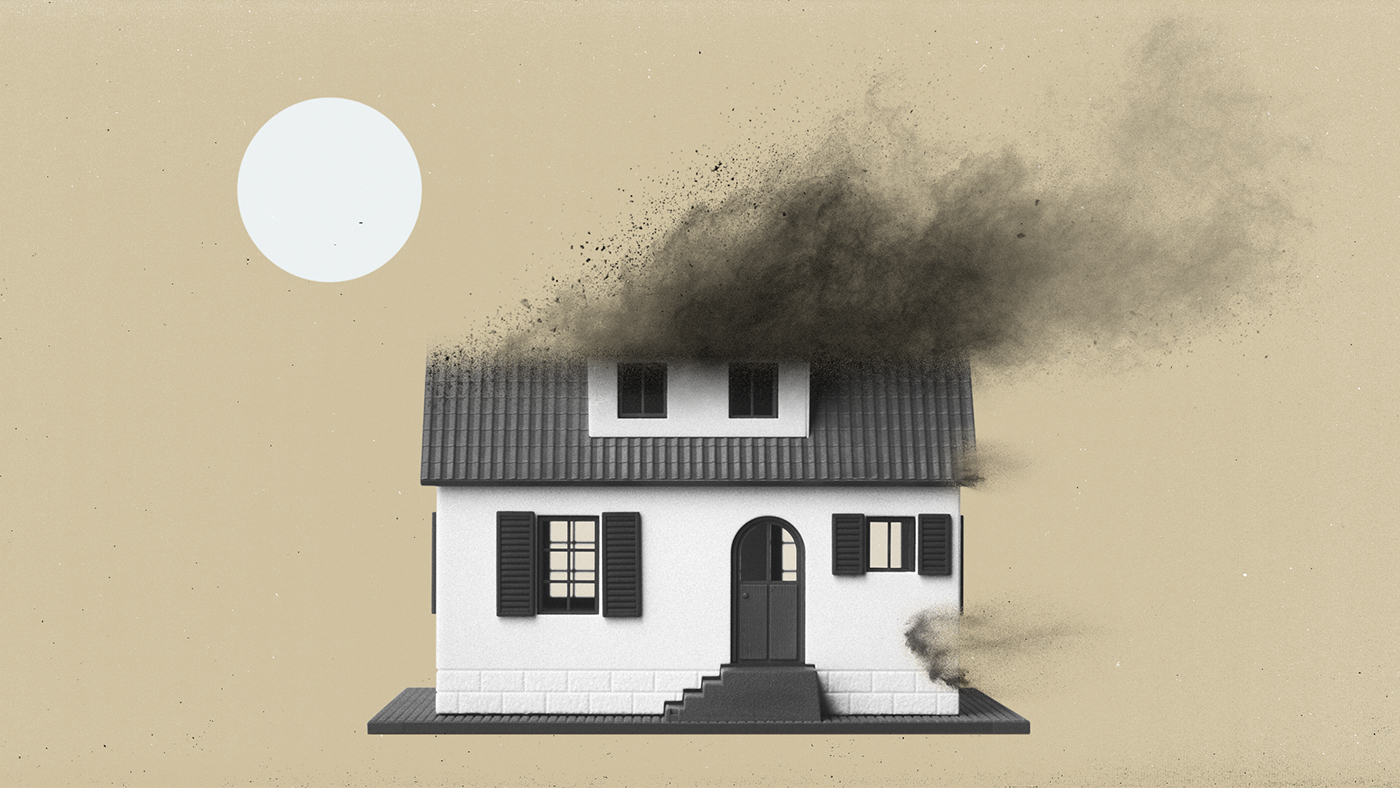
    Why are UK house prices falling?

    House prices have been under pressure for most of the year and there is little light at the end of the tunnel for homeowners hoping to sell any time soon. Average house prices in England are now lower in real terms than 20 years ago, as inflation and interest rates “hammer the property market”, said The Telegraph.

    What’s happening to house prices?
    The housing market has faced a “more difficult backdrop in recent months”, with uncertainty caused by global events impacting inflation and borrowing costs, said Lloyds. According to the bank’s latest House Price Index, average property values declined by 0.4% year-on-year in August, the first such decrease since November 2023.

    What is the outlook for the market?
    Devaluations “must be swallowed” in areas of the country such as the Southeast and London where homes have been “overvalued for the past 20 years”, said The Critic. But on a nationwide level, analysts expect growth to remain “broadly stable or modest”, said the HomeOwners’ Alliance.

    Estate agent Savills had previously predicted a 4% annual property price growth in 2026, but has since revised its forecasts to a 2% drop. Rightmove started the year predicting that asking prices would rise by 2% but now expects them to either be flat or to fall by 2%.

    What could impact future prices?
    The Office for Budget Responsibility has forecast that higher property income tax rates from April 2027 will “reduce house price growth by around 0.1 percentage points a year from 2028”. High-end property owners are facing a new mansion tax from April 2028. Although fewer than 1% of properties in England are expected to be above the £2 million threshold, it could have “knock-on effects for the rest of the market” if activity slows at the top, said This is Money. Further tax changes could also be announced next month in Chancellor John Healey’s first Budget.


    QUOTE OF THE DAY

    “It is, at the risk of overstating it, the Shakespeare of our time.”

    J.D. Vance unexpectedly weighs in on Netflix series “Emily in Paris”. The widely panned romcom, returning for a sixth and final season in December, is “a massive cultural criticism of millennial decision-making”, the US vice president said in a video on social media.


    Poll watch

    Nearly three-quarters of Americans (71.5%) felt “very tired or exhausted” on multiple days over the past three months, a survey of 27,000 adults suggests. One in six said they suffered fatigue “most days” or “every day”, according to a report from the US Centers for Disease Control and Prevention’s National Center for Health Statistics.


    IN THE SPOTLIGHT

    Piddington’s ‘posh revolt’ over migrant housing plans

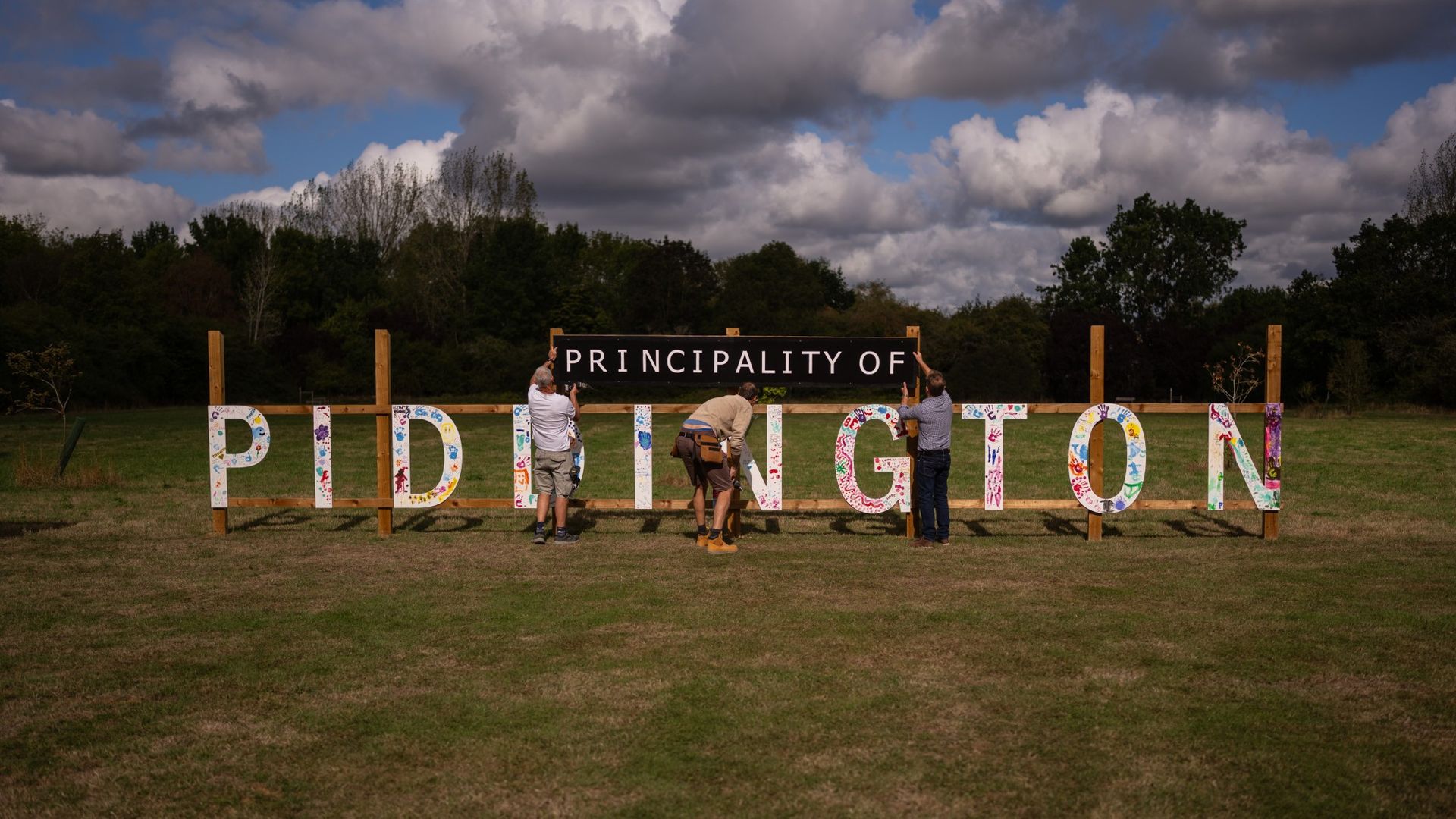
    A “polite, posh revolt” has broken out in an Oxfordshire village over plans to turn an old army site into new housing for more than 1,200 asylum seekers, said Ella Whelan in The i Paper. Residents of Piddington voted to become independent from the UK in a symbolic referendum this week, and the parish has been “approached by hundreds of other villages and towns for advice on replicating their campaign”, said Leaf Arbuthnot in The Telegraph.

    ‘Quietly grumbling’
    As the landslide result was announced – a 285 to 26 vote to leave – residents were “palpably delighted”, said Arbuthnot. The village’s “eccentric and deeply English decision to gun for a figurative ‘split’ from the UK has won it extensive coverage, even from media outlets overseas”.

    Piddington had been “quietly grumbling for a while” about the plans, said Whelan, but now those grumbles are “headline news”. What is “fascinating” is that these residents voted in Calum Miller, a Liberal Democrat candidate, in 2024. “You don’t vote in a Lib Dem if you’re agnostic on the issue of immigration.” The referendum shows how much the debate has evolved: ten years ago, “even using the I word” could have you labelled racist, but “concerns about cultural tensions, NHS waiting lists and even crime rates are now pretty commonplace across the political spectrum”.

    Backlog burden
    The government has defended its migration policy in the aftermath of the vote. “What I would just gently say to the people of Piddington is we inherited a massive asylum backlog,” Culture Secretary Lisa Nandy told Sky News. The government is “getting that backlog down” but “in the meantime”, it’s not “acceptable for all of the burden” to fall on poorer communities.

    But Labour MPs “would do well to study what has happened in Piddington”, said Arbuthnot. “The anger that has been stirred in even this conspicuously well-to-do and liberal corner of Oxfordshire could augur a broader mood taking hold across the country.” Andy Burnham has “sold himself as the ‘I hear you’ prime minister”, said Whelan, but “will he listen to the Piddington Poll”?


    Good day 🌾

    … for Poldark wannabes, as conservation charity English Heritage calls for volunteer scythers to help restore meadows at Muchelney Abbey in Somerset. The ancient agricultural practice of using a long, curved hand-blade to cut grass is part of a three-year plan with the Bumblebee Conservation Trust to improve habitats for rare shrill carder bees. Unlike the TV hero, working topless is not required. 


    Bad day 🏦

    … for mortgage-seekers, after the Bank of England voted to hold the interest rate at 3.75%, dashing hopes of cheaper fixed-rate deals. In a potential blow for homeowners with tracker deals, the Bank also hinted at impending hikes to the base rate to reflect rising inflation.


    PICTURE OF THE DAY

    A wing and a prayer

    An ultra-Orthodox Jewish man inspects a chicken in Jerusalem’s Mea Shearim neighbourhood. Chickens are used in kapparot, a ritual act of atonement performed ahead of Yom Kippur in which a person’s sins are symbolically transferred to the bird.

    Ilia Yefimovich / AFP / Getty Images


    Puzzles

    Chain Word

    Try The Week’s daily word challenge in our puzzles and quizzes section, which also includes sudoku and Guess the Number

    Play here


    THE WEEK RECOMMENDS

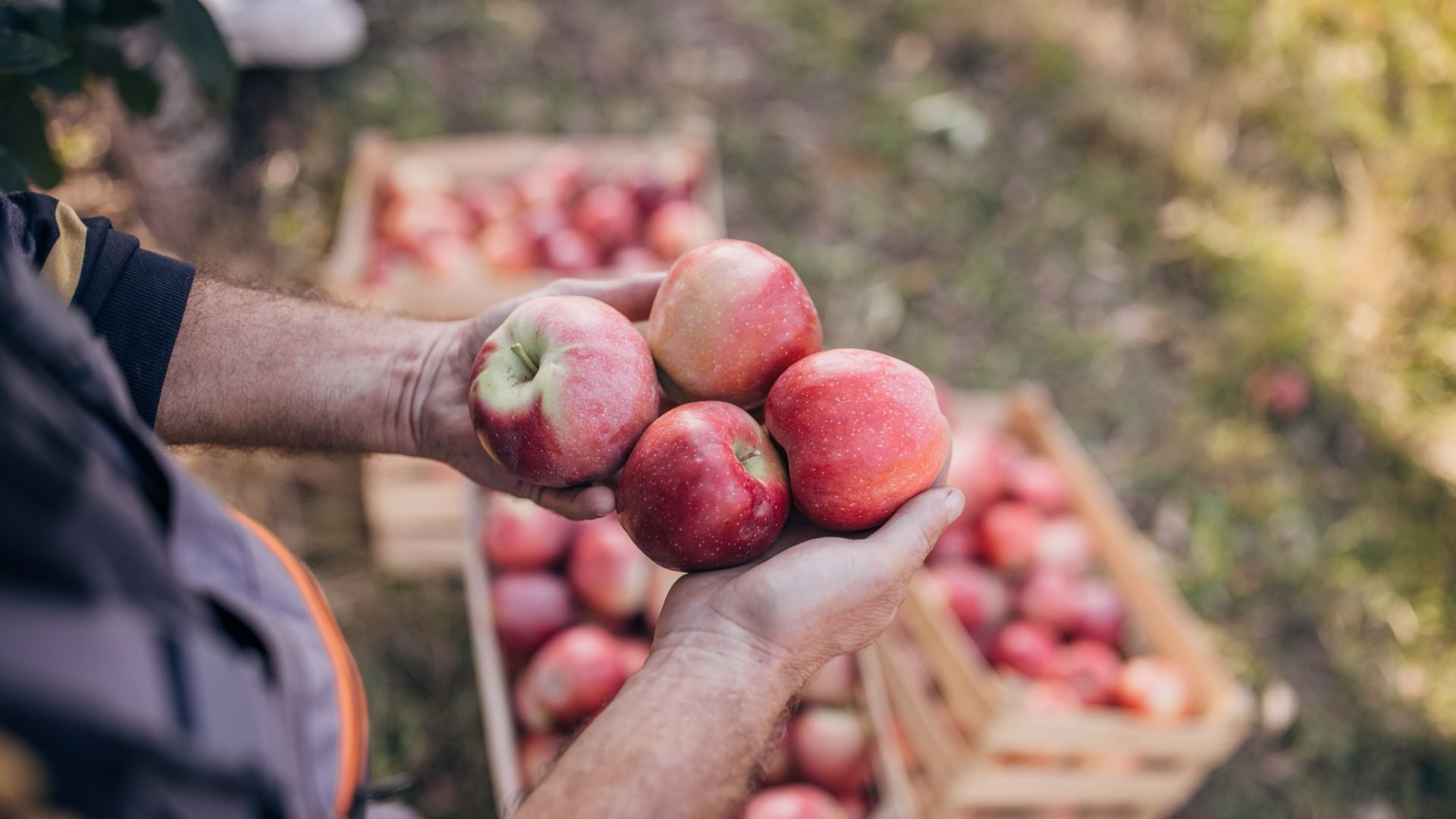
    The best orchards for apple picking

    The season for apple picking is about to hit its peak, with orchards nationwide opening their gates for people to fill their baskets. Here are some favourite picking places.

    Ampleforth Abbey, Yorkshire
    This is the “perfect place to spend a full autumn day out”, said Condé Nast Traveller. The abbey, which is open to the public, has its own cider mill where visitors can learn about the site’s history of making apple juice and cider.

    Hillfield Nursery, Norfolk
    More than 250 varieties of apple are planted at Hillfield, “meaning the season starts early in the summer and finishes well into autumn”, said Rebecca Seal in National Geographic. The rare William Crump and Ellison’s Orange varieties are among the many “real treasures among the trees”, which also bear “plums, quince and medlars”.

    Brogdale Collections, Kent
    This southeast gem is known for its “diverse array of fruits, set in a stunning natural setting”, said Lauren Hughes in Country Living. Guided tours run until the end of October, allowing visitors to “explore the grounds and sample seasonal fruit”.

    Hawarden Estate, Flintshire
    Apples, pears and pumpkins are all up for grabs in this Welsh haven, once home to William Gladstone, said Siobhan Grogan in The Times. After filling a punnet, head to the estate’s on-site bakery for more sugary sustenance, or take a mushroom foraging tour and learn to tell your “shaggy parasols from your chanterelles”. 


    Statistic of the day

    500: The estimated crocodile population of a Queensland river that will host events at the 2032 Olympics and Paralympics. The Fitzroy River – where protocols are in place for croc sightings – has been given the green light for rowing and canoeing races. “There are sharks in the ocean and we’re still surfing,” said Brisbane 2032 president Andrew Liveris. 


    instant opinion

    Today’s best commentary

    Menaced by Putin, betrayed by Trump – but this is Britain’s simple defence fix
    Naomi Smith in The i Paper
    Britain “is in an unenviable” security position, stuck between a bellicose Russia and an unreliable America, and outside the EU, writes Naomi Smith of the Best for Britain think tank. We need “a defence union with our allies in Europe” that includes Ukraine, Norway and Iceland. “This is where Britain can lead” and “be bold”. A pact with a “sharper” collective-defence promise than Nato’s Article 5 would be our “insurance policy for the day” the US guarantee is “found wanting”.

    In defence of Ealing Broadway’s ‘calm space’
    Sophie Maxwell Brown in City A.M.
    The new “calm space” at Ealing Broadway Tube station has become an object of “ridicule”, writes design strategist Sophie Maxwell Brown. The “unlit booth”, set where “the crowd is thickest”, has been likened to a “dog kennel” – “not exactly the natural home for anyone feeling overwhelmed”. But Transport for London “had the right instinct”: “neuroinclusive design” can “reduce cognitive load”. Perhaps they should “design the whole journey to reduce overload, rather than only providing a place to recover from it”. 

    Ed Sheeran wants to stay out of politics. By quitting his tour, his support acts have exposed the hollowness of neutrality
    Laura Snapes in The Guardian
    Ed Sheeran says “he doesn’t use his platform for politics”, writes Laura Snapes, but these days, “there is no such thing as a neutral position”. The musicians who have pulled out of his tour understand that losing money “and creating inconvenience is precisely what it takes to show backbone and stand against genocide and billionaires crushing free speech”. Sheeran looks “wilfully naive”: “you can’t play with the aesthetics of global music” without engaging “in the lived reality of those cultures”.


    word of the day

    Mehndi

    A special form of henna, the plant-based dye used for body art. Two million “singletons” caused a “near-stampede” at a temple in the Indian city of Jaipur as they flocked to get painted with mehndi believed to “guarantee a suitable life partner”, said The Times. This year’s turnout at the annual ritual was apparently boosted by viral videos claiming the 3,500kg batch of henna used had “particularly powerful properties”.


    Evening Review was written and edited by Rebecca Messina, Jamie Timson, Hollie Clemence, Will Barker, Marc Shoffman, Chas Newkey-Burden, Irenie Forshaw, Erica Jones, Helen Brown and Kari Wilkin, with illustrations from Stephen P. Kelly.

    Image credits, from top: illustration by Stephen P. Kelly / Getty Images; illustration by Stephen P. Kelly / Getty Images; Carl Court / Getty Images; Ilia Yefimovich / AFP / Getty Images; Nes / Getty Images
     

    Recent editions

    • Morning Report

      Palace hits back at Earl Spencer over Diana claims

    • Evening Review

      Is big money a threat to UK democracy?

    • Morning Report

      Vow to overhaul NHS after ‘devastating’ Letby inquiry

    VIEW ALL
    TheWeek
    • About Us
    • Contact Future's experts
    • Terms and Conditions
    • Privacy Policy
    • Cookie Policy
    • Advertise With Us
    • FAQ
    Add as a preferred source on Google Add as a preferred source on Google

    The Week UK is part of Future plc, an international media group and leading digital publisher. Visit our corporate site.

    © Future Publishing Limited Quay House, The Ambury, Bath BA1 1UA. All rights reserved. England and Wales company registration number 2008885.