The Week The Week
flag of US
US
flag of UK
UK
https://cdn.mos.cms.futurecdn.net/flexiimages/jzblygzdxr1769609154.gif

SUBSCRIBE

Try 6 weeks free

Sign in
  • View Profile
  • Sign out
  • The Explainer
  • Talking Points
  • The Week Recommends
  • Podcasts
  • Newsletters
  • From the Magazine
  • The Week Junior
  • More
    • Politics
    • World News
    • Business
    • Health
    • Science
    • Food & Drink
    • Travel
    • Culture
    • History
    • Personal Finance
    • Puzzles
    • Photos
    • The Blend
    • All Categories
  • Newsletter sign up Newsletter
  • The Week Evening Review
    Simultaneous summits, an AfD Germany, and the Ali G backlash

     
    TODAY’S BIG QUESTION

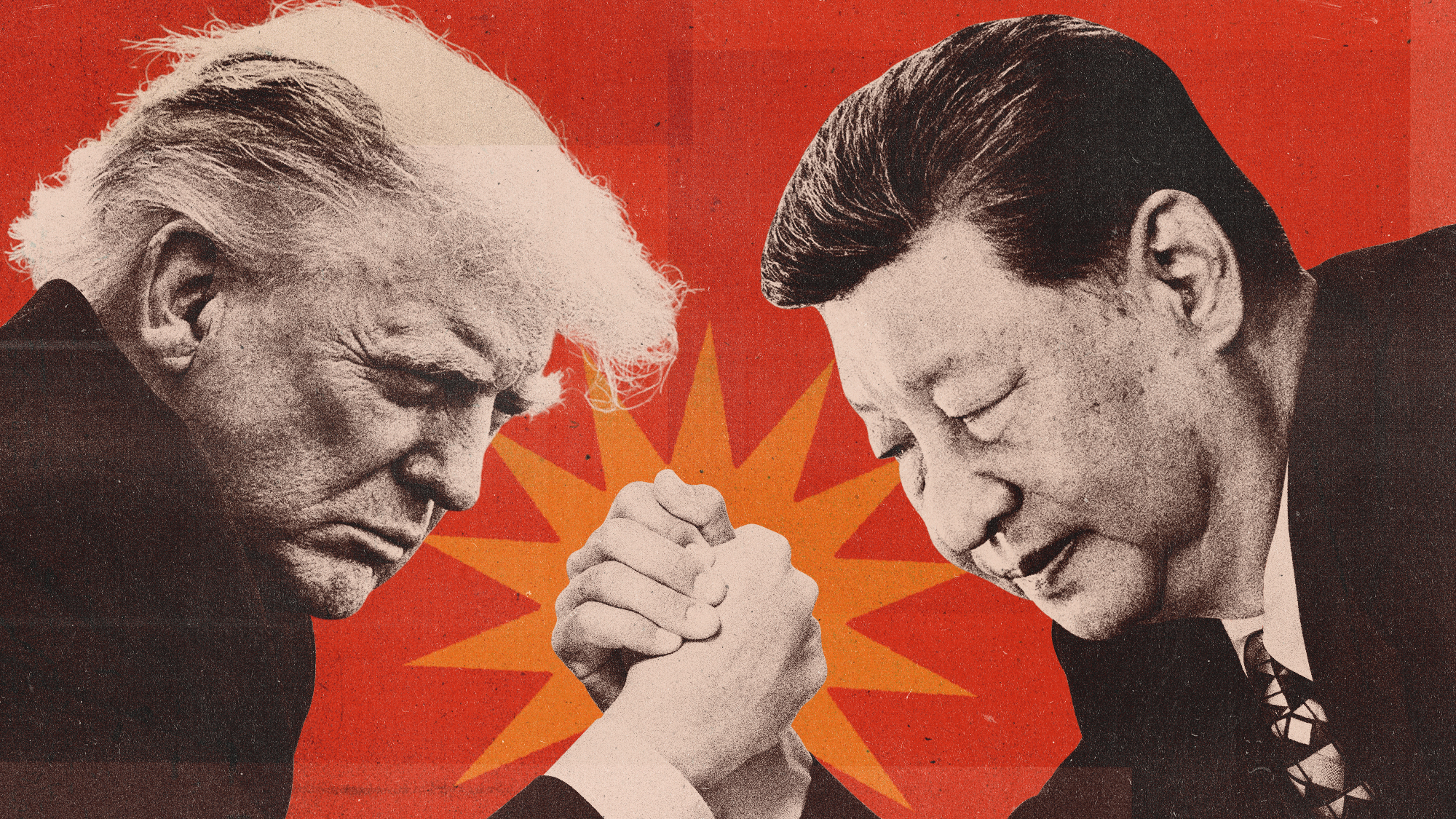
    G20 vs. SCO: who runs the world?

    Two top-level summits staged simultaneously this week offered contrasting visions for the world and who will lead it in the coming years.

    China’s Xi Jinping welcomed fellow world leaders including Russia’s Vladimir Putin, India’s Narendra Modi and Iran’s Masoud Pezeshkian to the Shanghai Cooperation Organisation in Kyrgyzstan’s capital, Bishkek, where Beijing was presented as a driver of stability and champion of an “orderly multipolar world”.

    But 6,826 miles away at a meeting of G20 finance ministers in Asheville, North Carolina, the mood could not have been more different. Western finance ministers expressed outrage at the Trump administration’s decision to invite Russia. There was also anger at the US’s ongoing trade spat with Canada, Trump’s decision to punish South Korea and the continuing economic fallout from his war against Iran.

    What did the commentators say?
    If the Bishkek summit was “designed to project solidarity”, the G20 gathering “offered an image of fracture”, said David Pierson in The New York Times. China is using ever-closer ties with Russia and Iran, both at war with the West, to “project its influence”. At the same time, the US is “straining the alliances and economic relationships that have underpinned decades of global leadership”.

    The “emerging global order is not simply dividing into two fixed camps”, said Business Insider Africa. Countries such as India are “maintaining relationships with competing powers while pursuing their own strategic interests”. And Xi has also sought to build bridges with the West, separately hosting the leaders of Germany, Britain and Canada this year, as long-standing allies turn away from the US under Trump.

    The world’s two leading economies are “uneasily preoccupied with their trajectory these days”, said Evan Osnos in the New Yorker. China is “eager to restore its historical eminence”, and having long “looked West for visions of the future”, nowadays “it favours its own”.

    What next?
    China put on a show of strength not only in Bishkek but also in Asheville, where it blocked a G20 joint statement, ahead of a crunch meeting between Xi and Trump in Washington DC later this month.


    THE EXPLAINER

    What an AfD Germany could look like

    Ulrich Siegmund was described as “the most dangerous man in Germany” by Der Spiegel in a recent cover story. The 35-year-old is on course to lead his Alternative für Deutschland party to power in elections in Saxony-Anhalt this week, ushering in the first far-right state government in post-war German history.

    The party’s predicted victory could provide a first look at what the AfD “hopes could ultimately be a cultural and demographic overhaul of German life”, said The New York Times.

    What are AfD’s policies?
    The party’s 156-page manifesto advocates a “complete 180-degree turn” on migration to include deportation and what it calls “remigration” – a term with “Nazi connotations” for a policy under which Ukrainian refugees who fled the war could be targeted, said CNN.

    An AfD government would also seek to ban gay pride flags from schools, axe funding for public broadcasters and pro-democracy NGOs, impose a moratorium on new wind turbines and roll back other green policies, and offer tax breaks to large families of German origin. The party wants to improve relations with Moscow, and would move to teach more Russian in schools. The manifesto also includes provisions to make childcare, already heavily subsidised by the state, totally free.

    How likely is an AfD national government?
    Since its founding in 2013, the AfD has evolved from a Eurosceptic party into a “full-scale populist uprising against mass migration, green energy policies and so-called wokeism”, said The Telegraph’s James Rothwell.

    The AfD has successfully expanded beyond its heartland in the former East Germany, and now consistently leads Politico’s poll of polls on national voting intention. Standing in its way of entering national government is the Brandmauer, Germany’s political “firewall” agreement between mainstream parties to refuse to work with extremists. It has succeeded until now in keeping the AfD out of power at state and federal level, but has done nothing to harm the party’s popularity.

    Some hope that taking control of Saxony-Anhalt would force the party to compromise and show that its radical political platform is unworkable and ineffectual. But the AfD could turn Saxony-Anhalt “into a testing ground for the whole country”, David Begrich of Miteinander, an organisation that fights right-wing extremism, told Deutsche Welle.


    QUOTE OF THE DAY

    “Isn’t it time for the prime minister to ditch the vibes and get serious about defending our nation?”

    Kemi Badenoch presses Andy Burnham to cut welfare spending and invest more in defence, at his first Prime Minister’s Questions. “There is no problem” with this government’s commitment to funding the Armed Forces, the PM fired back.  


    Poll watch

    A majority (63%) of Americans oppose Donald Trump’s decision to rename Lake Ontario as Lake America, according to an Ipsos/Reuters poll of 1,023 adults. Only 14% support the president’s executive order, but Apple and Google have renamed the lake on their maps for US users. 


    IN THE SPOTLIGHT

    The Ali G backlash: beyond a joke?

    Ali G is “a cover to laugh at Jamaican culture”, according to NewsCord, which has launched a campaign for cinemas to block the return of Sacha Baron Cohen’s character following a 20-year hiatus. Ali G “is a white man pretending to be Jamaican”, so he “smokes weed, is a misogynist, and does nothing meaningful in life”, said the media-monitoring site. While “the world laughs at Ali G”, the “real butt of the joke are Black people”.

    ‘Fun police’
    “Ali G: Who Iz I?” is due for release in October and the trailer features “some of the escapades and pranks” in Baron Cohen’s second feature-length comedy “starring the academically challenged west Staines rude boy character”, said The Guardian. Within days of the trailer’s release, activists responding to NewsCord’s campaign had sent more than 40,000 emails to 15 major cinema chains.

    “The fun police are already out in force” with their efforts “to cancel the leader of Da West Staines Massif”, said The Telegraph’s culture writer Liam Kelly. The letters of complaint are “AI-generated” and “tweaked” for each cinema chain but “one thing is consistent: Ali G is beyond the pale”. The British Board of Film Classification has the ultimate say on whether a film is “fit to be shown on the UK’s big screens”, however, and  “it would be a massive surprise” if this one “were not given a certificate”. All this outrage is “ludicrous”.

    Cinemas are not censors, Phil Clapp of the UK Cinema Association told Variety. “They are there to engage and entertain the widest possible audience”; they are not “arbiters of public taste”.

    ‘Moribund culture’
    “Any sensible person” can “see straight away” that Baron Cohen “does not depict or intend to depict Black men of any description”, said Zimbabwean author Masimba Musodza in The Times of Israel. He’s actually “poking fun at white youth” who have “consumed caricatures” of Black British masculinity in popular culture and “mistaken them for reality”.

    There’s something “uncomfortable” about the assumption that “reproducing those stereotypes” to ridicule the person reproducing them “constitutes an attack upon Black people themselves”. Besides, “the answer to bad ideas in art” isn’t always censorship. “Sometimes, it is simply to watch the bloody thing and understand the joke.”


    Good day 🎾

    … for life imitating art, after Serena Williams’ body double in the 2021 biopic “King Richard” competed in her first US Open singles match. Thea Frodin played world No.2 Elena Rybakina in New York yesterday, after earning a wildcard by winning the US Tennis Association’s Girls’ 18s National Championships. Despite being defeated in straight sets, the 17-year-old became an “instant fan favourite”, said The Associated Press.  


    Bad day 🚗

    … for Sadiq Khan, who has been the “victim of a scam”, according to City Hall officials. The London mayor was convicted in a criminal prosecution brought by the DVLA of failing to tax a 24-year-old Nissan Micra that he says he “does not own”. The driving agency is investigating after letters about the unpaid bill were sent to Gordon Ramsay’s east London restaurant, instead of the nearby Transport for London offices. 


    PICTURE OF THE DAY

    Blooming with joy

    A happy-looking dormouse perches on a flower in a photo by Italy’s Andrea Zampatti. The image is among 91 past winners of the Nikon Comedy Wildlife Photography Awards that will feature in an immersive experience at London’s Frameless from next week.

    Andrea Zampatti / Nikon Comedy Wildlife Photography Awards


    Puzzles

    Chain Word

    Try The Week’s daily word challenge in our puzzles and quizzes section, which also includes sudoku and Guess the Number

    Play here


    THE WEEK RECOMMENDS

    Dalliance: a ‘charming’ and ‘thoughtful’ drama

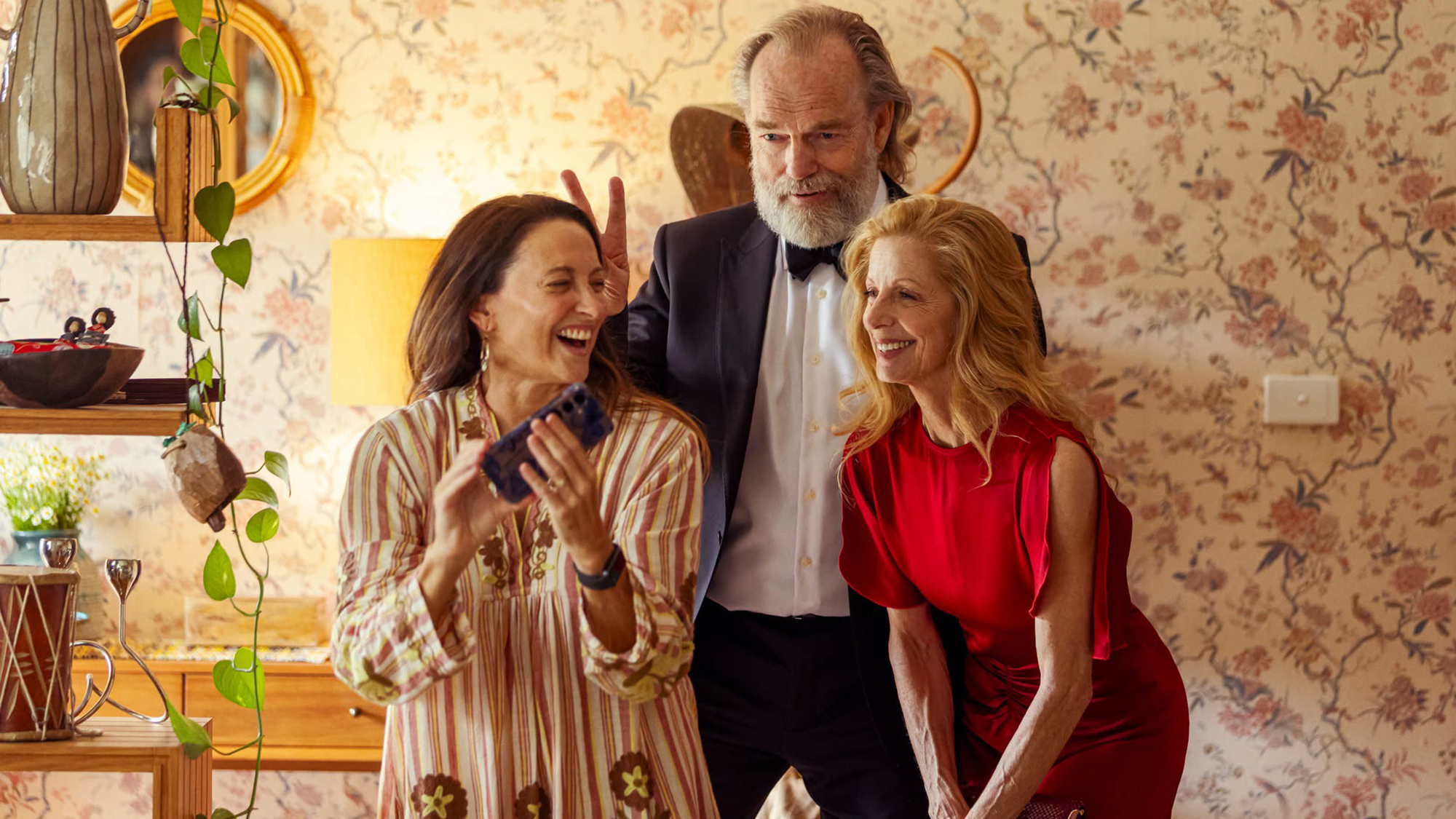
    A “tangled web of 60-somethings” juggle “friendship, divorce, bust-ups, romance” and “decades of baggage” in “Dalliance”, said Phoebe Loomes in The Senior. But this “charming and surprising” series shows that they have “no appetite to slow down”.

    The new Australian six-parter is a “mood piece”, said Lucy Mangan in The Guardian, and “characters who have actually lived some life” are introduced to us at a “later stage” than we usually see on our screens. “They and we are only better off for it.”

    “Beautifully written” and directed with “requisite subtlety”, the Paramount+ show stars Hugo Weaving as a “bonhomous retired cameraman”. A reunion of his old friends sparks a “feast” of “hilarious and heartbreaking” storylines shot through with the type of “irreverence and honesty that makes you instantly devoted to the whole endeavour”.

    The characters’ history is “part of the attraction of the story”, said Scott Podmore on Starts At 60, with “marriages, children, careers, mistakes” and “decades-long friendships” that make their choices “more complicated, not less interesting”.

    And they’re “not old old”, said Anthony Morris on Screen Hub. Yes, they are nearing retirement, but while some of them seem to have everything “worked out”, others are “unsure of themselves, questioning their choices” and “trying to figure out where they’re heading”. Yet the “Sydney backdrop” makes “everyone’s troubles” seem “just that little bit more glamorous”.

    “Even if you’re not in the target audience”, this is a “witty, thoughtful and often funny drama” that is well worth a watch. But if you are older and you’ve watched other shows by father-son producers John and Dan Edwards, you’re “finally” getting the chance to “see your generation complain about aches and pains and talk about the good old days”.


    Statistic of the day

    75,491: The number of A&E attendances by children aged six to 17 suffering a mental health crisis last year. The latest annual total is up by 36% since 2019, according to NHS England data obtained by the Royal College of Paediatrics and Child Health through a Freedom of Information request.


    instant opinion

    Today’s best commentary

    China’s real robot revolution is not about humanoids
    Zijing Wu in the Financial Times
    The “backflipping kung-fu bots” at Beijing’s humanoid games may have drawn “the world’s eyeballs”, writes Zijing Wu, but the “real robot revolution has been happening with much less hoopla” in China’s industrial sector. There, “robots do much more prosaic, repetitive stuff” like cleaning skyscrapers and assembling cars. They “are specialised and decidedly non-humanoid”. “Building robots in our image” is “emotionally resonant”, but for almost all “industrial tasks, a humanoid shape is a structural liability” that doesn’t justify the “astronomical cost”.

    Syria’s restrained approach to Israel carries risks
    Ehab Badwi on Al Jazeera
    Israel’s attacks on Syria “have persisted” despite efforts by Damascus “to de-escalate through diplomacy”, writes international political scientist Ehab Badwi. Syrian President Ahmed al-Sharaa “is avoiding an unwinnable confrontation” while he focuses on consolidating state capacity, boosting “economic recovery” and re-establishing “international access”. But “there are limits to what restraint can achieve” and “appearing indefinitely unable to respond to Israeli attacks could eventually damage” his popularity “and the legitimacy of his government”.

    Is your leg hair guilty of harassment?
    Carol Midgley in The Times
    Men who wore shorts to work in Japan this summer “were accused of ‘leg hair harassment’” by repulsed female colleagues, writes Carol Midgley. Now, some of the “shin-shamed” men “are getting laser treatment to achieve smooth, bald pins”. Perhaps “I should welcome men doing what women were pressured to do for decades”, but “mostly I think we’re all mad”. Just consider changing “vulvic fashion” among women, some of whom, having “shaved and waxed” for years, are “paying thousands of pounds for pubic hair transplants”.


    word of the day

    Abanico

    Spain’s traditional handheld fan. The “old-fashioned accessory” has been in massive demand this summer as temperatures soared, said The Associated Press. They’re more reliable than their battery-operated rivals, which tend to run out “at the worst possible moment”, Abanico seller Javier Llerandi told the news agency. “Without a doubt,” he said, “heatwaves are good for this business.”


    Evening Review was written and edited by Hollie Clemence, Jamie Timson, Irenie Forshaw, Chas Newkey-Burden, Adrienne Wyper, Helen Brown and Kari Wilkin, with illustrations from Stephen P. Kelly.

    Image credits, from top: illustration by Stephen P. Kelly / Getty Images; Sean Gallup / Getty Images; Karwai Tang / WireImage; Andrea Zampatti / Nikon Comedy Wildlife Photography Awards; Lisa Tomasetti / Paramount+

    Morning Report and Evening Review were named Newsletter of the Year at the Publisher Newsletter Awards 2025
     

    Recent editions

    • Morning Report

      Burnham vows change, but refuses to rule out tax rises

    • Evening Review

      Will the Burnham bounce deflate?

    • Morning Report

      The race to save hundreds trapped in Nepal tunnels

    VIEW ALL
    TheWeek
    • About Us
    • Contact Future's experts
    • Terms and Conditions
    • Privacy Policy
    • Cookie Policy
    • Advertise With Us
    • FAQ
    Add as a preferred source on Google Add as a preferred source on Google

    The Week UK is part of Future plc, an international media group and leading digital publisher. Visit our corporate site.

    © Future Publishing Limited Quay House, The Ambury, Bath BA1 1UA. All rights reserved. England and Wales company registration number 2008885.