The Week The Week
flag of US
US
flag of UK
UK
https://cdn.mos.cms.futurecdn.net/flexiimages/jzblygzdxr1769609154.gif

SUBSCRIBE

Try 6 weeks free

Sign in
  • View Profile
  • Sign out
  • The Explainer
  • Talking Points
  • The Week Recommends
  • Podcasts
  • Newsletters
  • From the Magazine
  • The Week Junior
  • More
    • Politics
    • World News
    • Business
    • Health
    • Science
    • Food & Drink
    • Travel
    • Culture
    • History
    • Personal Finance
    • Puzzles
    • Photos
    • The Blend
    • All Categories
  • Newsletter sign up Newsletter
  • The Week Evening Review
    Constitutional questions, Swedish elections, and AI food slop

     
    TODAY’S BIG QUESTION

    Is the UK about to break up for good?

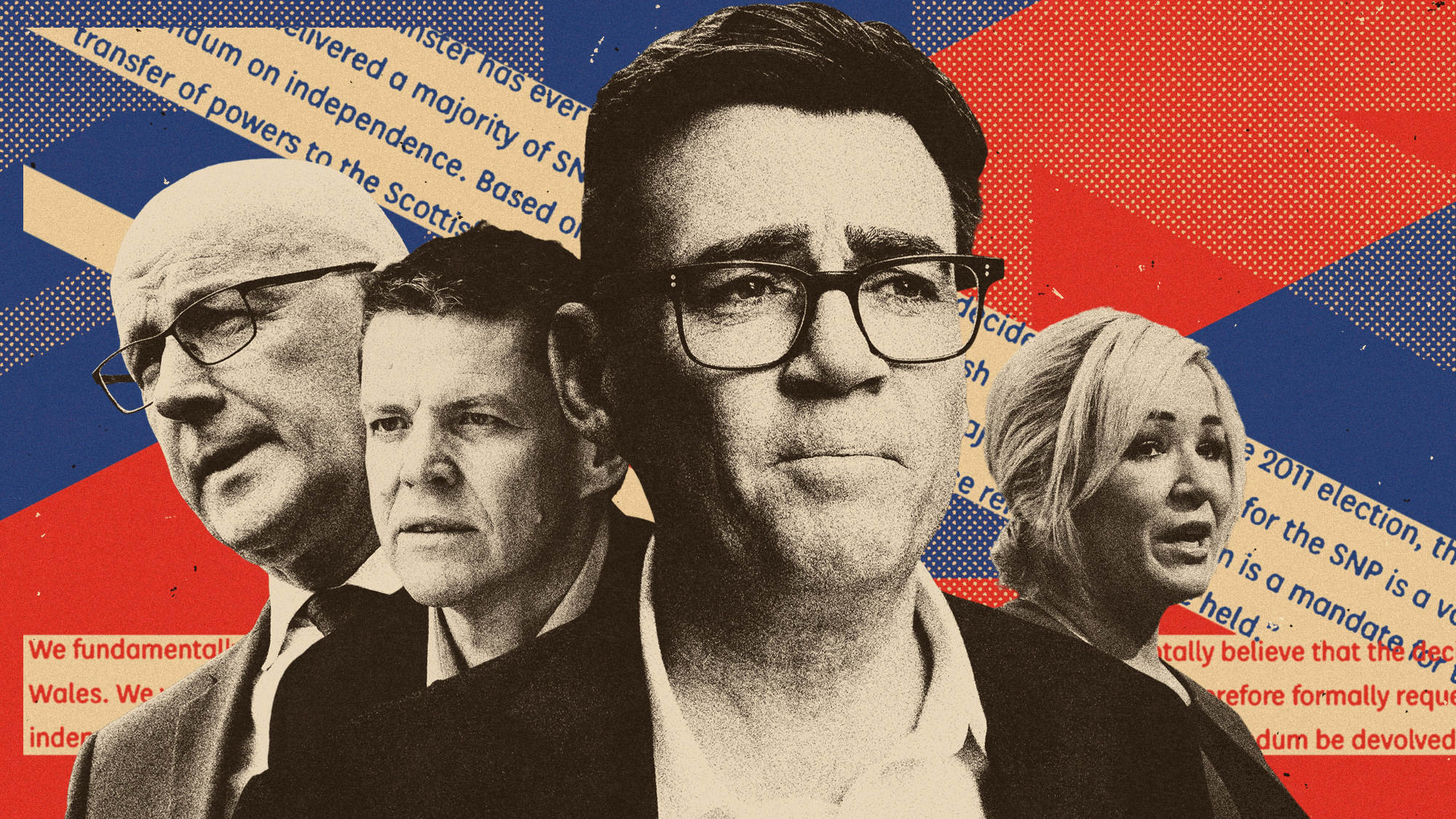
    The first ministers of Scotland, Wales and Northern Ireland met today to affirm their right to seek independence from the UK, with SNP leader John Swinney warning that Andy Burnham “will go down in history as the final prime minister of the United Kingdom”.

    In an “unprecedented summit” in Cardiff, The Telegraph said, Swinney, Plaid Cymru’s Rhun ap Iorwerth and Sinn Féin’s Vice-President Michelle O’Neill signed a memorandum of understanding that said “there could be no clearer sign that Westminster’s time is coming to an end”. 

    What did the commentators say?
    “No Westminster government has the right to block democracy or undermine the principle that our people will decide their own future,” the three leaders declared. The “very policy that powered Burnham’s rise”, said Firstpost, now “seems to have sparked an intense constitutional pushback”. Pointing to his efforts to devolve sweeping financial, transport and administrative powers to local mayors across England, pro-independence leaders in the Celtic nations “argue that Burnham’s vision threatens to reduce historic constituent nations to administrative regions within a centralist English framework”.

    But key differences between the three nations and their clamours for self-determination are evident, said Alex Massie in The Times. “There are persuasive reasons for thinking that the bar to a second plebiscite on an already answered question”, as in Scotland, “must be much higher than that for putting it the first time in another”.

    Then there were Donald Trump’s comments on Saturday, when the US president said he would “love” to see a united Ireland. Although quickly dismissed by No. 10, Trump’s remarks may “potentially change how political actors calculate what can be demanded, defended or negotiated”, said Grace Russo Bullaro on news site La Voce di New York. With the UK “already arguing over who has the right to determine its constitutional future, his finger on the scale can bear consequences”.

    What next?
    Latest polling suggests only around a third of voters in Northern Ireland would back reunification, while a similar percentage in Wales support independence. Support for Scottish independence is stronger, hovering at around half of decided voters. 

    “There seems to always be a troubling aura of delusion and ignorance when it comes to Unionists,” said Steph Brawn in The National. But “whichever way Burnham looks, he should be on edge about a UK that is falling apart around him”.


    THE EXPLAINER

    Swedish elections on a knife-edge

    Preliminary results from Sweden’s general election suggest the centre-left opposition has a three-seat lead over the right-wing ruling bloc that had promised ministerial seats to the far-right. The final result is unlikely to be announced until Wednesday or Thursday, but “weeks of uncertainty” and protracted coalition talks are expected, said the Financial Times.

    Who is competing?
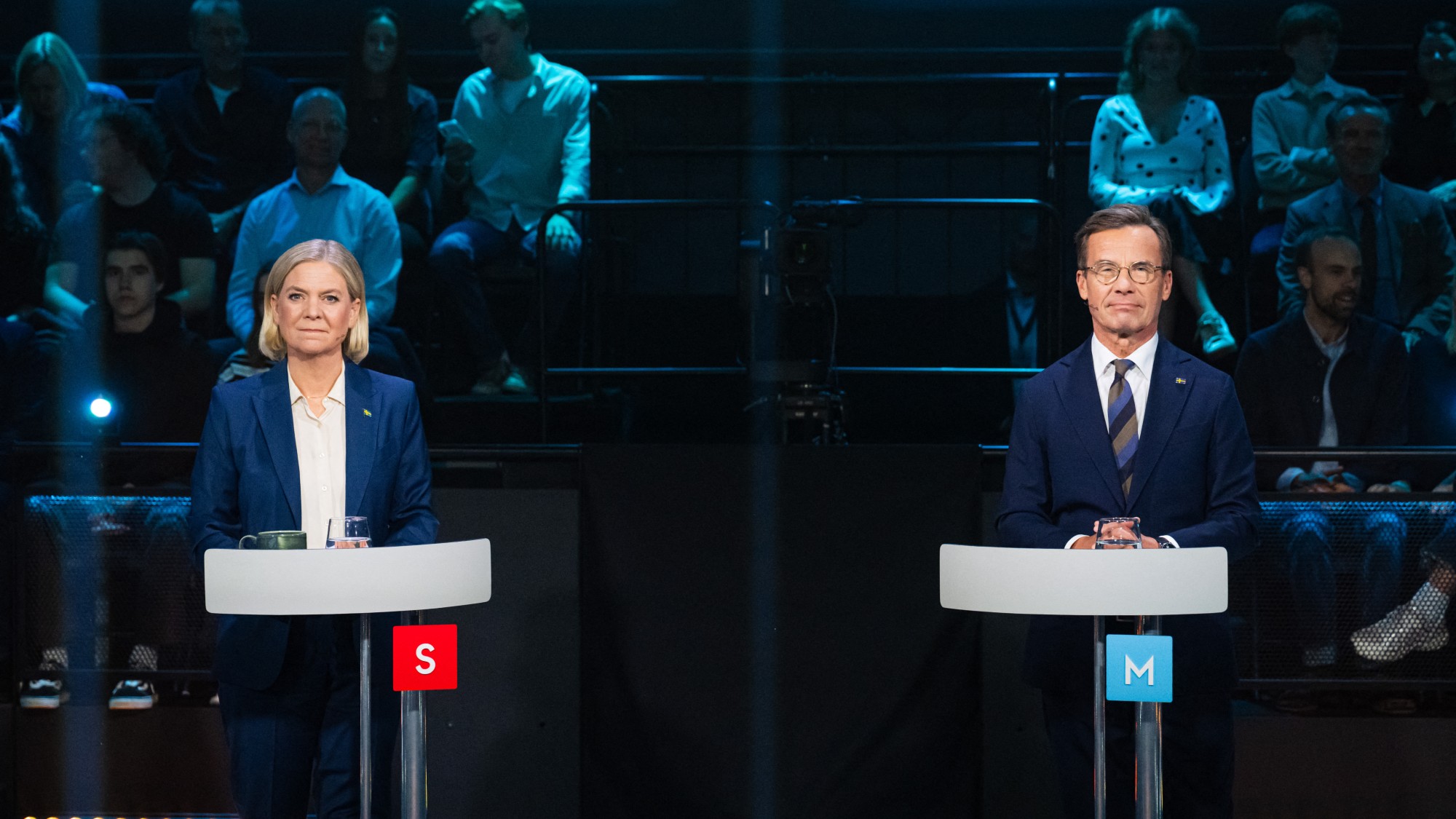
    The country’s centre-right prime minister, Ulf Kristersson, is fighting for re-election on a platform of cutting asylum numbers and reducing gang shootings. His main rival, Magdalena Andersson (pictured above with Kristersson), leader of the centre-left Social Democrats, has been focusing on the economy, the welfare state and suppressing the country’s growing far-right faction.

    Sweden uses a “mandate distribution” voting system, a type of proportional representation that means “coalitions are the norm” and “smaller parties often have outsized influence”, said Politico. With the “razor-thin victory margin” currently projected for the left, “that will be true again this time”.

    Why has this election been so tight?
    The friction between the two main blocs has been growing since the right-wing coalition “broke a long-standing taboo” by partnering with the Sweden Democrats, an anti-immigration party with “neo-Nazi roots”, said The Guardian. With a campaign slogan of “Make Sweden Sweden again”, the party’s policies include banning headscarves and expanding a “repatriation grant” worth SKr350,000 (£27,000) to immigrants who are already Swedish citizens. Kristersson has promised cabinet positions to Sweden Democrats members if the right-wing bloc is re-elected, which has led to an “unusually heated and polarised” election campaign.

    What should we take from the results so far?
    The final result, and the fate of the far-right, will be closely watched elsewhere in other European countries where similar nationalist movements are gaining ground. But if Europe’s centrists were hoping to take lessons from Sweden on how to beat the populist right, these “confusing” results leave the situation “far from clear”, said The Economist. Although Sweden Democrats have suffered their first decline in support since their party’s founding, they won’t be “too unhappy”. Previously ostracised, they have now “attained mainstream acceptance that was once unthinkable”.


    QUOTE OF THE DAY

    “Sydney Sweeney, this is what women in sport look like.”

    British sprinter Amy Hunt sends a message to the US actor, in an interview after running the 200m final in a season’s best 22.10 seconds at the inaugural Ultimate Championship in Budapest. Athletes are accusing Sweeney of sexualising women’s sport in controversial new adverts.


    Poll watch

    Nearly seven in 10 (69%) Brits now have an unfavourable opinion of Nigel Farage, his worst rating in the ten-year history of YouGov’s political favourability tracker. Of 2,099 adults quizzed in the latest poll, only 24% had a favourable opinion of the Reform leader, leaving him with a net favourability rating of -45 – identical to Keir Starmer’s score just before he quit as prime minister.  


    IN THE SPOTLIGHT

    The ‘nauseating’ horror of AI food slop

    A menu promising a “glistening digital cheesesteak or an eerily geometrical” turkey sandwich “evokes little more than horror in those who behold it”, said The New Yorker. Yet a growing number of restaurants are relying on generative AI to create their promotional materials.

    ‘Nightmarish quality’
    Images of food were once “a thing to be drooled over”, highlighting the “sensual, the luscious, the beautiful”, said The New Yorker. But now a “nauseating, nightmarish quality defines AI’s insectified interpretation of human cuisine, as if food were just another surrealist goo to stochastically iterate upon”. These fake images “mock life itself”.

    Such menus may also make a mockery of customers, Adaeze Onejeme, an ad sales worker in Los Angeles, told CNN. “It’s like you don’t even know what you’re going to get” when the actual food arrives, so “is it false advertising”? Despite such concerns, said the broadcaster, the “phenomenon” is spreading worldwide. In Tokyo, adverts show sandwiches that appear to be “made of cobwebs”. In Kuala Lumpur, a bowl of spaghetti marinara “looks like perfectly arranged yarn or strings of Play-Doh”, while images in Berlin include a “plastic-looking quiche with holes”.

    ‘Low quality, laziness’
    These menu images “can signify qualities people generally don’t want to associate with food”, such as “low quality, laziness or, well, slop”, said CNN. Some of them are “alienlike catastrophes”.

    AI images may be cheaper and easier to create, but there’s an “innateness” to how real food looks that “you can feel in your bones”, professional food photographer Emily Hawkes told USA Today. With AI images, “there’s something wrong, and you might not be able to put your finger on it, but you know it when you see it”. That’s why we can’t look away from these pictures, said psychologist Stephanie Sarkis: our brain gets stuck between “approach and avoidance” as it tries to make sense of something that looks almost real but clearly isn’t.


    Good day 🌲

    … for leafy Lewes, as the East Sussex town becomes the first in the country to recognise the rights of trees. The motion, passed by the town council, is “about drawing everybody’s attention to the importance of trees and looking after them”, said Audrey Jarvis, chair of the trees committee at the Friends of Lewes community group. 


    Bad day 🎭

    … for musicals fans, as the Barbican’s revival of “Sunday in the Park with George” is cancelled after stars Ariana Grande and Jonathan Bailey dropped out. It’s the second time that a West End production of the Sondheim show has been indefinitely postponed, after a version starring Jake Gyllenhaal was shelved in 2020 due to Covid.


    PICTURE OF THE DAY

    Think twice

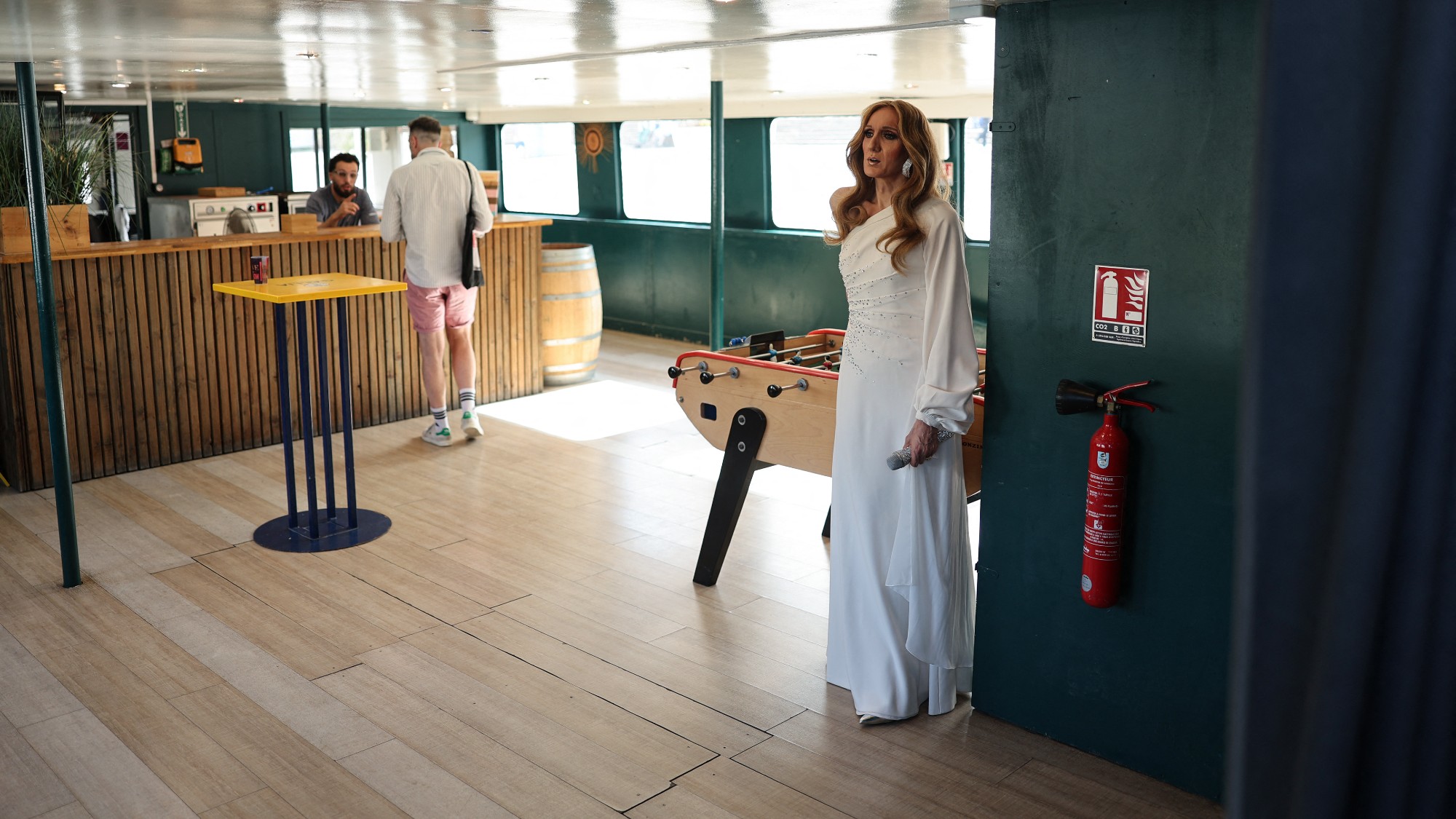
    Tribute artist Fabien Pierrel waits backstage to perform on a Céline Dion tribute cruise on the Seine River, to mark the start of the chart-topper’s Paris concert residency. The French-Canadian singer is returning to the stage after a six-year hiatus due to health problems.

    Anne-Christine Poujoulat / AFP / Getty Images


    Puzzles

    Chain Word

    Try The Week’s daily word challenge in our puzzles and quizzes section, which also includes sudoku and Guess the Number

    Play here


    THE WEEK RECOMMENDS

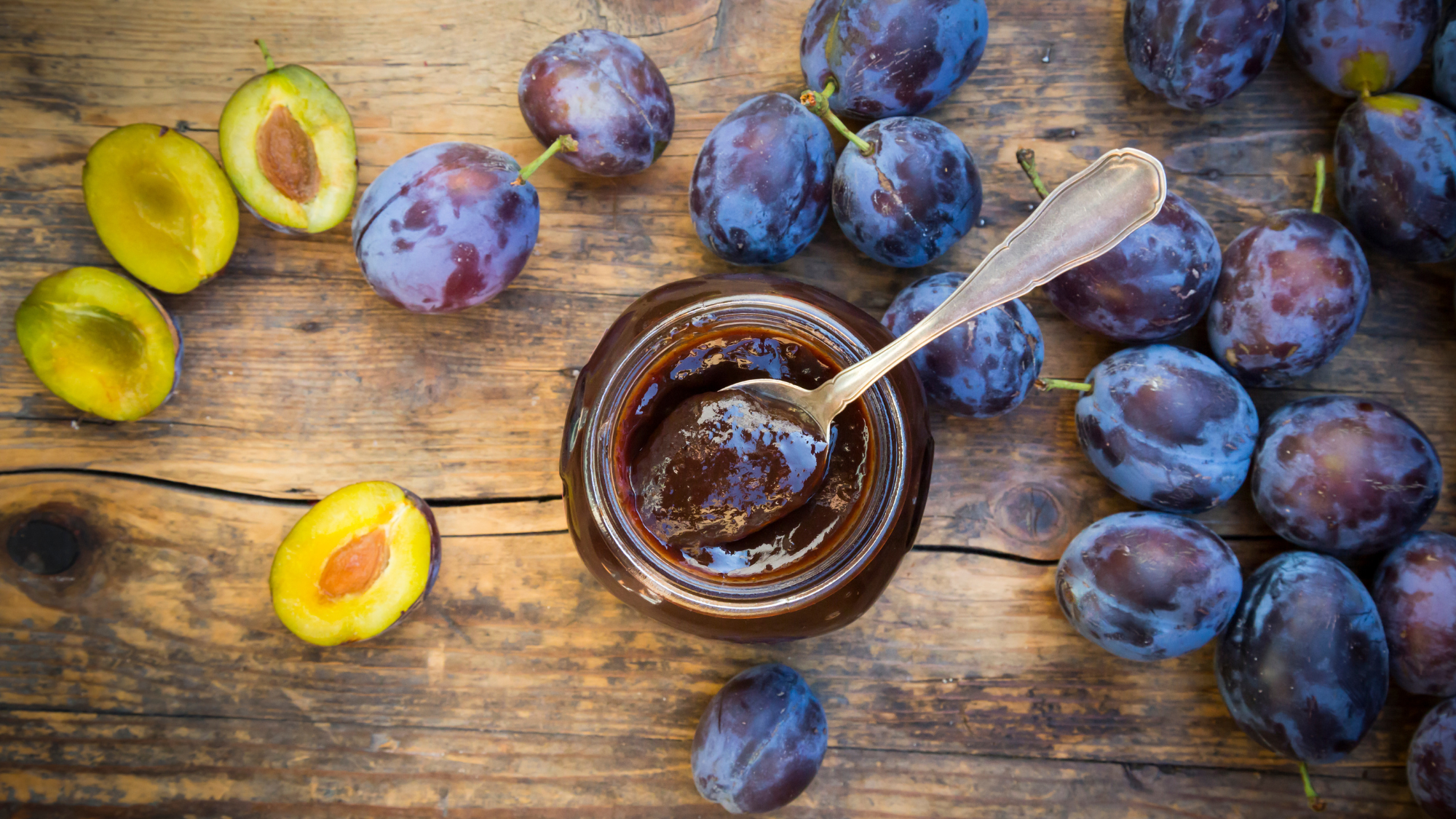
    Sweet, sticky jam season is here – time to get cooking

    The “real preserving season” begins at the “deep, sticky end of summer”, said Itamar Srulovich in The Guardian. “In fact, September may well be the best jam month of all.”

    As the weather cools, there is plenty of produce to turn into jars of sweet spread. Plums offer “near endless possibilities”, and some varieties can “take a surprising amount of spice”, while figs’ “honeyed sweetness” is delicious with a “few pods of cooling cardamom for balance”. Grapes are another good option, but they must be chosen carefully as most of the sweet commercial fruits lack the “funk” and “acidity” needed for a good jam. The fragola variety, with its “intoxicating, wild strawberry flavour”, is a “rare treat”.

    Making jam has an “undeniable romance”, said Jane Black in The Wall Street Journal. Just three ingredients are needed: fruit, sugar and lemon juice. Heat them over the stove and they become “summer in a jar”. “It’s true alchemy.”

    Perfecting the texture and consistency of homemade jam can be tricky, however. Jam-making business owner Daniel Perry suggests using a copper jam pan, which “conducts heat extraordinarily well”, and making jam in small batches to ensure the fruit on the bottom doesn’t burn.


    Statistic of the day

    340: The number of British nationals arrested abroad last year after being recruited as drug mules, according to new government figures. The total has more than quadrupled from just over 80 arrests in 2023, an increase driven by cannabis-related offences in Thailand and other countries in Southeast Asia. 


    instant opinion

    Today’s best commentary

    Britain once led but assisted dying vote is backwards step
    Simon Jenkins in The Times
    The “refusal of the government to steer” the “assisted dying bill into law will be a personal tragedy for thousands of Britons”, writes Simon Jenkins. In other countries, “people can celebrate the conclusion of their lives in the presence of their friends and relatives”. Denying us “this freedom” is “archaic statism, heavily doused in religious prejudice”. The “agony and the indignity of dying in Britain” is a “blot on its image as a progressive nation”.

    The biggest threat to the Last Night of the Proms is not the far-right
    Jessica Duchen in The i Paper
    Instead of the usual “outraged articles” demanding the Last Night of the Proms “be cancelled”, writes Jessica Duchen, “things have been oddly quiet” this year. When “actual Blackshirts” are “stalking British streets”, some “music-lovers in Union Jack waistcoats bobbing up and down to a sea shanty looks mercifully daft”. The main threat to this night of “old-fashioned” patriotism is now its length. By the time “Rule Britannia” started, “we were so knackered that we just wanted to go home and get some kip”.

    I’m 69. Please stop saying that I’m in midlife or middle-aged
    Denise Taylor in The Independent
    “We seem to move from midlife to old age without much language for what comes between,” writes psychologist Denise Taylor. But the “phase from 60 to 80” – which I call “olderhood” – is a “distinct period” that marks a “shift in orientation” from your career being “the organising principle” of your identity to getting “a clearer sense of who you actually are”, and acknowledging that “time is now finite in a way it wasn’t at 40. That’s not decline. It’s focus.”


    word of the day

    Hobnailed

    Footwear fitted with broad-headed nails to prevent wear and slipping. A pair of “battered, hobnailed boots” are among a “trove of everyday objects” unearthed during restoration work at Buckingham Palace, said the BBC. Other items found in nooks and crannies of the royal residence during the £369 million refurbishment include betting slips, a pewter tankard and a newspaper article about the gang behind the 1963 Great Train Robbery. 


    Evening Review was written and edited by Jamie Timson, Irenie Forshaw, Elliott Goat, Will Barker, Chas Newkey-Burden, Steph Jones, Helen Brown and Kari Wilkin, with illustrations by Stephen P. Kelly and Julia Wytrazek.

    Image credits, from top: illustration by Stephen P. Kelly / Getty Images; Jonathan Nackstrand / AFP / Getty Images; illustration by Julia Wytrazek / Getty Images; Anne-Christine Poujoulat / AFP / Getty Images; Getty / Westend 61
     

    Recent editions

    • Morning Report

      Reform defends £72m in donations amid crackdown

    • Sunday Shortlist

      Willem Dafoe’s ‘elegant tale of autumnal regret’

    • Saturday Wrap

      Danny Tommo’s ‘chilling’ protests

    VIEW ALL
    TheWeek
    • About Us
    • Contact Future's experts
    • Terms and Conditions
    • Privacy Policy
    • Cookie Policy
    • Advertise With Us
    • FAQ
    Add as a preferred source on Google Add as a preferred source on Google

    The Week UK is part of Future plc, an international media group and leading digital publisher. Visit our corporate site.

    © Future Publishing Limited Quay House, The Ambury, Bath BA1 1UA. All rights reserved. England and Wales company registration number 2008885.