The Week UK The Week UK
flag of US
US
flag of UK
UK
https://cdn.mos.cms.futurecdn.net/flexiimages/jzblygzdxr1769609154.gif

SUBSCRIBE

Try 6 weeks free

Sign in
  • View Profile
  • Sign out
  • The Explainer
  • Talking Points
  • The Week Recommends
  • Podcasts
  • Newsletters
  • From the Magazine
  • The Week Junior
  • More
    • Politics
    • World News
    • Business
    • Health
    • Science
    • Food & Drink
    • Travel
    • Culture
    • History
    • Personal Finance
    • Puzzles
    • Photos
    • The Blend
    • All Categories
  • Newsletter sign up Newsletter
  • The Week Evening Review
    Tories on the up, French school protests, and a bad impression of Renoir

     
    TODAY’S BIG QUESTION

    Team Kemistry: are the Tories making a comeback?

    The Conservatives have kicked off their conference in Birmingham in buoyant mood. Just two years on from the party’s worst general election result in history, Kemi Badenoch has “a modest spring in her step”, said Politico’s Noah Keate.

    The Tory leader “can point to disarray” in Reform’s ranks, “decent personal ratings” and the establishment of “clear dividing lines with Labour” as “reasons to be cheerful”. But “it’s still a massive road back” for Britain’s “once-dominant” centre-right party.

    What did the commentators say?
    Last year’s conference “marked a low ebb for the Conservatives”; they were “in a fight for relevance and, perhaps, survival”, said Rob Ford, Sky News’ election analyst. A year on, “things are looking up at last”. The public have “warmed to Kemi Badenoch, soured on Nigel Farage”, and the party has hauled itself “back into polling contention”.

    “Reports of the death of the Conservative Party now look premature,” political scientist Tim Bale told Agence France-Presse. Yet despite attempts by the Tories and their allies in the media to “create some momentum”, the party itself is still four points below its disastrous general-election showing of 2024.

    There has been “one clear message” from Badenoch’s public announcements: “that Britain must get off benefits and back to work”, said Robin Ashenden in The Spectator. She had framed this as a moral crusade, saying that a life of work, rather than dependency, is not just “better for society” but “better for the soul”. Badenoch’s lean into Thatcherite “Victorian values”, along with “her customary war-cry of ‘What a lot of nonsense!’ may have increasing voter appeal”.

    With this talk of benefits scroungers and pledges to repeal the Human Rights Act, the party “the country still regards as toxic is determined to double down on its toxicity”, said John Crace in The Guardian. Badenoch seems “desperate to track ever further to the right and abandon” the centre right “to Labour and the Lib Dems”.

    What next?
    With unfavourable economic headwinds likely to limit Andy Burnham’s ambitious reform agenda, there’s now a question Labour strategists “dare not ask”, said Keir Starmer’s former speechwriter Alan Lockey on Arguably: has Kemi Badenoch managed to turn her party round like Keir Starmer did his? “Is she, after two years of patient preparation, finally ready to make her move?”


    THE EXPLAINER

    The school protests in France

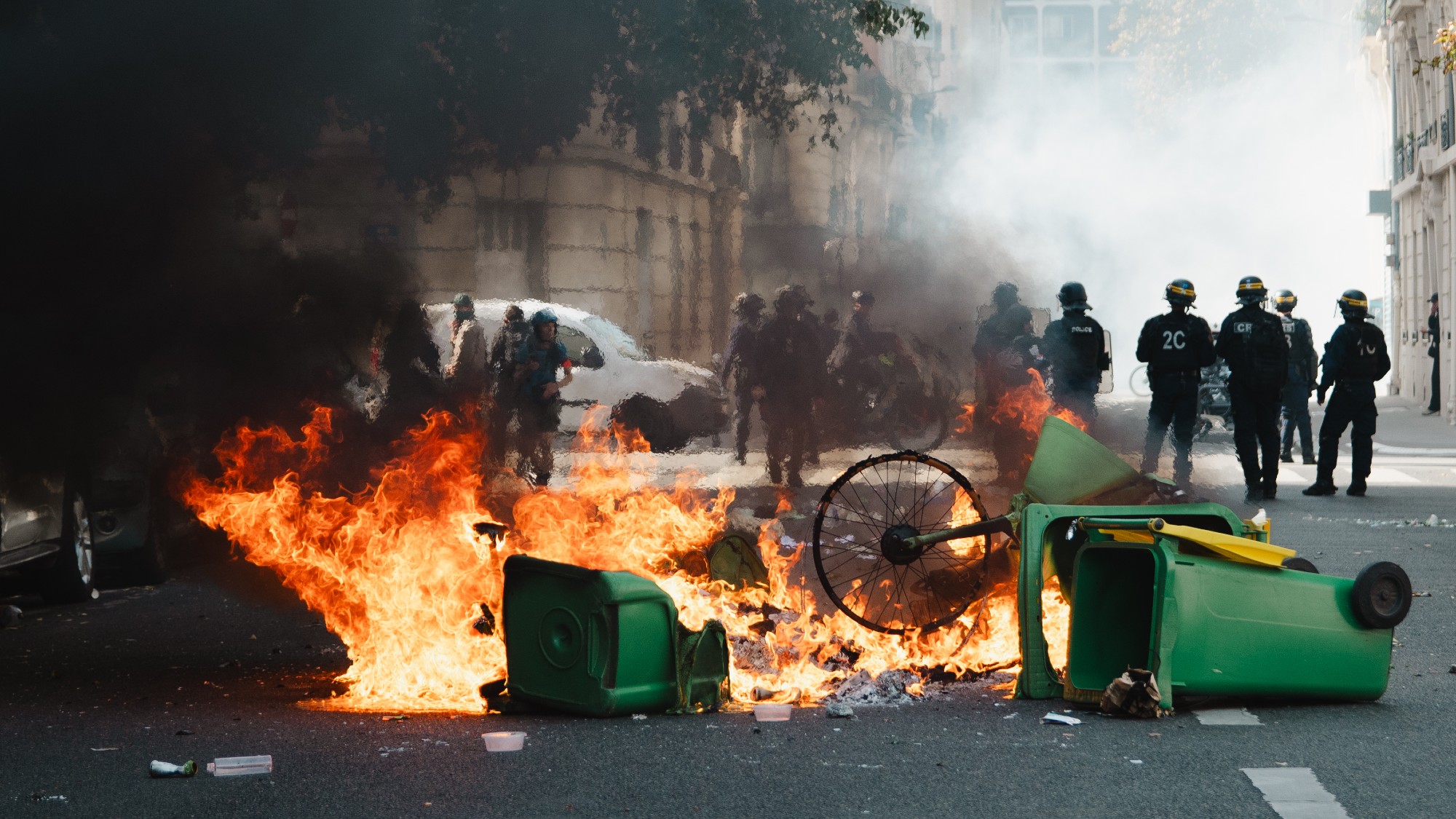
    Ever since the student demonstrations of May 1968, successive French leaders have “run scared of angry French youth”, said the BBC’s Paris correspondent, Hugh Schofield. With the current school protests showing no sign of slowing down, and presidential elections coming up,  there will be shivers running down government spines right now.

    What started as a spontaneous blockade of a high school in a Paris suburb in mid-September quickly turned into violent protests across the country. Up to 500 schools have been closed, and more than 5,000 people have been arrested, 85% of them minors.

    Why has this happened?
    A “main complaint” is a shortage of teachers and support staff, said Time magazine. In the year 2024-25, nearly 10% of teaching hours in public secondary education went untaught, according to data from the education ministry. 

    Students have had to put up with “overcrowded classes of up to 40 children in crumbling buildings”, said The Guardian. “Ceilings partially collapsing during class, leaks, cockroaches and buildings in disrepair” are fairly common experiences. Discontent has also been exacerbated by “unbearable temperatures in classrooms during heatwaves in May and June”.

    How has the government responded?
    On Friday, France’s Justice Minister Gérald Darmanin said on X that he would pursue a “firm” criminal response, and hold parents of minors civilly liable “wherever possible”.

    But the government has also tried to “placate” the rapidly spreading protests, and has “acknowledged some of the students’ grievances”, said The New York Times. Education Minister Édouard Geffray has said he would introduce a new online platform, where students could voice their thoughts for education reform.

    Geffray also told broadcaster France 2 on Thursday evening that the protests, which were “legitimate at the outset”, had been “taken hostage by ultra-left groups”.

    What could happen now?
    Student representatives who met Geffray said their talks “failed to produce the concrete measures they were seeking”, said The Wall Street Journal. Student unions have called for a third day of nationwide protest tomorrow.

    We cannot forget that French presidential elections are “only months away”, said the BBC. These protests, like many youth movements, are “unpredictable and shapeless”, and have “no clear structure” that would allow for negotiation. Because of this, they will have Emmanuel Macron’s team in “cold sweats”.


    QUOTE OF THE DAY

    “An awful lot must have gone wrong for a lab worker to be infected by a broken test tube.”

    Dr Simon Clarke, an associate professor in cellular microbiology at the University of Reading, reacts to the death of a Russian researcher who reportedly dropped a test tube containing the pneumonic plague pathogen at a laboratory in Siberia, triggering worldwide alarm.


    Poll watch

    Cristiano Ronaldo is losing the support of Portugal football fans after his walkout on the national team last week. Nearly half (46%) of the 400 fans polled in a Pitagórica survey for TVI and CNN Portugal believe the superstar should end his international career, with 41% wanting him to continue and 11% indifferent.


    TALKING POINT

    Why is Renoir still so divisive?

    The opening of the National Gallery’s “Renoir and Love” exhibition has triggered record-breaking ticket sales – and a new outbreak of loathing for one of the world’s most famous Impressionists.

    Renoir “gets a hard time from critics – and makers of memes”, said visual-art magazine Apollo. Where others see “joyous, light-flooded paintings”, they see “indifferent compositions, careless brushwork, overly saturated colours and a sentimental gaze”. 

    As ‘soft focus’ as Doris Day
    I grimaced my way around the “Renoir and Love” exhibition – to a soundtrack of “tweeting birds, splashing oars and crickets clicking in the grass”, said The Times’ chief art critic, Laura Freeman. The nudes are “puddingy”, with “clumsy hands” and “vacant expressions”, and Renoir’s “tendency to potboil” makes everything “formulaic” and “stupefying” – like eating slice after slice of French custard tart. 

    Renoir’s paintings can be “bland and mediocre”, often tipping “into the saccharine”, said Artlyst. He was the “chocolate-boxiest” of the Impressionists, with works that seem “painted through a soft-focus lens reminiscent of a Doris Day film”. “I’ve hated his work for decades,” said art critic Eddy Frankel in The Guardian. It’s chintzy and safe, lacking the “hard-edged absolute dedication to angular, prismatic experimentation” of other, better Impressionists.

    ‘Life-affirming stuff’
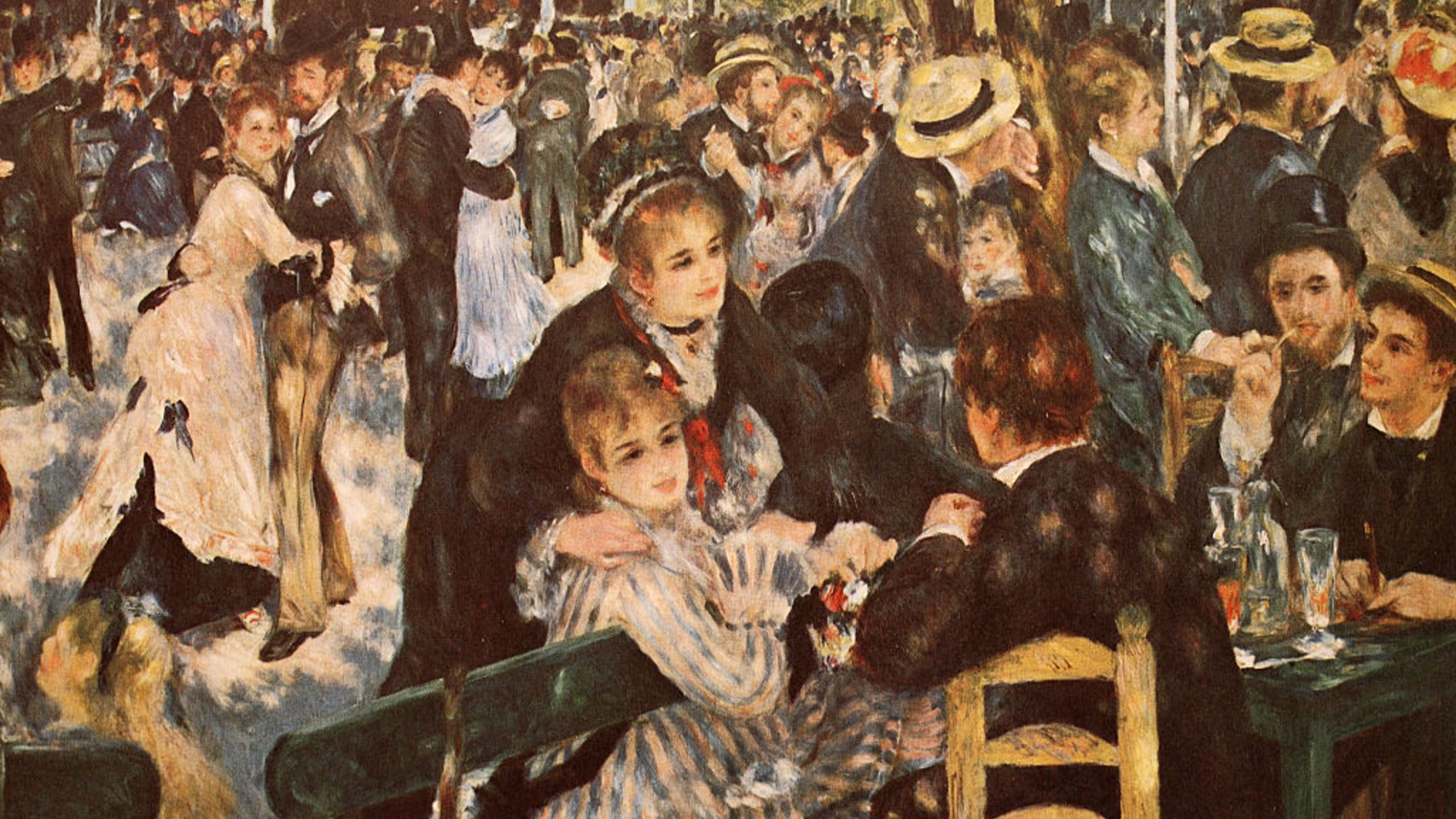
    Yes, Renoir can look “soft touch”, especially when compared with the “tough, ironic realism of Manet”, said art critic and former Turner Prize judge Jonathan Jones in The Guardian. But he was radical in his “enthusiastic embrace” of people enjoying bourgeois French life. “He doesn’t just paint the changing light of the passing moment; he urges us to live in it.” His “Dance at the Moulin de la Galette” (pictured, above), the centrepiece of this exhibition, captures “flirtations, longings and consolations” in a “dappled, mobile dance of golden light and cool shadow”. It’s “as grand as a history painting and as light as a soufflé”.

    His best pictures “are so seductive” that you are “soon swept up and whirling to the artist’s rhythm”, just like the “beaming, waltzing” people he paints, said Alastair Sooke, The Telegraph’s chief art critic. “Happy art doesn’t have to be vapid and dumb”; this is “life-affirming, pulse-quickening, sap-stirring stuff” that challenges the “entrenched notion that art is only great when it deals with darkness and conflict”.


    Good day 🧠

    … for mind expansion, as US scientist Karl Deisseroth and his German colleagues Peter Hegemann and Georg Nagel win this year’s Nobel prize for physiology or medicine. Their work developing optogenetics, techniques for controlling nerve cells with light, “has fundamentally altered our understanding of the brain”, the Nobel committee said.


    Bad day 🇧🇷

    … for Lulismo, as veteran Brazillian leftist Lula looks set to lose to Flávio Bolsonaro in the country’s presidential election. Flavio, eldest son and political successor of far-right former president, Jair Bolsonaro, won the first round of voting on Sunday, and there will now be a run-off between the two on 25 October.


    PICTURE OF THE DAY

    Smoke screen

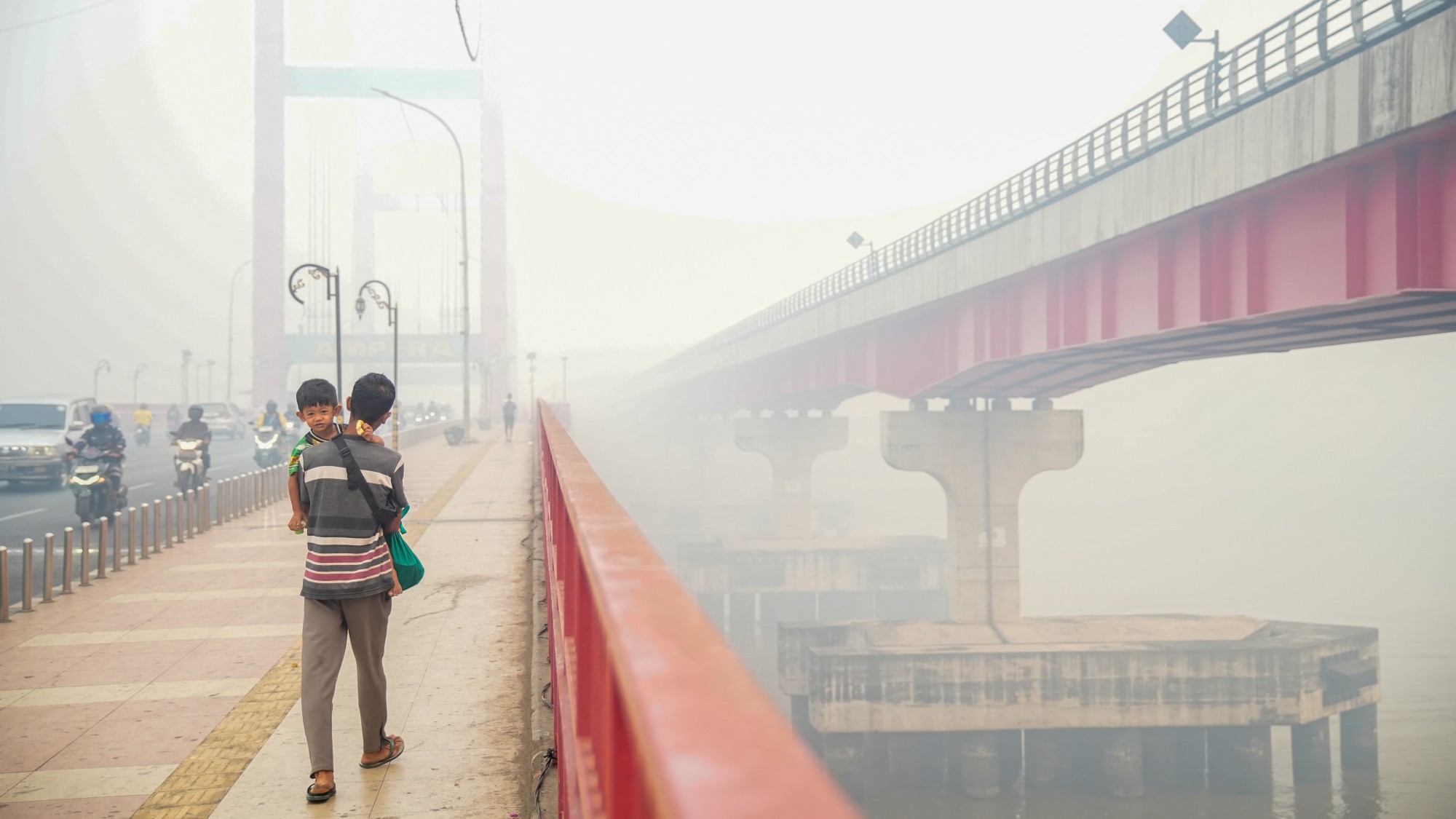
    A man carrying a child walks along the Ampera Bridge in Palembang, South Sumatra, as a toxic haze blankets the sky. For weeks, Indonesia has been battling fires that are burning up vast areas of forest and peatland in the region.

    Al Zulkifli / AFP / Getty Images


    Puzzles

    Chain Word

    Try The Week’s daily word challenge in our puzzles and quizzes section, which also includes sudoku and Guess the Number

    Play here


    THE WEEK RECOMMENDS

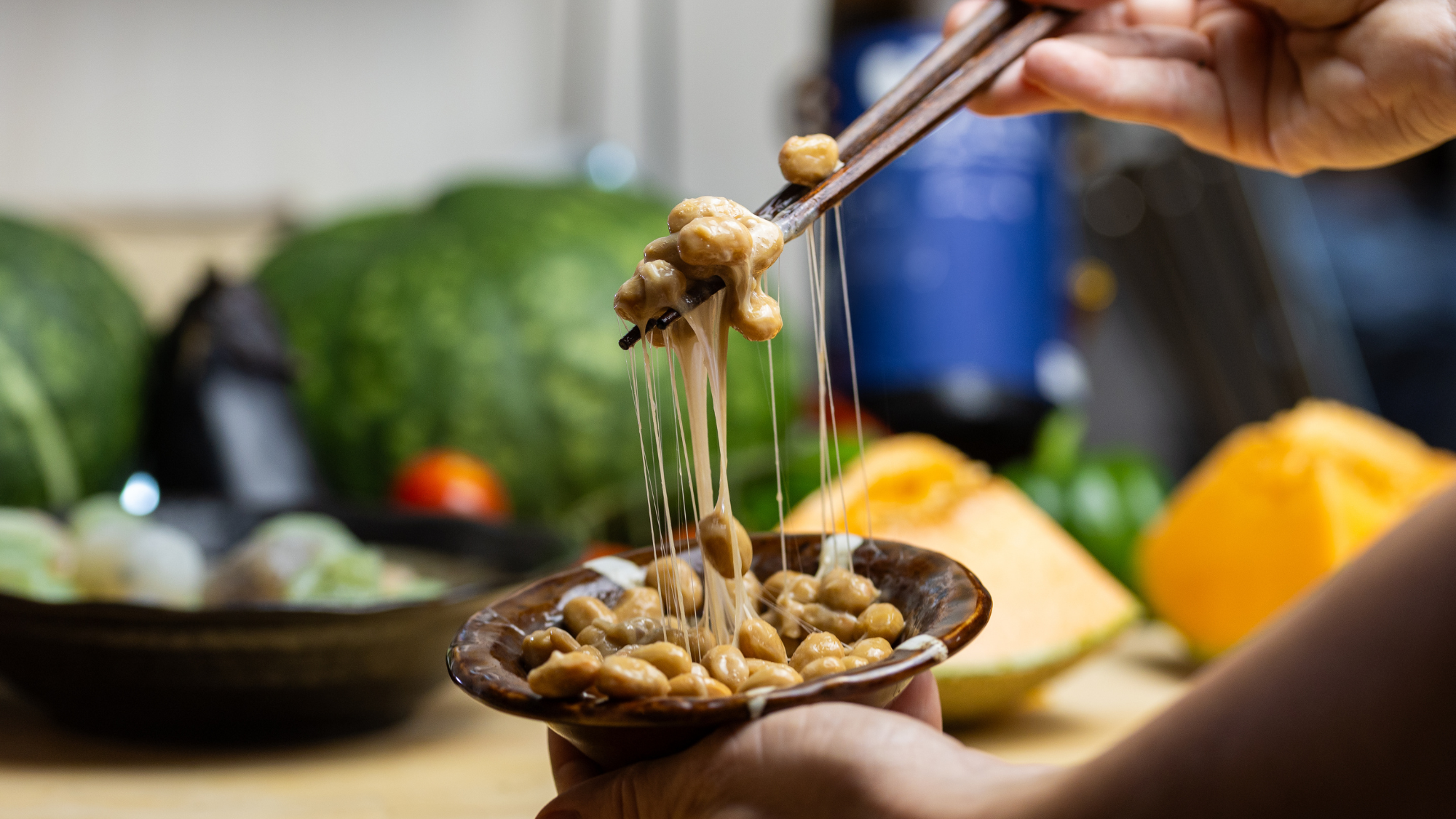
    Natto: the slimy, polarising new superfood 

    “It is smelly, slimy and contains bacteria,” said Justin McCurry in The Guardian. But, after centuries of being eaten only by Japanese people with “nerves of steel”, natto is popping up in health shops around the world as a superfood to “rival kimchi, kombucha and kefir”.

    It’s made of fermented soya beans, sometimes chopped “hikiwari-style”, and looks like it’s “held together by strands of mucus”. The beans – which smell like “particularly ripe Stilton cheese” – are extremely versatile: they can be eaten alone or topped with “mustard, shredded onion, wasabi and a splash of dashi”.

    Natto is certainly “polarising”, said Erika Hobart on BBC Travel. Some people think it “tastes revolting” but push through because of the benefits. The Japanese have long believed that consumption of the ancient dish, packed with protein, fibre and vitamin K, is linked to “improved blood flow and reduced risk of stroke”. Men and women who eat fermented foods like natto every day may reduce “their risk of dying from a stroke or heart attack by 10%”, according to a long-term Japanese study published in the British Medical Journal in 2020. 

    If the texture puts you off, try whisking it into “submission” by using chopsticks in “repeated circular motions”, said McCurry in The Guardian. “Natto novices” could also try mixing the beans with chilli oil to make them more palatable, or even using them “as a topping for fish and chips”.


    Statistic of the day

    5: The number of elections Spain will have had in the past 10 years after the country’s prime minister, Pedro Sánchez, announced a snap general election this morning. The vote on 29 November is likely to be dominated by growing anger over the country’s housing crisis.


    instant opinion

    Today’s best commentary

    Putin’s escalating bombing campaign won’t break Ukrainians’ resolve. History shows that it’s doomed to fail
    Rajan Menon in The Guardian
    Russia’s “massive increase” in air strikes on Ukrainian cities is intended to “make life so unbearable” that Kyiv caves in to Vladimir Putin’s “unfulfilled annexationist ambitions”, writes international relations professor Rajan Menon. But “the historical record shows that bombing campaigns don’t crush morale; they strengthen it”. And Putin “is under pressure” himself, with a “military manpower shortage” and an economy damaged by war. His “drones and missiles won’t force Ukraine to accept peace on his terms – even under the stress of winter”.

    AI is adding yet another layer to call centre hell
    Sathnam Sanghera in The Times
    It’s “becoming difficult” to email or text without robots “offering to take over”, writes Sathnam Sanghera. A new Meta app can also book travel and even call customer service, “wait on hold and only ring your phone when a real human is finally on the line”. Sadly, it’s “also sending buyers” to “collect items” that “are not available”, making “disembodied calls to small businesses” and “causing other kinds of chaos”. AI is “going to destroy everything”, yet “it still can’t read” a PDF.

    The true, decent British Right must be like Jacob Rees-Mogg, not Tucker Carlson
    Tim Stanley in The Telegraph
    “Please watch” the video debate between former Tory MP Jacob Rees-Mogg and right-wing US commentator Tucker Carlson, writes Tim Stanley. It “crystallises” how, “by emphasising terror and fury”, the US right-wing has “become the temperamental antithesis” of “calm, sentimental, reasonable” conservatism. It’s also clear that “Tucker does not understand” that the Second World War “impoverished us, yes, but it also united and redefined us”. That’s why we favour common security” with Europe – “not out of wokeness but from bitter experience”.


    word of the day

    Bogong

    An Australian moth that has seen a dramatic resurgence this year. Drought, insecticides, artificial lighting and loss of habitat have recently reduced the Bogong moth population. But this spring, they’re back in droves. There have been tears and happy dances at the sight of them, conservation biologist Marissa Parrott told The New York Times. “My cheeks hurt because I’ve been smiling so much,” she said.


    Evening Review was written and edited by Jamie Timson, Will Barker, Irenie Forshaw, Elliott Goat, Chas Newkey-Burden, Adrienne Wyper, Helen Brown and Kari Wilkin, with illustrations from Stephen P. Kelly.

    Image credits, from top: illustration by Stephen P. Kelly / Getty Images; Giulia Morici / NurPhoto / Getty Images; Bildagentur-online / Universal Images Group / Getty Images; Al Zulkifli / AFP / Getty Images; petesphotography / Getty Images
     

    Recent editions

    • Morning Report

      US pulls bombers from RAF Fairford

    • Sunday Shortlist

      Sky’s ‘delicious’ new divorce drama

    • Saturday Wrap

      Germany’s ‘zombie chancellor’

    VIEW ALL
    TheWeek
    • About Us
    • Contact Future's experts
    • Terms and Conditions
    • Privacy Policy
    • Cookie Policy
    • Advertise With Us
    • FAQ
    Add as a preferred source on Google Add as a preferred source on Google

    The Week UK is part of Future plc, an international media group and leading digital publisher. Visit our corporate site.

    © Future Publishing Limited Quay House, The Ambury, Bath BA1 1UA. All rights reserved. England and Wales company registration number 2008885.