The Week UK The Week UK
flag of US
US
flag of UK
UK
https://cdn.mos.cms.futurecdn.net/flexiimages/jzblygzdxr1769609154.gif

SUBSCRIBE

Try 6 weeks free

Sign in
  • View Profile
  • Sign out
  • The Explainer
  • Talking Points
  • The Week Recommends
  • Podcasts
  • Newsletters
  • From the Magazine
  • The Week Junior
  • More
    • Politics
    • World News
    • Business
    • Health
    • Science
    • Food & Drink
    • Travel
    • Culture
    • History
    • Personal Finance
    • Puzzles
    • Photos
    • The Blend
    • All Categories
  • Newsletter sign up Newsletter
  • The Week Evening Review
    Andrew’s ‘calculated gamble’, the Greens’ ‘Zionism is racism’ policy, and the plague

     
    TODAY’S BIG QUESTION

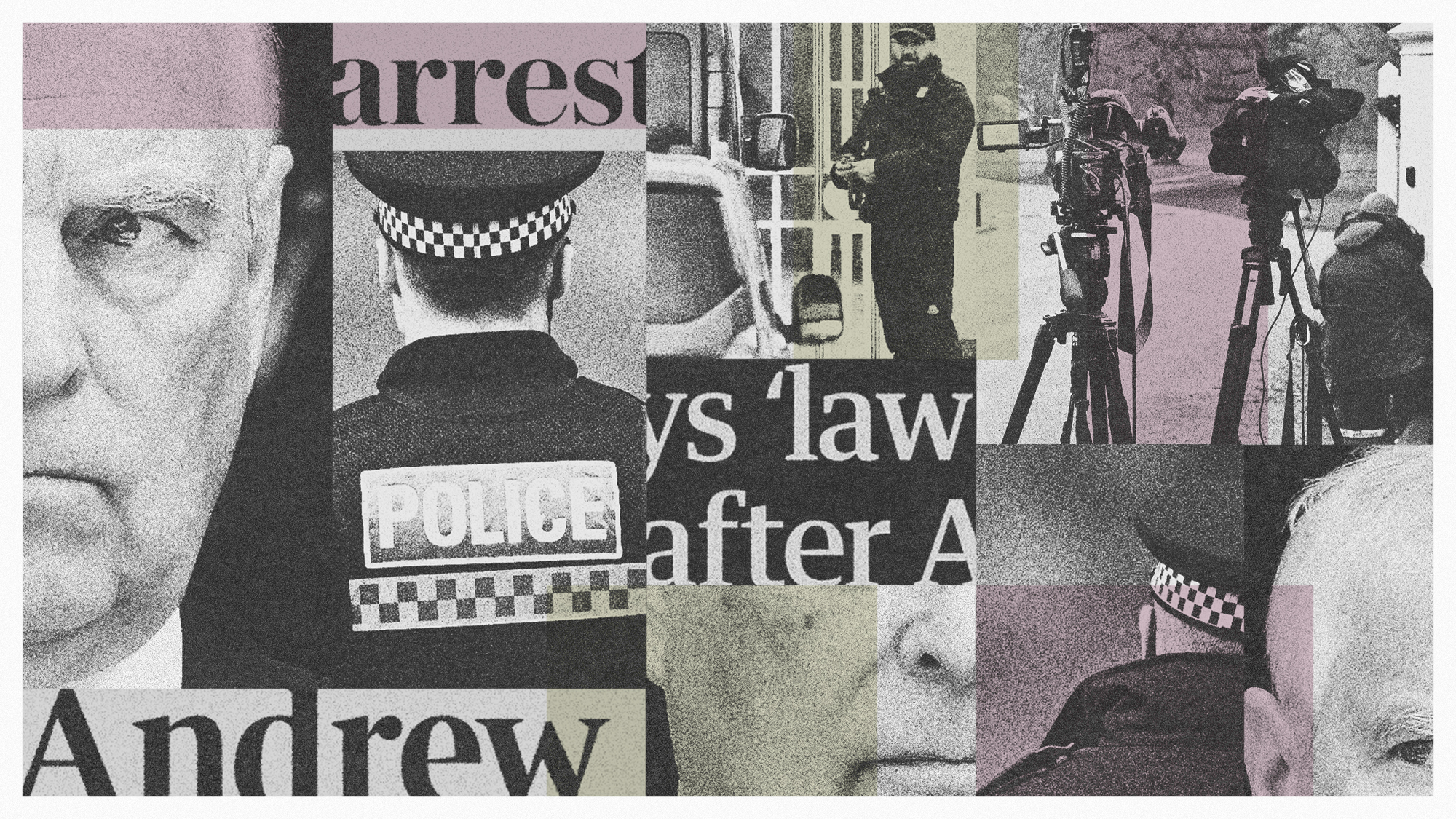
    Why is Andrew Mountbatten-Windsor suing the police?

    Andrew Mountbatten-Windsor has launched a legal action against Thames Valley Police over search warrants issued for raids on his homes at the Sandringham Estate and Windsor’s Royal Lodge in February. An initial judicial hearing will take place in private on Thursday, though it is not known whether the former prince will attend.

    This is the “first time a member of the royal family has challenged the lawfulness of criminal actions against them since Charles I in 1649”, said The Telegraph’s royal editor Hannah Furness. “And we all know how that went.”

    What did the commentators say?
    The review is the “last roll of the dice” to rehabilitate Mountbatten-Windsor’s image, said Furness. He was arrested on suspicion of misconduct in public office, before being released without charge. The investigation remains ongoing, and he denies all wrongdoing. Winning his newly launched legal action would at least “put the idea of his innocence, or injustice, back in the public imagination”. Yet there is only one way to fully restore his image: by “actually clearing his name”. So “no loopholes, no PR – just the truth in the eyes of the law”.

    An “unusual” form of “gamesmanship” is taking place, former senior detective Martyn Underhill told The Times. “In about 50 years in policing, I’ve never known legal action against a warrant”, because the threshold required to obtain them is “really quite low”. This looks more like an “effort to try and change the dynamic and narrative, to show he’s fighting back”.

    Mountbatten-Windsor’s “calculated gamble” could destabilise wider accusations made against him, said Andrew Tillett in the Australian Financial Review. He’s lost almost everything, and challenging the police “won’t get that back”. But with “customary arrogance”, he thinks he can “ease some of the shackles on his life in limbo”.

    What next?
    The former prince will have to self-fund the proceedings, said The Times. His “counterattack” was made “seemingly without the King’s knowledge”, and Charles has “made it clear” that his brother’s private stipend – “understood to be in excess of £1 million a year” – “should not be used to fund the judicial review”.

    Even if the police are deemed to have acted unlawfully, it is unlikely to “derail the criminal investigation”, solicitor John Hagan told The i Paper.


    TALKING POINT

    ‘Zionism is racism’: the Greens’ ‘divisive’ new policy

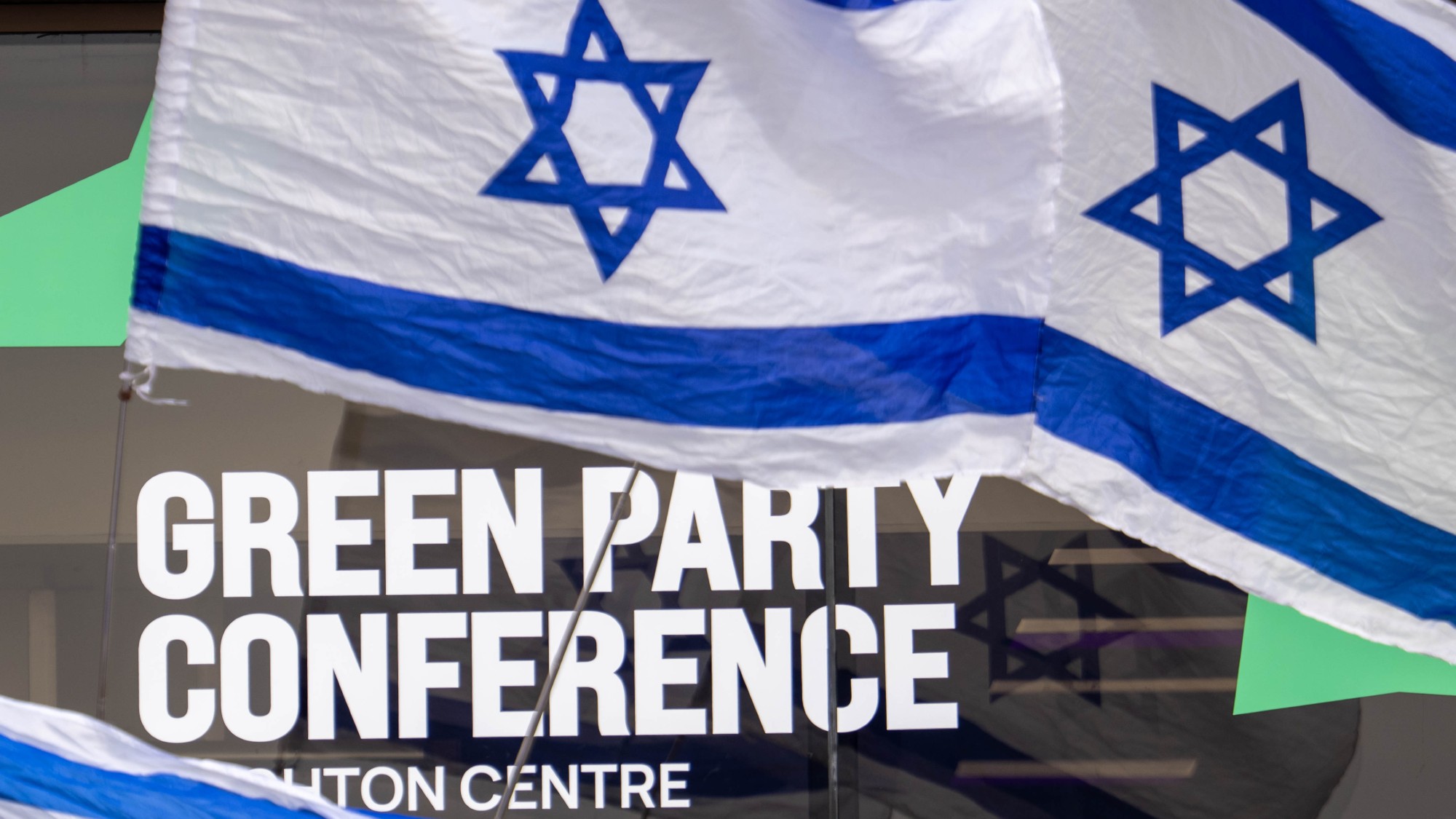
    The Greens’ conference vote to treat Zionism “as any other form of racism” has caused turmoil within the party, and been roundly condemned as an attack on the Jewish community in Britain.

    Two attempts to water down the motion, both backed by leader Zack Polanski, failed. Polanski, who is Jewish, has since been banned from Israel, and the country’s Foreign Ministry has accused the Greens of legitimising “the elimination” of Israel “through armed struggle”. The UK’s chief rabbi, Ephraim Mirvis, also condemned what he described as “poisonous antisemitism” that is “a threat to British Jews and to Britain”. 

    ‘Grim transformation’
    There is now a “genuine fear” among some of the Jewish members of Polanski’s party, said The Guardian. “This radical turn in official Green Party policy”, said The Times’ editorial board, “underscores the grim transformation that has taken place” under his leadership. It is veering “unnervingly close to open hostility towards the people of Israel and to Jewish interests”.

    Zionism is the simple belief “in a Jewish national home in some portion of historic Palestine”, said Jonathan Freedland in The Guardian. Research shows that a large majority of British Jews identify as Zionist, as does “almost every synagogue, or synagogue movement, in Britain and indeed the world”. This vote betrays a “deep ignorance of what the word Zionism means” and “a wilful misunderstanding of Jews and Judaism”.

    ‘Strategic mistake’
    “To blame all Israelis – all Zionists, indeed – for atrocities against Palestinians and to seek to punish them as a group is unjust,” said The Economist’s editorial board. The Greens’ new policy goes so far as to endorse “the destruction of Israel”, to be replaced by a Palestinian state “possibly run by the murderers of Hamas”. This is a “damning moment for a political party with pretensions to power”. Polanski “needs to grasp that his movement has been taken over by zealots” and lead an effort to regain control.

    A “sizeable group” within the party view the vote – which passed by 1,022 votes to 813 – as a “strategic mistake” that will both “alienate potential voters” and “be the only thing the party is asked about” for months to come, said Meghan Kenyon in The New Statesman. Former MP and party leader Caroline Lucas spoke against the “divisive” motion, condemning it as an “over-simplification” of complex issues.


    QUOTE OF THE DAY

    “Io sono Giorgia Meloni.”

    A recorded message, meaning “I am Giorgia Meloni”, sent by the Italian prime minister to the EU Intellectual Property Office in a bid to trademark her voice. The right-wing leader is reportedly worried about AI-generated deepfakes ahead of Italy’s general elections next year.


    Poll watch

    Hispanic voters are abandoning Donald Trump, according to new Reuters/Ipsos polling. The president’s approval rating among Hispanic Americans, who helped to vote him into the White House in 2024, has fallen to a new low of 24%. His overall approval rating in the survey of 4,506 adults remained at 32%, unchanged from September.


    THE EXPLAINER

    The Russian pneumonic plague case

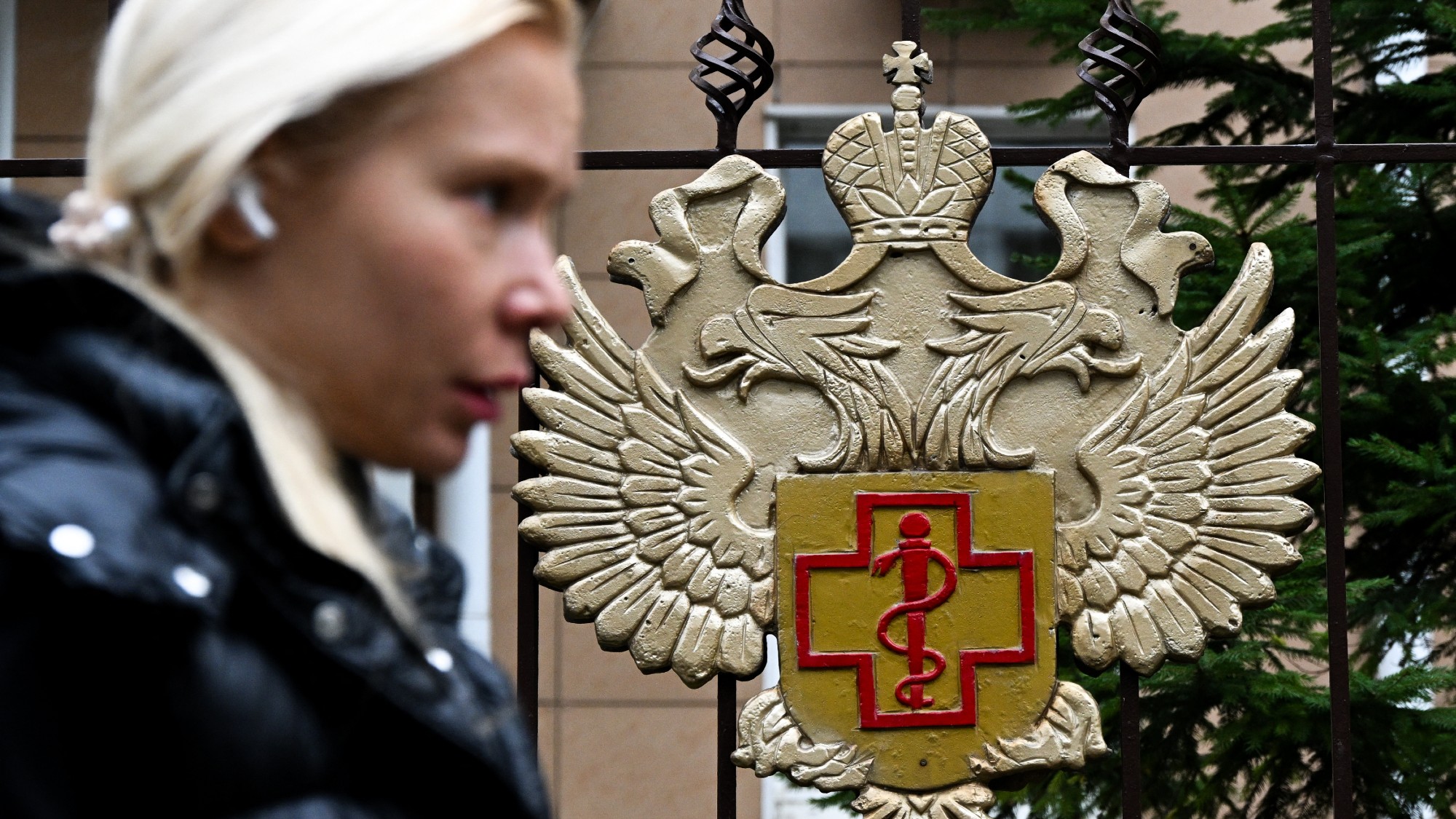
    The US is looking “very strongly” into a suspected plague case following the death of a researcher at a Russian lab, Donald Trump told reporters yesterday. Darya Shipilova, 28, who worked at the Irkutsk Anti-Plague Research Institute of Siberia and the Far East, died on Friday, two days after falling ill following reported exposure to pneumonic plague bacteria. Russia’s public health agency, Rospotrebnadzor, said that her diagnosis was pneumonia of “unknown” origin.

    What do we know so far?
    Exactly how Shipilova became unwell is unclear. Independent local media outlet Lyudi Baikala suggested that she may have been infected after accidentally breaking a test tube containing pneumonic plague bacteria on 25 September. This has not been confirmed by Russian authorities. Rospotrebnadzor said that expanded tests of samples from the patient found no microorganisms associated with her work. Other reports suggest she contracted the disease on a field trip to a region where plague occurs naturally among wild rodents.

    The uncertainty has been compounded by conflicting messages from local politicians, and relative silence from Moscow. Alexey Tsydenov, governor of the neighbouring Buryatia region, initially said on social media that Baikala had died of plague, before editing his post to add “possibly”.

    Although Rospotrebnadzor has said the “sanitary and epidemiological” situation in the area is stable, Radio Free Europe/Radio Liberty reported on Monday that several hospitals in Irkutsk had been placed under quarantine. The Lyudi Baikala outlet reported that nearly 200 contacts of Shipilova were under observation.

    How dangerous is pneumonic plague?
    Plague is caused by the bacterium Yersinia pestis, and pneumonic plague is the most virulent form of the disease, with an incubation period as short as 24 hours. It is especially contagious because it “can trigger severe epidemics through person-to-person transmission via respiratory particles”, said the World Health Organization.

    Symptoms include respiratory symptoms such as shortness of breath and coughing, often with blood-tainted mucus. Common antibiotics can effectively combat the disease provided they are administered early enough. If left untreated, pneumonic plague can prove fatal within 18 to 24 hours. This makes any outbreak “potentially very dangerous”, said The Times. But “it is important to distinguish the severity of the disease for an individual person, especially if untreated, from its ability to spread quickly”.


    Good day 🐾

    … for tiny dogs, after Mexico’s National Guard recruited Comando the chihuahua as a mascot and search-and-rescue worker. The 7kg pup, the smallest canine on the force, has been kitted out with miniature goggles, boots, a tactical vest, a helmet and a head-mounted camera.  


    Bad day 🎾

    … for Daniil Medvedev, who’s been disqualified from the China Open after hitting a ball into a spectator’s face during his semi-final against Novak Djokovic. The Russian tennis star has to forfeit his prize money and ranking points from the tournament in Beijing, but told reporters it was “100% an accident” and he was “terribly sorry” about the injured man, who was taken to hospital. 


    PICTURE OF THE DAY

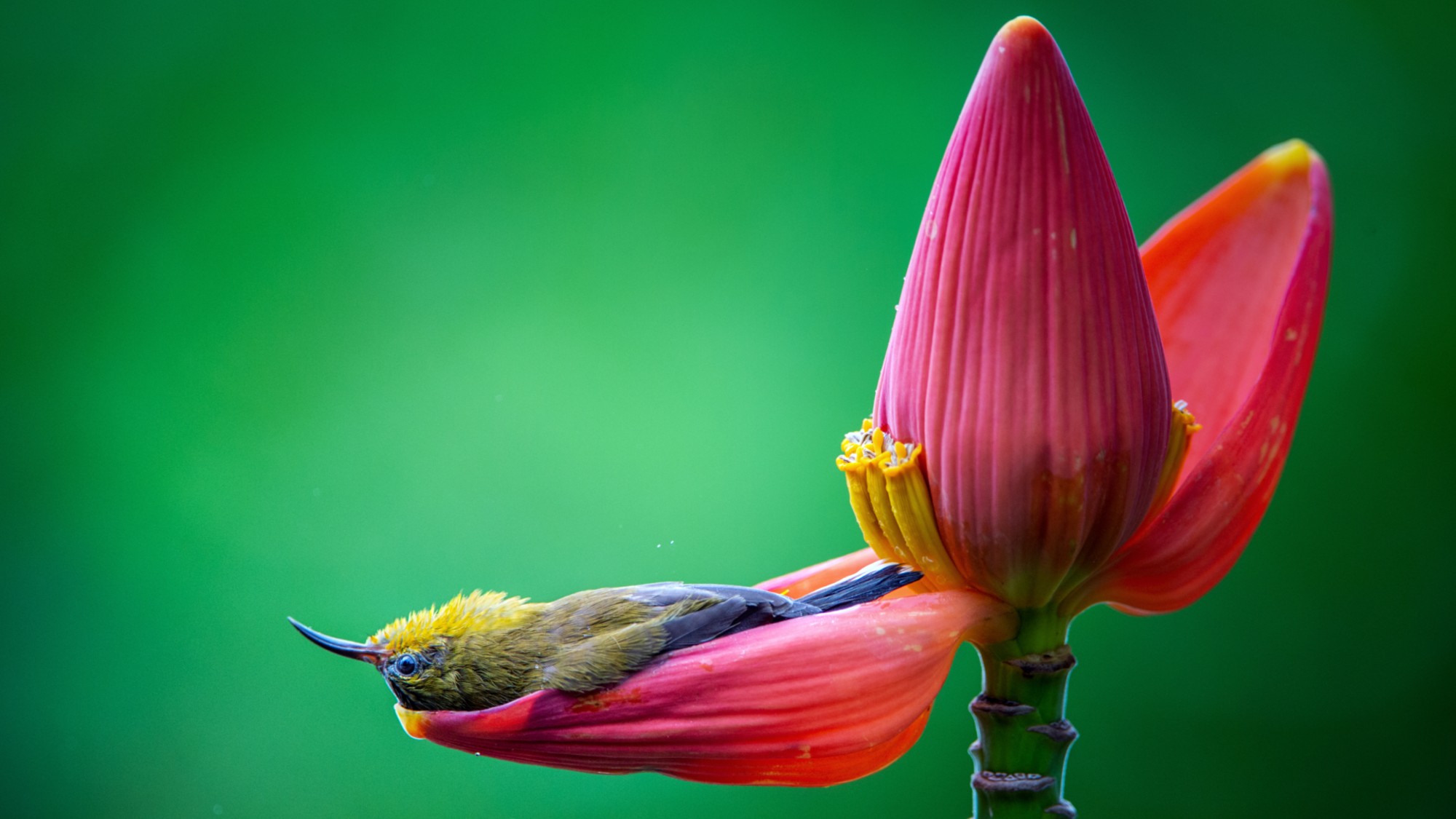
    Forest spa

    A tiny sunbird cools off in water pooled in a banana blossom petal. The photograph, by Vietnam’s Thong Duy Vu, has been shortlisted from more than 10,000 entries for this year’s Nikon Comedy Wildlife Awards.

    Thong Duy Vu / Nikon Comedy Wildlife Awards


    Puzzles

    Chain Word

    Try The Week’s daily word challenge in our puzzles and quizzes section, which also includes sudoku and Guess the Number

    Play here


    THE WEEK RECOMMENDS

    On the hunt for Chartreuse in France

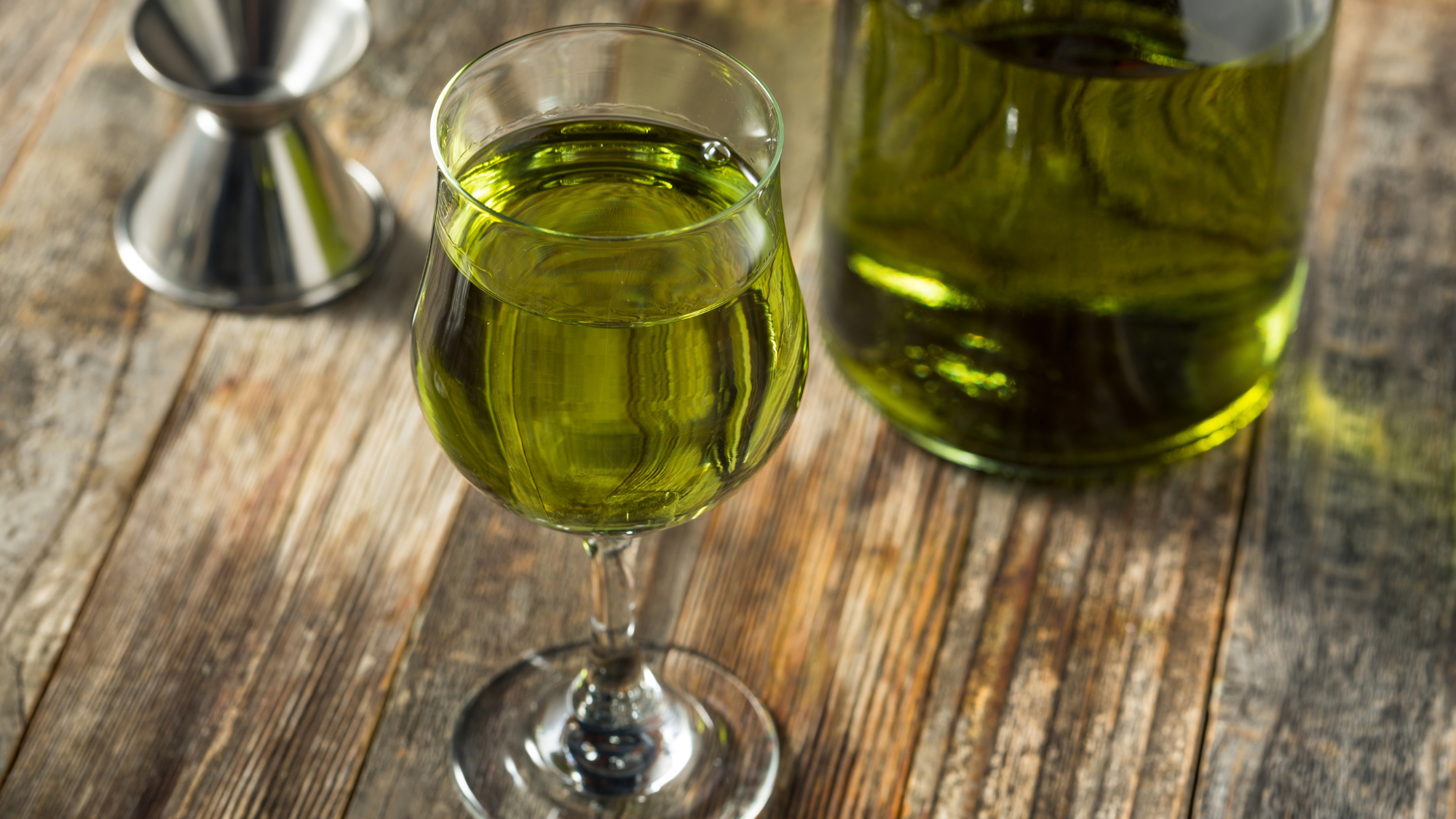
    More and more Parisians have been “reaching for a glass of Chartreuse” in recent years, said Morwenna Ferrier in The Guardian. But the “intensely green” herbal liqueur isn’t always easy to find.

    Chartreuse dates back to 1605, when Carthusian monks were “entrusted with the recipe” by Duke François Annibal d’Estrées. Containing 130 ingredients including plants, barks and spices, the original recipe for the so-called “elixir of long life” took the monks “over a century to decipher”. Eventually, they settled on what became the base of today’s Chartreuse – a secret recipe known by only three monks. It’s always been “pricey”, but it got even more so after 2021, when the Carthusian monks “suddenly announced plans to cap production” to devote themselves to prayer, sparking a global shortage.

    The elusive liqueur is still available in more “ambitiously stocked” bars, said Ferrier. At Combat, an “edgy-cool” establishment on the French capital’s Rue de Belleville, Chartreuse is served cold in a “crystal-cut sipping glass”, or mixed with gin, lime and a maraschino cherry in a cocktail, The Last Word.

    Les Cave des Papilles, Le Saint Sebastien and Cave Pur Jus are other spots in Paris where you can find the “electric-green liqueur”, said Joel Hart in Bloomberg. Chartreuse drinkers are a “motley crew” – you’ll see them everywhere from luxury hotels to “low-key cave à mangers”.

    Beyond the capital, Les Fêtes de la Chartreuse takes place in the Auvergne-Rhône-Alpes region of France every May. The festival is a “triple celebration”: of the liqueur itself, the “verdant mountain range” after which it is named, and the “area’s natural bounty at the height of spring”, said Matt Ortile in Condé Nast Traveler.


    Statistic of the day

    £14,300: The average value of each fraudulent insurance claim last year, according to new data from industry trade body The ABI – the second-highest on record. Scammers who claimed a total £1.34 billion in 2025 included one jailed after lying about stolen Lego, while another staged a series of car crashes. 


    instant opinion

    Today’s best commentary

    Badenoch is trying to match Farage step for step – but it’s a dance of death for the Tories
    Polly Toynbee in The Guardian
    The more Kemi Badenoch “woos Reform voters” in constituencies the Tories will never win back, “the more she repels home counties moderates”, writes Polly Toynbee. She’s competing “punch for punch with Nigel Farage” to promise the “lowest taxes, smallest state, toughest stance on migrants” and “harshest welfare cuts”. But to be even “plausibly electable”, her party must fight Faragism, not become “a carbon copy of it”. “If Badenoch is not for turning”, the Tories “will need to turn her out”.

    The politics of losing sleep
    Sarah O’Connor in the Financial Times
    “There is still a class divide when it comes to work that tramples over your body clock,” writes Sarah O’Connor. Night workers tend to be less educated, and having to sleep “when their bodies are primed to be awake” has “consequences for blood pressure and the immune system”. Companies are experimenting with robot-only night shifts, “setting aside those orders that require human assistance” until morning. “Such a transition would be economically challenging for workers” currently paid night-shift premiums “but could have huge benefits” for their health.

    In defence of tattoos
    Julie Burchill in The Spectator
    I used to think an “inking signifies a person who is thick and useless“, writes Julie Burchill. But I’ve shed my prejudice after “prolonged interaction” with so many “tattooed brethren” in the NHS – nurses who have been looking after me, since I became disabled, with “overwhelming efficiency and gentleness”. Besides, tattoos are “so accepted” now; when even David Dimbleby has a scorpion inked on his back, it “would be folly” to keep “judging anyone else for having one”.


    word of the day

    Glottophobia

    Linguistic discrimination, which Brazilian speech therapists claim to have suffered while trying to find work in Portugal. According to the recently established Brazilian Speech Therapists Association in Portugal, “barely any” have been granted a licence to practice speech therapy there in recent years, said The Guardian, and they blame “prejudice still embedded into Portuguese society against the language variant of its former colony”. 


    Evening Review was written and edited by Hollie Clemence, Rebecca Messina, Will Barker, Chas Newkey-Burden, Irenie Forshaw, Adrienne Wyper, Helen Brown and Kari Wilkin, with illustrations from Stephen P. Kelly.

    Image credits, from top: illustration by Stephen P. Kelly / Getty Images; Gary Roberts / SOPA Images / LightRocket / Getty Images; Igor Ivanko / AFP / Getty Images; Thong Duy Vu / Nikon Comedy Wildlife Awards; Bhofack2 / Getty
     

    Recent editions

    • Morning Report

      Britannia Shield: does the UK need its own Iron Dome?

    • Evening Review

      Kemistry test

    • Morning Report

      US pulls bombers from RAF Fairford

    VIEW ALL
    TheWeek
    • About Us
    • Contact Future's experts
    • Terms and Conditions
    • Privacy Policy
    • Cookie Policy
    • Advertise With Us
    • FAQ
    Add as a preferred source on Google Add as a preferred source on Google

    The Week UK is part of Future plc, an international media group and leading digital publisher. Visit our corporate site.

    © Future Publishing Limited Quay House, The Ambury, Bath BA1 1UA. All rights reserved. England and Wales company registration number 2008885.