The Week UK
flag of US
US
flag of UK
UK
https://cdn.mos.cms.futurecdn.net/flexiimages/jzblygzdxr1769609154.gif

SUBSCRIBE

Start your trial today

Sign in
  • View Profile
  • Sign out
  • The Explainer
  • Talking Points
  • The Week Recommends
  • Podcasts
  • Newsletters
  • From the Magazine
  • The Week Junior
  • More
    • Politics
    • World News
    • Business
    • Health
    • Science
    • Food & Drink
    • Travel
    • Culture
    • History
    • Personal Finance
    • Puzzles
    • Photos
    • The Blend
    • All Categories
  • Newsletter sign up Newsletter
  • The Week Evening Review
    Serbia’s Gen Z victory, pedestrianising Oxford Street, and Wenger vs. Infantino

     
    TODAY’S BIG QUESTION

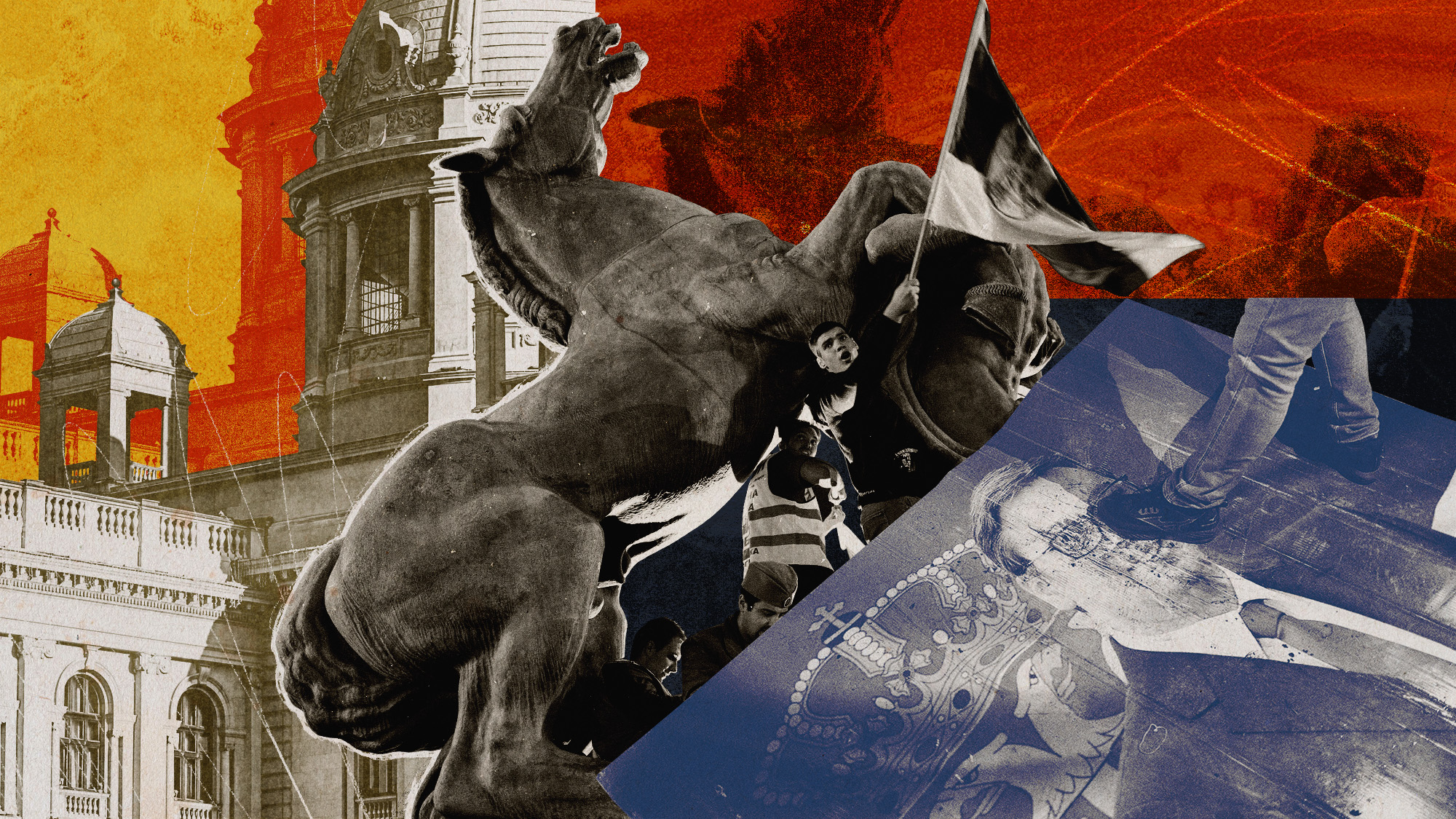
    Does Serbia election show power of Gen Z?

    A student-led protest movement has won the Serbian parliamentary elections and defeated strongman Aleksandar Vučić, who has ruled the country for 14 years. “After toppling governments in Sri Lanka, Bangladesh and Nepal, and rattling others in India, Kenya and Vietnam,” Gen Z protests “have come for Europe”, said Judah Grunstein in World Politics Review.

    Vučić threw “the kitchen sink at the campaign to skew the result his way”, said central Europe correspondent Misha Glenny in The Guardian. But despite taking control of all Serbia’s broadcast channels, “cranking up the nationalist rhetoric” and “cultivating support from Moscow”, he was beaten, in a result that will reverberate across European countries rocked by their own student protests.

    What did the commentators say?
    “Protest movements always respond to local factors,” said Grunstein in World Politics Review. But the student grievances in Serbia, “and their underlying causal factors”, have “more than a passing similarity” to those in France, Spain and Italy: “educational systems starved of funding, a bleak employment outlook and scarce opportunities for housing”. And corruption “is often the trigger that catalyses anger over the rest”.

    Serbia’s Student List has successfully “transformed itself” from “social revolt into electoral legitimacy”, said Ljubiša Ivanović on Euronews. Formed less than two years ago, the movement was vilified by pro-government media but managed to attract voters disillusioned with their local politicians. The message, said The Associated Press, was “focused on a non-partisan effort to rebuild Serbia’s economy and restore its democracy”. This youth-led victory over an authoritarian leader echoes the recent defeat of Viktor Orbán, once Vučić’s staunch ally in Hungary.

    What next?
    “Winning an election is one thing; governing a country is another,” said Ivanović on Euronews. Student List must now “formulate policies on the economy, foreign affairs, the European integration process, social policy and the rule of law”. Its newly elected parliamentarians, with little or no experience of governing, will be tasked with implementing an 11-point programme that includes purging ministries of officials linked to organised crime, “freeing” Serbia’s media and restoring transparency to public procurement.


    the explainer

    The long road to change on Oxford Street

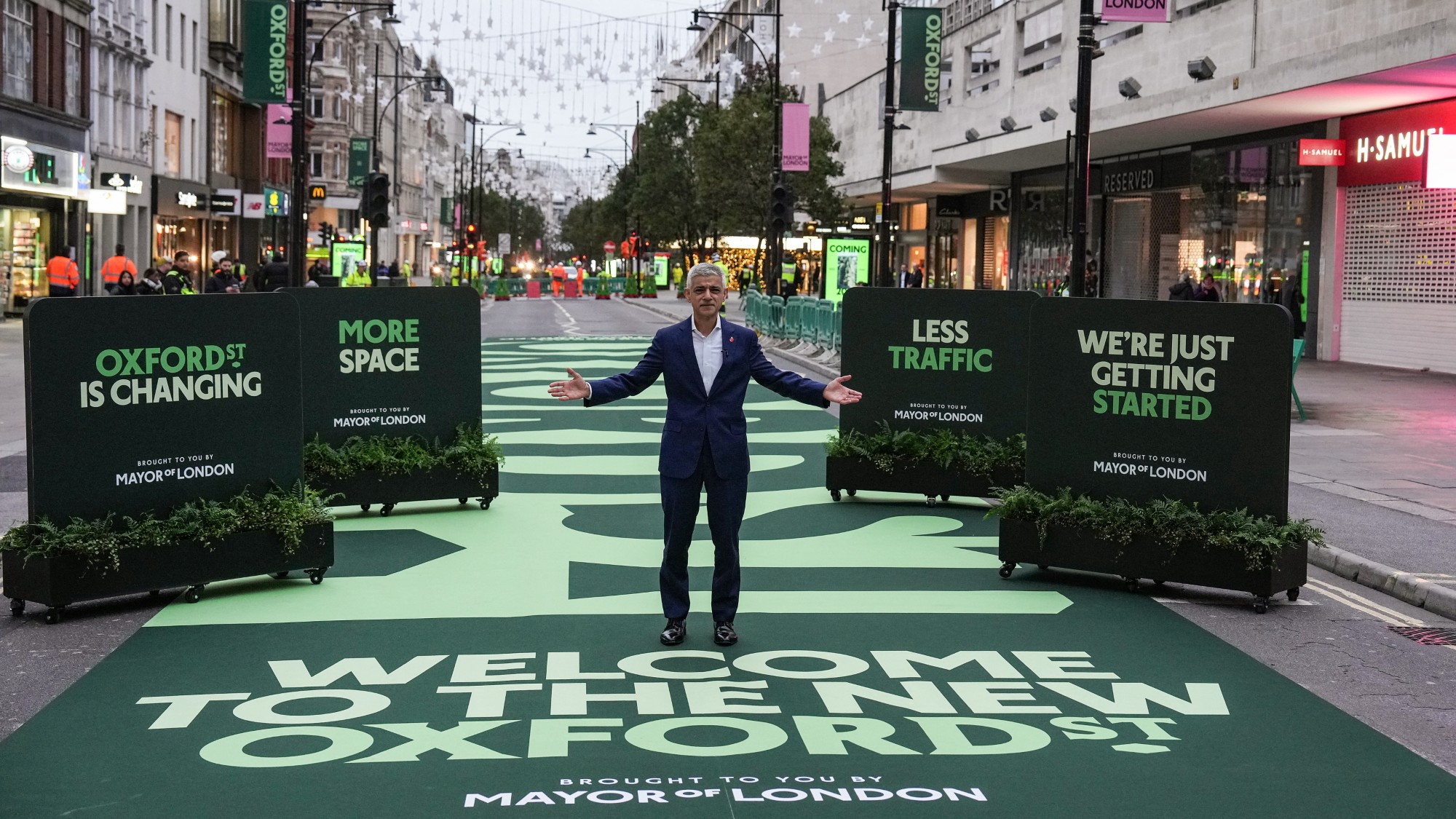
    London’s Oxford Street has been a “key thoroughfare” since the capital was called Londinium, said The Times. “Where the Romans used chariots or animal-drawn carts, modern Britain filled Oxford Street with double-decker buses, black cabs and e-bikes. Until now.” From today, after “2,000 years of traffic”, half a mile of the “nation’s high street” will be pedestrianised. 

    What are the new rules?
    All ordinary cars, buses, taxis, private vehicles, bikes (including e-bikes), scooters and pedicabs are now banned from the stretch between Selfridges (near Bond Street) and Ikea (by Great Portland Street). Emergency vehicles will continue to have access at all times.

    The hope is that Oxford Street will become more like Times Square in New York, or the shopping streets of “La Rambla in Barcelona or Strøget in Copenhagen”, said the Financial Times. A change like this would certainly “welcome”, as the area has gone through a “bleak period” since the pandemic.

    How did it happen?
    It all comes after “years of proposals, abandoned schemes and political wrangling”, said London’s The Standard. Pedestrianisation has been the subject of debate “stretching back to the early 1960s” but the idea was first formally promised in Sadiq Khan’s election manifesto for London Mayor in 2016.

    There was a consultation a year later but plans had to be abandoned after the Conservative-led Westminster City Council – which controls the area – withdrew its support. The scheme was revived in 2024, as part of Khan’s “wider transformation” of the area.

    Why has it been controversial?
    The “thorny issue” of council opposition has “foxed mayoral administrations for years”, said the BBC. To circumvent it, Khan created a development corporation, allowing a mayoral body to take control of the area and remove planning powers from the council.

    Doing this in a semi-residential area was “unprecedented”; when the method was used before, it was at brownfield-site developments for the Olympic Park and Old Oak Common. The move also needed the approval of central government – which it duly got after Labour’s landslide election victory in 2024.

    Critics called the move “anti-democratic”, said The Telegraph. Residents are concerned that re-routing buses will cause congestion and danger to communities living near Oxford Street, and larger footfalls won’t be matched with adequate police resources or security.


    QUOTE OF THE DAY

    “Several missions to Mars have now been launched from Britain’s space port.”

    Liz Truss imagines what might have been by 2040 if her 49-day premiership hadn’t been cut short, in her new book “Bank Job”. There would also be “no European Union laws in Britain” in the former prime minister’s alternative version of the future.


    Poll watch

    One in five (21%) Brits use AI to get personal or relationship advice, rising to 42% among Gen Z, according to research for the Social Market Foundation. Of 2,000 adults quizzed by Opinium, more than half (54%) who had turned to chatbots for guidance found them more helpful than family and friends.


    TALKING POINT

    Can Arsène Wenger save football’s soul?

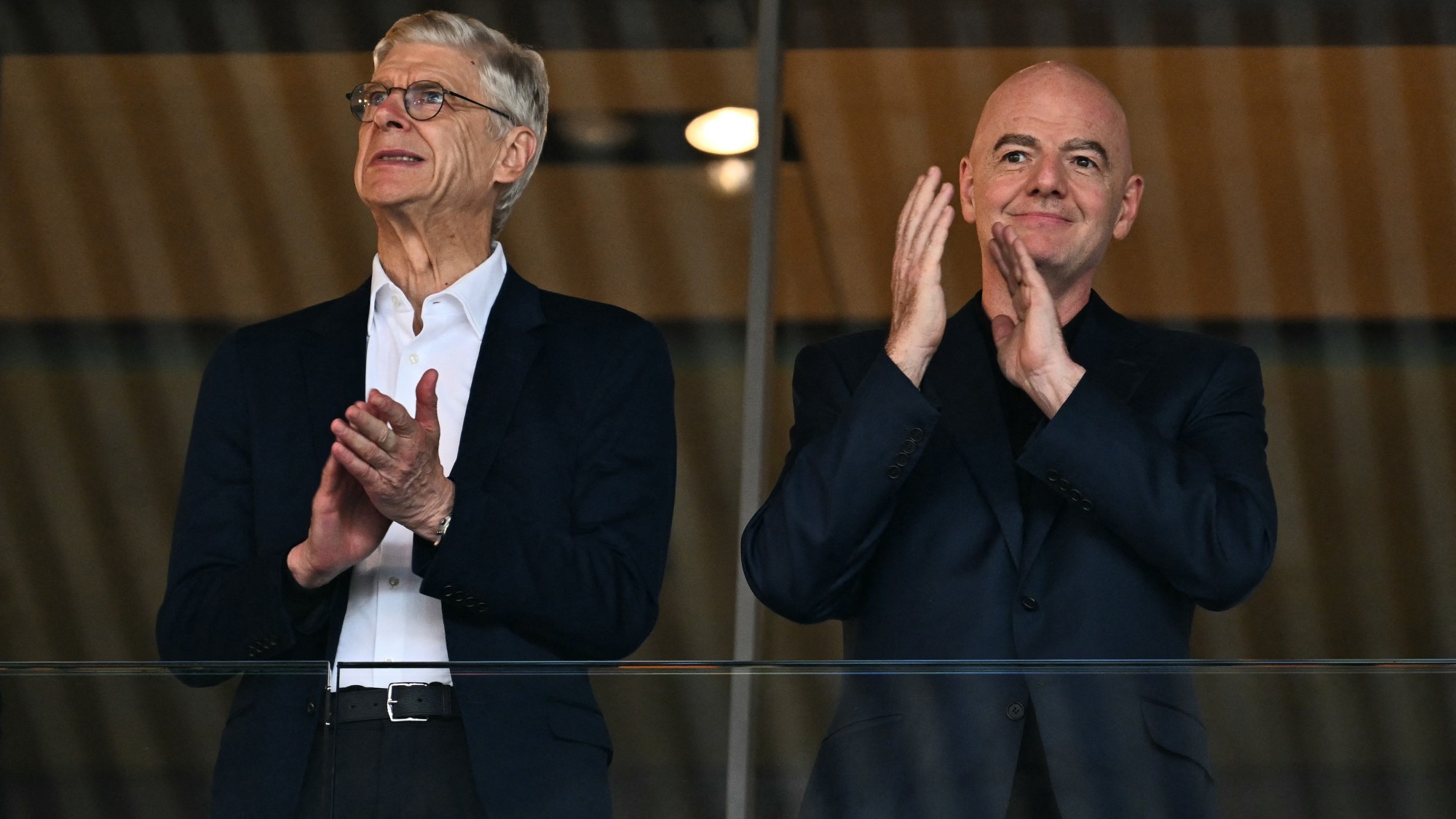
    Fifa’s controversial president Gianni Infantino looks “increasingly likely” to be re-elected unopposed for a fourth and final term, said the BBC’s Dan Roan, but there could be a “sensational twist”. Senior figures within European football want former Arsenal manager Arsène Wenger, now head of global development at the governing body, to run as a “surprise candidate”. But would Wenger (pictured above, left, with Infantino) “really challenge his own boss”?

    ‘Break the chain’
    “At first glance”, the Frenchman “looks an unlikely figure to stir a revolution from within”, said Oliver Brown in The Telegraph. Wenger, who turned 77 last week, would hardly “represent fresh blood”, but he “could fundamentally change an ossified bureaucracy that has produced just three presidents in 52 years”.

    The role of president of world football’s governing body has been “debased” and “mired in the machinations of keeping power by whatever means necessary”. But Wenger – “a true football obsessive” who has “seldom come across as financially motivated”– could “break the chain”. “So please, Arsène, in the name of sanity, declare your candidacy now.”

    Any hopefuls for the role may be planning to “keep their identity under wraps until the last minute to catch Infantino and his acolytes off guard”, said Alyson Rudd in The Times. The “smart money” is on Wenger. He is popular in Africa, having “supported the growth of the game on the continent”, and has “universal appeal” following his success as a manager in Japan.

    ‘Intriguing prospect’
    At Fifa’s HQ, in Zurich, there’s “no indication” that Wenger, who joined Infantino and others for dinner last week, is “plotting a bid”, said the BBC’s Roan. But a “large number of Fifa’s staff” want Wenger to run. They “believe he could change the organisation’s image”, so “it is an intriguing prospect”.

    Wenger has yet to comment on the speculation in the run-up to the 18 November deadline. Any reluctance to stand “probably comes from the fact you cannot risk losing to Infantino”, said John Cross in the Daily Mirror. The president “looked damaged beyond repair after the summer but has gone round the world on a charm offensive – and it appears to have worked, outside of Uefa, of course”.


    Good day ⚽

    … for Harry Kane, who is bookies’ favourite to win the Ballon d’Or at tonight’s ceremony in London. The England captain, who faces stiff competition from France’s Kylian Mbappé and Spain’s Lamine Yamal, would be the first English player to be crowned the world’s greatest male footballer since Michael Owen in 2001, and only the fifth in the award’s 70-year history. 


    Bad day 👩‍⚕️

    … for English hospitals, as senior doctors plan a two-day strike over pay and working conditions. The British Medical Association has announced the walkout, set to begin on 25 November, after a month of talks with the government failed to produce an agreement. More than three-quarters of consultants who took part in a July ballot voted in favour of strike action.


    PICTURE OF THE DAY

    Homecoming queen

    Venezuela’s opposition leader María Corina Machado receives a hero’s welcome in Caracas after nearly a year in exile. The Nobel Peace Prize winner returns to the country amid growing fears for democracy under interim president Delcy Rodríguez, who replaced ousted longtime leader Nicolás Maduro in January. 

    Jesus Vargas / Getty Images


    Puzzles

    Chain Word

    Try The Week’s daily word challenge in our puzzles and quizzes section, which also includes sudoku and Guess the Number

    Play here


    THE WEEK RECOMMENDS

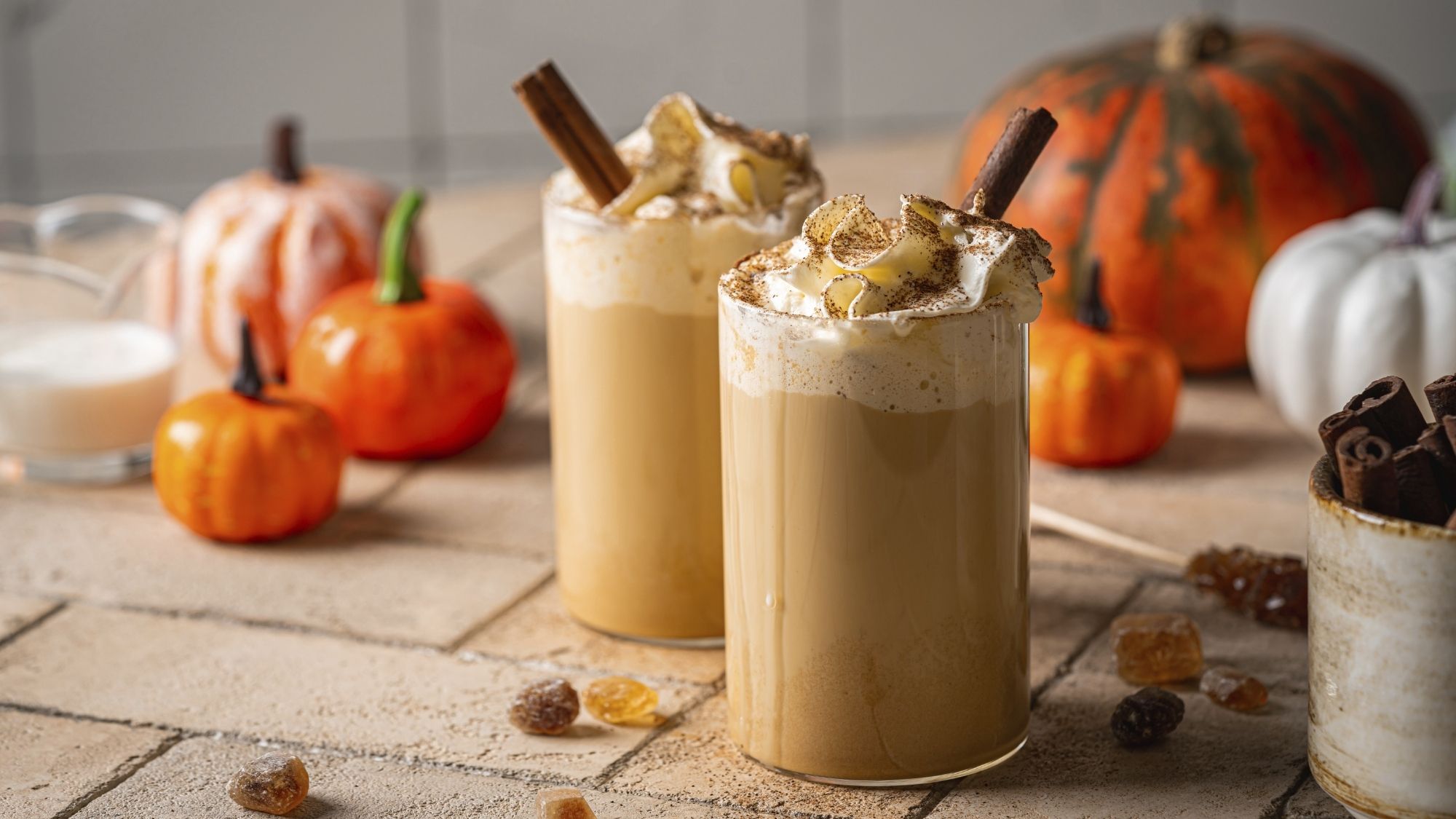
    Spice, spice, baby: why pumpkin spice latte endures

    As leaves fall and the nights draw in, coffee lovers are diving into a “sea of spice-infused foam”, said Metro. A “non-negotiable” autumn fixture in coffee shops nationwide, pumpkin spice latte is available everywhere “from high-end bakeries to budget spots offering their own signature twist”.

    The pumpkin spice latte has “become a cultural phenomenon greater than itself”, said NPR. Over the years, it’s been seen as “shorthand” for everything from “basicness” to “femininity, and even for white culture”. But its most enduring impact may be the “$500 million-dollar industry” that it generates every year.

    With the average pumpkin spice latte now costing £5.25, you may want to swap your coffee shop’s “autumn favourite” for a homemade version, said The Telegraph. The “real secret to the drink’s success” is in the “warming” blend of spices that is sweetened with pumpkin purée. Even if you don’t have a milk steamer to produce the signature latte froth, you can create a delicious “all-in-one” version of the PSL. Simply put 200ml milk, 50ml espresso and a tablespoon of tinned pumpkin purée in a pan, then add a tablespoon of brown sugar and a pinch each of ground cinnamon, ground ginger and ground nutmeg. Heat gently, whisking once steaming. Pour into a mug and top with a swirl of cream and another pinch of cinnamon to serve.


    Statistic of the day

    £874 million: How much the government is to invest to tackle homelessness. Andy Burnham has announced that in addition to the existing £442 million commitment, a further £432 million in funding will be confirmed in Wednesday’s Budget, in a bid to offer all rough sleepers a bed by Christmas.


    instant opinion

    Today’s best commentary

    Could Europe’s autumn of discontent threaten the survival of the EU?
    Catherine De Vries in The Guardian
    The EU faces a “real test” amid mounting global pressures, writes political scientist Catherine De Vries. Protesters in Paris, Milan and Madrid are demanding “functioning public services, affordable housing, economic and national security, and a sense that they have some control over their futures”. If Europe doesn’t respond, the “discontent” on the streets “could increasingly turn against the EU itself”. The bloc’s “proved remarkably durable” in past political crises; “now it must ensure that the people living through” this one see “tangible improvement to their lives”.

    Benjamin Netanyahu is destroying the case for a Jewish homeland
    Tim Stanley in The Telegraph
    “When I was a boy, and memories of the Holocaust were fresher, creating a homeland for the Jews” was seen “as a human-rights cause”, writes Tim Stanley. But the Gaza war is “the Vietnam of its time”, and the way Benjamin Netanyahu pursues it “with such pitiless arrogance has turned a whole generation off Zionism”. The idea that he, “uniquely, speaks for Israel” is “specious”. But the world’s Jews are left “more vulnerable” as “anti-Semitism flourishes under multiple rocks – left, right, Muslim or Christian”.

    I’ve been wrong all my life – the coffee snobs are right
    Caitlin Moran in The Times
    Where I grew up, you made coffee with “dark and bitter” supermarket granules, “boiling water, and a splash of evaporated milk”, writes Caitlin Moran. This has been my quirky “Coffee Status” for decades. “Then, last month,” I was served “an ethereally light latte” and “it was like drinking the soul of an angel”. I went straight out to buy my own “fancy coffee machine”, and now realise “there’s a difference between ‘being proud of your heritage’ and ‘unnecessarily repeating a profound oral trauma’”.


    word of the day

    Lumina

    Latin for “lights”, and the name of a computer simulation recreating how ordinary matter, dark matter and radiation interacted during the universe’s first two billion years. In a study in the journal Monthly Notices of the Royal Astronomical Society, US physicists reveal how Lumina is being used to test theories about how the cosmos evolved after the Big Bang. 


    Evening Review was written and edited by Jamie Timson, Rebecca Messina, Elliott Goat, Will Barker, Chas Newkey-Burden, Irenie Forshaw, David Edwards, Helen Brown and Kari Wilkin, with illustrations from Julia Wytrazek.

    Image credits, from top: illustration by Julia Wytrazek / Getty Images; Carlos Jasso / AFP / Getty Images; Fabrice Coffrini / AFP / Getty Images; Jesus Vargas / Getty Images; imageBROKER / Tatiana Goskova / Getty Images
     

    Recent editions

    • Morning Report

      Lula wins Brazilian election

    • Sunday Shortlist

      Kristin Scott Thomas’s ‘hypnotic’ performance

    • Saturday Wrap

      The downfall of Kimberly Guilfoyle

    VIEW ALL
    TheWeek
    • About Us
    • Contact Future's experts
    • Terms and Conditions
    • Privacy Policy
    • Cookie Policy
    • Advertise With Us
    • FAQ
    Add as a preferred source on Google Add as a preferred source on Google

    The Week UK is part of Future plc, an international media group and leading digital publisher. Visit our corporate site.

    © Future Publishing Limited Quay House, The Ambury, Bath BA1 1UA. All rights reserved. England and Wales company registration number 2008885.