The Week UK
flag of US
US
flag of UK
UK
https://cdn.mos.cms.futurecdn.net/flexiimages/jzblygzdxr1769609154.gif

SUBSCRIBE

Start your trial today

Sign in
  • View Profile
  • Sign out
  • The Explainer
  • Talking Points
  • The Week Recommends
  • Podcasts
  • Newsletters
  • From the Magazine
  • The Week Junior
  • More
    • Politics
    • World News
    • Business
    • Health
    • Science
    • Food & Drink
    • Travel
    • Culture
    • History
    • Personal Finance
    • Puzzles
    • Photos
    • The Blend
    • All Categories
  • Newsletter sign up Newsletter
  • The Week Evening Review
    Israel’s political divisions, science cuts, and the half-term debate

     
    TODAY’S BIG QUESTION

    Where does Israel stand ahead of key election?

    Opinion polls suggest Benjamin Netanyahu’s governing coalition is neck and neck with the main opposition bloc as Israelis go to the polls today. The general election, the first since the 7 October 2023 attacks, “hangs over a country that’s deeply divided and ready for a fight”, said the BBC.

    What did the commentators say?
    To Israelis in Netanyahu’s electoral strongholds, the prime minister is their “champion and protector against enemies across the region”, said Neri Zilber in the Financial Times, and against a loathed “domestic ‘elite’ they perceive as undermining the will of the people” by succumbing to “international pressure to allow a Palestinian state”.

    Elsewhere, opinions are very different. On Saturday, thousands rallied in Tel Aviv to protest against Netanyahu’s government and call for an independent inquiry into the security failures that led to the 7 October Hamas attacks. “Taking part were leading figures from opposition parties, including Gadi Eisenkot,” said Al Jazeera.

    “Reports of Israelis flying in from across the world specifically to vote tell you something about the political culture,” said Jonathan Sacerdoti in The Spectator. How they vote “matters less than the act”. A “civic urgency” is driving people to cross continents to take part.

    More than 500,000 Israelis have reached voting age since the last election, in 2022, and they will be a crucial demographic. This generation “came of age after the Oslo process collapsed” and were teenagers when the 7 October attacks occurred, said Emma Graham-Harrison in The Guardian. “Bucking global trends”, they “are more right-wing than older generations”. Most Israelis see this election as “the most consequential in their country’s history”.

    What next?
    The first exit polls will be published at 10pm local time (8pm in the UK), but neither Netanyahu’s bloc nor Eisenkot’s are projected to win the 61 seats needed to form a majority government. Weeks or months of political wrangling are likely to follow before any workable coalition government can be formed.


    THE EXPLAINER

    The fight to save Jodrell Bank Observatory

    Leading scientists are calling for the government to cancel cuts to the UK’s science budget that could force the closure of Cheshire’s Jodrell Bank Observatory, home to the world’s third-largest telescope. 

    The Lovell Telescope was the brainchild of physicist Bernard Lovell, who worked on the government’s secret radar programme during the Second World War, and became operational in the 1950s. It has since enabled scientific breakthroughs beyond its creator’s “wildest dreams”, said A.S. Ganesh in The Hindu. “From quasars to black holes, and pulsars to gravitational lenses”, the Jodrell Bank Observatory has “played a crucial part in our better understanding of the universe”.

    Why is the observatory under threat?
    The UK Research and Innovation funding agency announced in July that Jodrell Bank would not be prioritised for further investment after its existing agreement ends in March 2028. The non-departmental public body said investment would go towards projects that deliver “the greatest long-term impact”. 

    Under the current arrangement, Jodrell Bank receives around £2.8 million per year. Without further funding, it will have to close, risking the loss of 28 jobs at the site and affecting nearly 3,000 scientists who use its observations in their research.

    Scotland’s astronomer royal, Professor Catherine Heymans, has described the funding decision as an “act of national self-harm”. Other scientists including Brian Cox – the professor of particle physics at Manchester University, which hosts Jodrell Bank Observatory – have warned Chancellor John Healey that the threat to the UK’s largest telescope is “just the tip of the iceberg”, said The i Paper. In an open letter ahead of tomorrow’s Budget, they argued that planned funding cuts of up to 30% for the wider particle physics, astronomy and nuclear sector will “cause lasting and possibly irreparable damage to the UK’s scientific capabilities”.

    Can it be saved?
    The government has said it is “exploring” long-term options for Jodrell Bank. Business Secretary Jonathan Reynolds told the Commons earlier this month that he had recently met staff at Manchester University to explore potential solutions. Andy Burnham has also pledged to find a way to save the telescope. 


    QUOTE OF THE DAY

    “Shoppers face rising costs at the till and families are struggling to make ends meet, but Burnham’s plan is cheaper gherkins.”

    Shadow chancellor Andrew Griffith strikes a sour note about the removal of tariffs on more than 100 other household food items, including gherkins. The government’s pre-Budget announcement is an “insult to families hammered by Labour’s tax rises”, the Tory MP said in a statement.


    Poll watch

    More than half (53%) of Britons aged between 18 and 24 watch TV shows and films with the subtitles on. By contrast, only 22% of people aged 65 to 74 and 31% of over-75s use captions, according to a YouGov poll of 35,753 adults, despite hearing loss being more common in these older age groups. 


    IN THE SPOTLIGHT

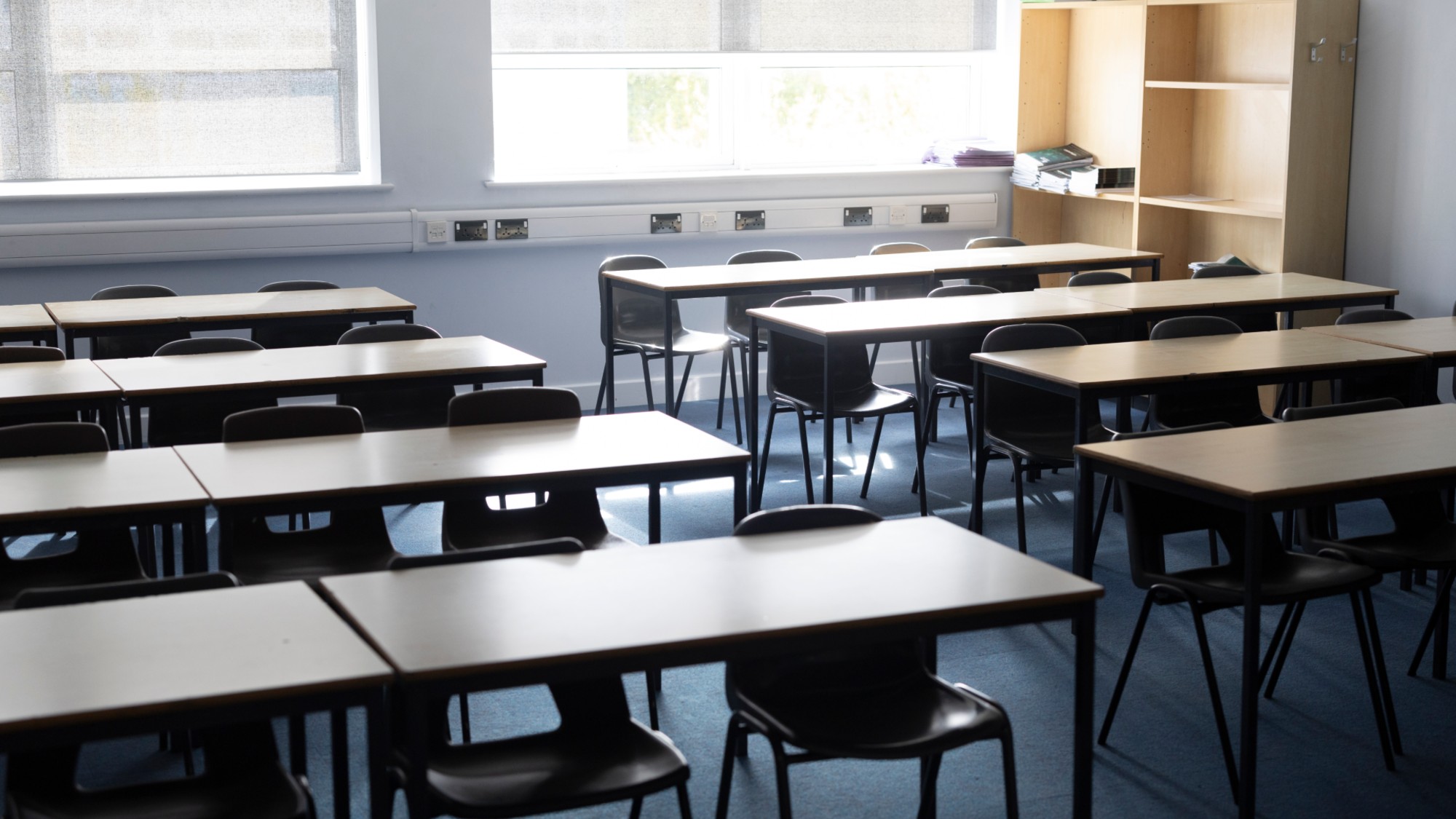
    The two-week half-term dilemma

    “It is one of the great dividing lines between schools,” said Lottie Hayton in The Sunday Times: “is your October half-term holiday one week or two?” Private school pupils typically get a fortnight off; state schools are increasingly offering the same, or considering doing so. But the policy is “not without critics”. About 15% of state school teachers in England say their school now offers a two-week October break, up from 7% in 2023. 

    ‘Greater flexibility’
    The “rationale” is that it gives pupils and staff “more time to rest and recharge”, said Lauren Crosby Medlicott in The i Paper. The longer break can also offer families “greater flexibility and the chance for a cheaper holiday”, after the main tourist season has ended. And for neurodivergent households, it can offer the chance to “recover from the demands of school”.

    A longer break is “critical to keeping concentration and energy levels up” among staff and pupils alike, said David Hatchett, CEO of the Anthem Schools Trust, which has introduced the two-week half term across its 15 schools. “When you have had such a long holiday over the summer and then you return to a long and intensive first half term, it is quite a big adjustment for a teacher and school leader,” he told the Press Association. One week is “arguably too late and short for a proper rest and reset”.

    ‘Stretched’ parents
    As a parent of a school-age child, “no thank you”, said Natasha Hinde on HuffPost. Of course it’s important for children to rest, but what about the needs of working parents? Many are “already stretched to breaking point”. After six weeks of summer holidays, “we’re pretty much out of annual leave” yet then have two more weeks of childcare to sort, “which ends up easily costing hundreds of pounds – potentially triple that if your child is disabled”.

    Although some schools shorten the summer holidays to accommodate the longer half term, many parents are left juggling care for children at different schools or nurseries on different timetables. What “everyone wants is consistency”, primary school teacher Lee Parkinson told The i Paper. “If an area is going to do it, everyone should.”


    Good day 🎤

    … for self-selection, after Jay-Z chose himself to headline the upcoming Super Bowl half-time show. The rapper, whose Roc Nation record label has co-produced the mid-game entertainment since 2019, will take centre stage at the NFL event on 14 February. 


    Bad day ⚽

    … for Kylian Mbappé, who has been dropped by two major Chinese brands after apparently joking about Mao Zedong in a video that has gone viral. The French football star has apologised for his “ill-judged” comments after laughing about a meme in which his face was photoshopped onto that of “some guy – I think he’s a Chinese dictator”. 


    PICTURE OF THE DAY

    Copycats

    Lion cubs pile onto a bench in their enclosure at Dortmund Zoo. A total of 12 were born to lionesses Zuri and Saba and male lion Boeti at the park in western Germany this summer.

    Ina Fassbender / AFP / Getty Images


    Puzzles

    Chain Word

    Try The Week’s daily word challenge in our puzzles and quizzes section, which also includes sudoku and Guess the Number

    Play here


    THE WEEK RECOMMENDS

    Best small ski resorts

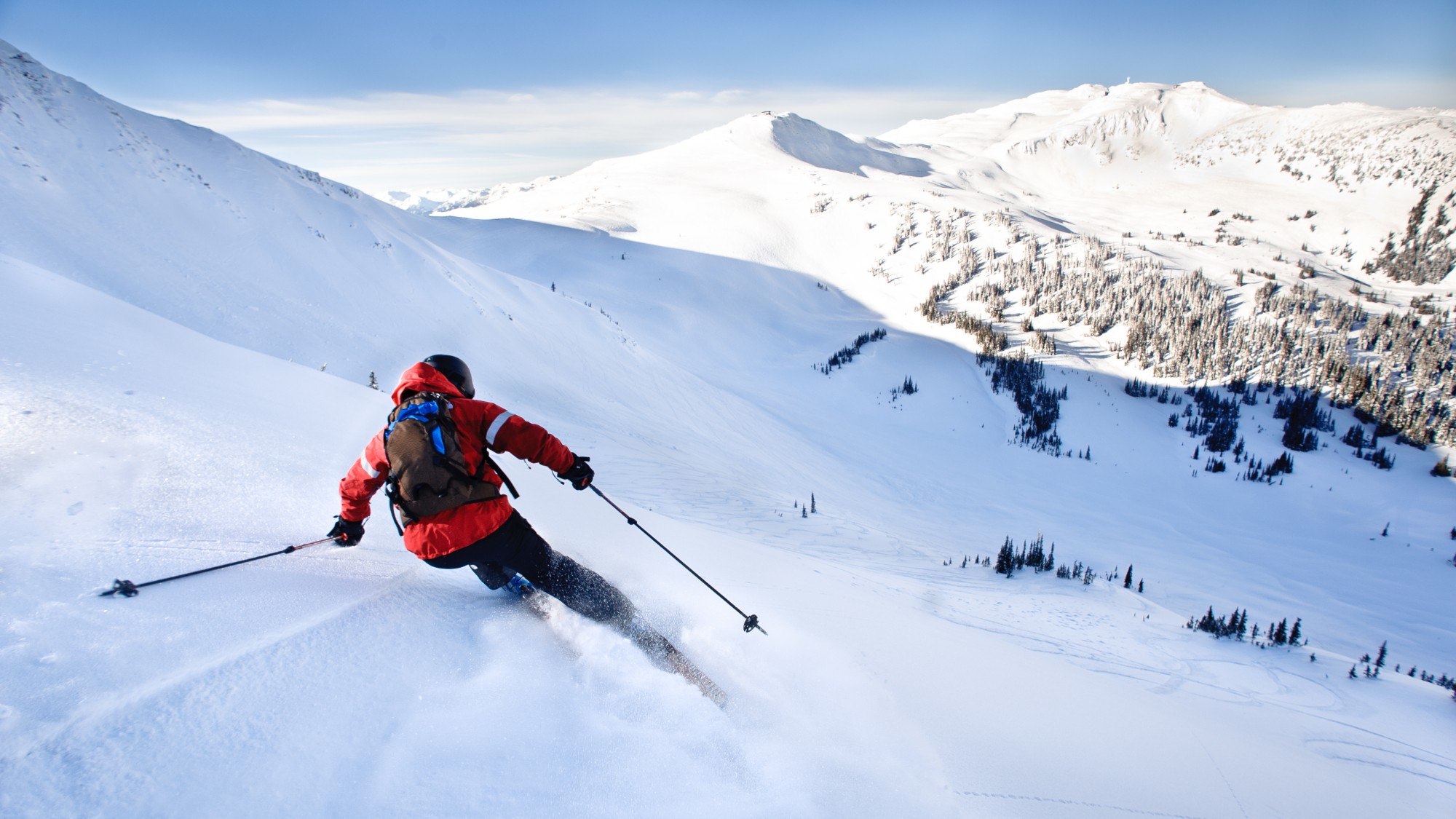
    Following the variability of last year’s snowfall, many holidaymakers may head to larger resorts that they hope offer the best guarantee for a full week of skiing. But “smaller, lesser-known resorts can often have bigger snowfalls, more vertical, fewer skiers and better off-piste”, said The Telegraph. Cheaper lift passes, shorter queues and fewer interruptions on the slopes also sweeten the deal, without compromising on skiing quality. Here are some of the best smaller options.

    Heiligenblut, Austria
    This tiny village beneath Austria’s highest mountain is “blissfully quiet”, said The Sunday Times. Heiligenblut is home to “mind-blowing” views of the 3,798-metre Grossglockner and a “non-existent (in a good way)” après-ski culture, allowing for proper relaxation. Anyone with an interest in ski touring or off-piste skiing will be “thrilled by its back-country potential”.

    Tetnuldi, Georgia
    The Georgian resort of Tetnuldi has “deserted slopes, deep powder and truly wild alpine panoramas”, said The Telegraph. And with “consistently good snow and almost 1,000 metres of vertical” to explore, the long journey there is definitely “worthwhile”. The 15-odd miles of marked pistes are also a “good warm-up for the world-class back-country skiing that’s the area’s big attraction”.

    Brundage Mountain Resort, US
    This Idaho resort has an “uncrowded and unpretentious” vibe, said The Independent. Just above the small mountain town of McCall, the resort offers a “classy experience”, welcoming both “strong skiers craving room to roam, and families who enjoy the low-stress atmosphere”. And the après-ski is “friendly and relaxed” after a day on the area’s “famously light, dry snow”.


    Statistic of the day

    40%: How much sales of tinned products increased over the weekend, according to supermarket chain Iceland. Other retailers also reported a dramatic increase in sales of goods including bottled water, wind-up radios and torches following government warnings to stock up on essentials in case of a crisis. 


    instant opinion

    Today’s best commentary

    This is just the beginning – we need to go further to earn people’s hope
    Andy Burnham in The Mirror
    “A hundred days ago I stood in Downing Street and promised to do things differently,” writes Andy Burnham. I promised to tackle problems Westminster was “ignoring”, and make Britain start “believing in itself again”. Many said it “would be impossible”, but “we’re proving them wrong”, fixing “everyday things that make life harder” and handing power to communities “on a scale not seen in decades”. The job’s not done – “not even close” – but “I won’t stop until people can look to the future with hope”.

    The Queen of shops who accidentally helped wreck the great British high street
    James Ball in The i Paper
    For years, TV’s “Queen of Shops” Mary Portas has “fought a magnificent battle” to save the “old school” British high street, writes The New World’s James Ball. Admirable, but she’s helping “policymakers deny the reality that the very way we think of high streets has to change”. Shopping online is “simpler, cheaper, and offers” more choice, so we need to reinvent our town and city centres as spaces for “parks and recreation” and much-needed housing.

    We need a crackdown on the cycling menace
    Ross Clark in The Spectator
    In my town, “there is a long history of paths shared by cyclists and pedestrians”, writes Ross Clark, and that was fine when everyone rode push bikes. But it’s “becoming increasingly unpleasant to walk anywhere” because “riders on powerful and bulky e-bikes have decided that these paths belong to them”. Cyclists “moan bitterly about how they are treated by motorists”, with “good reason”, yet then “treat pedestrians” the same, “trying to bully them out of the way”.


    word of the day

    Cig

    “Young Silicon Valley entrepreneurs are embracing a new ritual: smoking cigarettes,” said The Times. Many are so convinced that AI will find a cure for cancer that they are willing to risk their lungs, in a trend “dubbed Cig Tech”. It’s become a way to signal that their “chips are all in”, said Palantir’s chief technology officer Shyam Sankar in a TV interview. 


    Evening Review was written and edited by Hollie Clemence, Rebekah Evans, Rebecca Messina, Chas Newkey-Burden, Harriet Marsden, Will Barker, Irenie Forshaw, Helen Brown, David Edwards and Kari Wilkin, with illustrations from Julia Wytazek.

    Image credits, from top: illustration by Julia Wytrazek / Getty Images; Christopher Furlong / Getty Images; Alistair Berg / Getty Images; Ina Fassbender / AFP / Getty Images; Alan V. Young / Getty Images
     

    Recent editions

    • Morning Report

      Netanyahu urged Iran strike before election

    • Evening Review

      Talkin’ ‘bout my generation

    • Morning Report

      Lula wins Brazilian election

    VIEW ALL
    TheWeek
    • About Us
    • Contact Future's experts
    • Terms and Conditions
    • Privacy Policy
    • Cookie Policy
    • Advertise With Us
    • FAQ
    Add as a preferred source on Google Add as a preferred source on Google

    The Week UK is part of Future plc, an international media group and leading digital publisher. Visit our corporate site.

    © Future Publishing Limited Quay House, The Ambury, Bath BA1 1UA. All rights reserved. England and Wales company registration number 2008885.