The Week UK
flag of US
US
flag of UK
UK
https://cdn.mos.cms.futurecdn.net/flexiimages/jzblygzdxr1769609154.gif

SUBSCRIBE

Start your trial today

Sign in
  • View Profile
  • Sign out
  • The Explainer
  • Talking Points
  • The Week Recommends
  • Podcasts
  • Newsletters
  • From the Magazine
  • The Week Junior
  • More
    • Politics
    • World News
    • Business
    • Health
    • Science
    • Food & Drink
    • Travel
    • Culture
    • History
    • Personal Finance
    • Puzzles
    • Photos
    • The Blend
    • All Categories
  • Newsletter sign up Newsletter
  • The Week Evening Review
    Cyberthreat era, the sodium valproate scandal, and Sandpapergate

     
    TODAY’S BIG QUESTION

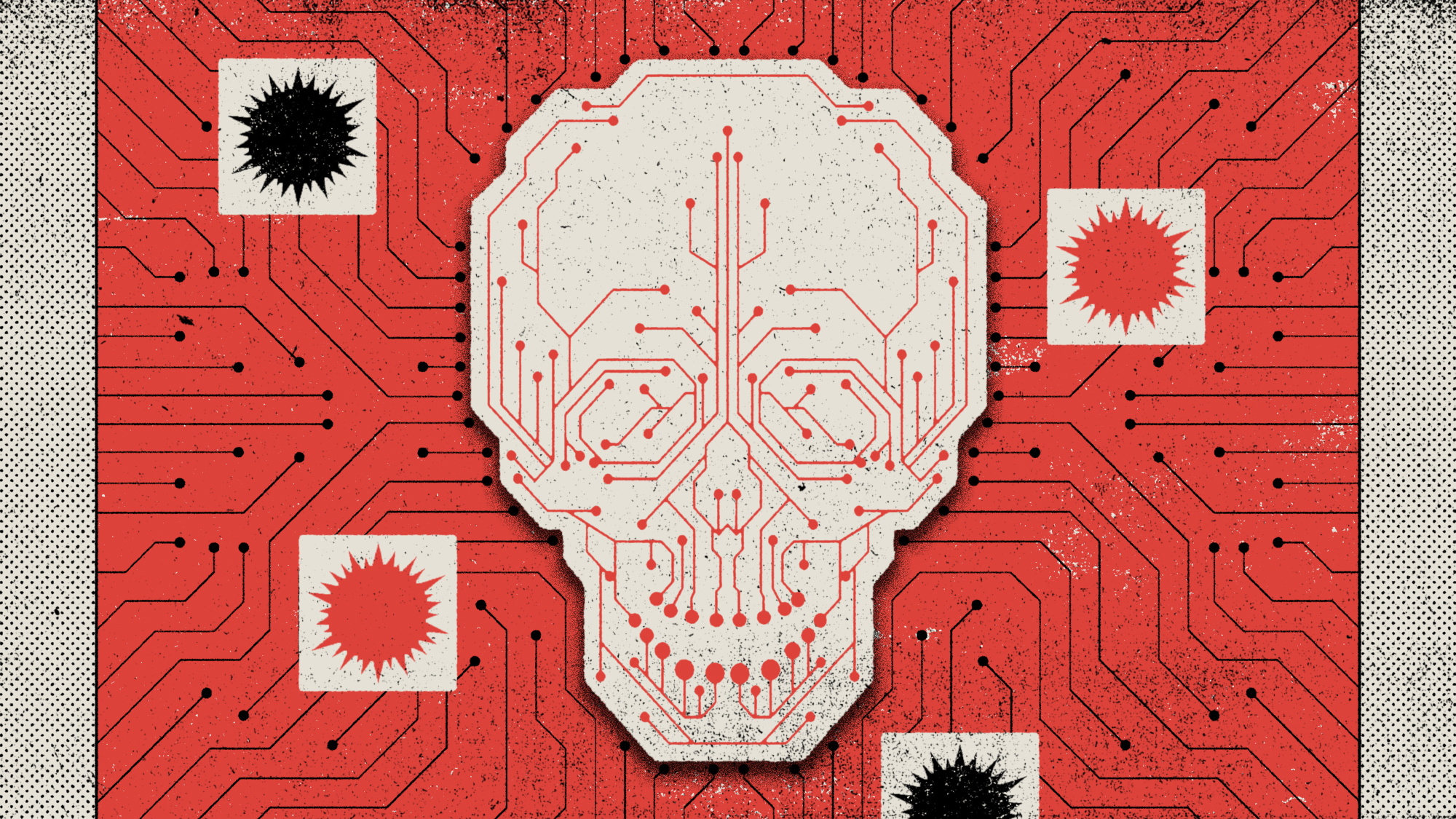
    Are we entering new normal of cyberattack threats?

    A common theme links hijacked refrigerators, a record cryptocurrency heist, bomb threats to airlines and newsrooms, and a fake nuclear strike alert sent by Ukraine’s emergency alert app. These are “just the foothills” of a new hacking landscape, according to the head of the UK’s National Cyber Security Centre. “There are so many vulnerabilities out there,” said Richard Horne, pointing to flaws in IT systems exposed by AI technology, and they are increasingly likely “to be exploited”.

    What did the commentators say?
    Exactly who is exploiting these weaknesses, and why, is not always clear, but there are “two factors underpinning the NCSC warnings: geopolitics and AI”, said Dan Milmo and Aisha Down in The Guardian.

    North Korea has been widely blamed for last month’s £4.7 billion hack on Binance, the world’s largest cryptocurrency exchange, while cybersecurity experts say last week’s Europe-wide fridge attacks bear the hallmarks of Russia. If Russia were responsible, those attacks could be intended to demonstrate the potential costs of Europe’s continued support for Ukraine, said Sidharth Kaushal from the RUSI think tank. “I think it’s more about cost imposition,” he told CNBC. “Convincing the European political leadership that the costs of a war can come home to them.”

    “Whether nuisances or true threats, the events collectively highlighted Europe’s vulnerability in a digitally connected era,” said Adam Goldman in The New York Times. The “mix of disarray and upheaval” in recent months has “left European officials rushing to identify culprits and residents inconvenienced, confused or fearful”.

    What next?
    With cyber disruption becoming the new norm, private firms and governments are racing to protect themselves, their users and citizens. Yet countries’ abilities to withstand hybrid threats vary substantially across the continent, said Kaushal. “As one goes further west in Europe, the level of preparation, both against hybrid attacks, but also just simple missile attacks of the kind that we’ve seen in Ukraine, is far less great.”

    The UK is belatedly trying to catch up. According to The Times, UK defence chiefs have begun deploying “hunt forces” abroad to disrupt enemy hackers who are preparing to cripple Britain’s military systems.


    THE EXPLAINER

    Mums vs. Big Pharma: the sodium valproate scandal

    A new BBC documentary has reignited the outcry over the sodium valproate scandal – a catalogue of pregnancy harms that England’s Patient Safety Commissioner has called “bigger than thalidomide”.
    Sodium valproate was prescribed to pregnant women, despite its known risks to foetuses. Over the past 50 years, the drug is thought to have caused an estimated 20,000 babies in the UK to develop serious disabilities or neurodevelopmental conditions in the womb. 

    What is the scandal?
    In 1962, sodium valproate was found to be an effective anti-seizure drug, as well as a treatment for bipolar disorder. The scientists who created it knew that it had caused foetal malformations when tested on pregnant rats. Yet in 1972, the drug, often distributed as Epilim, was licensed in the UK to treat epilepsy without official contraindications for pregnant women. 

    In the 1990s, clinical geneticist Jill Clayton-Smith began a formal study that eventually helped determine that babies exposed to sodium valproate in the womb have a 10% risk of developing physical malformations (way above the 2% norm), and a 30% to 40% risk of developing serious neurodevelopmental disorders. 

    Who are the mums?
    Janet Williams gave birth to two sons with developmental delays in the 1990s, but was told for years that nothing was wrong. Then, in 2009, a specialist mentioned that their condition had probably been caused by her epilepsy medication, Epilim. She began sharing her story with families in and around her hometown of Pilling, Lancashire, and asked other potentially affected parents to get in touch. One of those who did was Emma Murphy from nearby Bury. Five of Emma’s six children had similar developmental difficulties, and she had also taken Epilim during pregnancy. Together, the women “doggedly pursued answers” in the face of “institutional resistance and, in some cases, patronising dismissal”, said The Times.

    What has the government done?
    In 2018, then health secretary Jeremy Hunt announced an independent review into sodium valproate. The resulting report, published in 2020, highlighted affected families’ “struggle to be believed” and recommended financial redress for the “life-changing consequences” they suffered. In 2024, England’s Patient Safety Commissioner set out options for a compensation scheme. The government has still not responded to that, and the affected families have yet to receive any payouts.


    QUOTE OF THE DAY

    “You know, Joe, if it weren’t for politics, I believe we’d be good friends.”

    Joe Biden recalls a comment from Donald Trump that left him “too stunned to respond”, in an excerpt from his new memoir, “Promise Me, America”. According to the former president, his successor’s tone during a White House meeting after the 2024 election “bordered on fawning”. 


    Poll watch

    Only 37% of voters recognise Britain’s longest-serving party leader, according to a YouGov poll of 2,216 adults. Even among those who backed his party in the 2024 election, only 49% recognised a photo of Ed Davey, who has led the Liberal Democrats for more than six years. 


    TALKING POINT

    Will Sandpapergate tear the Aussies apart again?

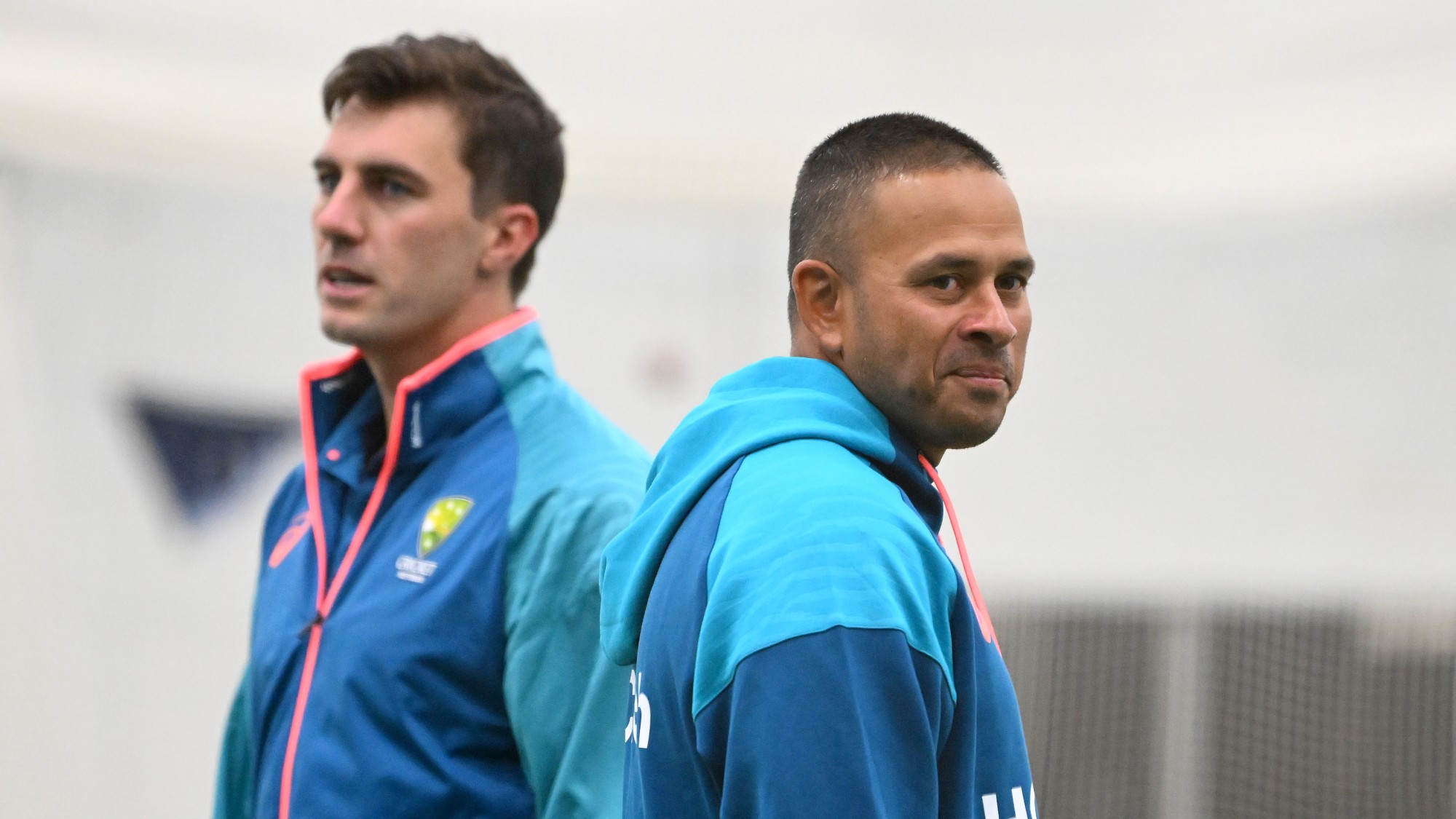
    Cricket Australia has said it will not reopen its inquiry into Sandpapergate, having completed a three-day investigation following the 2018 ball-tampering scandal. But former Australian batter Usman Khawaja (pictured above, right), who retired from international cricket in January, is claiming that the investigation failed to uncover the truth. The “stench around ‘Sandpapergate’ is as overpowering now as it was” eight years ago, said The i Paper’s cricket correspondent Chris Stocks.

     ‘Ludicrous’ claims
    The use of sandpaper to alter the ball during the third Test against South Africa in Cape Town was blamed on Australia’s then captain Steve Smith, vice-captain David Warner and batter Cameron Bancroft. But in his new autobiography, Khawaja claims the whole team knew about the scam. Cricket Australia’s decision not to reopen the inquiry is “sad” and “predictable”, said Robert Craddock in The Australian, and demonstrates “exactly why a new investigation is needed”. There is “enormous public interest” in “the most notorious event in Australian cricket this century”.

    Had Khawaja spoken up at the time, his career would have disappeared faster than “that bit of sandpaper disappeared down Cameron Bancroft’s pants”, said Zachary Gates on Nine. Khawaja’s version of events “smells like the truth”. It seems “incredibly unlikely” that he would do “untold damage” to his relationships with former teammates by making false claims. And the idea that the bowlers, as they continue to claim, had no knowledge of ball tampering is “ludicrous”.

    It’s the public who have been most hurt, said ABC. They care less about the “whodunnit and more about the irreparable breach of trust”. The “wounds that remain stem from a feeling of betrayal”.

    ‘Taint an entire generation’
    “Apologies for the crude analogy but for Australian cricket this is the unflushable turd,” said Stocks in The i Paper. Current Test captain Pat Cummins (pictured above, left) has kept quiet so far, but he has also come under pressure for his recent performances. “Could this tip him over the edge?” Khawaja’s allegations, “whether true or not, promise to taint an entire generation of Australian cricketers”. Looking ahead to the Ashes in England next year, the “soundtrack of the summer” promises to be home fans chanting: “Same old Aussies, always cheating”.

    Perhaps there is another “unpalatable” explanation for why the case hasn’t been reopened, said BBC Sport. Australia’s last two captains “lost the job in disgrace” – Smith for Sandpapergate, and his successor, Tim Paine, for a “sexting” scandal. Perhaps Cricket Australia has “no desire to open the door for fear of what might lie behind it”. Sandpaper, however, is the “stench Australian cricket cannot shake”.


    Good day 📖

    … for diversity, as Andy Burnham signals his support for a cross-party bid to allow Brits to identify as black English and Asian English on the census. The PM told the Commons that he “wants” to support the so-called St George’s Bill, tabled by Lib Dem MP Josh Babarinde, to “take on the poisonous politics that we have seen from some in this House”.


    Bad day ⚽

    … for Michael Carrick, who is facing the boot from his role as Manchester United manager after overseeing the club’s worst start to a season in four decades. Former Chelsea and Spurs manager Mauricio Pochettino is widely expected to replace Carrick, as United sit 18th in the Premier League and inside the relegation zone.


    PICTURE OF THE DAY

    Get your kicks

    Route 66 buzzes with traffic during a rainstorm in Albuquerque, New Mexico, in a 1969 image by photojournalist Ernst Haas. Celebrations are taking place today along the 2,400-mile route from Chicago to Santa Monica, as the iconic highway turns 100.

    Ernst Haas / Getty Images


    Puzzles

    Chain Word

    Try The Week’s daily word challenge in our puzzles and quizzes section, which also includes sudoku and Guess the Number

    Play here


    THE WEEK RECOMMENDS

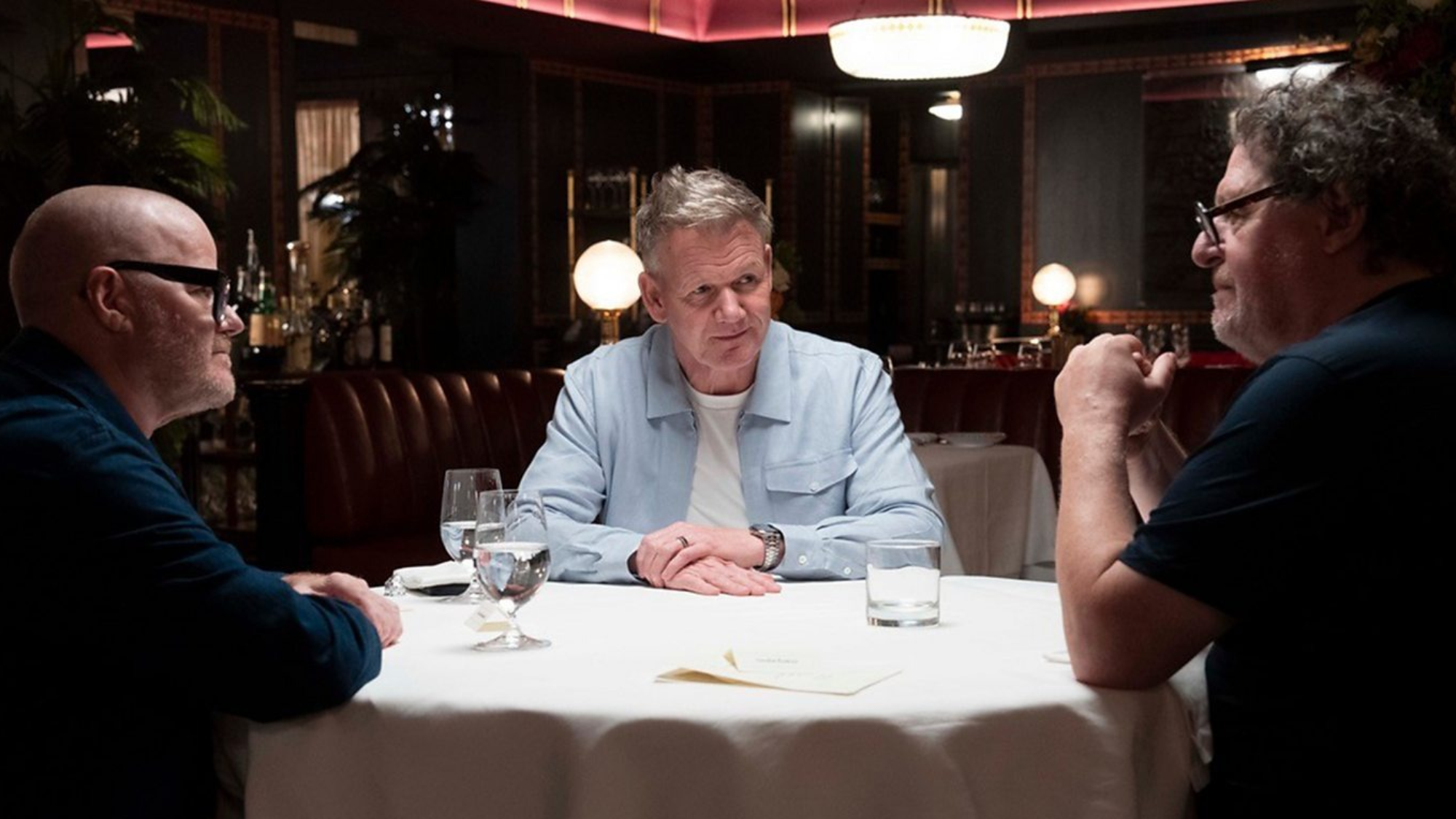
    Rise of the Rockstar Chef is ‘delicious entertainment’

    “My heart sank” when I heard Gordon Ramsay’s production company has made a docuseries about the sweary chef’s rise to fame and notorious beef with Marco Pierre White, said Carol Midgley in The Times.  But now I’m “eating my words”. This isn’t just another “vanity epic” – the show “sizzles with gossip, snark, strutting macho energy and anecdotes that are the stuff of HR managers’ nightmares”.

    The drama builds as the feuding chefs meet for the first time in 20 years, said Anita Singh in The Telegraph. It’s a “fascinating study of two great talents and their competing egos”.

    “It’s a culinary willy-waving contest,” said Michael Hogan in The Guardian. At one point, White brags: “We were bigger and better than the Beatles.” The “mouthwatering question” is whether, decades after their “bitter bust-up”, White and Ramsay can meet without “taking copper-bottomed saucepans to each other’s heads”. Both sides of the feud are “picked over in chewy detail”, and “there is, in a very real sense, beef”.

    When White and Ramsay finally sit down together to hash things out in the third and final episode, it’s as captivating and “infuriating as you might expect”. The former is “prickly and unrepentant”, while the latter still seems to have an enormous chip on his shoulder. “Does it make for delicious entertainment? Yes, chef! Service please.”


    Statistic of the day

    300: The estimated number of schools that were evacuated across Italy today after receiving bomb threats. Education Minister Giuseppe Valditara told TV interviewers that the alerts were probably a “cyberattack, not a genuine risk”, and that the evacuations were a precaution. Similar hoax threats were also reported at schools across the UK.


    instant opinion

    Today’s best commentary

    If China can honey-trap tech bros, it can do it in Britain. We have fragile male egos too
    Sangita Myska on The Nerve
    The sex scandal involving Nvidia CEO Jensen Huang and a suspected Chinese spy highlights how a “rich, powerful man” can be “lured into sharing nationally important trade secrets over pillow-talk”, writes Sangita Myska. Another alleged Chinese spy had “what appeared to be a full-on bromance with ex-Prince Andrew’s top aide”, and “what’s to stop” Beijing “infiltrating” an “infrastructure-critical UK corporation”? The “threat from China is on par with that from Russia and Iran”, and “influential men” could be the “softest target of all”.

    Is Washington rethinking its relationship with Israel?
    Yossi Mekelberg on Al Jazeera
    Whenever Benjamin Netanyahu leaves office, “one of his most damaging legacies” will be the “deterioration” of Israel’s relationship with America, writes international relations expert Yossi Mekelberg. The midterm elections showed that US voters “find it difficult to accept that American money and weapons have been used” to kill “innocent Palestinians” and to wage the “extremely costly” Iran war. Amid “the narrative that Israel dragged the US” into the conflicts, many are asking if the alliance is “an asset or a burden to American interests”.

    The economist worshipped by Labour… who gave Britain its dangerous debt addiction
    Hamish McRae in The i Paper
    “If you want to know why the UK’s national debt” exceeds £3 trillion, writes Hamish McRae, “it’s the misapplication of the ideas of the economist John Maynard Keynes”. He changed everything by arguing that nations should “offset economic downturns by increasing public spending”. Labour and the Conservatives “are both in thrall” to his ideas, which have been “carried to excess”. The result: “young Britons now have to pay higher taxes to fund huge government debts run up by politicians who were slaves” to his theories.


    word of the day

    Moneses

    Latin for “solitary delight”, and the name of rare Scottish wildflowers that have been saved from falling into the sea off the Moray coast. The UK population of moneses uniflora, aka the one-flowered wintergreen, has more than halved over the past 50 years, but 3,400 of the star-shaped blooms have been rescued from an eroding shoreline by conservationists and moved to the safety of nearby Culbin Forest.   


    Evening Review was written and edited by Jamie Timson, Elliott Goat, Will Barker, Harriet Marsden, Chas Newkey-Burden, Irenie Forshaw, Helen Brown, David Edwards and Kari Wilkin, with illustrations from Stephen P. Kelly.
    Image credits, from top: illustration by Stephen P. Kelly / Getty Images; Galina Zhigalova / Getty Images; Morgan Hancock / Getty Images; Ernst Haas / Getty Images; BBC / Studio Ramsay / Christopher Raphael 
     

    Recent editions

    • Morning Report

      Police may probe Walliams over teenage girl allegations

    • Evening Review

      The first 'sci-fi' Booker winner

    • Morning Report

      Trump declares Iran war ‘effectively over’

    VIEW ALL
    TheWeek
    • About Us
    • Contact Future's experts
    • Terms and Conditions
    • Privacy Policy
    • Cookie Policy
    • Advertise With Us
    • FAQ
    Add as a preferred source on Google Add as a preferred source on Google

    The Week UK is part of Future plc, an international media group and leading digital publisher. Visit our corporate site.

    © Future Publishing Limited Quay House, The Ambury, Bath BA1 1UA. All rights reserved. England and Wales company registration number 2008885.