The Week UK
flag of US
US
flag of UK
UK
https://cdn.mos.cms.futurecdn.net/flexiimages/jzblygzdxr1769609154.gif

SUBSCRIBE

Start your trial today

Sign in
  • View Profile
  • Sign out
  • The Explainer
  • Talking Points
  • The Week Recommends
  • Podcasts
  • Newsletters
  • From the Magazine
  • The Week Junior
  • More
    • Politics
    • World News
    • Business
    • Health
    • Science
    • Food & Drink
    • Travel
    • Culture
    • History
    • Personal Finance
    • Puzzles
    • Photos
    • The Blend
    • All Categories
  • Newsletter sign up Newsletter
  • The Week Evening Review
    Democrats’ agenda, Rwanda deportations and a youthful Glasto line-up

     
    TODAY’S BIG QUESTION

    How will the Democrats use their new power?

    Alaska’s close-run Senate race has ended with victory for Democrat Mary Peltola, capping a dramatic triumph for the party in the midterm elections. Her projected win, following a two-week ballot count, cements Democratic control of Congress for the final two years of Donald Trump’s presidency.

    What did the commentators say?
    The “midterm tsunami” will allow Democrats to “wield power swiftly and consequentially” in state capitals, and “in ways that will impact lives almost immediately”, said David W. Chen and colleagues in The New York Times. In Wisconsin, Pennsylvania and Nevada, Democrats want to “raise the minimum wage, strengthen unions and pass paid family leave”. In Georgia and Texas, they will press to “expand Medicaid”, and in Arizona, Democrats are “determined to repeal abortion restrictions and revamp a costly school vouchers programme”.

    But in Washington DC, the incoming Democrat representatives “face a dilemma” over how to handle the president, said Mike Crawley on CBC. Senator-elect James Talarico of Texas, who “pulled off arguably the most monumental red-to-blue flip”, stunned an audience of fellow Democrats in Denver “into near silence” by arguing that their party must work with Trump. Others are calling for a “more aggressive approach”, with the aim of “holding the administration accountable”.

    A Reuters-Ipsos poll suggests eight in 10 Americans think that after taking power in January, Democrats should focus on tackling the cost of living. Investigations into the Trump administration are a priority for 40%, rising to 71% of respondents who voted Democrat. Balancing these various goals is going to be a “tricky” needle for the party leadership to thread, said Domenico Montanaro on NPR.

    What next?
    The Democrats shouldn’t get too comfortable, said Dustin Guastella in The Guardian; there’s no guarantee that voters “will stick by the party come 2028”. Trump’s economic bungling “gifted” them their midterms triumph, but they must “spend the next two years hammering out a political vision that can actually win voters’ loyalty for the long haul”.


    THE EXPLAINER

    The EU states embracing Rwanda deportation scheme

    Five European countries are resurrecting the UK’s controversial Rwanda deportation plan for rejected asylum seekers. Denmark, Austria, Germany, the Netherlands and Greece have announced a partnership with the Rwandan government to create the first EU migrant holding centres outside the bloc.

    How will the scheme work?
    Asylum seekers whose applications are rejected will be transferred to reception centres in Rwanda, where they can choose to settle in the local community, return to their home country, or travel to a third country where they have a right to reside. Those who choose to stay in Rwanda will be given a residence permit and offered language classes and support with finding work.

    Each country will apply its own criteria for deciding who is to be deported, but only adults will be considered. A pilot project is expected to run initially, with Rwanda hosting about 100 people. Representatives of the five EU countries said they are confident deportations could begin as soon as next year.

    Is it legal?
    Changes to EU legislation earlier this year “made it possible for countries to negotiate deals to set up such deportation centres”, said Politico, “as long as they comply with fundamental rights obligations”. Anticipating legal battles like those that stalled similar UK plans, the EU countries involved have been talking up protections for those deported. Dutch Foreign Affairs Minister Tom Berendsen said migrants’ safety would remain a “key priority”.

    What has the reaction been?
    Nearly 50 organisations from 15 countries, including the International Rescue Committee, issued a joint statement condemning what they called a “new phase of harmful externalisation policies”.

    But supporters of the Tory Rwanda scheme that was jettisoned by the Labour government are pointing to the deal as a vindication. It’s “ironic” that the announcement comes as “we are discovering what an absolute Europhile Andy Burnham really is”, leading Eurosceptic Tory MP Mark Francois told the Daily Mail. Burnham has said his government will watch any offshore migrant detention deals struck by EU nations “with interest” and keep the situation “under review”.


    QUOTE OF THE DAY

    “China-Russia relations have remained as solid as a mountain, undaunted by wind and rain.”

    President Xi Jinping pledges to maintain strong ties with Vladimir Putin during a meeting with his Russian counterpart on the sidelines of the Apec summit in Shenzhen. They will be joined by Donald Trump tomorrow for their first formal trilateral meeting. 


    Poll watch

    Just over half (51%) of American voters rank Barack Obama as their favourite president of the past 25 years. A Politico-PF Global poll of 2,000 adults found that 28% prefer Donald Trump, ahead of George Bush (16%) and Joe Biden (5%). But Trump has the highest disapproval rating, with 52% picking the country’s current leader as their least favourite since 2001.


    IN THE SPOTLIGHT

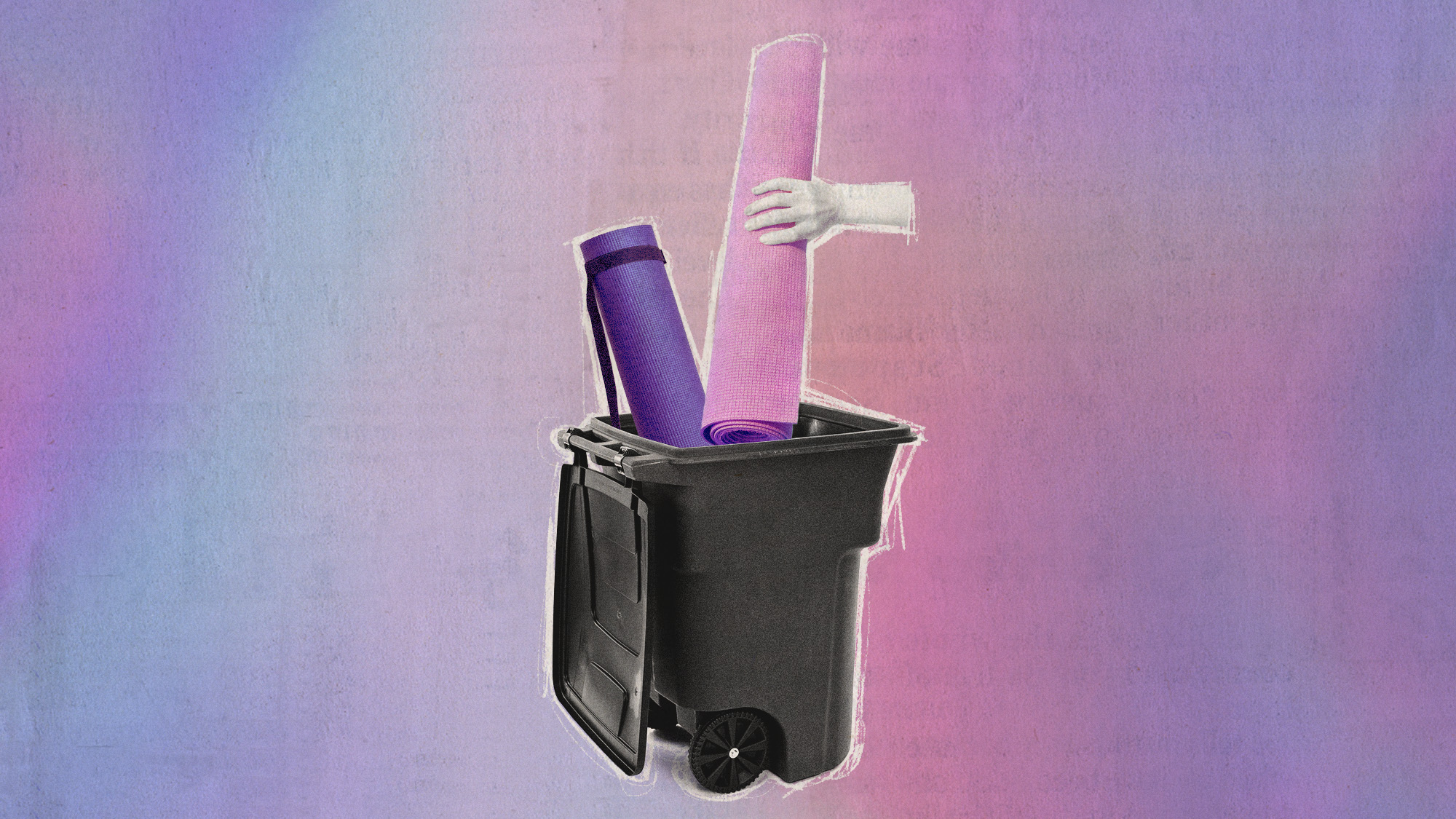
    Is yoga falling out of fashion?

    One of London’s top yoga studio chains abruptly shut down last month, leaving an estimated 100 of its teachers “blindsided” and without pay, said The Guardian. The collapse of Triyoga, once frequented by the likes of Kate Moss and Gwyneth Paltrow, is the latest signal that Brits may be falling out of love with yoga.

    ‘Economic headwinds’
    Yoga originated in India thousands of years ago as a spiritual discipline intended to unite the mind with the body by combining physical postures with breathing techniques. It was embraced by Western hippies in the 1960s, and by the Noughties, dedicated yoga studios were popping up across the UK and US.

    A “secondary boom”, propelled by the popularity of hot yoga, kept business brisk well into the 2010s, said The Telegraph. But then the coronavirus pandemic radically shifted the landscape. “When Covid shut down public life, yoga, like everything else, moved online.” City-centre yoga studios have since battled “relentless economic headwinds” amid a shift to remote working and a “growing exodus” to the suburbs and the countryside.

    World of ‘fitness-maxxing’
    Wellness enthusiasts “lugging oversized water bottles” are still everywhere, said The Telegraph, but their “exercise of choice is changing”. Adult participation in yoga has dropped from 4.2% of adults in 2019 to 3.8% in 2025, according to Sport England – a decline of around 115,000 people. Conversely, demand is growing for “low-cost, out-of-town gyms”.

    How we choose to exercise reflects “contemporary understanding of what it means to be well”, said The Atlantic. In the Noughties, yoga tied in with our quest for “stress reduction and mindfulness”, in contrast to the intense aerobics classes that defined the 1980s and 1990s. Today, we are living in a world of “fitness-maxxing”, where inner peace has lost out to a “social-media-driven obsession” with “outward perfection” forged through intensive, strength-based training methods, such as Reformer Pilates and Hyrox.

    Yoga’s sheer ubiquity may also have “triggered its cultural decline”. Some practitioners believe its rapid expansion and commercialisation in the West “trivialised” its spiritual roots and stripped away its authenticity. “In other words, yoga lost its cool.” But as with any wellness trend, that could change. When people turn back to seeking something “restorative”, they may decide yoga is the answer – again.


    Good day 🌎

    … for Nasa, which set a cosmic record this morning when its Voyager 1 spacecraft reached a distance of one light day – about 16 billion miles – from Earth. The probe, which has been travelling through space for 49 years, has gone farther than any other man-made object.


    Bad day 💉

    … for vaccination uptake, as the US loses its measles-free status after 26 years, amid record case numbers. The Pan American Health Organization has also withdrawn elimination status from Mexico and Bolivia, in a major setback that the international agency attributed to “persistent gaps in vaccination”. The UK was among several European nations officially declared no longer measles-free earlier this year. 


    PICTURE OF THE DAY

    Sour note

    Serbian actor and MP Lidija Vukićević is doused with yoghurt as she arrives at the National Assembly in Belgrade for the first parliamentary session since the election victory of the grassroots Student List movement. Vukićević is backing Aleksandar Vučić’s Serbian Progressive Party, which ruled for 14 years.

    AFP / Getty Images


    Puzzles

    Chain Word

    Try The Week’s daily word challenge in our puzzles and quizzes section, which also includes sudoku and Guess the Number

    Play here


    THE WEEK RECOMMENDS

    Cunk on Cinema: ‘blistering’ gags from Diane Morgan

    Britain’s “top mockumentarian”, Philomena Cunk, is back with a “gloriously silly” investigation into whether Hollywood is “finished”, said Rebecca Nicholson in the Financial Times. In the three-part BBC Two show, Diane Morgan’s comedic alter-ego takes us through a “slyly educational” history of film, with the help of a series of puzzled experts. “It works a treat, not least because of a blistering gag-to-screen-time ratio.”

    Like Cunk’s previous outings, this is “technically a prank show”, said Rachel Aroesti in The Guardian. “Half the fun is seeing how people react” to the “idiocy” of their interviewer. Among Cunk’s “British interlocutors” this time are film critic Mark Kermode, who looks “genuinely exasperated” by her “ludicrous misunderstandings”, and Benedict Cumberbatch, whose “irritation in the face of pointless questions about whether all actors like chickpeas seems put on”. The Americans (who include “Die Hard” writer Steven E. de Souza) are more “straightforwardly baffled”, but “tolerate Cunk’s tangents” with such grace that it never turns into “an exercise in gotcha-style cringe”. There are plenty of “proper belly laughs” and even when the script is “merely snigger-inducing”, it’s hard not to smile. 

    Cunk’s latest venture offers “some quite insightful descriptions of cinema’s evolution mixed in with the torrent of the absurd”, said James Jackson in The Times. But some of the humour, like her mistaking “slapstick” for “slaps dick”, feels like “something a 14-year-old boy would come up with”. I could have done with less of that.

    Not every joke can “land with a knockout blow”, said Nicholson in the Financial Times. “But the hit rate is strong in this daft and acidic delight.”


    Statistic of the day

    88: The combined current age of Glastonbury’s 2027 headliners, the festival’s youngest top-billing trio since 1997. Harry Styles, 32, Sam Fender, 32, and Billie Eilish, 24, have been announced as the main acts for the Pyramid Stage at Worthy Farm next June, while Cher will become the oldest singer to play the legends slot, at 81. 


    instant opinion

    Today’s best commentary

    Macron banned smartphones in schools. A month later, France was ablaze. Could they be connected?
    Joseph de Weck in The Guardian
    For any “shared political consciousness to form”, writes Joseph de Weck, “people need to break out of isolation, talk to one another and build trust”. That’s what happened in France when a government ban on phones in schools pushed pupils “back into the analogue world”. Abruptly “disconnected” from their online “matrix”, they “could no longer tune out the grim reality of the world they inhabit”. The result? They “walked out of school and joined mass protests”. The “war on les écrans” has “unleashed a storm”.
     
    How Britain led America down the K-hole
    Poppy Sowerby on UnHerd
    Ketamine has long been the “king” of party drugs in Britain, writes Poppy Sowerby, but “the US has started to catch up”. Ket appeals to Zoomers because, unlike cocaine, the high brings a “glorious stultification”, dovetailing with “this generation’s favourite lonely pastimes” of “withdrawing, turning in”. But it comes “with consequences”: witness the UK’s “unglamorous epidemic of youths addled by memory loss, psychosis, addiction” and “chronic bladder issues”. It’s “a drug with real dangers” tempting “a nation all too ready to tune out”.

    Go on, begin Christmas in November
    Daniel Seifert in The Spectator
    I used to “grimace” at “Mariah Carey carols in mid-November”, writes Daniel Seifert. But “as this Grinch ages, his heart mellows”, and I now admit “there’s something rather fab about getting into the festive lane early”. Our tree was up “three weeks before December even begins” and “my spirits have followed suit”. The cause of this “Dickensian Damascene conversion” is “no mystery”: in “dismal times”, you find happiness by “dragging the cheerful future towards you”. Let’s all “cast off the shackles of stroppiness” and “celebrate early”.


    word of the day

    Human

    “Having the qualities, faults, and feelings that people have, as opposed to gods, animals, or machines,” according to the Cambridge Dictionary, which has chosen “human” as its word of 2026. As AI blurs the “boundaries between people and machines”, the dictionary said in a statement, “the year has been defined by global debates on what it means to be human”.


    Evening Review was written and edited by Hollie Clemence, Rebecca Messina, Chas Newkey-Burden, Irenie Forshaw, Helen Brown, David Edwards and Kari Wilkin, with illustrations from Stephen P. Kelly.
    Image credits, from top: illustration by Stephen P. Kelly / Getty Images; Radek Mica / AFP / Getty Images; illustration by Julia Wytrazek / Getty Images; BBC / Pacesetter Productions / Matt Kennedy
     

    Recent editions

    • Morning Report

      EU youth mobility deal may not take effect until 2030

    • Evening Review

      Age of consent under scrutiny

    • Morning Report

      Forensic expert says Epstein was murdered

    VIEW ALL
    TheWeek
    • About Us
    • Contact Future's experts
    • Terms and Conditions
    • Privacy Policy
    • Cookie Policy
    • Advertise With Us
    • FAQ
    Add as a preferred source on Google Add as a preferred source on Google

    The Week UK is part of Future plc, an international media group and leading digital publisher. Visit our corporate site.

    © Future Publishing Limited Quay House, The Ambury, Bath BA1 1UA. All rights reserved. England and Wales company registration number 2008885.