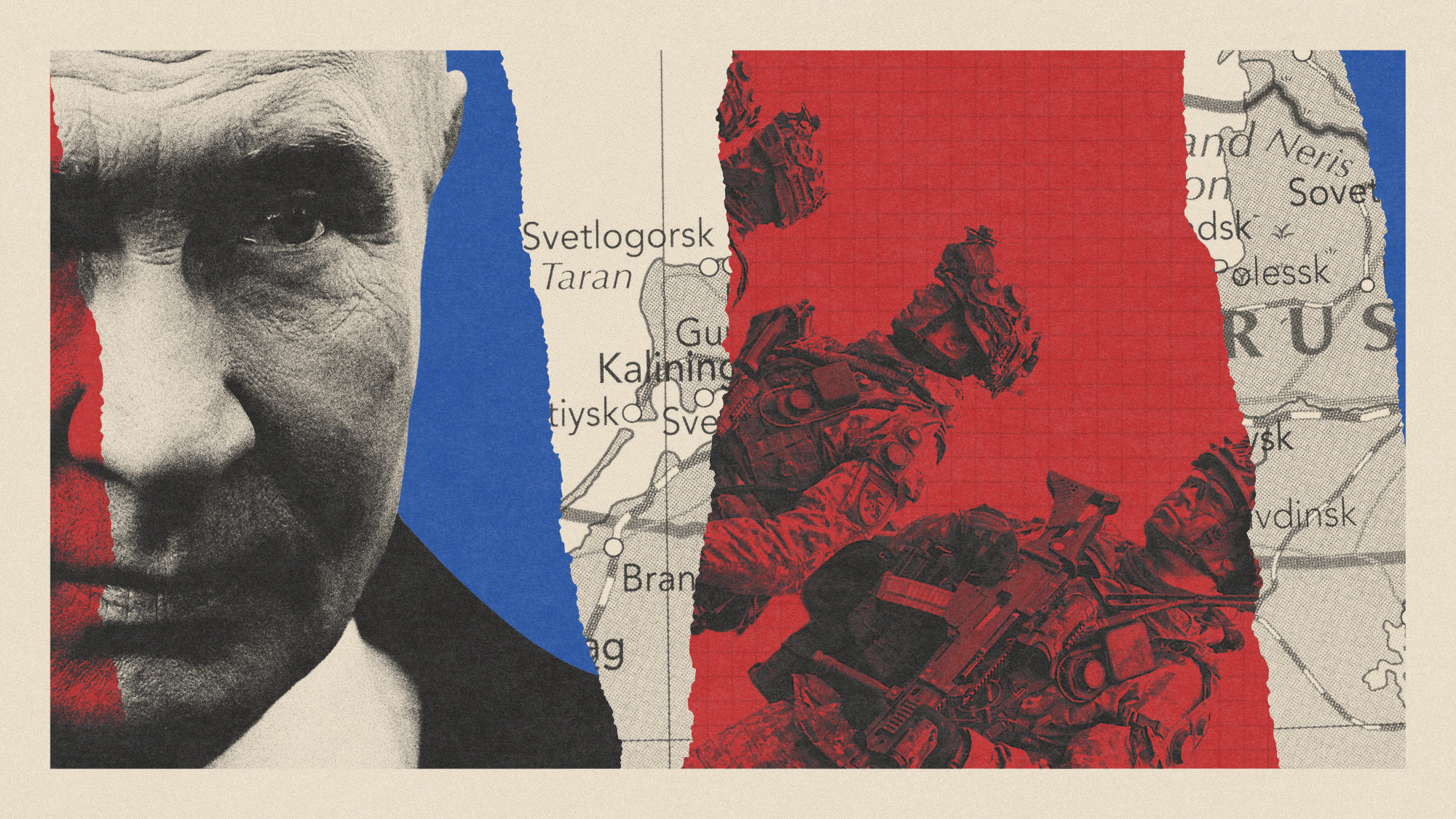
Kaliningrad has long been a geographical anomaly. Sandwiched between Poland and Lithuania on the Baltic coast, the Russian exclave is completely cut off from Russia. Yet the Kremlin has repeatedly warned against any attempt to threaten the territory, vowing to defend it at all costs, including with nuclear weapons if necessary. Now, security analysts are warning that Kaliningrad could become a flashpoint if Vladimir Putin decides to escalate tensions with Nato.
What is Russia doing there?
The East Prussian city of Koenigsberg was renamed Kaliningrad after being annexed by the Soviet Union at the end of the Second World War. Kaliningrad was also the name given to the entire region, which is home to around a million Russian citizens.
As well as being granted “special economic status” in 1996, the highly militarised territory is of “great strategic importance to Moscow”, said the BBC. The Russian Baltic Fleet is based in the exclave, at Baltiysk, the country’s only ice-free European port. Kaliningrad provides Russia with a “platform for air defence, missile and naval forces that can project power deep into northern and central Europe while also restricting Nato forces’ ability to reach the Baltic member states overland” across the Suwałki Gap, said Reuters.
Why is it a problem for Nato?
The Suwałki Gap is the 40-mile section of the Polish-Lithuanian border that separates Kaliningrad from the Russia-friendly and authoritarian state of Belarus. From Nato’s perspective, it “poses a tremendous risk to the Baltics and is viewed as the alliance’s single greatest terrestrial vulnerability”, said Daniel Peris on Engelsberg Ideas. The “dual character of the Suwałki Gap – dangerous to both Russia and Nato – encapsulates the predicament in which Kaliningrad places Moscow”.
Why are tensions rising?
When Russia invaded Ukraine in 2022, Lithuania restricted transit of sanctioned goods through its territory. So Kaliningrad is “not just strategically exposed in the event of war” but also relies “on a transit agreement with Lithuania”, a “point of great sensitivity for Moscow”, said The Times. Russia has responded by increasingly using Kaliningrad as a forward operating hub for hybrid warfare attacks against EU and Nato countries. The Western military alliance has “also become markedly more explicit about its readiness to obliterate Kaliningrad’s military infrastructure should Russia start a war against the alliance”.
“Any miscalculation could lead to a direct military confrontation,” said The Independent. |