The Week The Week
flag of US
US
flag of UK
UK
https://cdn.mos.cms.futurecdn.net/flexiimages/jzblygzdxr1769609154.gif

SUBSCRIBE

Try 6 weeks free

Sign in
  • View Profile
  • Sign out
  • The Explainer
  • Talking Points
  • The Week Recommends
  • Podcasts
  • Newsletters
  • From the Magazine
  • The Week Junior
  • More
    • Politics
    • World News
    • Business
    • Health
    • Science
    • Food & Drink
    • Travel
    • Culture
    • History
    • Personal Finance
    • Puzzles
    • Photos
    • The Blend
    • All Categories
  • Newsletter sign up Newsletter
  • WeekDay AM: 10 Things you need to know this morning
    Kushner meets Hamas, Reform’s radical welfare plan, and a summer jobs comeback

     
    today’s international story

    Kushner holds rare Hamas talks

    What happened
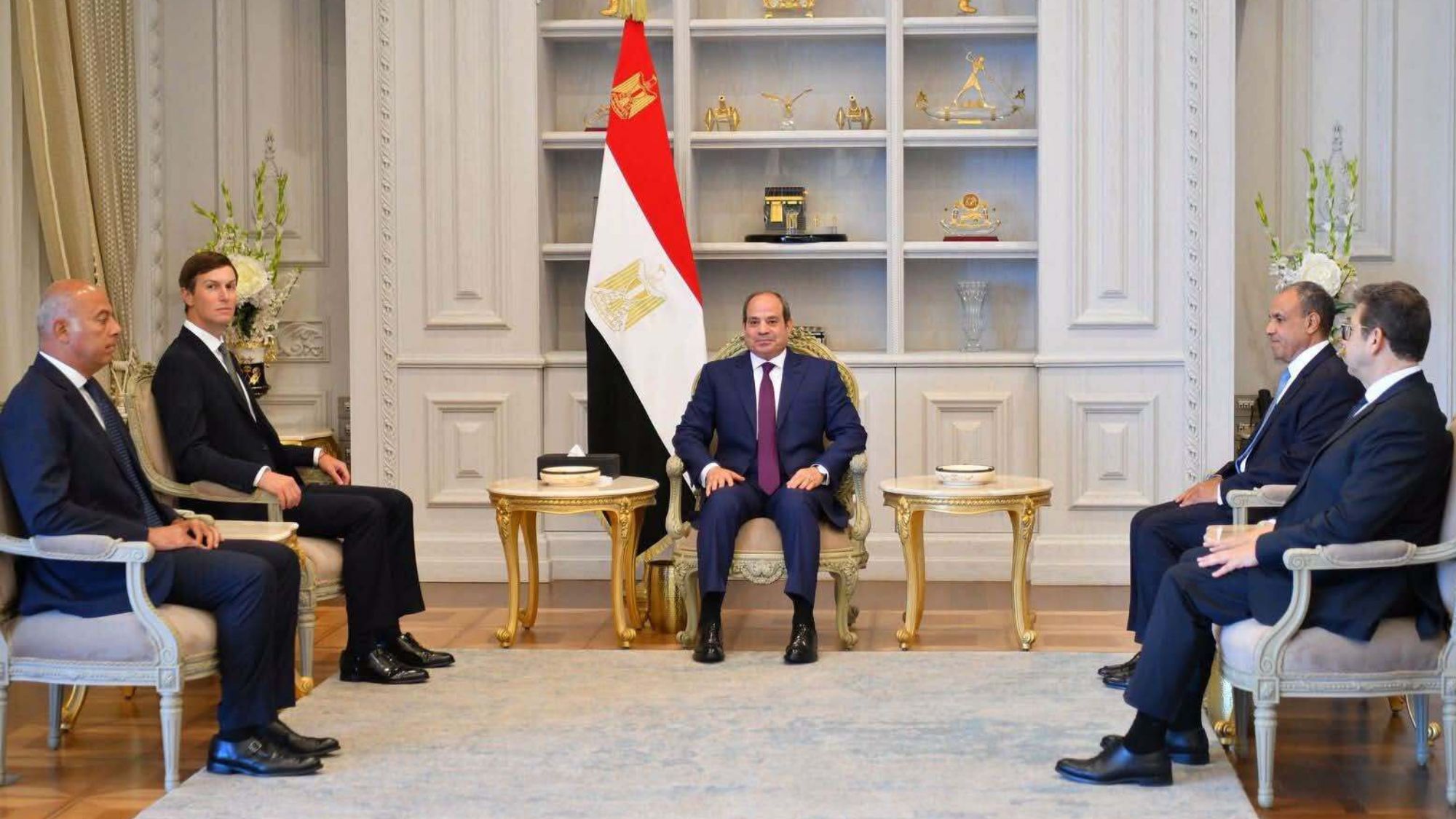
    Donald Trump’s Middle East envoy Jared Kushner has met Hamas political leader Khalil al-Hayya in Egypt as the Trump administration tries to revive a US-backed proposal for ending the Gaza conflict. The meeting lasted more than two hours and included representatives from Egypt, Qatar and Turkey. The US president’s son-in-law is also due to meet with Israeli Prime Minister Benjamin Netanyahu today.

    Who said what
    Hamas says it remains committed to the agreement as it was proposed and wants mediators to begin negotiations on how it can be implemented. Several regional governments criticised Netanyahu after he recently rejected the 15-point proposal.

    Kushner’s visits to Israel and Egypt “are an effort to narrow differences over Trump’s latest roadmap for Gaza”, said Al Jazeera. At stake “is the survival of approximately 2 million people in Gaza and the rebuilding of the densely populated enclave”, said Samy Magdy in The Independent.

    “Direct talks between the US government and Hamas, which the United States has designated as a terrorist organisation, were once rare,” said Aaron Boxerman and Zolan Kanno-Youngs in The New York Times. “But the Trump administration broke that taboo.”

    What next?
    Kushner, Tony Blair and Nickolay Mladenov, director-general of the Board of Peace, will meet Netanyahu today. The main disputes remain Hamas’s disarmament and the Israeli withdrawal, with reconstruction and international security arrangements dependent on reaching agreement on those sticking points. Netanyahu faces an election in October.


    today’s politics story

    Reform’s welfare ban for foreigners branded ‘cruel’

    What happened
    Reform UK has proposed preventing more than one million foreign nationals living in Britain from receiving most state benefits if it wins power. The party says the policy will form part of a wider programme intended to reduce welfare spending by more than £50 billion. It extends an existing pledge targeting Universal Credit to include housing support, child benefit, pension credit and disability payments.

    Who said what
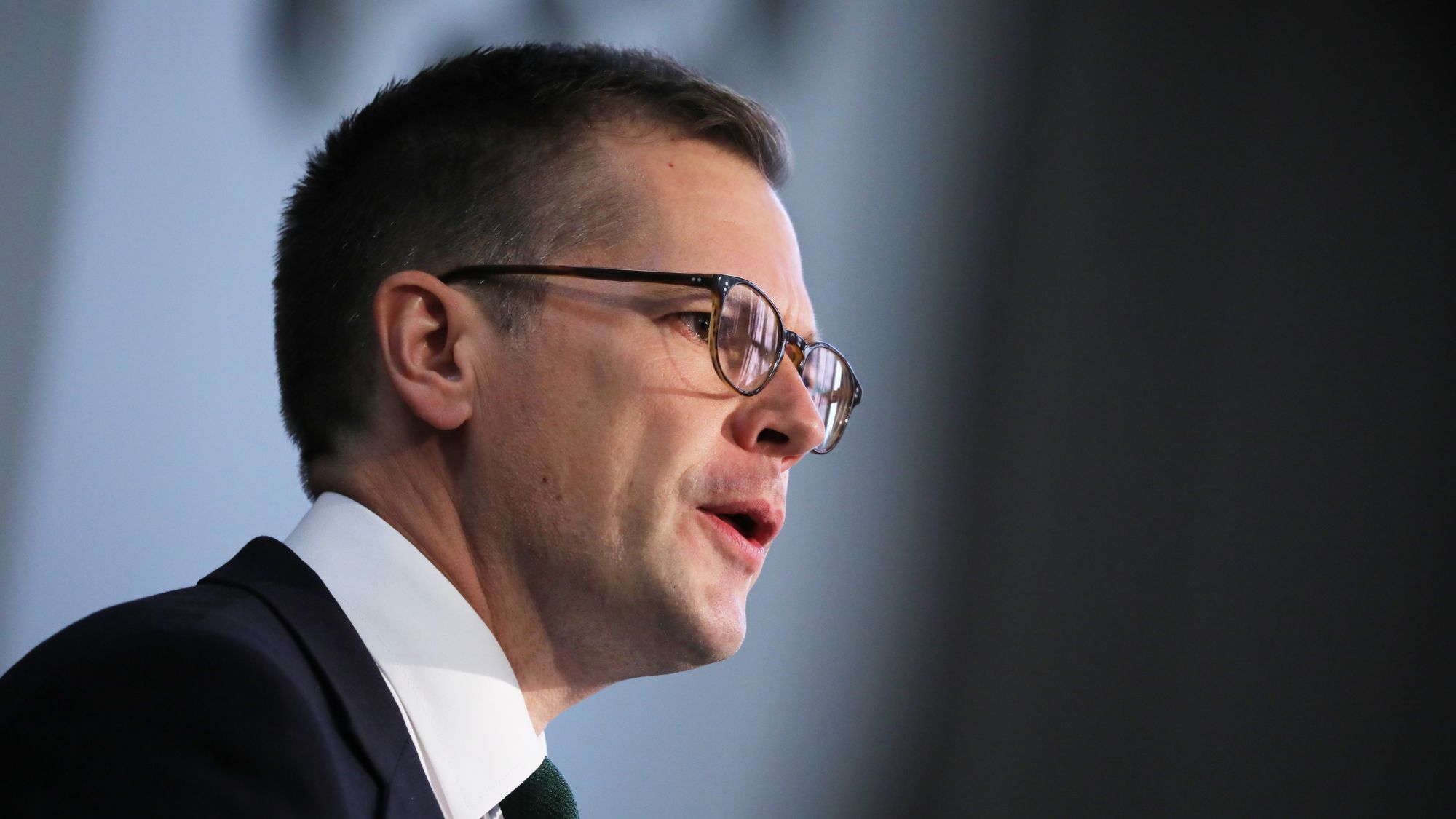
    Reform UK’s Treasury spokesperson Robert Jenrick (pictured above) said taxpayers should not be expected to finance benefits for people who had not contributed to the system. He described the current arrangement as “plain immoral”.

    Labour said the proposal would penalise people who had legally settled in Britain, while the Conservatives accused Reform of using the announcement to distract from the political controversies surrounding Nigel Farage. Liberal Democrat work and pensions spokesperson Steve Darling said the proposal was “senseless and cruel”.

    It would also not be straightforward, said Aubrey Allegretti and Seren Hughes in The Times. The plan to strip benefits from EU citizens with settled status in particular “would require difficult negotiations”.

    What next?
    The proposal would “affect 4.5 million EU citizens in the UK” and require Reform to “renegotiate the Brexit deal with Brussels”, said Charles Hymas in The Telegraph. It would no doubt also “mean that British residents living in Europe, and entitled to claim benefits in their host country, would lose their reciprocal rights”.


    Today’s Military story

    US admiral acknowledges hardships on USS Lincoln

    What happened
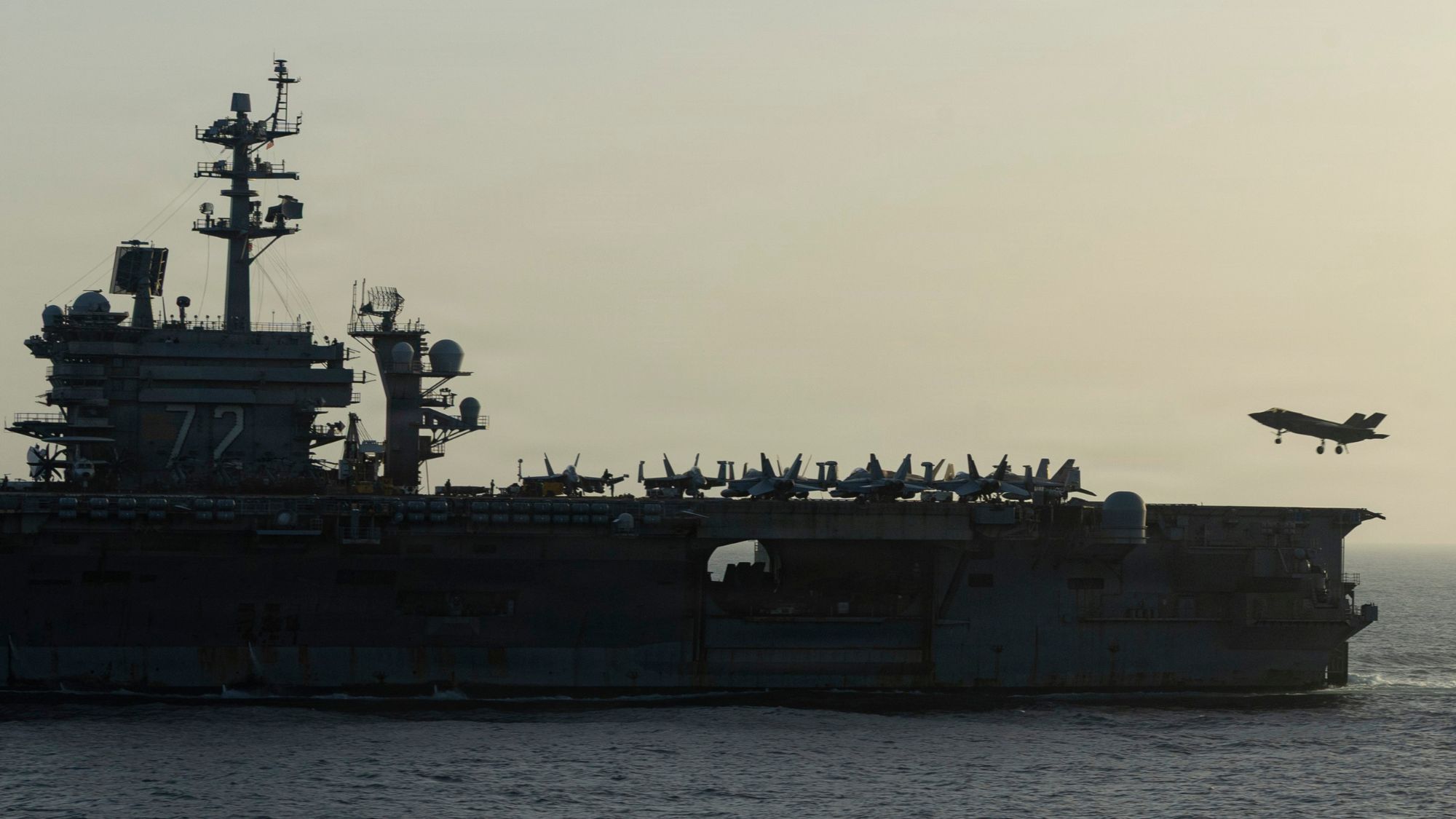
    The senior US military officer overseeing operations in the Middle East has highlighted mental wellbeing aboard the USS Abraham Lincoln following reports of worsening conditions during its exceptionally long deployment. The aircraft carrier has been at sea for more than 240 days and has been supporting US operations against Iran, including a blockade of Iranian ports. Families have raised concerns about sailors’ wellbeing, with stories emerging of attempts by crew members to jump overboard.

    Who said what
    Admiral Brad Cooper, the leader of the US Central Command, said after visiting the ship that the mental health of the crew was a “priority”. Cooper’s visit and statement “follow reports of widespread morale and mental health issues aboard the Lincoln”, said Garrett Downs on CNBC. Democratic senators have demanded answers about the deployment, while Defence Secretary Pete Hegseth has rejected the accounts of poor conditions. Donald Trump said the sailors had not been deployed for “nearly long enough”.

    What next?
    The 5,000 personnel aboard the Lincoln are expected to be relieved by the USS George Washington, which could reach the region within days. The deployment, originally scheduled to finish in May, has been repeatedly extended. Reports of sanitation problems, faulty plumbing and limited fresh food are likely to face further scrutiny.


    It’s not all bad

    The traditional summer job is making a comeback, with hot weather and a packed calendar of sporting, music and cultural events driving a rise in seasonal hiring. Hospitality and tourism job ads across the UK have increased by double digits compared with last summer, according to the Recruitment and Employment Confederation. The organisation said there were clearly more opportunities for young people, who often rely on seasonal work for their first experience of employment.


    under the radar

    ‘Breakthrough’ in notorious Mexican disappearance case

    The disappearance of 43 students in 2014 has come to symbolise Mexico’s “brutal cartel violence and government impunity”, said The Guardian.

    The case “rocked” the nation – and continues to “haunt” it. Now, the former governor of the state of Guerrero has been formally charged over his alleged involvement after a judge ruled that Mexico’s attorney general had sufficient evidence to proceed.

    Ángel Aguirre, who resigned as governor a month after the students vanished, is accused of “forced disappearance” as well as “obstruction of justice” for ordering the destruction of surveillance footage that “may have shed light on what happened”. He has been ordered to remain in maximum-security detention pending trial. A lawyer for Aguirre denied any wrongdoing.

    In September 2014, 43 students from the Ayotzinapa Rural Teachers’ College “commandeered several buses” in the city of Iguala, Guerrero state, in order to get to a protest in Mexico City, said The Associated Press.

    The local cartel is believed to have attacked the students “in collusion with security forces as well as local, state and federal authorities, including the military”. The students are presumed to have been killed, but only the bone fragments of three of them have ever been identified.

    The case, considered one ​of Mexico’s “worst human-rights atrocities”, has been “marred by missteps and interference”, said Reuters. But Aguirre’s indictment is the “biggest breakthrough” since the 2022 arrest of Jesús Murillo Karam, who was Mexico’s attorney general in 2014, added The Guardian. Karam faces charges of forced disappearance, obstruction of justice and torture.

    “We want no more deception,” said Meltión Ortega, spokesperson for the 43 students. The victims “deserve to have the actual perpetrators and the masterminds punished”.


    on this day

    17 August 1945

    Indonesia declared its independence from the Netherlands, launching the Indonesian National Revolution against Dutch colonial rule. In June Dutch Prime Minister Rob Jetten formally apologised for the “heartless” mistreatment of thousands of Moluccan soldiers who fought for the Dutch colonial army during Indonesia’s struggle for independence.


    Today’s newspapers

    ‘Pool bans’

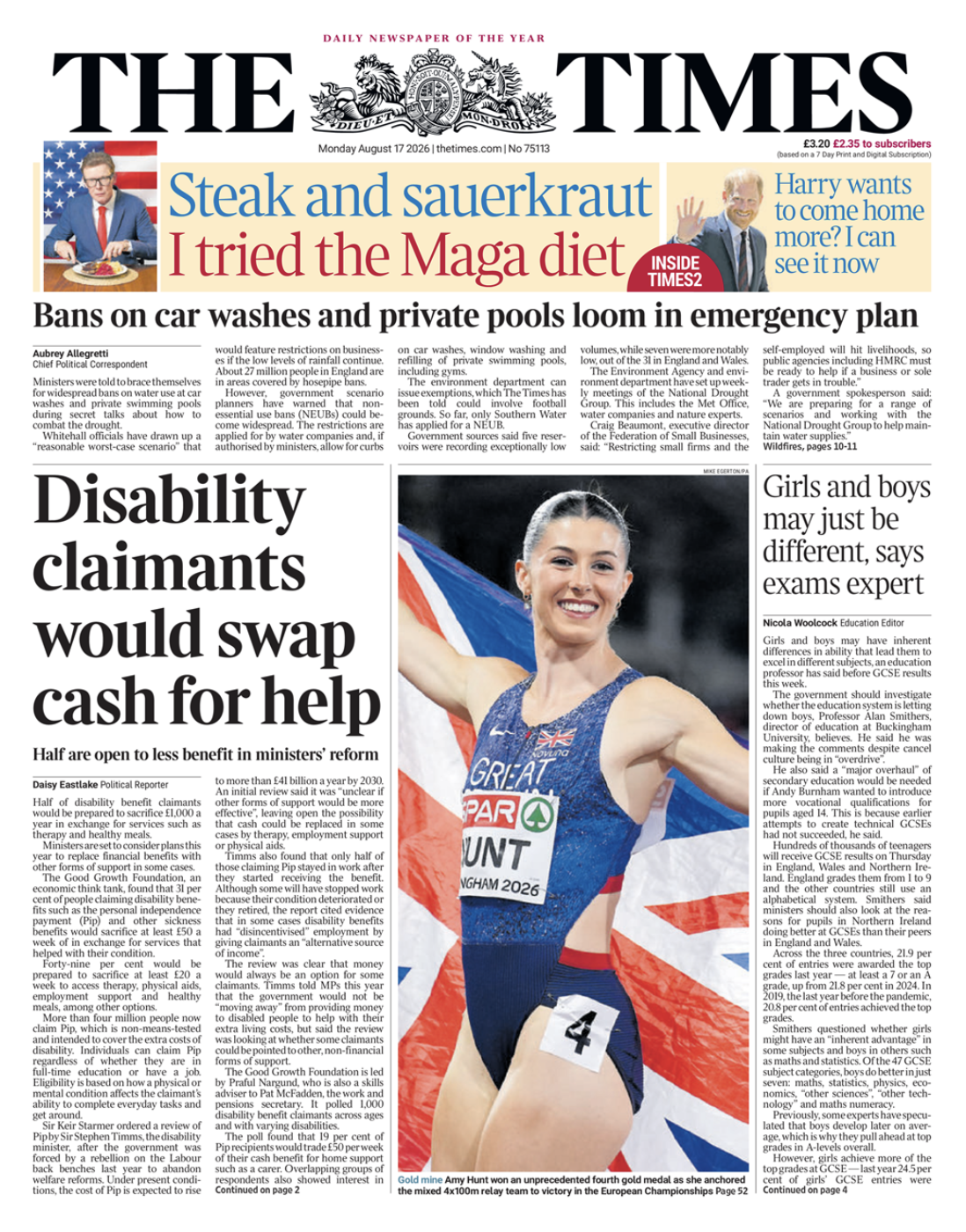
    Ministers have been told to “brace themselves” for “bans on car washes and private pools”, The Times says. “Water bloody cheek”, says the Daily Star, as water companies are allowed to increase prices during droughts. “Water cheek”, echoes Metro. “Russia’s secret bases threaten Nato”, says The Telegraph. “Royals face £10m bill to insulate rentals”, The Guardian reports. The Independent leads with statistics from record heatwaves and wildfires, reporting on “our burning world”.

    See the newspaper front pages


    tall tale

    Let sleeping bears lie

    An unnamed person has been fined for using a foghorn to wake up a sleeping polar bear in Norway. The offender sounded the horn from a vessel that was sailing past the Svalbard archipelago. Local regulations state that “it is forbidden to needlessly disturb, attract or pursue” polar bears, which were declared a protected species in Svalbard in the 1970s. The offender was fined 50,000 kroner (£3,890). In a similar case in 2024, a tourist was fined 11,500 kroner (£900) for “getting too close to a walrus”, said the BBC.


    Morning Report was written and edited by Arion McNicoll, Jamie Timson, Harriet Marsden, Ross Couzens and Chas Newkey-Burden, with illustrations by Julia Wytrazek.

    Image credits, from top: Egyptian Presidency / Handout / Anadolu / Getty Images; Alishia Abodunde / Getty Images; Handout Photo by the US Navy / Getty Images; Illustration by Stephen P. Kelly / AP Photo.

    Morning Report and Evening Review were named Newsletter of the Year at the Publisher Newsletter Awards 2025
     

    Recent editions

    • Sunday Shortlist

      An ‘electrifying’ Game of Thrones dramatisation

    • Saturday Wrap

      Badenoch sticks her neck out

    • Evening Review

      Did Farage’s ploy pay off?

    VIEW ALL
    TheWeek
    • About Us
    • Contact Future's experts
    • Terms and Conditions
    • Privacy Policy
    • Cookie Policy
    • Advertise With Us
    • FAQ
    Add as a preferred source on Google Add as a preferred source on Google

    The Week UK is part of Future plc, an international media group and leading digital publisher. Visit our corporate site.

    © Future Publishing Limited Quay House, The Ambury, Bath BA1 1UA. All rights reserved. England and Wales company registration number 2008885.