The Week The Week
flag of US
US
flag of UK
UK
https://cdn.mos.cms.futurecdn.net/flexiimages/jzblygzdxr1769609154.gif

SUBSCRIBE

Try 6 weeks free

Sign in
  • View Profile
  • Sign out
  • The Explainer
  • Talking Points
  • The Week Recommends
  • Podcasts
  • Newsletters
  • From the Magazine
  • The Week Junior
  • More
    • Politics
    • World News
    • Business
    • Health
    • Science
    • Food & Drink
    • Travel
    • Culture
    • History
    • Personal Finance
    • Puzzles
    • Photos
    • The Blend
    • All Categories
  • Newsletter sign up Newsletter
  • WeekDay AM: 10 Things you need to know this morning
    RAF base bomb plot, standoff in Northern Ireland, and the Aussie bee heists

     
    today’s crime story

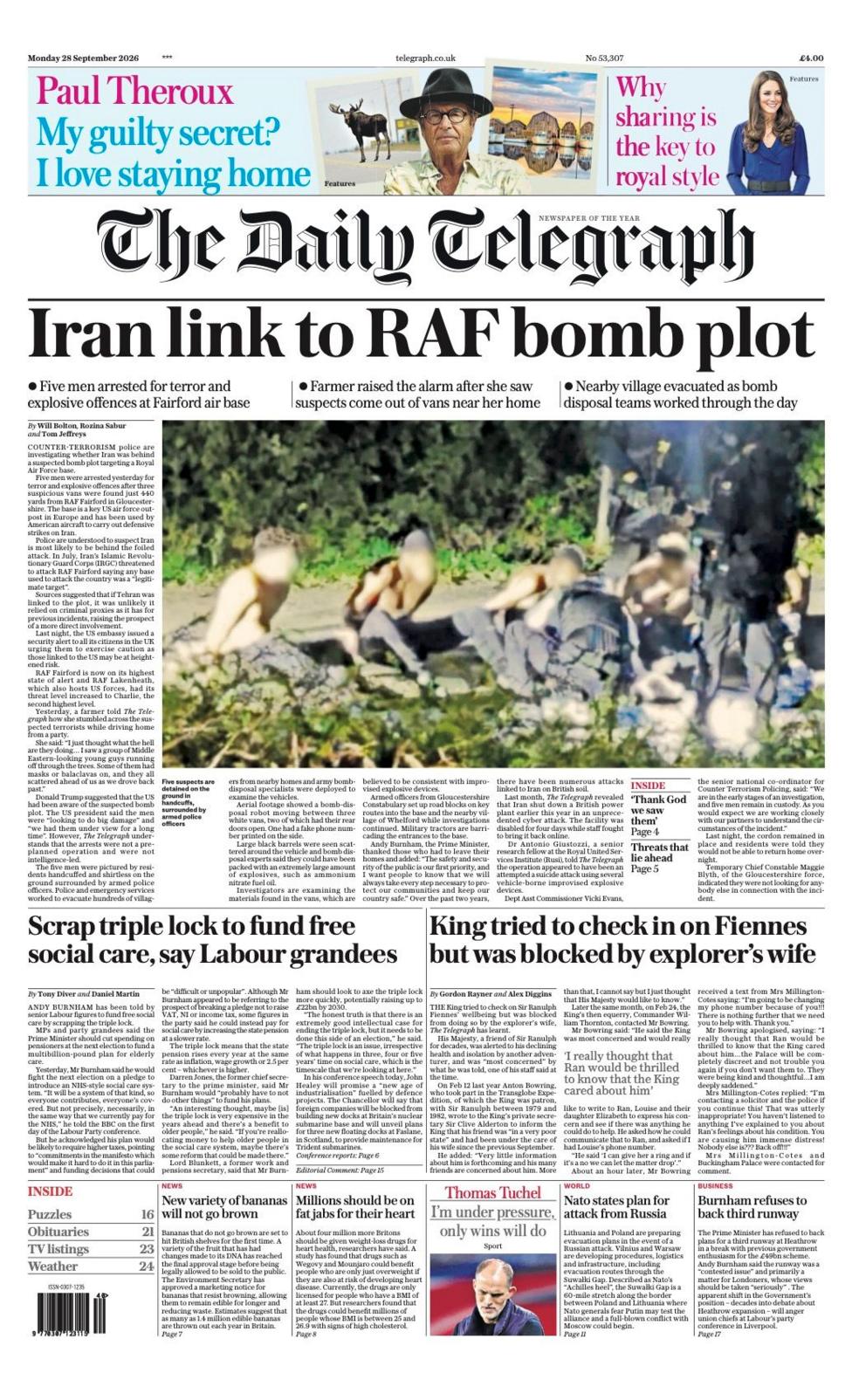
    Five arrested over suspected RAF base bomb plot

    What happened
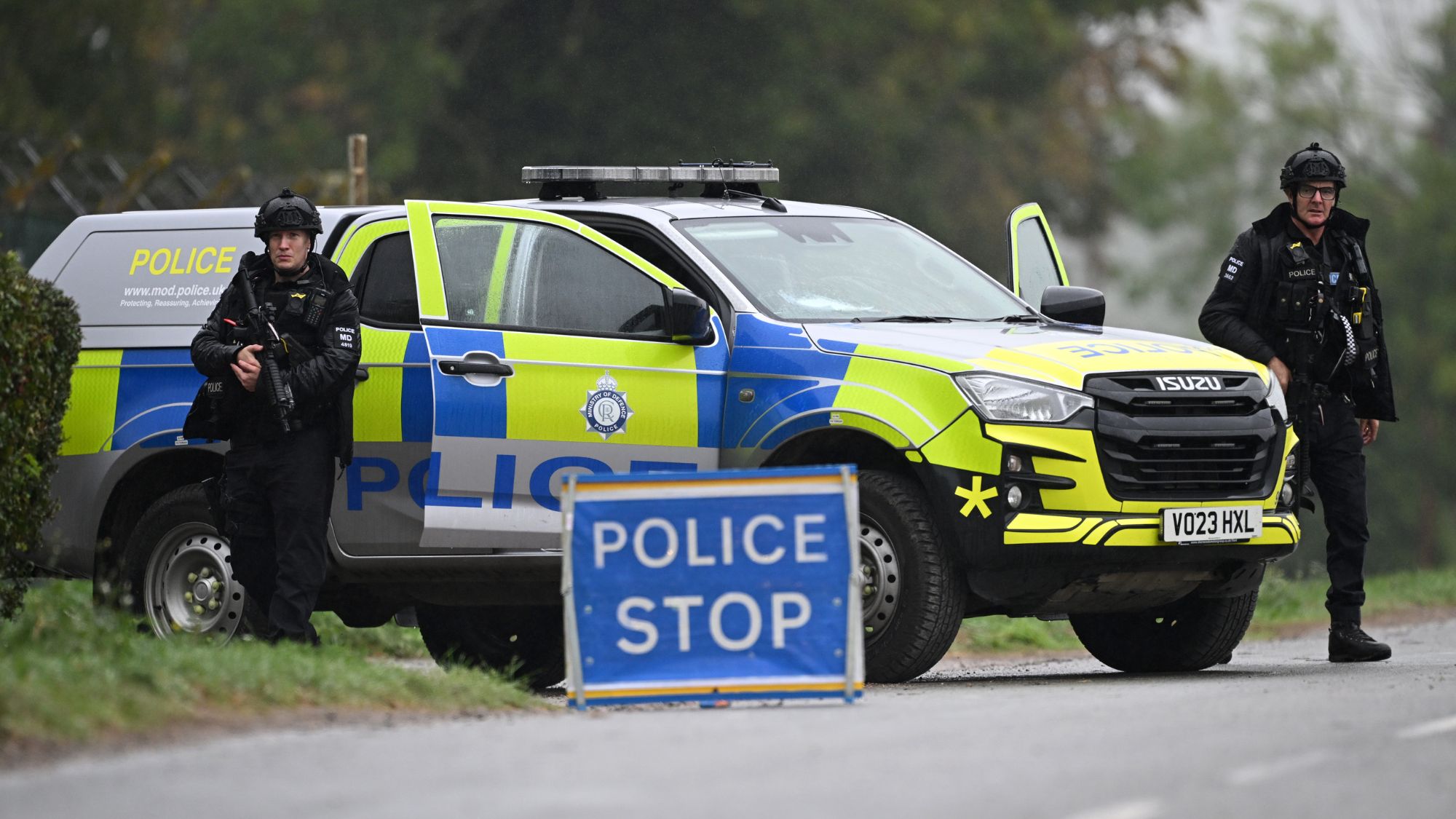
    Five men have been detained after police were alerted to three vehicles travelling towards RAF Fairford in Gloucestershire shortly after midnight yesterday. A major emergency operation followed, with about 85 households in the nearby village of Whelford evacuated and a 400m exclusion zone established. Army bomb disposal specialists examined vehicles close to the US Air Force facility, while counter-terrorism officers took charge of the investigation. The men were initially detained under the Explosives Act before being arrested on suspicion of preparing a terrorist act.

    Who said what
    Donald Trump claimed that the alleged plot was “looking to do big damage” to RAF Fairford, which has been a forward operating base for the US Air Force since the Cold War. It is a “slice of America in the heart of England”, said James Landale on the BBC, and, in recent months, “has been used by America to launch defensive operations against Iran”, said Amy-Clare Martin in The Independent.

    It was a farmer’s “chance encounter” that led to the terrorism arrests, said Jamie Grierson and Helena Horton in The Guardian. The farmer, who asked not to be named, was driving home from a party when she saw three white vans and a “large group of hooded and balaclavaed” men. She called 999 and police arrived on the scene 15 minutes later.

    What next?
    The five men remain in custody while investigators continue to examine the vehicles. The US has raised the security alert level at another of its airbases, RAF Lakenheath in Suffolk.


    today’s UK story

    Parade sparks tense standoff in Northern Ireland

    What happened
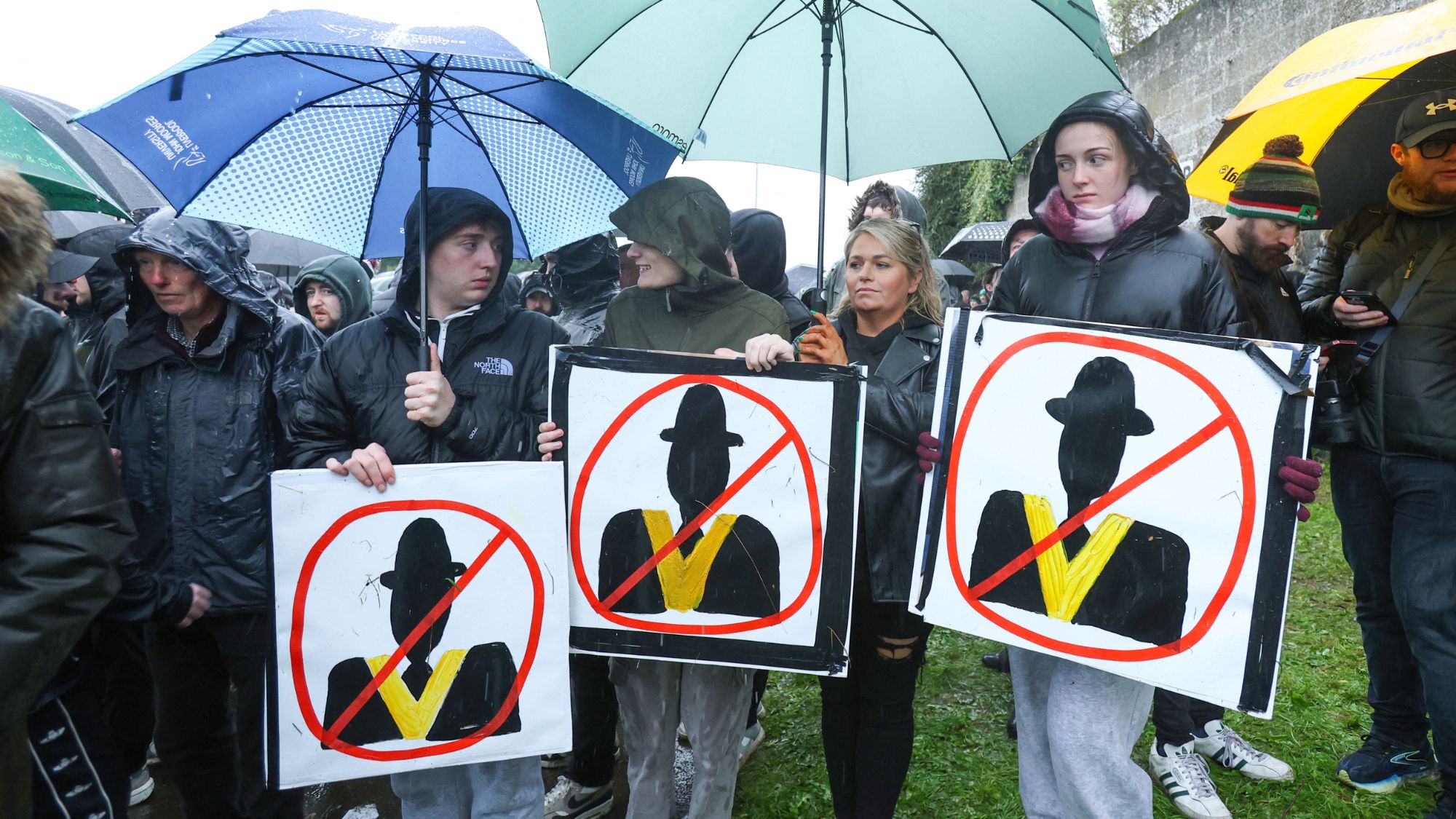
    Hundreds of nationalist protesters gathered in Portadown yesterday to prevent an Orange Order procession from reaching the Garvaghy Road area, which is predominantly Catholic. The march had been authorised for the first time since 1998 after a series of court hearings that ended shortly after 2am yesterday. Protesters linked arms and remained on the road as police warned that they could face arrest. The Orange Order waited at Drumcree Church, where organisers said they would not proceed until officers confirmed that the route was open. The authorised procession was limited to 35 people and required to begin at 8am in silence.

    Who said what
    Sinn Féin president Mary Lou McDonald called the court decision “madness”, while First Minister Michelle O’Neill said it had left families “collectively traumatised”. DUP leader Gavin Robinson accused politicians of undermining the rule of law. Northern Ireland Secretary Chris Bryant urged the respective leaders to lower tensions, while Irish Taoiseach Mícheál Martin called the decision “incomprehensible and wrong”. Prime Minister Andy Burnham appealed for calm.

    The Garvaghy Road dispute “echoes its past as a major Troubles-era flashpoint”, said Iain Gray in The News Letter, one of Northern Ireland’s main daily newspapers. “The situation got so bad that for several years the army was sent in.”

    What next?
    The courts have declined to overturn the Parades Commission’s ruling.


    Today’s social care story

    Wife stymies King’s attempt to contact explorer Fiennes

    What happened
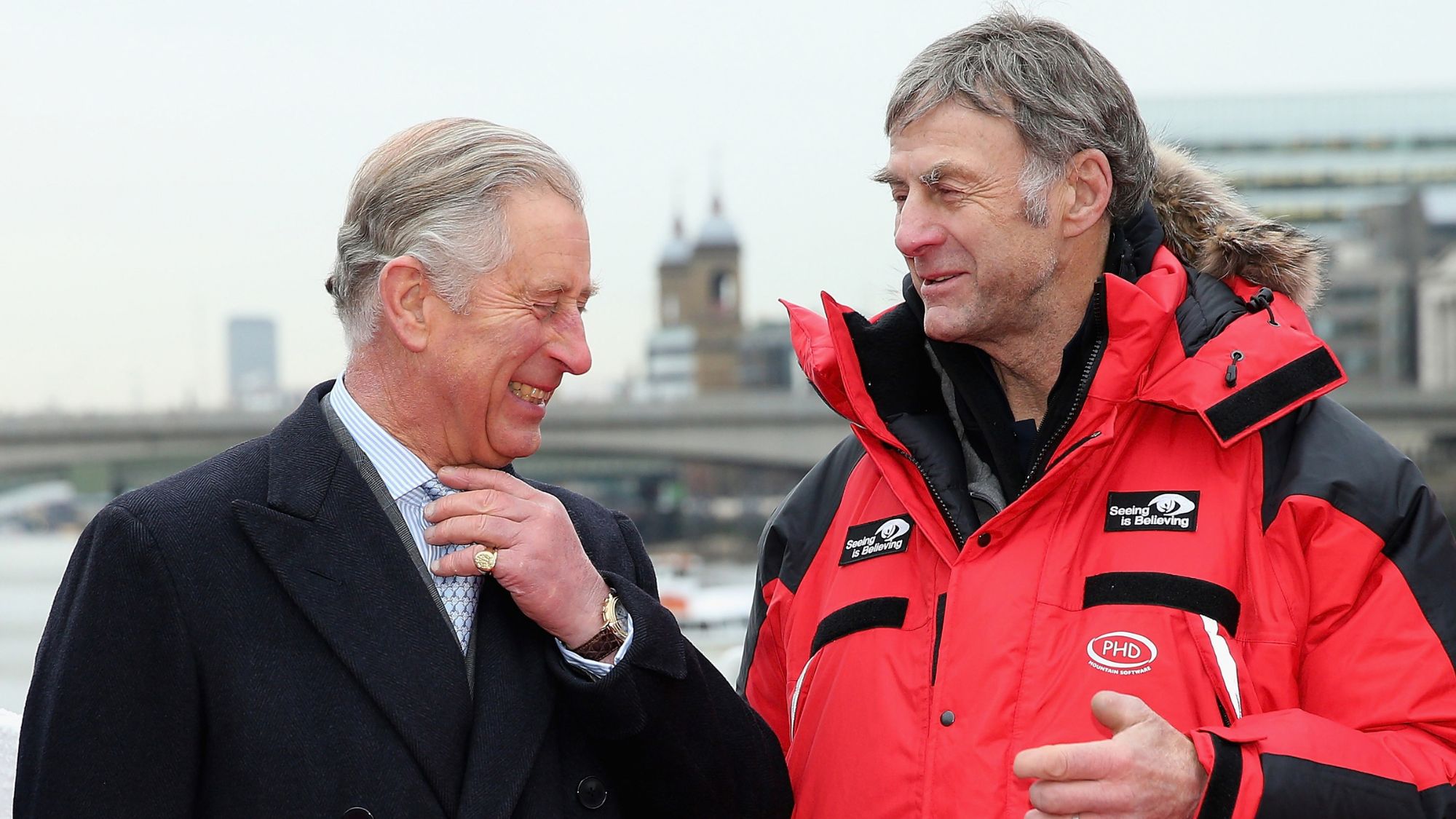
    The King reportedly tried to establish contact with explorer Ranulph Fiennes (pictured above with the monarch) after being told of concerns about his health and isolation. Adventurer Anton Bowring wrote to the King about Fiennes, 82, who has Parkinson’s and several other medical conditions, and has not been seen publicly for two years. A Palace aide subsequently contacted Bowring to ask how the King could reach Fiennes. Bowring supplied a number belonging to Fiennes’s wife, Louise Millington-Cotes, who reportedly reacted angrily. Fiennes’s stepson, Alex Millington, has also raised concerns and is seeking to challenge his mother’s lasting power of attorney over the explorer.

    Who said what
    Millington said Fiennes appeared to have been kept “effectively annexed in the other end of the house” with limited contact with others. Adventurer Ben Fogle said he was “deeply disturbed” by the reports concerning his friend and called for an investigation. Millington-Cotes has rejected attempts by friends to contact Fiennes, with a message to Bowring warning: “Back off!!!”

    What next?
    Millington is raising £55,000 to help cover the costs of his legal challenge. Fiennes has been moved to care homes in Wales and Cheshire, “but his current whereabouts are unknown”, said Gordon Rayner in The Telegraph. Famous friends of his, including Fogle, Bear Grylls and Joanna Lumley, have called for an investigation into his wellbeing by the Office of the Public Guardian.


    It’s not all bad

    A new NHS test can identify brain tumours in as little as two hours, cutting diagnosis times that had taken up to eight weeks. The genomic test analyses a tumour’s DNA and can even provide results while surgeons are operating, helping guide how much tissue to remove. The technology is being piloted at five specialist centres in England, with plans to expand it to four more, potentially allowing patients to begin treatment and access clinical trials sooner.


    under the radar

    The great Australian bee robberies

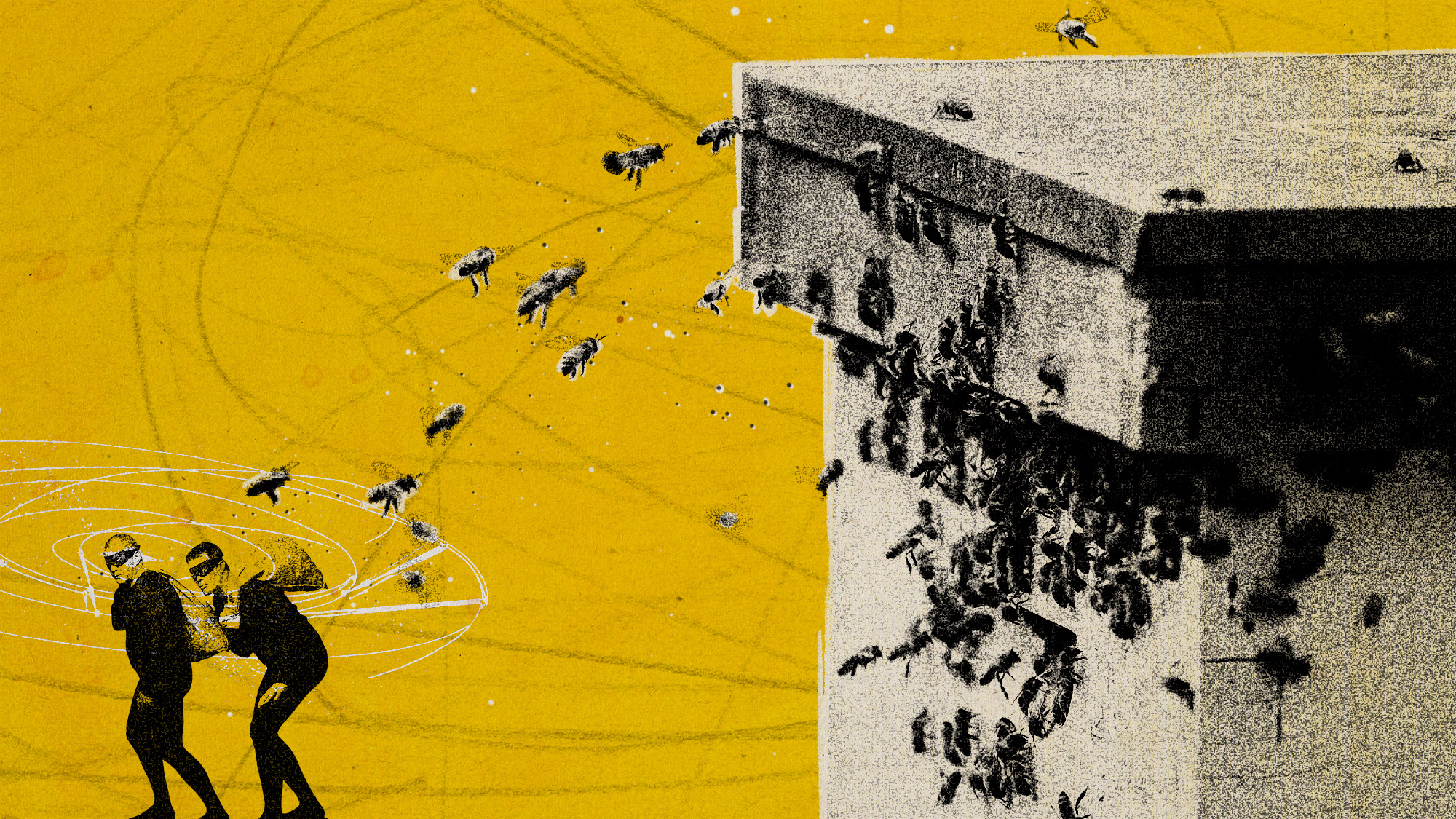
    Beekeepers in Australia are “abuzz” at the news that “a series of stunning heists” had caused the disappearance of 800,000 bees, according to the Smithsonian magazine.

    The loss of the stolen insects – which are worth tens of thousands of dollars to  members of the “apiary community” in and around Queensland – has also “sparked concerns” for regional food production and comes at a tricky time for the sector.

    The thefts occurred across multiple properties and required a sophisticated operation, with the thieves taking the entire brood boxes – “the colony’s breeding system” – in order to avoid detection.

    The culprit is thought to be from a “commercial operation” rather than being a “hobby farmer”, a police detective told ABC.

    The apiarists don’t just lose the insects and honey they would have produced, but the value of pollination contracts, which can be worth thousands of dollars. Many bees are used at avocado farms in Queensland to pollinate the crops, so the thefts could have a knock-on effect for other food production.

    To compound the “impact of lost revenue” and the “difficulty of recovering stolen populations”,  a bee-killing parasite, the varroa mite, has recently been detected in the region, added the Smithsonian.

    In 2022 Australia was the last inhabited continent on which varroa was detected and, just over a year later, the parasite had become “so widespread” that the government “abandoned its eradication efforts” after it had spent more than $A100 million (£53 million) to try to prevent the mite’s spread. This decision has “shifted additional expenses and burdens on to apiarists”.


    on this day

    28 September 1928

    Scottish born pharmacologist Alexander Fleming accidentally discovered what later became known as penicillin when he found that a mould had developed on a contaminated staphylococcus culture plate. This month a plaque was erected in Sheffield to honour Cecil Paine, who was part of a University of Sheffield research team that was the first to successfully use penicillin as a therapeutic treatment in 1930.


    Today’s newspapers

    ‘Iran link’

    There’s an “Iran link” to the incident at RAF Fairford, says The Telegraph. “Farmer foils RAF bomb plot”, says The Sun. “They were looking to do big damage”, says the Daily Star, quoting Donald Trump. “Let’s be Apping you,” says Metro, exploring whether the suspected “terror plot” was foiled by a village WhatsApp group. “Tax rise talks at No 10 pay for new National Care Service”, says The i Paper. “Voters blame private equity for surging US housing costs”, reports the Financial Times.

    See the newspaper front pages


    tall tale

    Bagman Rises

    A real-life Batman has returned a stolen handbag in Norwich. Sonni Mason, 25, a café worker from London, was out for a friend’s fancy dress birthday party on Saturday, 19 September when he witnessed a man grabbing a woman’s bag outside the bar. Mason hotfooted it after the thief, but the bag was discarded in the pursuit. Luckily Mason and a crack team of his other costumed friends saw that the bag had been thrown on to the top of a wall. Mason, “who had a grappling hook made of recycled toilet roll”, reported The Times, was given a boost by a friend to climb up and throw down the bag, which still had all of its contents.


    Morning Report was written and edited by Arion McNicoll, Jamie Timson, Ross Couzens and Chas Newkey-Burden, with illustrations by Julia Wytrazek.

    Image credits, from top: Leon Neal / Getty Images; Paul Faith / AFP / Getty Images; Chris Jackson / Getty Images; Illustration by Julia Wytrazek / Getty Images.
     

    Recent editions

    • Sunday Shortlist

      Sharon Horgan’s ‘sandwich generation’ comedy

    • Saturday Wrap

      A mess of Ed Sheeran’s own making

    • Evening Review

      How will El Nino affect us?

    VIEW ALL
    TheWeek
    • About Us
    • Contact Future's experts
    • Terms and Conditions
    • Privacy Policy
    • Cookie Policy
    • Advertise With Us
    • FAQ
    Add as a preferred source on Google Add as a preferred source on Google

    The Week UK is part of Future plc, an international media group and leading digital publisher. Visit our corporate site.

    © Future Publishing Limited Quay House, The Ambury, Bath BA1 1UA. All rights reserved. England and Wales company registration number 2008885.