The Week UK The Week UK
flag of US
US
flag of UK
UK
https://cdn.mos.cms.futurecdn.net/flexiimages/jzblygzdxr1769609154.gif

SUBSCRIBE

Start your trial today

Sign in
  • View Profile
  • Sign out
  • The Explainer
  • Talking Points
  • The Week Recommends
  • Podcasts
  • Newsletters
  • From the Magazine
  • The Week Junior
  • More
    • Politics
    • World News
    • Business
    • Health
    • Science
    • Food & Drink
    • Travel
    • Culture
    • History
    • Personal Finance
    • Puzzles
    • Photos
    • The Blend
    • All Categories
  • Newsletter sign up Newsletter
  • WeekDay AM: 10 Things you need to know this morning
    Taxing banks, saving a cinema, and dropping the ‘mother of all bombs’

     
    today’s politics story

    Healey mulls £2bn tax on banks

    What happened
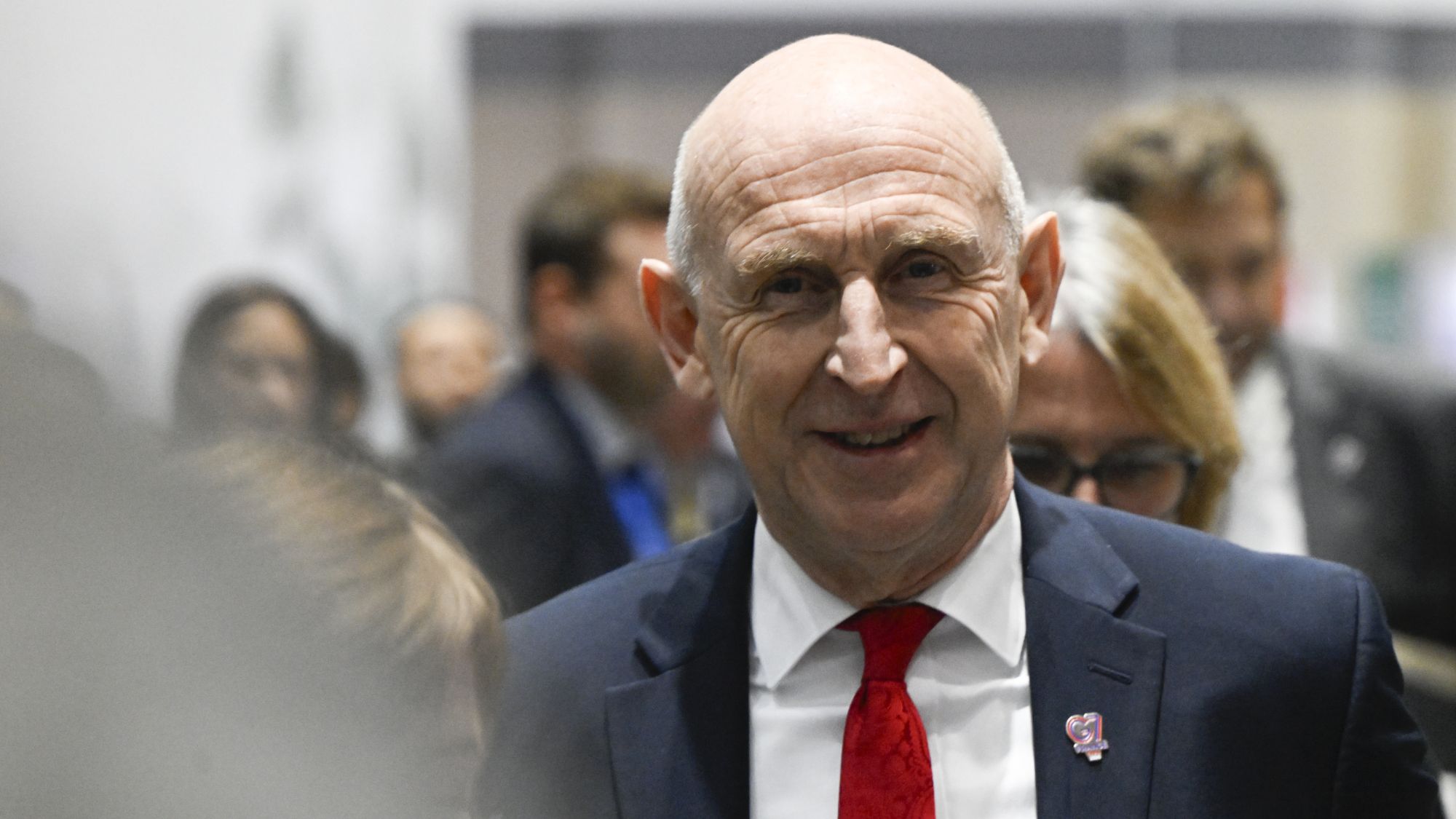
    John Healey is poised to increase taxes on banks in his 28 October budget, seeking extra revenue as conflicts in the Middle East drive up borrowing costs, according to reporting by The Guardian. One proposal would reverse a previous cut to the banking surcharge, lifting the levy on profits from 3% to 8%. The change could generate about £2.25 billion annually, helping the government maintain its deficit-reduction commitments amid the growing pressure on public finances.

    Who said what
    At an International Monetary Fund gathering in Bangkok, the chancellor praised lenders, saying they were “hardwired into the economic fabric of this country”. But he is “nevertheless believed to be minded to increase the surcharge banks pay on their profits”, added The Guardian. The Trades Union Congress has called for a larger rise, arguing that the major banks continue to enjoy substantial earnings while households struggle with mortgage costs.

    Higher inflation and borrowing costs since the outbreak of the war in Iran have “put pressure on the public finances”, said The Telegraph. But the UK was commended by the International Monetary Fund this week for setting out a plan to address its deficit. The fund’s managing director, Kristalina Georgieva, urged the government to “stay the course”.

    What next?
    Healey is expected to announce further prudent measures in his first budget as chancellor. He has promised to provide relief for households and businesses facing higher energy costs, but has ruled out the prospect of substantial extra funding for government departments.


    today’s international story

    ‘Mother of all bombs’ among US plans for new Iran strikes

    What happened
    The US military has drawn up plans to use its most powerful non-nuclear bomb against Iranian energy infrastructure and nuclear facilities if Donald Trump orders renewed attacks, according to officials cited by CNN. The 21,600-pound GBU-43/B — nicknamed the “mother of all bombs” (MOAB) — has not been used in the conflict so far. Its potential deployment would represent a significant escalation after more than seven months of fighting.

    Who said what
    Military planners have included the weapon in options for attacking nuclear sites, including the suspected underground facility at Pickaxe Mountain. However, officials have questioned whether its blast can penetrate deeply buried installations, warning that it is primarily designed to destroy targets over a wide area. One source told CNN the MOAB was mainly conceived as a weapon employed for “psychological operations”.

    What next?
    The White House said Trump retained all options to prevent Iran acquiring nuclear weapons. Yet deploying the MOAB “could significantly escalate the ongoing conflict at a time when fighting has lulled”, said Al Jazeera. The US president faces pressure to end an increasingly unpopular war before November’s midterm elections, but negotiations have yet to deliver a resolution.


    Today’s entertainment story

    Much-loved cinema avoids closure

    What happened
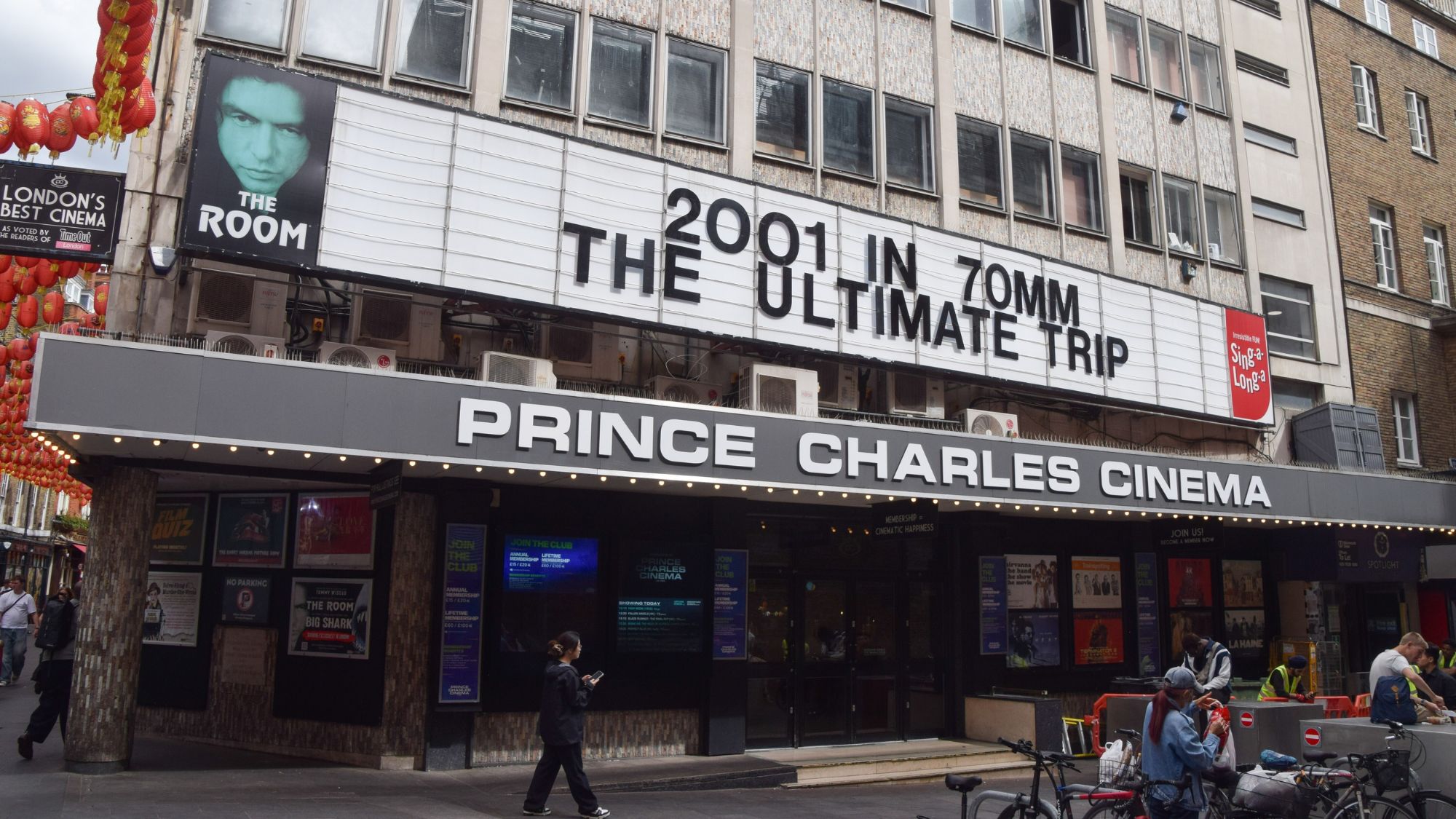
    One of the UK’s most prestigious independent picture houses, the Prince Charles Cinema in London, has been saved following a public campaign.

    The cinema said it had signed a 25-year lease that would allow “our projectors will keep rolling for years to come”. The campaign to save the Prince Charles Cinema began early last year when its management released a public statement stating that the movie theatre was under “serious threat” of closure.

    Who said what
    The theatre is the “only independent cinema in the West End”, said Deadline, and “the venue is popular with hipsters and young film fans”. Quentin Tarantino, director of cult classics such as “Pulp Fiction” and “Reservoir Dogs”, has cited it as his favourite UK cinema, while “28 Days Later” director Danny Boyle said London would “die a little death” if the site was forced to close.

    Number eight on Time Out’s list of the 100 greatest cinemas in the world, the Prince Charles Cinema “is a true one-of-a-kind in the pantheon of picture houses”, according to the magazine.

    What next?
    There is no break clause in the new agreement and “effectively, this means the indie venue can continue under its current conditions for at least another 25 years — a major victory at a time when beloved London businesses are closing at quite a rate”, said the Londonist.


    It’s not all bad

    Croydon’s Lion Green Road housing development has won the Royal Institute of British Architects’ (Riba) prestigious Stirling Prize, being crowned Britain’s best new building. Asked to provide just 80 homes, lead architect Mary Duggan ended up delivering 157 bright flats. The project features shared gardens, play areas and equal access for every resident. The Riba judges described the project as a “new kind of garden neighbourhood”, the principles of which could be emulated in other developments around the country.


    under the radar

    Ghost forests are becoming more real

    A decaying forest full of grey, leafless trees may seem like the setting for a horror movie. But ghost forests have expanded beyond silver screens and on to coastlines across the US.

    A ghost forest is the “watery remains of a once verdant woodland”, said the National Oceanic and Atmospheric Administration. It happens when seawater “advances and overtakes the fresh water that deciduous trees rely upon” and “poisons living trees, leaving a haunted ghost forest of dead and dying timber”.

    Between 2012 and 2023, scientists tracked more than 260 million dead trees across the US Great Lakes and the country’s coastlines, according to a preprint on research distribution service bioRxiv. More than half of the mortality was “concentrated in just 10% of forests, primarily in high-elevation inland wetlands and low-lying forests prone to inundation”.

    The rise in sea levels — brought about by climate change — is the biggest contributor to the growth of ghost forests. Global mean sea levels are “rising at about 4.1 millimeters per year, and saltwater intrusion is expected to affect nearly 77% of the world’s coastlines by 2100”, said New Scientist, putting more coastal forests at risk.

    There are likely to be long-term climate implications. “Tree mortality and decomposition releases carbon into the atmosphere,” Michelle Sims, a geospatial research scientist at the World Resources Institute, told New Scientist. “If the forests do not recover, then these areas may not regain their capacity to sequester carbon and it could represent a more long-term carbon stock loss.”


    on this day

    16 October 1998

    Former Chilean dictator Augusto Pinochet was arrested in London on a Spanish warrant requesting his extradition on murder charges. Last month hundreds of Chileans took to the streets in protest, comparing right-wing President Jose Antonio Kast’s security policies with those of Pinochet.


    Today’s newspapers

    ‘Tax raid’

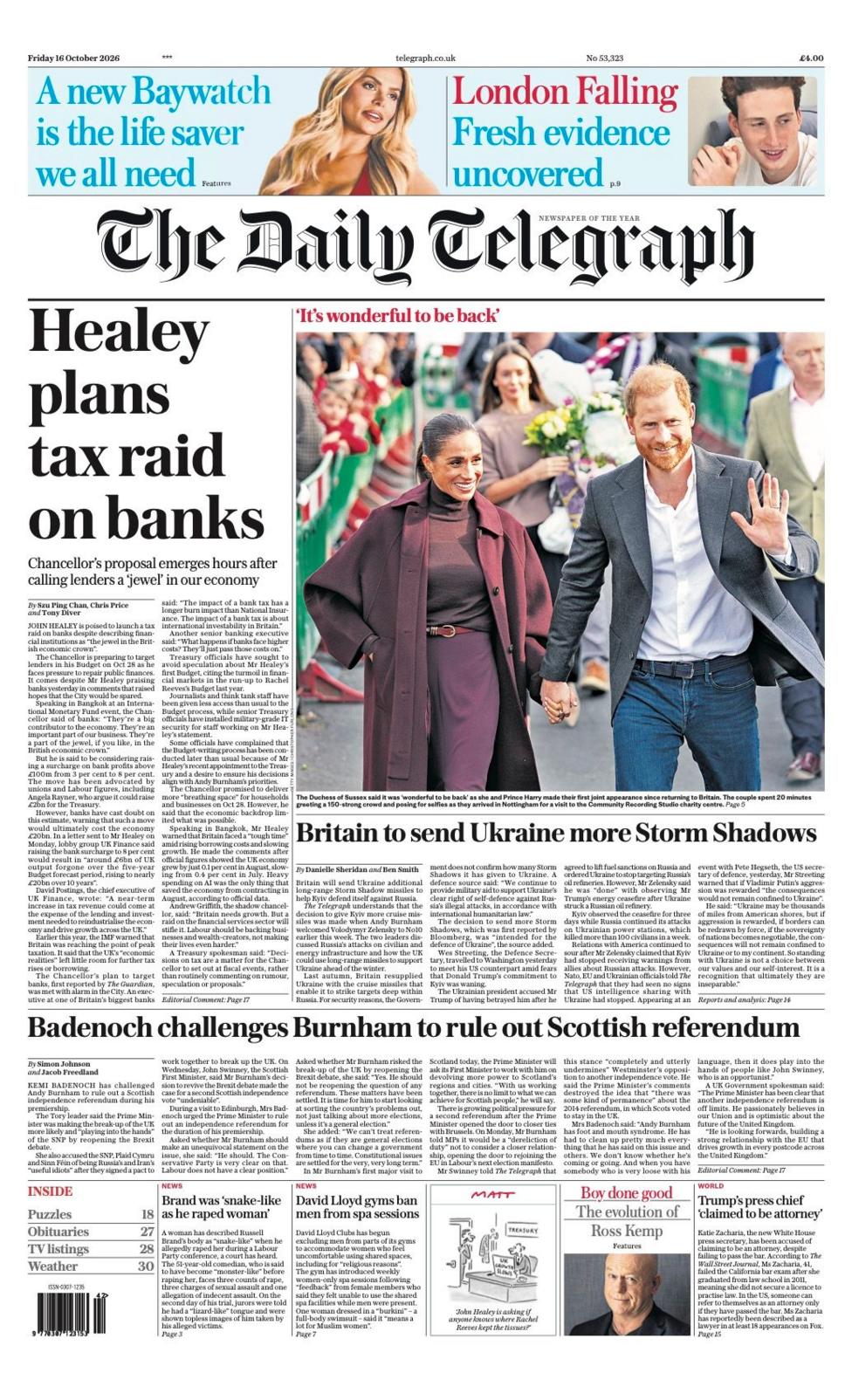
    “Healey plans tax raid on banks”, The Telegraph reports. “Trump drops plan to broadcast execution”, The Guardian says. “Energy bills set for double rise in the new year”, say The i Paper. “Topless Monster”, the Daily Star says, above its report of the Russell Brand rape trial. “The axis of diesel”, says Metro. “Merz rules out resignation in vow to confront age of upheaval”, the Financial Times reports. Meghan says “it’s wonderful for us to be back in the UK”, reports the Daily Express.

    See the newspaper front pages


    tall tale

    A Tinie visit 

    Sixteen years after he revealed that he’d never been to Scunthorpe in his hit song “Pass Out”, Tinie Tempah says he will finally visit the Lincolnshire town. The rapper came to an agreement with Ben Johns, a Scunthorpe resident, on Instagram. “I’ll do you a deal brother,” wrote Tempah, offering to pay a “long-awaited visit” in return for 5,000 pre-saves of his new album “The Night’s Not Dead”, which is released today. Johns duly made a cardboard cutout of the artist — complete with a QR code link to pre-save the album — and carried it around the town, eventually garnering the magic number.


    Morning Report was written and edited by Arion McNicoll, Jamie Timson, Devika Rao, Ross Couzens and Chas Newkey-Burden, with illustrations by Julia Wytrazek.

    Image credits, from top: Sirachai Arunrugstichai / Bloomberg / Getty Images; US Department of Defense / Getty Images; Vuk Valcic / SOPA Images / LightRocket / Getty Images; Illustration by Julia Wytrazek / Getty Images.
     

    Recent editions

    • Evening Review

      Can the Tories unite the right?

    • Morning Report

      Musk blames US for Ukraine Starlink slowdown

    • Evening Review

      A ‘dangerous moment’ for Kyiv

    VIEW ALL
    TheWeek
    • About Us
    • Contact Future's experts
    • Terms and Conditions
    • Privacy Policy
    • Cookie Policy
    • Advertise With Us
    • FAQ
    Add as a preferred source on Google Add as a preferred source on Google

    The Week UK is part of Future plc, an international media group and leading digital publisher. Visit our corporate site.

    © Future Publishing Limited Quay House, The Ambury, Bath BA1 1UA. All rights reserved. England and Wales company registration number 2008885.